Vera Clarissa
Before Apple’s strategic pivot to in-house custom silicon, marked by the debut of the A4 chip in the iPhone 4, the company’s early iOS devices relied on processors manufactured by Samsung. This foundational period laid the groundwork for a technological revolution. Every Apple device released since the original iPad has been powered by an Apple-designed chip, known as the "A-Series" System on a Chip (SoC). This naming convention, adopted from 2010 onwards, signifies a significant shift in Apple’s product development philosophy, moving from reliance on external suppliers to a self-sufficient, vertically integrated approach that has defined its modern technological prowess.
Fast forward to 2026, and the landscape of mobile computing has been dramatically reshaped by the iPhone 17 lineup, featuring the ultra-powerful A19 and A19 Pro chips. These processors deliver desktop-class multicore processing, formidable graphical capabilities, and a level of responsiveness previously unimaginable in a smartphone or tablet. While today’s mobile Apple SoCs can rival even chips like the M1, the journey to this point has been one of consistent, incremental innovation, a testament to Apple’s long-term vision and commitment to pushing the boundaries of silicon technology.
The Genesis: "APL0098" – The Apple A1 Chip
The story of Apple’s in-house silicon begins with the chip internally designated "APL0098," more commonly recognized as the Apple A1. This processor, also known by its Samsung S5L8900 identifier, was the powerhouse behind the very first iPhone, the original iPod touch, and the iPhone 3G. The adoption of the S5L89xx series came after initial iPhone prototypes utilized Freescale i.MX31 chips. At the time of its development, the primary design focus for these chips was power efficiency, a critical factor for early mobile devices seeking to maximize battery life.
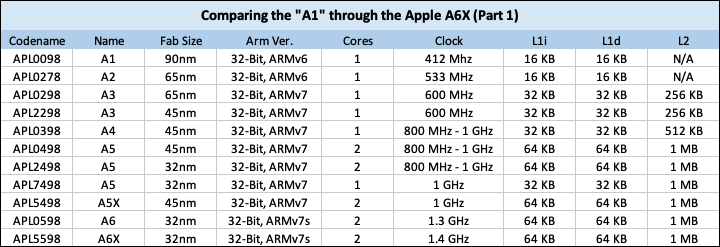
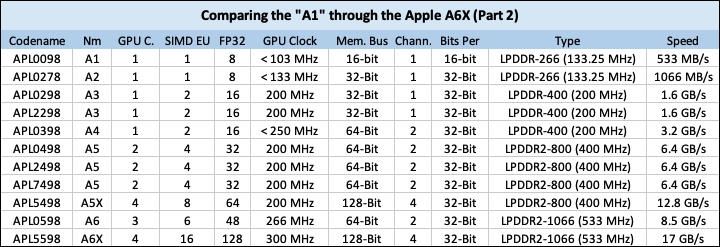
Technically, the A1 chip was a 32-bit ARMv6 processor, manufactured on a 90-nanometer process. It operated at an underclocked frequency of 412 MHz, a significant reduction from its default 666 MHz capability. Its cache structure was notably modest, featuring 16 KB of Level 1 Instruction cache and another 16 KB for L1 data. The absence of L2, L3, or shared system caches underscores the simplicity of early mobile chip architectures. The A1 housed a single processor core and was paired with 128 MB of LPDDR-266 memory running at 133.25 MHz, resulting in a total memory bandwidth of 533 MB/s. This configuration, while basic by today’s standards, represented a significant step forward for mobile computing at the time.
The "APL0278" Era: A Subtle Evolution to the Apple A2
While Apple has never officially marketed a chip under the "Apple A2" designation, the term aptly describes the processor used in the second-generation iPod touch. This chip, while bearing a close resemblance to the Apple A1 (S5L8900), represented a step forward in manufacturing technology. It was produced on a more advanced 65-nanometer process, a reduction from the 90nm of its predecessor, which typically translates to improved power efficiency and potentially higher clock speeds. While specific details beyond the manufacturing node reduction are scarce, this iterative improvement highlights Apple’s ongoing refinement of its mobile silicon strategy even in its nascent stages.

The A3 Series: S5L8920/S5L8922 – Doubling Down on Performance
The S5L8920 chip powered the iPhone 3GS, while its close variant, the S5L8922, found its way into the third-generation iPod touch. These chips, often referred to as the A3 series, marked a significant performance leap over the A1 and A2. A key differentiator was the doubling of both L1 Instruction and data caches to 32 KB per core, directly contributing to enhanced processing capabilities.
Memory bandwidth saw a substantial increase, doubling to 1.6 GB/s, supported by 256 MB of LPDDR-400 memory running at 200 MHz. This provided a more robust foundation for multitasking and demanding applications. Crucially, the A3 series introduced a 256 KB L2 cache, a feature conspicuously absent in previous iOS devices. This addition was vital for improving instruction fetching and data access, significantly boosting overall system responsiveness. The maximum GPU clock speed was also elevated to 200 MHz, further enhancing graphical performance. The inclusion of L2 cache was a watershed moment, fundamentally altering the performance ceiling for iOS devices.

The Dawn of In-House Design: The A4 Chip
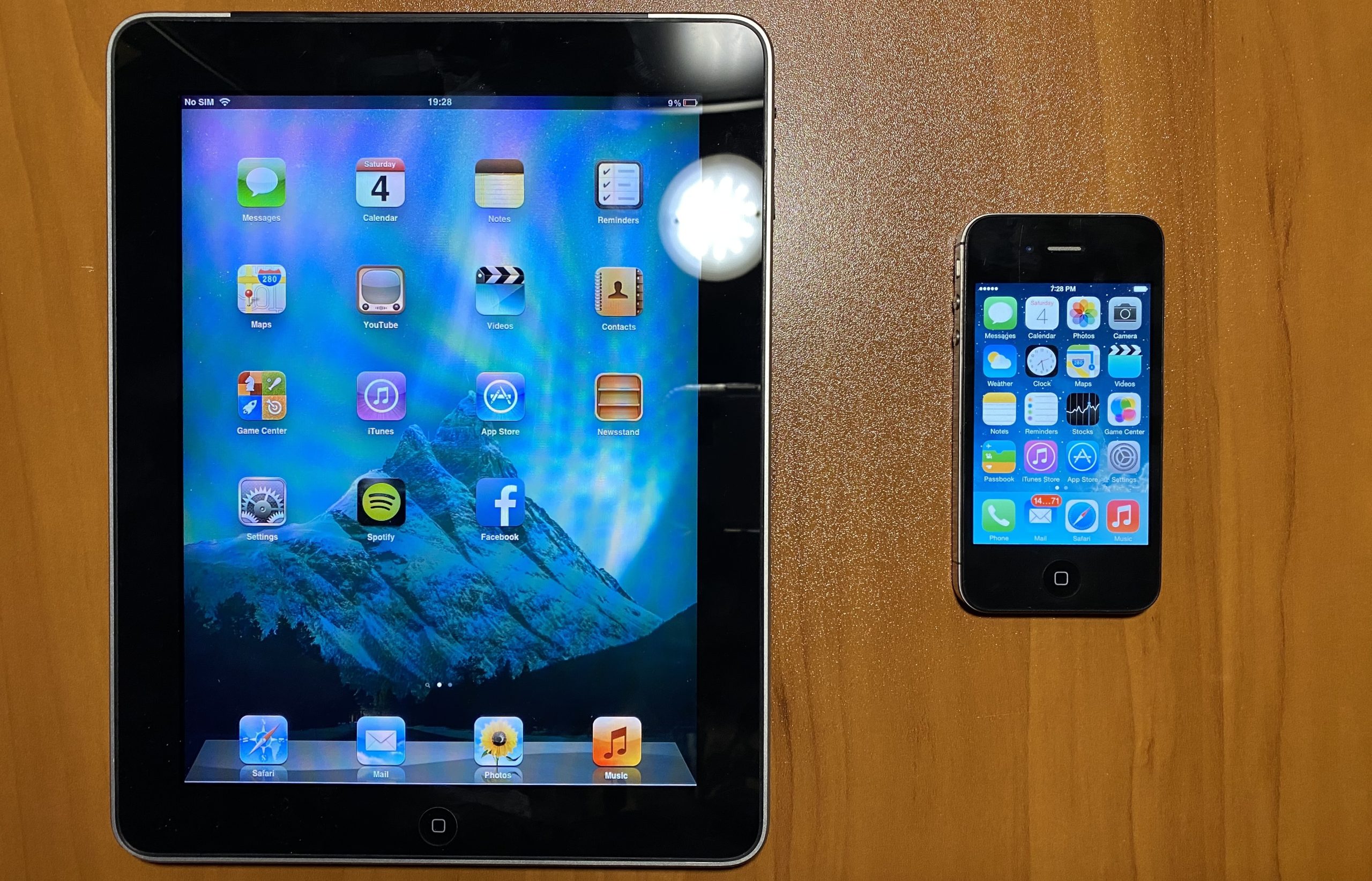
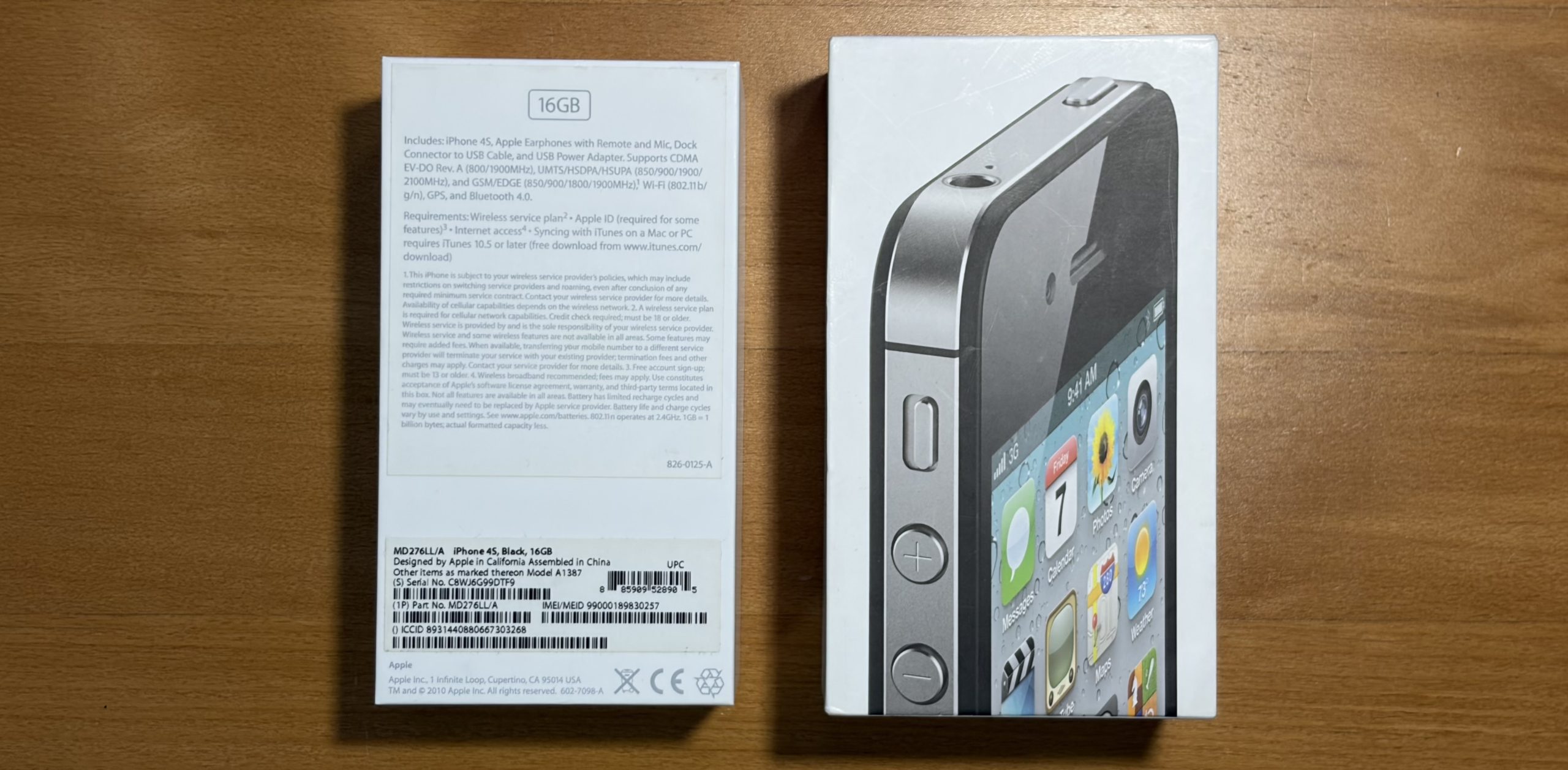
The A4 chip marked a pivotal moment in Apple’s history: it was the very first Apple Silicon chip designed entirely in-house, mirroring the philosophy behind the later M-series chips. This chip powered iconic devices such as the iPhone 4, the original iPad, and the fourth-generation iPod touch. While still a 32-bit processor, the A4 represented a substantial upgrade in performance.
The L2 cache was doubled compared to the A3 series, reaching 512 KB. CPU clock speeds saw a modest increase, ranging from 800 MHz to 1 GHz, depending on the device. Memory bandwidth also expanded significantly to 3.2 GB/s across all devices utilizing this SoC. The A4 chip’s successful development and integration signaled Apple’s growing confidence and capability in designing its own core technology, setting the stage for future innovations.

The A5 Family: A Multi-Faceted Approach to Performance
The A5 chip family demonstrated Apple’s increasing sophistication in silicon design, offering multiple configurations tailored to specific product needs. Technically, there were four distinct A5 variants, including the A5X. A noteworthy point is the existence of a locked-down, single-core version of the A5 specifically designed for the third-generation Apple TV. This strategy of customizing core counts showcased Apple’s granular approach to optimizing performance and power consumption for different device categories.
All A5 chips featured improved L2 cache over the A4, faster memory, and enhanced graphics cores. Launched alongside the second-generation iPad in March 2011, Apple promoted the A5 as being capable of "twice the work" of the A4, with a staggering nine times the graphical performance. All A5 and A5X chips boasted 1 MB of L2 cache.
The A5X, introduced with the third-generation iPad, was a higher-performance iteration of the A5. It incorporated a quad-core graphics chip, pushing graphical performance to an impressive 25.6 Gigaflops and introducing several technical enhancements over the standard A5. This differentiation strategy allowed Apple to cater to the distinct performance demands of its tablet and smartphone product lines.
The A6 and A6X: Breaking the 1 GHz Barrier
The A6 and A6X chips represented another significant leap, with CPU clock speeds finally surpassing the 1 GHz threshold. The iPhone 5 and 5c were equipped with chips running at 1.3 GHz, while the fourth-generation iPad featured the A6X at 1.4 GHz. The RAM architecture also saw an upgrade over the A5 series, with the adoption of LPDDR2-1066 memory, providing a memory bandwidth of 8.5 GB/s for iPhones and an impressive 17 GB/s for the fourth-generation iPad. The GPU clock speed on the iPad 4th-gen was also higher at 300 MHz, compared to 266 MHz on the iPhone 5/5c. These advancements underscored Apple’s continuous drive for higher clock speeds and more efficient memory subsystems.
Apple A7: The 64-Bit Mobile Revolution
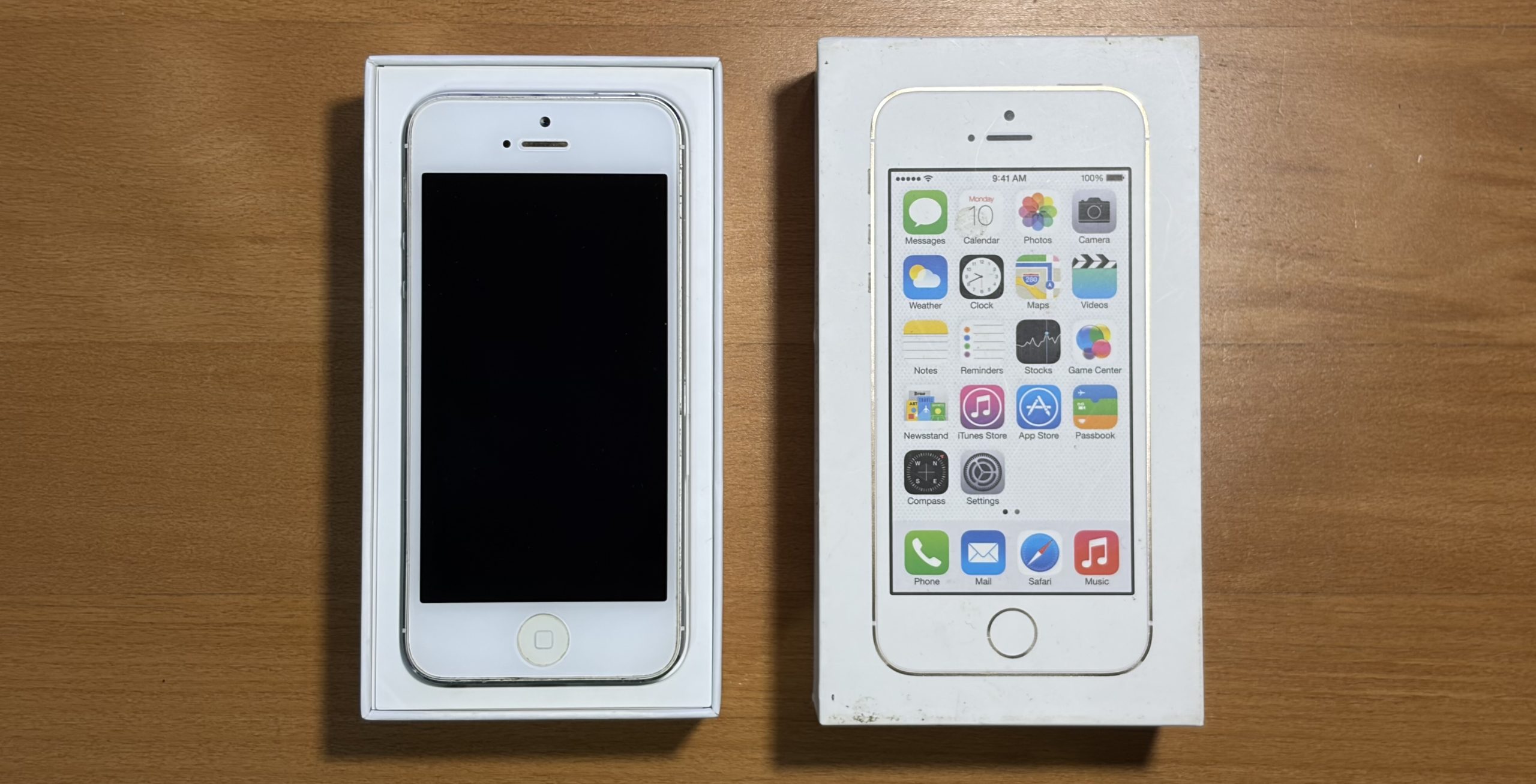
Introduced on September 10th, 2013, alongside the iPhone 5s, the Apple A7 was a groundbreaking chip. It was the first 64-bit mobile processor, a significant architectural shift that offered a vastly expanded addressable memory space and paved the way for more sophisticated software capabilities. The A7 also powered the second and third generations of iPad mini, as well as the original iPad Air. Featuring a billion transistors and manufactured on an even smaller fabrication process, the A7 delivered substantial improvements over its predecessors, including enhanced CPU performance and advanced graphics capabilities. The transition to 64-bit computing in mobile devices was a testament to Apple’s foresight, anticipating the future demands of mobile applications and operating systems.
The Popularity Surge: iPhone 6, 6 Plus, and the Apple A8
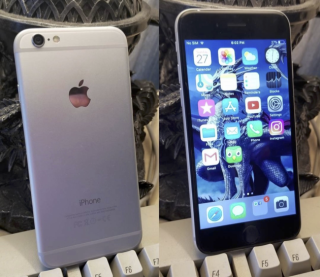
The release of the iPhone 6 and 6 Plus in 2014 coincided with the Apple A8 chip and marked a period of unprecedented popularity for Apple’s flagship smartphone. These devices, with their larger screen sizes, resonated deeply with consumers, selling approximately a quarter of a billion units worldwide and becoming the most popular smartphones to date. The A8 chip, while a solid performer, continued the trend of incremental performance gains, further refining Apple’s mobile silicon. This era also saw Apple responding directly to consumer demand for larger devices, demonstrating a keen awareness of market trends and consumer preferences.
A9, A9X, and the TSMC Partnership: A New Manufacturing Era
The A9 and A9X chips, introduced with the iPhone 6s and 6s Plus, represented a significant development with the adoption of TSMC as a manufacturing partner alongside Samsung. There were two nearly identical versions of the A9: one manufactured by Samsung and another by TSMC, which found its way into the iPhone SE. This diversification of manufacturing partners was a strategic move by Apple to ensure supply chain resilience and potentially leverage different manufacturing capabilities.
A notable advancement with the A9 was its use of DDR4 memory, predating its adoption in Macs by approximately two years, with the 2017 5K iMac being one of the first Mac models to feature it. This highlights Apple’s practice of introducing cutting-edge technologies in its mobile devices first. Furthermore, the A9 chip introduced a custom storage solution featuring an Apple-designed NVMe controller, incorporating PCI Express technology. This resulted in significantly faster internal storage speeds for the iPhone 6s and subsequent models, a crucial enhancement for app loading times, photo and video capture, and overall system responsiveness. This marked the beginning of a substantial upgrade in internal storage performance on iPhones.
The A10 Fusion, A10X Fusion, and the T2 Chip: Efficiency Meets Power
The release of the iPhone 7 and 7 Plus on September 16th, 2016, brought the A10 Fusion chip, a significant milestone in mobile processor design. The A10 Fusion was Apple’s first quad-core SoC, ingeniously incorporating "efficiency cores" alongside performance cores. This heterogeneous computing architecture allowed the chip to intelligently switch between high-performance cores for demanding tasks and low-power cores for background processes and less intensive operations, leading to substantial power savings. Apple claimed a 40% increase in CPU performance and a 50% boost in GPU performance over the A9.
Alongside the A10 Fusion, Apple also developed the A10X Fusion for its iPad Pro lineup, further pushing the boundaries of tablet performance. This chip offered even greater processing and graphical power, catering to the needs of professional users and demanding applications. The introduction of the T2 chip, while primarily associated with Macs, also signaled Apple’s expanding focus on integrated security and control within its silicon ecosystem, ensuring a more cohesive and secure user experience across its product range. The T2 chip, in particular, integrated a Secure Enclave processor, offering enhanced security for data encryption and biometric authentication.
The Trajectory of Innovation
The journey from the Samsung S5L8900 to the futuristic A19 and A19 Pro chips is a testament to Apple’s relentless pursuit of innovation in mobile silicon. Each iteration has built upon the successes of its predecessors, introducing new architectures, manufacturing processes, and features that have consistently redefined the capabilities of smartphones and tablets. This deep dive into the evolution of Apple’s A-series chips reveals a strategic, long-term vision that prioritizes control over its core technology, enabling the company to deliver unparalleled performance, efficiency, and user experiences across its diverse product ecosystem. The ongoing advancements in Apple Silicon not only power its own devices but also serve as a benchmark for the entire mobile technology industry, continually pushing the envelope of what is possible.