Cecilia Chamidah Nur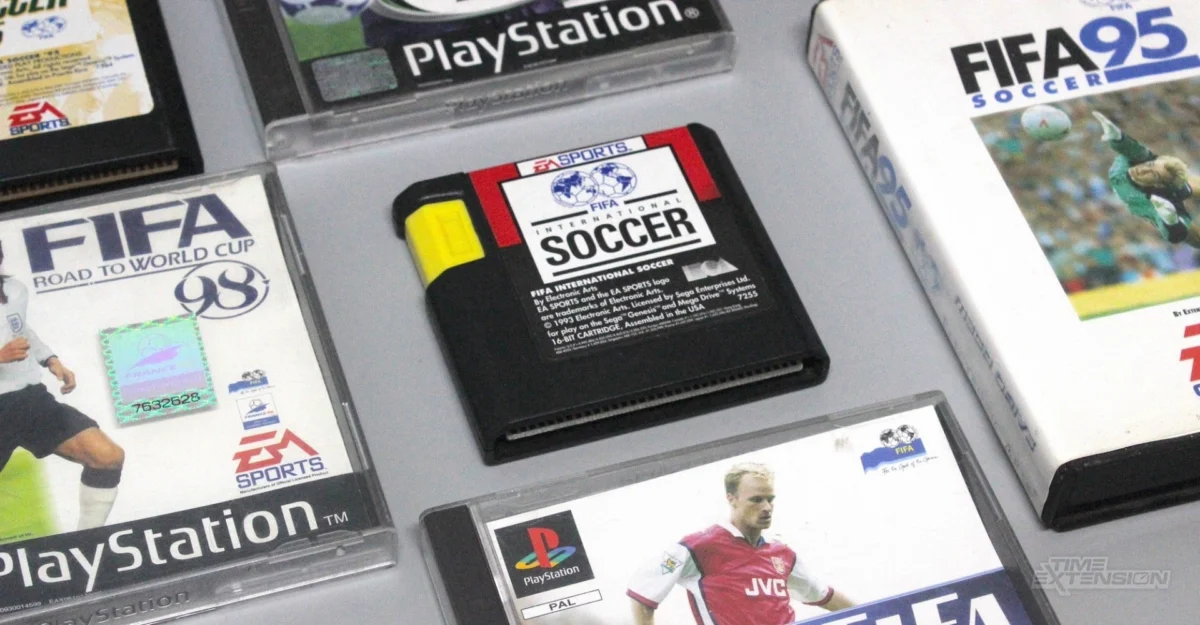
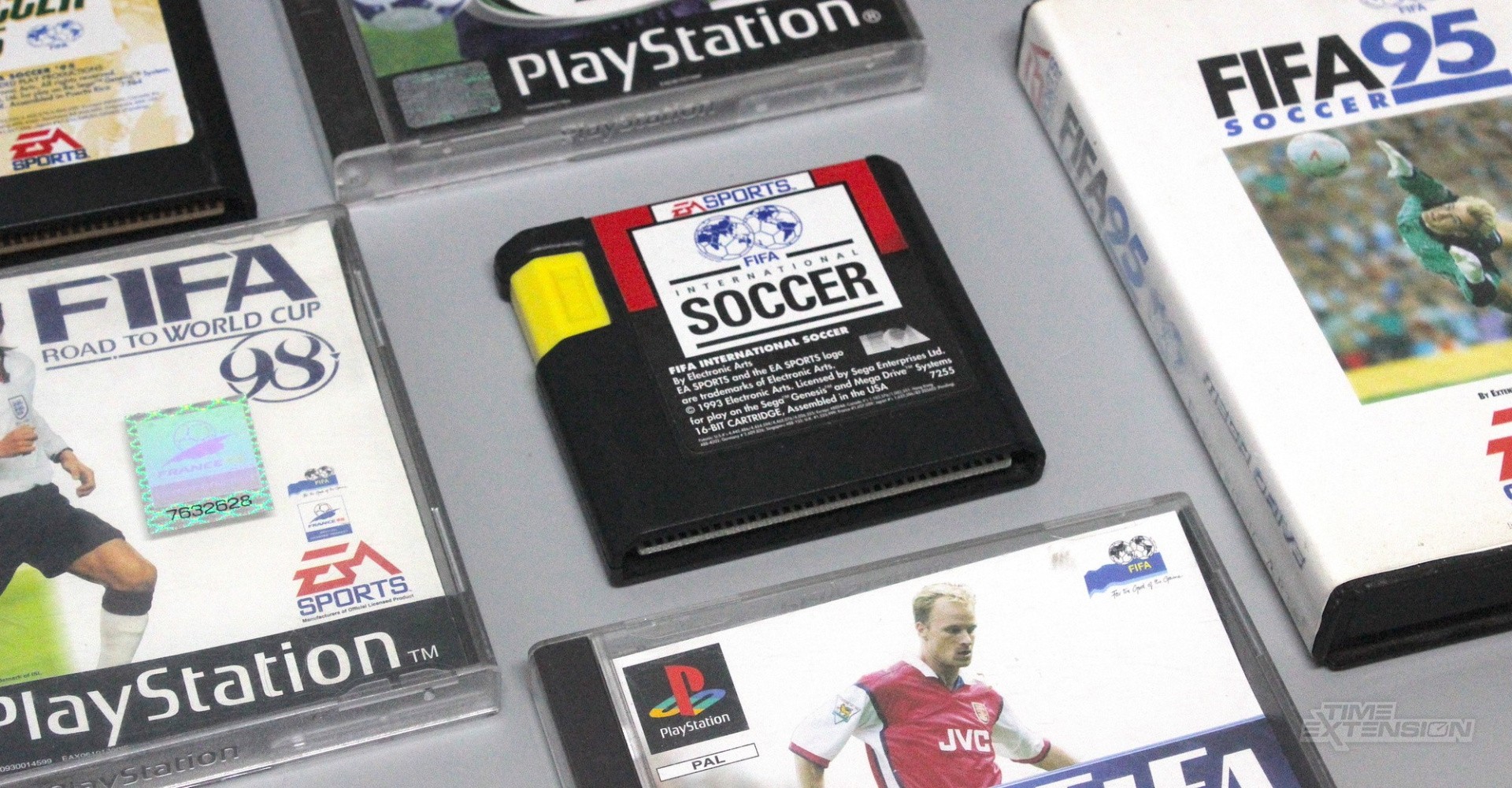
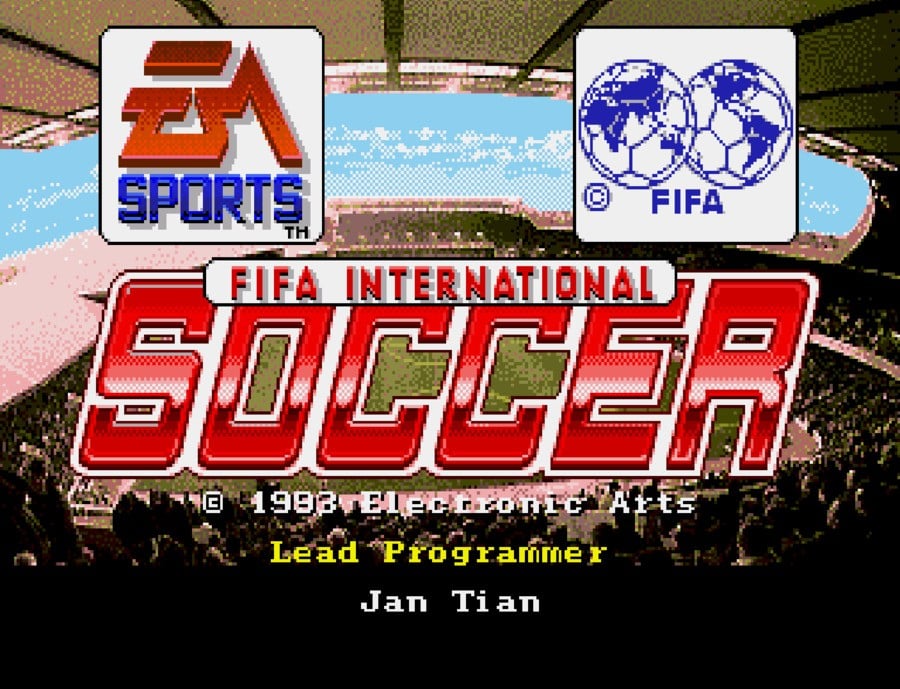
The 30th anniversary of FIFA International Soccer, the groundbreaking title that launched a multi-billion dollar franchise, is being celebrated this year, coinciding with a pivotal moment in its history as Electronic Arts (EA) and FIFA part ways, signaling the end of an era for one of the most successful video game series of all time. Originally released in December 1993 for the Sega Mega Drive/Genesis, FIFA International Soccer was a monumental achievement, born from the determination of a small team across two continents and a vision for an authentic football simulation that would ultimately sell over 325 million copies worldwide. As the FIFA World Cup 2026 commenced earlier this week on June 11th, drawing global attention to the sport, it is a timely moment to revisit the origins and profound impact of this iconic game, offering a unique perspective from those who were instrumental in its creation.
The Unlikely Genesis: EA UK’s Persistent Vision
While the FIFA series would eventually be developed primarily at EA Canada, the initial spark for the project ignited within the smaller EA UK office in Guildford. In the early 1990s, EA UK functioned predominantly as a regional branch, focused on supporting external development, testing, and marketing North American products across Europe. Internal game development was not its primary mandate, yet a dedicated group believed passionately in the untapped potential of a football simulation for the burgeoning console market, particularly on the Sega Mega Drive.
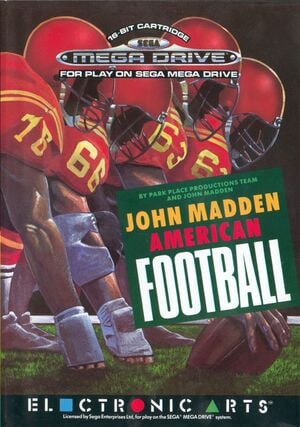
Neil Thewarapperuma, then an EA marketing manager, championed the cause. Reflecting on the period, he noted, "Essentially, we were taking a US product and putting it out in Europe… A lot of those successful games were sports games. So Madden was huge. We did EA Hockey because we didn’t have the NHL license. And they were pretty successful because they were really good games." Recognizing a significant gap in EA’s European portfolio, Thewarapperuma penned a "WhyEA" document, a technical justification for the company to invest in a football product – an unusual initiative for a marketing individual at the time.
Despite Thewarapperuma’s initial efforts, the idea languished until 1992, when Matthew Webster, another EA UK team member, reignited the concept. Webster, who had joined EA UK in 1990 after a brief and disillusioning stint exploring a career in the Royal Air Force, had transitioned from customer service to assistant producer, fueled by a deep passion for video games. Inspired by the success of EA Hockey on the Mega Drive, he developed a more comprehensive design document for a potential title, provisionally named EA Soccer or EA Football.
Forging the Prototype: The Isometric Breakthrough
Lacking an internal development team, Webster sought external partners to bring his vision to life. He recalled Jules Burt and Jon Law, two developers from Widnes who had recently pitched a volleyball demo to EA. Burt and Law, resourceful and innovative, had cobbled together a makeshift Sega development kit from a German salesman, connecting a wire-wrapped board to a Mega Drive and interfacing it with a Commodore Amiga.
Burt recounted the pivotal moment: "One of the key things we thought we were pitching to EA was a volleyball game… We were trying to do something cartoony with a bit of an arcade feel." However, during their third meeting, Webster, accompanied by his boss John, delivered the news that EA would not pursue the volleyball game. Instead, they posed the crucial question: "Sorry, we’re not going to sign your beach volleyball game, but we’re just wondering if you guys would be interested in doing football [instead]?"
Despite the disappointment of abandoning their volleyball project, Burt and Law embraced the new challenge. Over the next three months, they developed three distinct prototypes. The first two explored a side-on parallax view and a Madden-style perspective, where the player moved in and out of the camera. The third, however, proved to be the game-changer: an isometric view. This novel perspective was inspired by Burt’s father, who, observing their work, repeatedly suggested, "Why can’t you make it look more like TV?"
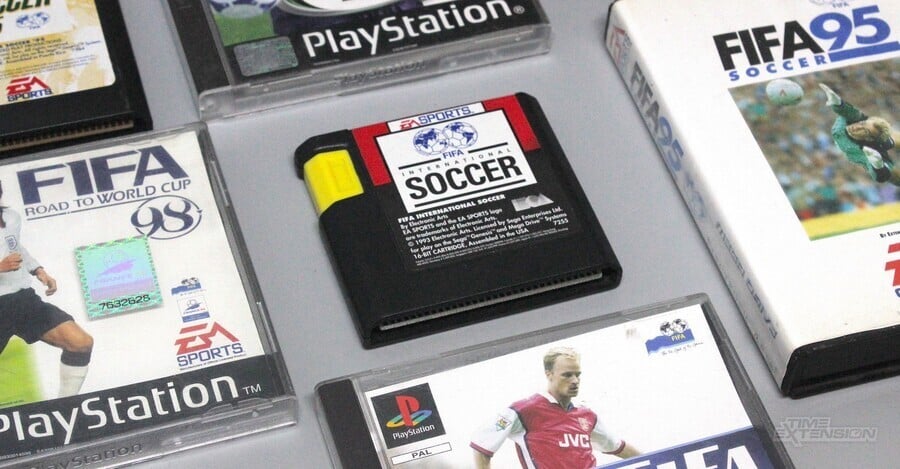
The isometric approach, with its three-quarter perspective, immediately captivated EA. Webster recognized its potential to differentiate the game from the prevalent top-down football titles of the era, such as Kick Off and Sensible Soccer. "We saw that isometric view and we were like, ‘Well, that’s it!’" Webster exclaimed. "We were like ‘That’s different, that’s fresh.’" This innovative camera angle would become a hallmark of the early FIFA series, providing a more immersive and realistic representation of a football match than anything seen before.
The Canadian Connection: A New Home for Development
Just as Burt and Law seemed poised to lead the project, a strategic decision from higher up within EA shifted the project to EA Canada. This studio, formed from the 1991 acquisition of Distinctive Software (DSI), was rapidly becoming a central hub for EA’s sports titles. While initially a "difficult pill to swallow" for Burt and Law, both later conceded it was for the best, acknowledging that their small team would have struggled with the extensive content creation, audio integration, and surrounding screens required for a full-scale title. To soften the blow, EA offered them roles at the UK branch, where they subsequently worked on Rugby World Cup ’95. Matthew Webster remained an associate producer on the football project, maintaining close contact with the Canadian team before temporarily relocating to Vancouver to collaborate directly.
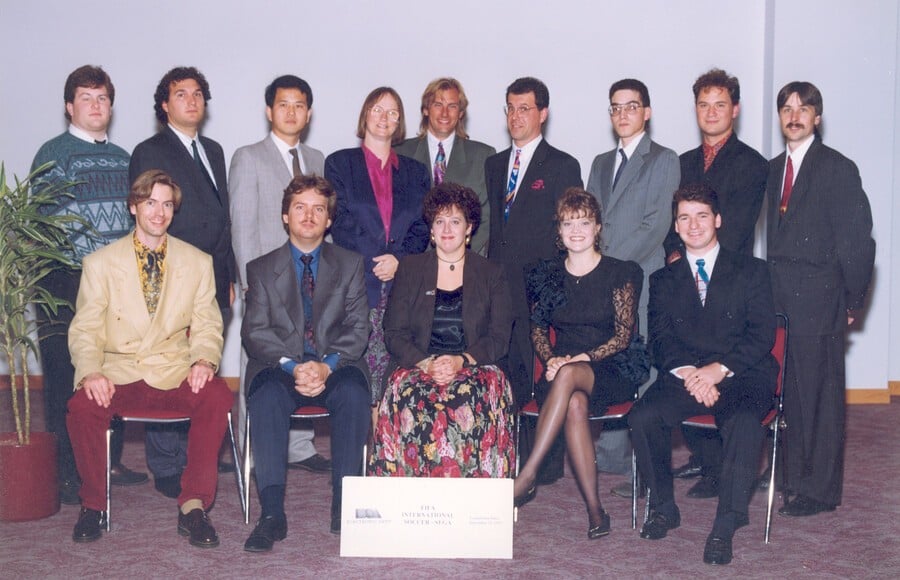
EA Canada commenced work on the reimagined EA Soccer at the close of 1992. The core team included producer Bruce McMillan, development director Joe Della-Savia, and engineers Jan Tian and Brian Plank. Tian, fresh from leading 4D Sports Tennis, initially expressed burnout but was persuaded by McMillan, a keen soccer player, to take on the lead engineering role. Plank, an audio programmer, eagerly joined, forming the initial two-person programming team. "Jan and I were the first two programmers to work on FIFA," Plank recalled, noting that serious development began in January 1993.
The development process began with an exhaustive analysis of existing football games and a commitment to authenticity. Jan Tian developed an AI testbed on a PC, using simple squares for the field, a stick figure for the player, and a white dot for the ball, purely to refine core mechanics like passing, positioning, and dribbling. McMillan emphasized this foundational approach: "What was really interesting, though, is what we did first was we had the discipline of just having two characters on the screen passing the ball back and forth. That’s how the game started. It didn’t matter about cameras. It didn’t matter about whatever. We just made that and really, really refined it."
The early programming efforts involved converting Tian’s C++ testbed code to C for optimal performance on the Sega Genesis. Plank humorously described himself as a "human C++ to C compiler," dedicating two intense days to this conversion. "So kind of like overnight, we went from having a testbed to a game running on a Genesis," he stated, marking a significant milestone in the game’s rapid progression.
The Pursuit of Authenticity and the Toll of Dedication
As development accelerated, artists and sound engineers joined the team, fleshing out the game’s immersive experience. The isometric perspective, which Plank attributed partly to his affection for 80s arcade classics like Zaxxon, remained central to the visual design. A paramount concern for the developers was authenticity. The team obsessively studied football footage, breaking down player movements, tactical decisions, and the nuances of on-pitch strategy. Bruce McMillan recounted, "[Our librarian at EA] Linda grabbed all the footage she could get from around the world… Rather than watching TV at night while we were eating dinner, we’d all watch footage [of football matches]." George Ashcroft, the lead artist, confirmed the extensive use of "well-worn VHS videos" ranging from "Greatest Goals to even blooper stuff." The animated scoreboards, possibly inspired by NHL Hockey, were designed to amplify the impact of scoring a goal, enhancing the game’s presentation.
Matthew Webster worked closely with Jan Tian on the formation editor, a system that divided the pitch into squares, allowing players to plot desired positions for each formation. This rudimentary AI would then guide players to adapt their positions based on the ball’s movement.
The enthusiastic feedback from testing teams in both the UK and Canada fueled the team’s confidence. Neil Thewarapperuma vividly recalled the impact of early builds: "The work that the EA Canada people did was fucking insane… And when they put crowd sounds in, we were like, ‘Are you fucking serious?’ No one else had done this before." This innovative inclusion of realistic crowd noise significantly elevated the immersion.

However, this intense dedication came at a personal cost. Jan Tian, the lead programmer, admitted to becoming a workaholic, frequently returning to the studio after hours to fine-tune the AI. This relentless pursuit of perfection severely impacted his health and family life. Tian emotionally recounted a Sunday night when his producer, Bruce McMillan, received a call from Tian’s eight-year-old son, asking, "Can you make Dad come home please?" Tian confessed, "It just brings tears to my eyes, because he hadn’t seen me and I hadn’t seen him for like 2 or 3 months… I was suffering from anxiety attacks because of the stress and overwork. I sent myself to the hospital three times." McMillan and Plank had to intervene, sometimes physically locking Tian’s keyboard to force him to rest, highlighting the extreme pressures faced during the game’s development.
The FIFA License: A Brand-Defining Acquisition
Remarkably, for much of its development, the game known internally as EA Soccer did not bear the FIFA name. The crucial acquisition of the FIFA license came relatively late in the process, driven by the persistent efforts of the UK branch. Matthew Webster, utilizing a connection to a Welsh football referee and FIFA representative named Keith Cooper, directly contacted FIFA in Switzerland. This led to an introduction to ISL (International Sports and Leisure), the organization then responsible for FIFA’s brand licensing.
In June 1993, Tom Stone, EA’s former vice president of European marketing, met with ISL’s Ross Berlin. A handshake deal quickly followed, securing EA’s position as FIFA’s worldwide official licensee for a four-year term (1993-1997). Stone articulated the strategic rationale: "What we realised was in order to make a point of difference, a point of distinction between FIFA and all the other football games, we needed to have those real teams, real names, apparel, stadia, etc."
However, the initial FIFA license was not all-encompassing. It notably excluded official player names and likenesses, a detail Neil Thewarapperuma candidly admitted: "It’s not the license we wanted. It really isn’t." To populate the rosters, EA created an internal database and solicited volunteers from its staff. Employees contributed their names, with some humorously assigning themselves to their favorite teams or enhancing their in-game attributes. Jan Tian, for instance, aspired to be the star player for Brazil but was gently dissuaded by his manager from having an "Asian name on the star player of the Brazilian team," resulting in his in-game alias, "Janco Tianno." Brian Plank, having control over the player database, made his own player "one of the most powerful in the game." This blend of real and fictional names, along with internal staff contributions, became a quirky characteristic of the first game.
The "US Soccer" Controversy and Global Unity
As release approached, a significant challenge emerged from EA’s North American marketing department. They proposed dropping the FIFA license in America and renaming the game "US Soccer" to better appeal to the American market, which traditionally had less affinity for "soccer." This suggestion met with fierce resistance from the development team, who understood the global implications of the FIFA brand.
Bruce McMillan passionately defended the FIFA name to Bing Gordon, a co-founder of EA: "I sat down with a founder of EA, Bing Gordon, in our boardroom in Vancouver and I said, ‘I’m going to bet my whole job, my whole career, that if we call it US Soccer, it’ll be a failure. We have to call it FIFA. We have to be around the world as FIFA.’" Marc Aubanel, an assistant producer, echoed this sentiment, stating, "The US hated it. They really wanted it to be called US Soccer, which we looked at it, and we were like, ‘You’re fucking crazy. You’ll sell nothing.’"
The dispute was ultimately resolved by Mark Lewis, then Vice President of Electronic Arts Europe. He pointed out the logistical nightmare of handling unsold stock if the game had different branding in different regions, effectively forcing the US marketing team to relent. This crucial decision ensured a unified global brand identity, a move that proved prescient in the series’ eventual worldwide dominance.
Launch, Critical Acclaim, and Unforeseen Success
The anticipation for FIFA International Soccer was immense, particularly in Europe. EA launched an unprecedented marketing campaign, including one of its first-ever television advertisements in Europe, numerous magazine ads, and a deluge of positive press. Neil Thewarapperuma highlighted the effectiveness of their PR team and the game’s disruptive market entry: "Our first teaser ad for FIFA was… sort of attacking the opposition." Matthew Webster noted the buzz, recalling, "Simon Jeffery, who is the guy who used to run the PR team, […] was like, ‘The previews are going crazy for this.’ Then we heard word that Virgin was moving the release of Sensible Soccer to get out of the way because they expected this was going to review really high."
The hype culminated in a special promotional event on September 8th, 1993, at Wembley Stadium, coinciding with a World Cup qualifier between England and Poland. EA invited FIFA officials to witness a presentation of the game. Tom Stone recounted a memorable moment: "We’d invited all of the FIFA officials to come and witness the launch of this game that bore their name, and I met them all and shook hands, and a guy said, ‘Oh look, has the football started?’ I said, ‘No, that’s our game!’" This anecdote perfectly illustrates the groundbreaking realism achieved by the 45-degree isometric view, which truly made the game resemble a live television broadcast.
Upon its release on December 3rd, 1993, FIFA International Soccer garnered widespread critical acclaim. Mean Machines Sega, a leading UK Sega magazine, awarded it 94%, praising its "utterly amazing" animation, "superlative presentation," and "easy to pick up and play" gameplay, concluding, "Anyone who plays FIFA Soccer must concede that this IS Football. [It’s] in the Mega Drive’s sporting elite." Computer & Video Games magazine gave it 92%, with reviewer Paul Rand lauding its "Lurvely flowing graphics with brilliantly sized sprites and a different to the norm perspective," and "sound FX [that] are as realistic as you’re likely to get without actually getting up off your bum." The game’s commercial success exceeded even EA’s most optimistic forecasts, quickly becoming a phenomenon.
A Lasting Legacy and a New Era
Following its initial release on the Sega Mega Drive, FIFA International Soccer was swiftly ported to a multitude of platforms, including the 3DO, Commodore Amiga, MS-DOS, Game Boy, Game Gear, Sega CD, Sega Master System, and Super Nintendo. The immediate success paved the way for its first sequel, FIFA 95, which introduced club teams and solidified the annual release cycle. Over the subsequent decades, the series evolved dramatically, incorporating increasingly sophisticated graphics, gameplay mechanics, and licensing agreements, transforming into the globally recognized franchise familiar to millions today.
However, 2022 marked a significant turning point. EA announced its decision to cease using the FIFA brand, rebranding its football simulation series as EA Sports FC. This decision stemmed from FIFA’s demand for a licensing fee more than double what EA was currently paying, reportedly exceeding $1 billion over four years. FIFA President Gianni Infantino has since declared that FIFA will continue its own video game series without EA’s involvement, though many industry analysts remain skeptical about its prospects given EA’s established development expertise and market dominance.
The developers who initiated the FIFA phenomenon offered varied perspectives on this separation. Bruce McMillan expressed disappointment at the end of a 30-year partnership: "For me, as a creator of FIFA, I’m disappointed that they are not still working together." Yet, he remained confident in EA’s future success, acknowledging the financial realities of modern game development: "EA is an outstanding company, so it’s not going to go sideways. I hope FIFA finds somebody that will help them with this next thing, but it really is an expensive business to be in right now."
Matthew Webster offered a more critical assessment of FIFA’s stance: "Personally, the video game doesn’t need those four letters. It just doesn’t need it." He argued that FIFA "don’t quite understand the creativity and complexity as well as the power of video games and so are somewhat oblivious to the impact," concluding that the split "should have happened years ago."
The separation between EA and FIFA represents a new chapter for both entities. While EA Sports FC aims to carry forward the legacy of authentic football simulation, FIFA faces the challenge of building a new gaming franchise from the ground up, competing in a market it once dominated through its partnership with EA. Regardless of future outcomes, the enduring legacy of FIFA International Soccer as a pioneer in sports gaming remains undeniable, a testament to the vision, dedication, and innovative spirit of its original creators three decades ago.