 Indra Gunadi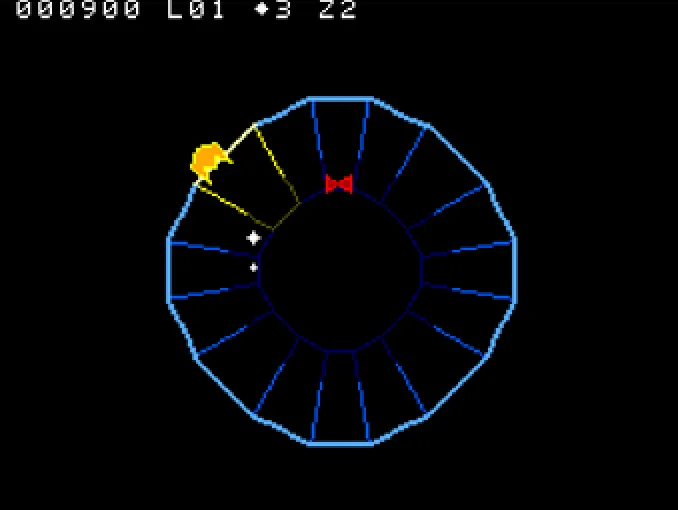
The release of Tempest 2000 for the Sega Master System, developed by the independent programmer haroldo-ok, marks a significant milestone in the preservation and expansion of 8-bit homebrew gaming. Released on October 10, 2026, this port represents a bridge between the legendary arcade aesthetics of the 1990s and the limitations of the 1985 hardware architecture of the Master System. Notably, the project incorporates AI-assisted development tools, highlighting a growing trend in the retro-gaming community where modern computational aids are used to overcome the memory and processing constraints of legacy consoles.
The Evolution of a Classic
The Tempest franchise, originally created by Dave Theurer for Atari in 1981, is renowned for its psychedelic vector graphics and intense, twitch-based gameplay. The sequel, Tempest 2000, was famously released for the Atari Jaguar in 1994, featuring a techno-heavy soundtrack and enhanced visual effects. Bringing this experience to the Sega Master System—a console defined by its 3.58 MHz Zilog Z80 processor and limited VRAM—has long been considered a technical impossibility by many enthusiasts.
Haroldo-ok’s project does not attempt a one-to-one port of the Jaguar version, but rather captures the essence of the gameplay loop, focusing on fluid motion and responsive controls. The development process, as disclosed by the developer, utilized artificial intelligence to assist in optimizing the complex math required for the pseudo-3D perspective that defines the Tempest experience.
Chronology of Development and Release
The timeline for this project reflects a compressed development cycle typical of modern hobbyist projects utilizing machine-learning assistance.
- Early 2026: Initial conceptualization of a vector-style shooter for the Master System, with a focus on emulating the "tube" movement found in Tempest.
- May 2026: Integration of AI-assisted code generation tools to manage the transformation matrices for the game’s rotating geometries.
- August 2026: Beta testing phase, where community feedback on frame rate stability was prioritized.
- October 10, 2026: Public release of the ROM and official documentation via independent retro-gaming distribution platforms.
Technical Challenges and AI Integration
The Sega Master System utilizes a VDP (Video Display Processor) that was never intended to render the kind of rotating, scaling polygons found in the original Tempest 2000. To simulate these effects, haroldo-ok had to implement highly optimized assembly code. According to the developer’s disclosures, artificial intelligence was utilized primarily in the "backend" of the development process. This involved optimizing loops for the Z80 processor and suggesting memory management strategies to keep the game’s footprint within the constraints of standard Master System cartridge sizes.
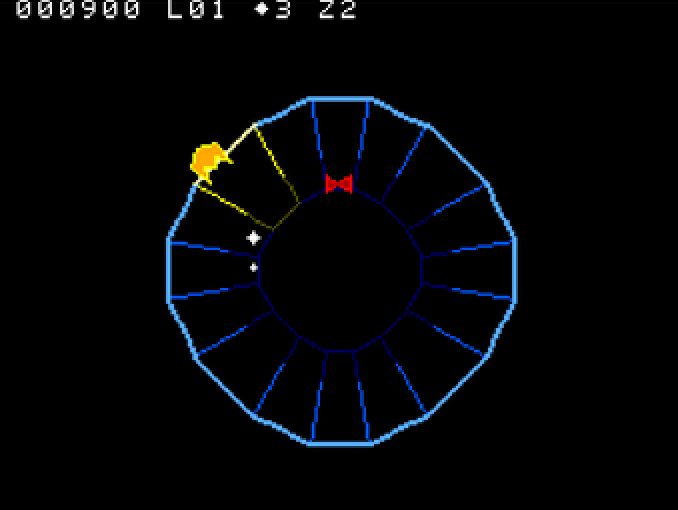
This use of AI in homebrew development is not merely a novelty; it is a pragmatic solution to a decades-old problem. In the past, programmers had to manually calculate bitwise operations for screen refreshes. Today, AI models trained on legacy assembly language repositories can suggest optimized routines that shave milliseconds off the processing time, allowing for the inclusion of more sprites or complex screen effects that would have otherwise triggered hardware slowdowns.
Historical Context: The Master System Landscape
The Sega Master System, while largely overshadowed by the Nintendo Entertainment System (NES) in North America, enjoyed a significant lifespan in Europe, Brazil, and Australia. Its library remains a point of intense interest for collectors. In the last decade, the "homebrew" scene—independent developers creating new software for discontinued hardware—has transitioned from simple "ROM hacks" to sophisticated, original games.
The release of Tempest 2000 fits into a broader pattern of "demakes," a sub-genre where high-end titles are reconstructed for less powerful hardware. Other notable projects in recent years have included NES ports of 16-bit classics or Sega Genesis adaptations of arcade hits. These projects serve as a digital archeology of sorts, demonstrating the untapped ceiling of early 8-bit systems.
Industry Implications and Community Reaction
The inclusion of an "AI-assisted content" disclosure has sparked discussion within the retro-gaming community regarding the definition of authorship in homebrew development. While some purists argue that code must be written by hand to maintain the "spirit" of the original console era, others contend that as long as the final product is playable on original hardware, the methodology is secondary to the outcome.
The professional consensus, however, leans toward viewing AI as a "force multiplier" for solo developers. With the rising cost of development and the complexity of modern engines, the ability for a single individual to use AI to handle repetitive coding tasks—such as palette generation or sprite optimization—allows for more ambitious projects like Tempest 2000 to reach the finish line.
Technical Performance and Analysis
A brief analysis of the released ROM indicates that the game maintains a consistent frame rate, which is the primary metric for a successful port of a high-speed arcade game. The visual fidelity relies on clever use of the Master System’s palette capabilities, simulating the neon glow of the original arcade cabinet through high-contrast sprite design.
The game’s input latency is remarkably low, which is essential for a game that relies on split-second reactions. By utilizing AI to refine the input-handling subroutines, the developer has managed to minimize the overhead between the user’s controller input and the action on the screen—a task that, in the 1980s, would have required weeks of manual profiling by a team of engineers.
Broader Impact on Homebrew Preservation
The release of this title suggests that the future of game preservation may be inextricably linked to the use of artificial intelligence. As original source code for arcade cabinets from the 1980s is often lost or fragmented, AI models can be trained to interpret existing binaries and suggest optimized assembly equivalents for different architectures. This could theoretically allow for a "golden age" of homebrew development, where titles from the arcade era are made accessible on a variety of vintage consoles, expanding the library for current owners of original hardware.
Furthermore, the documentation provided by haroldo-ok serves as a roadmap for future developers. By being transparent about the use of AI, the developer has contributed to the technical knowledge base of the community, potentially lowering the barrier to entry for other programmers interested in challenging the limits of 8-bit systems.
Future Outlook
As we look toward the remainder of the 2020s, the intersection of AI and retro-gaming appears poised to grow. With tools becoming more accessible and hardware-specific AI models being trained by community volunteers, the limit of what can be squeezed out of a 40-year-old console is constantly being redefined. Tempest 2000 for the Sega Master System is a clear indicator that the homebrew scene is moving toward a more sophisticated, collaborative model of development.
Whether this trend will lead to an influx of high-quality ports or whether it will necessitate new standards for "authentic" development remains to be seen. However, for the Sega Master System enthusiast, the arrival of such a fast-paced, visually engaging game represents a significant victory for the platform’s longevity. It reinforces the fact that the Master System, despite its age, remains a viable canvas for innovative software, provided the developer has the tools—and the ingenuity—to push the boundaries of what is possible.
In conclusion, the development and release of Tempest 2000 by haroldo-ok is more than just a hobbyist project; it is a testament to the power of modern software tools in the service of historical preservation. By leveraging AI to navigate the technical constraints of the Sega Master System, the developer has successfully brought a piece of gaming history to a new generation of players, ensuring that the legacy of the Tempest series continues to thrive in unexpected and technically impressive ways.