Hartono Sudibyo
The PlayStation Vita, a handheld console that carved a unique niche in the gaming landscape, continues to defy expectations through the dedication of its passionate homebrew and emulation community. In a recent development that has sent ripples of excitement through retro gaming circles, the fan-made port of Mario Kart 64, creatively dubbed "Spaghetti Kart," has showcased remarkable progress on Sony’s portable device. This initiative, spearheaded by the prolific developer Rinnegatamante, builds upon previous successes, including a notable port of The Legend of Zelda: Majora’s Mask, further solidifying the Vita’s potential as a formidable retro gaming handheld.
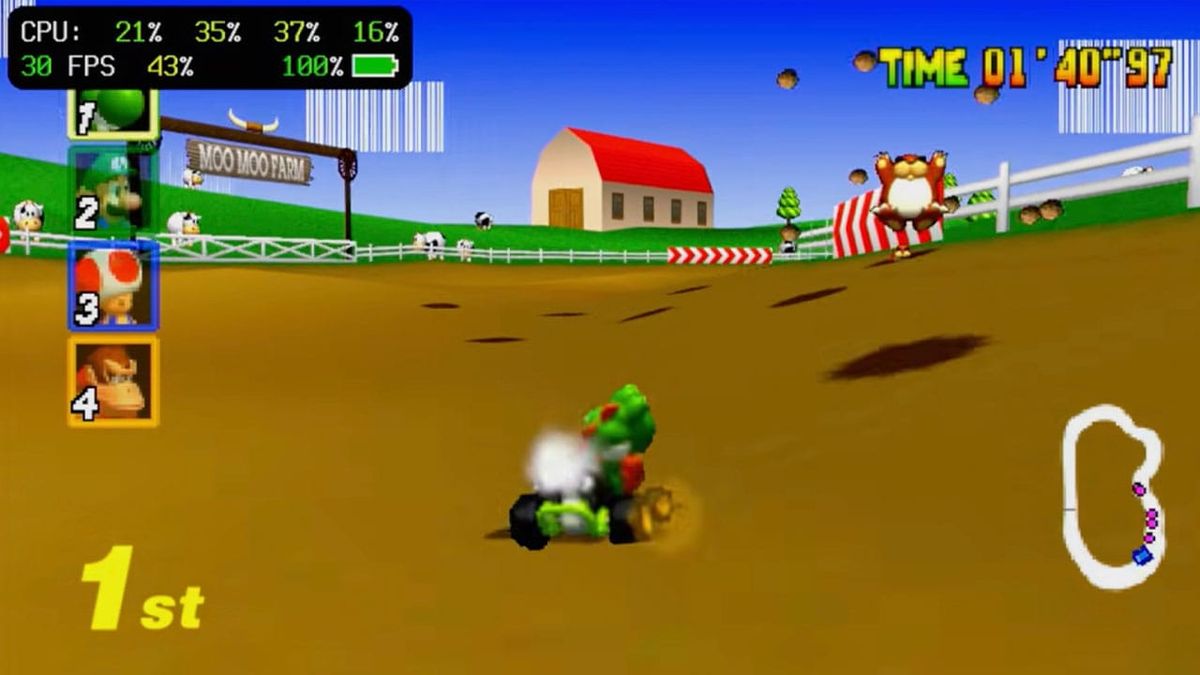
The latest footage emerging from the project offers a compelling glimpse into the current state of Spaghetti Kart. Demonstrating gameplay through the entirety of the Mushroom Cup, the port exhibits a surprising level of polish and fluidity. This visual evidence suggests that Rinnegatamante is meticulously refining the game’s performance, aiming to deliver an experience that closely mirrors the original Nintendo 64 title, but within the convenient form factor of the Vita. The smooth execution of races, the responsive controls, and the faithful recreation of iconic tracks like Moo Moo Farm, as depicted in accompanying visuals, are all testaments to the considerable effort being invested in this project.
A Legacy of Handheld Emulation and Fan Innovation
The journey of Spaghetti Kart on the PS Vita is not an isolated incident but rather a continuation of a broader trend within the retro gaming community. For years, dedicated developers have sought to bring beloved classic games to modern platforms, often through unofficial ports and emulators. The PS Vita, with its relatively powerful hardware and open-source capabilities, has become a particularly fertile ground for such endeavors. Unlike official emulation efforts, which are often subject to licensing and legal constraints, fan-made ports leverage the ingenuity of individuals to overcome technical hurdles and unlock new possibilities for accessing cherished gaming experiences.
The history of emulating Nintendo 64 titles on various platforms is itself a testament to the enduring appeal of the console’s groundbreaking 3D graphics and innovative gameplay. Early attempts often struggled with accuracy, performance, and compatibility issues. However, advancements in emulation techniques and increased processing power have gradually made it feasible to run N64 games with greater fidelity. Spaghetti Kart represents a significant achievement in this lineage, particularly in its successful adaptation for a handheld device. The technical challenges of porting a 64-bit era console game to a different architecture, such as the Vita’s ARM-based processor, are substantial. These challenges include optimizing graphics rendering, accurately emulating the N64’s unique sound hardware, and ensuring precise input handling for a console that differs significantly from the original controller.
The Genesis of Spaghetti Kart and Rinnegatamante’s Contribution
The development of Spaghetti Kart is attributed to Rinnegatamante, a developer who has become a recognized figure within the PS Vita homebrew scene. His previous work, including the successful port of The Legend of Zelda: Majora’s Mask, demonstrated a keen understanding of the Vita’s architecture and a commitment to delivering high-quality gaming experiences. The decision to tackle Mario Kart 64, a game known for its fast-paced action and competitive multiplayer, presented a distinct set of challenges. Mario Kart 64 was a landmark title for its time, introducing features like analog control, item-based racing, and a revolutionary four-player split-screen mode. Replicating these aspects on a portable device requires meticulous attention to detail.
Rinnegatamante’s approach appears to prioritize core gameplay functionality and performance. While the current build, as evidenced by initial gameplay footage, still exhibits minor visual glitches, particularly in the skybox rendering, the fundamental smoothness of the gameplay is a strong indicator of the project’s viability. This focus on playable performance over absolute graphical perfection in the early stages is a common and often effective strategy in game development, especially for ambitious fan projects. The fact that the game is running at a stable frame rate during races, allowing players to navigate the tracks and utilize items effectively, suggests that the underlying engine is robust.
Chronology of Development and Future Prospects
While a precise, publicly documented timeline for Spaghetti Kart’s development is not readily available, its emergence can be contextualized within Rinnegatamante’s ongoing contributions to the PS Vita scene. Following the successful release of the Majora’s Mask port, the announcement of Spaghetti Kart as a subsequent project indicated a clear direction for the developer: bringing more seminal N64 titles to the Vita. The progression from initial announcement to playable footage of the Mushroom Cup suggests a steady pace of development.
The current state of the project, characterized by playable gameplay with minor graphical imperfections, positions it in a crucial development phase. This stage typically involves extensive testing, bug fixing, and optimization. The presence of visual anomalies in the sky, while noticeable, is often among the easier elements to address in later stages of development, especially when compared to fundamental gameplay mechanics or performance issues.
The implications of a successful Spaghetti Kart port are significant for the PS Vita community. It would mean:

- Enhanced Portability for a Classic: Mario Kart 64 is a game that thrives on quick play sessions and social gaming. A portable version allows fans to enjoy it on the go, during commutes, or in casual settings, fulfilling a long-held desire for a portable N64 experience.
- Expanding the Vita’s Retro Library: Each successful port adds another valuable title to the Vita’s burgeoning library of classic games, further cementing its status as a premier device for retro enthusiasts.
- Inspiration for Other Developers: The success of Spaghetti Kart could inspire other developers to undertake similar ambitious projects, potentially leading to ports of other N64 or even GameCube titles.
Technical Considerations and Challenges
Porting a game like Mario Kart 64 involves overcoming several technical hurdles. The Nintendo 64’s architecture, with its unique graphics processor and memory management, presents specific challenges for emulation. Key among these are:
- Graphics Rendering: The N64 utilized a Z-buffer for depth buffering, texture perspective correction, and anti-aliasing techniques that were advanced for their time. Replicating these effects accurately on the Vita’s GPU requires careful programming and optimization. The glitches observed in the sky might stem from issues with texture mapping, transparency effects, or the handling of distant objects.
- CPU Emulation: The N64’s MIPS R4300 CPU needs to be accurately emulated, or its instruction set translated, to run on the Vita’s ARM processor. This process is computationally intensive and requires efficient code to achieve playable frame rates.
- Input and Control Mapping: The N64 controller’s analog stick and unique button layout need to be mapped to the Vita’s controls. This includes ensuring that the analog sensitivity and button responsiveness are as close as possible to the original experience.
- Audio Synthesis: The N64 had a distinct sound chip, and accurately emulating its output, including the characteristic reverb and audio effects, is crucial for a complete retro experience.
- Memory Management: The N64’s memory architecture and the use of the Expansion Pak (which was optional for Mario Kart 64 but vital for other titles) add layers of complexity to porting.
The current progress suggests that Rinnegatamante has made significant headway in addressing these challenges. The smooth gameplay implies that the core CPU and graphics emulation are functioning well, and the input mapping is likely satisfactory for players. The remaining visual glitches are often the result of fine-tuning specific rendering pipelines or asset loading.
Community Reaction and Future Outlook
The announcement and subsequent demonstration of Spaghetti Kart have been met with enthusiastic responses from the PS Vita community. Forums and social media platforms dedicated to the console have been abuzz with discussions, with many expressing their anticipation for the game’s eventual release. The developer’s commitment to transparency, by sharing footage and updates, has fostered a sense of trust and excitement.
While no official release date has been announced, the visible progress indicates that Spaghetti Kart is moving towards a stable, playable state. The current focus on the Mushroom Cup suggests that other cups, and potentially multiplayer modes, are also in development or planned for future updates. The possibility of a fully functional Mario Kart 64 experience on the Vita represents a significant achievement for the homebrew community and a powerful testament to the enduring appeal of both the game and the hardware it’s being brought to.
For fans of Mario Kart 64 and the PlayStation Vita, Spaghetti Kart represents a beacon of hope. It underscores the power of dedicated developers and the vibrant ecosystem that continues to thrive around older gaming hardware. As Rinnegatamante continues his work, the prospect of a portable N64, powered by the humble yet capable PS Vita, inches closer to reality, promising countless hours of nostalgic racing fun. The journey from initial concept to a polished port is often long and arduous, but the progress shown thus far by Spaghetti Kart suggests that this particular pasta-themed racing adventure is well on its way to being served.