Chalid Lutfie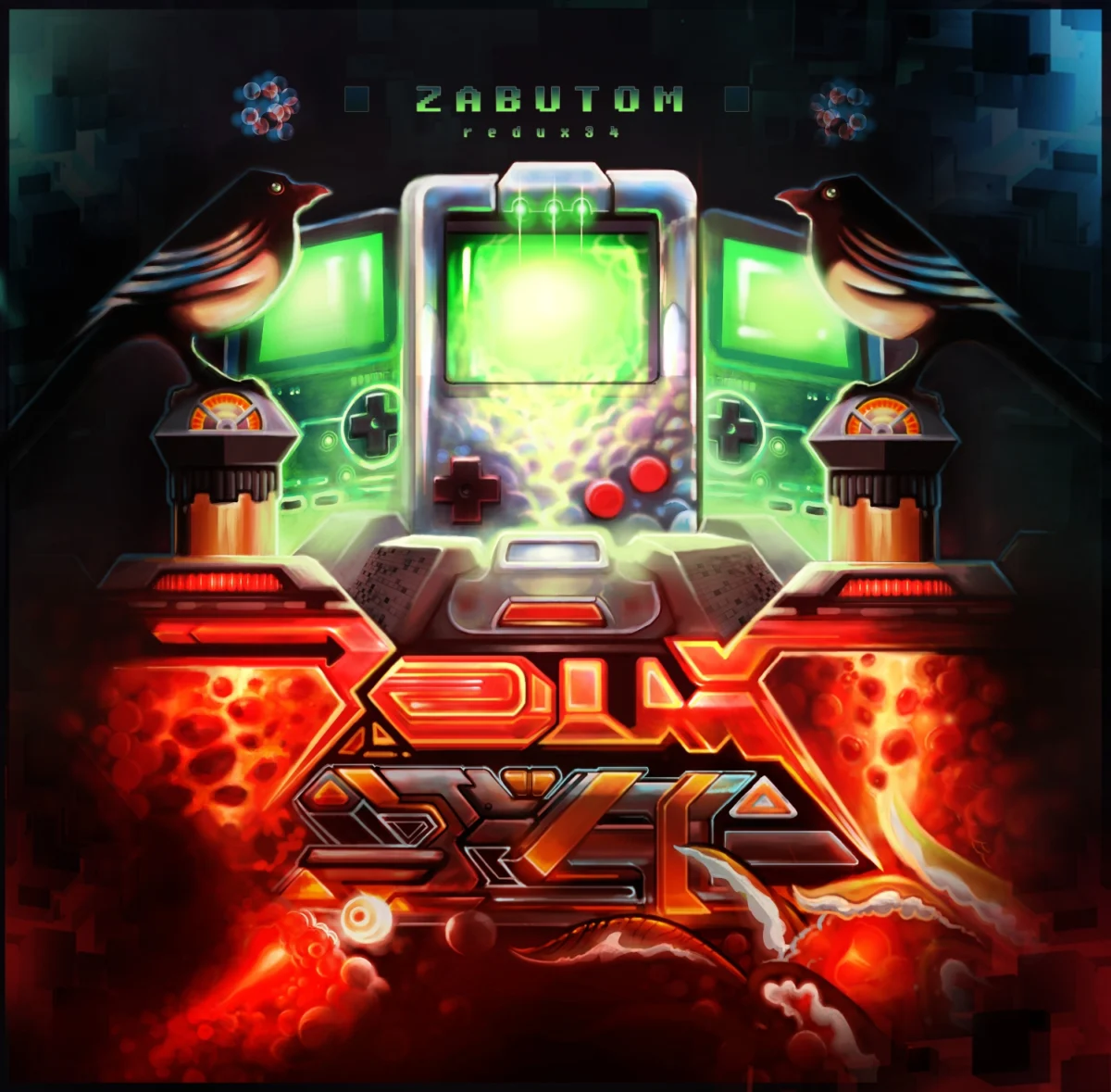
The release of Redux34 on September 18, 2015, marks a pivotal moment in the career of Niklas Sjösvärd, the Swedish composer known globally by his stage name zabutom. Issued through the Ubiktune label, the album represents a sophisticated departure from traditional 8-bit limitations, integrating elements of progressive rock, Intelligent Dance Music (IDM), and folk into a cohesive electronic narrative. The project is the culmination of seven years of development, reflecting both technical perseverance and the academic maturation of its creator. As a veteran of the international chiptune and demoscene communities, Sjösvärd’s latest work serves as a bridge between the niche world of hardware-restricted synthesis and the broader landscape of contemporary electronic composition.
The Artistic Evolution of Niklas Sjösvärd
Niklas Sjösvärd, born in 1985, has been a fixture of the Swedish electronic music scene since the early 2000s. His trajectory is deeply rooted in the European demoscene—a computer art subculture focused on producing self-contained programs that generate audio and visual content in real-time. This background provided the technical foundation for his early work, which primarily utilized the sound chips of vintage gaming consoles like the Nintendo Entertainment System (NES) and the Nintendo Game Boy.
Sjösvärd’s debut major release, Zeta Force (2011), established his reputation for high-energy, "shmup-esque" (shoot ’em up) compositions. These tracks were characterized by the rapid-fire arpeggios and driving rhythms typical of 1980s arcade soundtracks. However, Sjösvärd’s ambitions extended beyond the nostalgia of retro gaming. In 2014, he earned a Bachelor of Arts in composition and electronic music from the Academy of Music and Drama at the University of Gothenburg. This formal education in music theory and electronic orchestration is evident in Redux34, where the raw, square-wave textures of the 8-bit era are tempered by sophisticated harmonic structures and high-fidelity production values.
Technical Development and the Redux34 Chronology
The origins of Redux34 date back to 2008, a period when Sjösvärd began performing extensively at international chiptune festivals. At the time, his primary tool was Little Sound Dj (LSDJ), a tracker-based software cartridge for the Nintendo Game Boy. The development of the album’s title track provides a window into the precarious nature of hardware-based electronic music production.
In 2008, as Sjösvärd was finalizing the foundational patterns for the track "Redux34," a critical hardware failure occurred. The LSDJ cartridge crashed, resulting in the total loss of all stored music data. This incident necessitated a complete reconstruction of the piece from memory. The title "Redux" refers to this act of recreation, while the "34" denotes the track’s 3/4 time signature—a rhythmic choice more common in waltzes and progressive rock than in the 4/4-dominated world of electronic dance music.
This theme of loss and reconstruction became a recurring motif throughout the seven-year production cycle. Sjösvärd reported multiple instances of lost patterns, corrupted settings, and discarded mixes. The extended timeline allowed the artist to incorporate his growing expertise in other musical domains, including modular synthesis with the "Buchla Boys" collective and acoustic folk performances with acts such as Fowlcloud and Léonore Boulanger. Consequently, Redux34 is not merely a collection of songs but a chronological record of an artist finding his way back to his digital roots after years of multi-instrumental exploration.
Genre Synthesis and Production Architecture
Stylistically, Redux34 moves away from the straightforward melodic structures of Sjösvärd’s earlier work. The album is characterized by a "retro-futuristic" aesthetic that blends 8-bit synthesis with modern recording techniques. This is achieved through a meticulous layering process where the distinct "bleeps" of the NES and Game Boy are integrated with electric guitars, analog synthesizers, and expansive delay textures.

Integration of Progressive Rock and IDM
The influence of progressive rock is felt in the complex arrangements and shifting time signatures found throughout the album. Unlike standard chiptune tracks that often rely on repetitive loops, Redux34 utilizes long-form structures that evoke a sense of journey or narrative. The inclusion of live electric guitars adds a physical, organic weight to the digital compositions, creating a sonic contrast between the rigid precision of the computer and the expressive fluidity of the human performer.
The IDM influence is manifest in the album’s intricate percussion and sound design. Sjösvärd employs "glitch" aesthetics—intentional digital artifacts and stuttering rhythms—to create a sense of mechanical complexity. This approach aligns the album with the works of artists such as Aphex Twin or Autechre, albeit through the unique lens of 8-bit hardware.
Folk and Melancholic Narratives
A surprising element of Redux34 is its folk-inspired composition. Sjösvärd’s experience as a guitarist and vocalist in acoustic acts informs the melodic sensibilities of the album. The music is described as conjuring "strange new worlds," maintaining a balance between a sense of melancholic longing and a resilient, hopeful undertone. This emotional depth is often cited as a distinguishing factor in Sjösvärd’s work, elevating it above the purely technical displays common in the genre.
Visual Identity and Collaborative Efforts
The aesthetic presentation of Redux34 was curated to complement its complex soundscapes. The album features original artwork by Anders Karlsson, a concept artist and painter based in Norrköping, Sweden. Karlsson’s visual style—often characterized by atmospheric landscapes and mysterious, technological artifacts—serves as a visual counterpart to the "mysterious, somewhat melancholic" story Sjösvärd aimed to tell through the music.

The collaboration highlights the interdisciplinary nature of the Swedish creative scene, where electronic musicians and visual artists often work in tandem to create immersive multimedia experiences. The artwork serves not just as a cover but as a gateway into the "retro-futuristic" world Sjösvärd envisioned during the album’s long gestation period.
The Role of Ubiktune and the Chiptune Market
The release of Redux34 through Ubiktune underscores the label’s role as a leader in the "progressive chiptune" movement. Based on the philosophy of expanding the boundaries of what 8-bit music can be, Ubiktune has provided a platform for artists who seek to move beyond the limitations of vintage hardware while still honoring its unique sound.
In the broader context of the 2015 music market, Redux34 arrived at a time when chiptune was transitioning from a niche internet subculture into a recognized tool in the palette of mainstream pop and electronic producers. However, while mainstream artists often use 8-bit sounds as a superficial novelty, artists like Sjösvärd treat the hardware as a legitimate instrument requiring the same level of mastery as a violin or a piano.
Broader Impact and Implications
The release of Redux34 has implications for both the chiptune community and the wider electronic music world. For the chiptune scene, it demonstrates that "chip music" is a viable medium for complex, high-concept albums that can stand alongside traditional electronic genres. It challenges the notion that 8-bit music is inherently tied to gaming, positioning it instead as a unique form of synthesis with its own distinct timbral qualities.

For the wider music industry, Sjösvärd’s work highlights the increasing blur between "high art" academic composition and "low art" digital subcultures. By bringing his degree in electronic music from the Academy of Music and Drama into the world of Game Boy trackers, Sjösvärd validates the technical and artistic merit of the demoscene.
Redux34 is currently available across all major digital distribution platforms and streaming services. In a nod to the tactile nature of the music’s origins, the album was also produced in a physical CD format, catering to a dedicated fanbase that values the physical artifacts of the digital age. As Sjösvärd continues his career, Redux34 will likely be remembered as the project that redefined his sound, proving that even when data is lost and patterns are erased, the core of a musical vision can be rebuilt into something more significant than the original.