Chalid Lutfie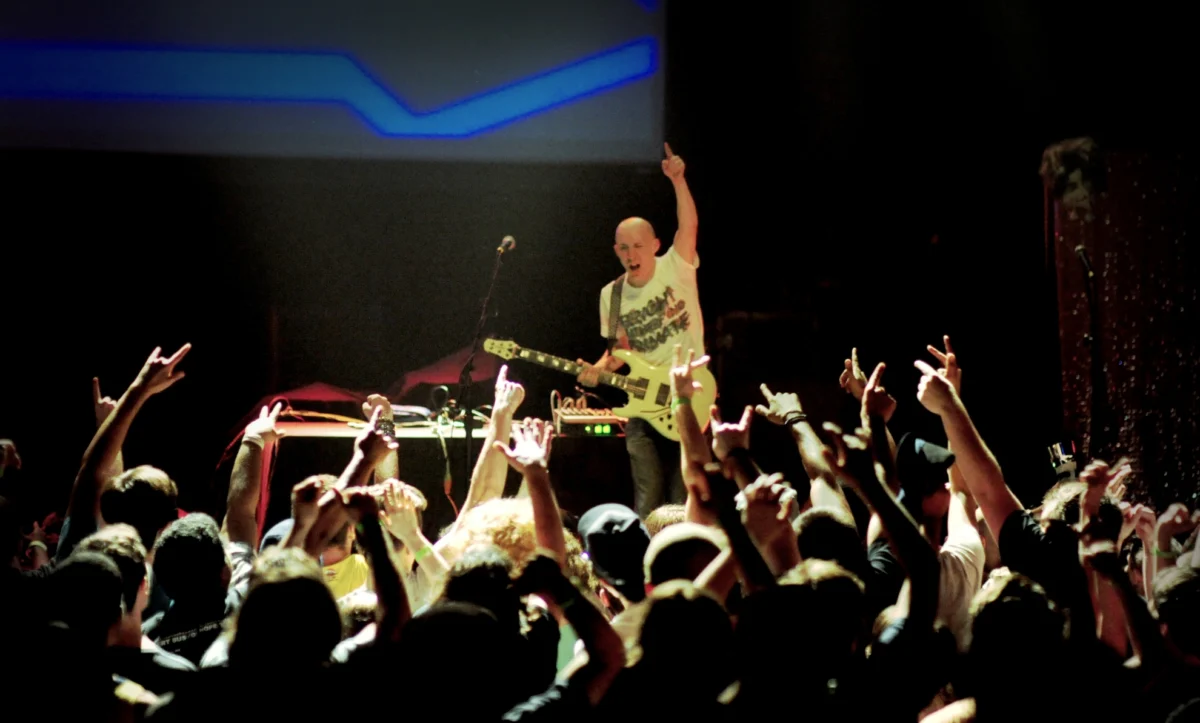
The landscape of contemporary progressive music is set to expand with the announcement of Lunaria, the latest full-length studio effort from the prolific composer and multi-instrumentalist Danimal Cannon, also known as Dan Behrens. Arriving three years after his high-profile collaboration with Zef on the album Parallel Processing, Lunaria represents a significant milestone in Behrens’ career, marking the culmination of a half-decade of technical refinement and stylistic experimentation. The album, slated for a March 11 release, is positioned as the definitive realization of Behrens’ signature sound: a complex, high-energy fusion of Game Boy-based chiptune synthesis and virtuosic electric guitar performance. While Behrens has long been recognized for his high-octane live performances that bridge the gap between retro-gaming aesthetics and heavy metal, Lunaria serves as the first studio recording to fully integrate these two disparate sonic worlds into a cohesive, progressive narrative.
Evolution of a Signature Sound: From Roots to Lunaria
The journey toward Lunaria began shortly after the release of Behrens’ 2011 debut solo album, Roots. During that period, Behrens began experimenting with the logistical and harmonic challenges of pairing the 8-bit limitations of the Nintendo Game Boy with the expansive, organic textures of the electric guitar. While Roots featured early attempts at this hybridization, Behrens has since acknowledged that the integration was initially difficult to execute with the level of cohesion he desired. At the time, the technical constraints of chiptune hardware—specifically the pulse wave and noise channels of the Game Boy’s Ricoh 2A03-compatible sound chip—often clashed with the overtones and sustain of a distorted guitar.
In the five years since Roots, Behrens dedicated himself to mastering the compositional techniques required to marry these instruments. This involved a deep dive into frequency management and arrangement, ensuring that the chip-generated melodies and the live instrumentation occupied distinct yet complementary spaces within the mix. The result, as showcased in Lunaria, is a sound that Behrens describes as a "new band lineup that really gels." The album moves beyond the novelty of "chip-metal" to establish a legitimate progressive metal framework where the Game Boy acts not merely as a background texture, but as a lead polyphonic instrument capable of holding its own against complex guitar riffs and percussion.
Conceptual Foundations: The Giant Impact Hypothesis
Beyond its technical achievements, Lunaria is a concept album rooted in Behrens’ personal interest in astrophysics and planetary science. The narrative arc of the record is informed by the "giant impact hypothesis," the prevailing scientific theory regarding the formation of the Moon. According to this hypothesis, approximately 4.5 billion years ago, a Mars-sized protoplanet—often referred to by scientists as Theia—collided with the early Earth (Gaia). The resulting debris from this cataclysmic event eventually coalesced in Earth’s orbit to form the Moon.
Behrens has personified this celestial event through the character of Lunaria, a representative of the impactor and the subsequent lunar body. The title itself serves a dual purpose, functioning both as a name and a linguistic play on "Lunar-aria," suggesting a vocal or melodic lament centered on the moon. This thematic depth provides a dramatic backdrop for the album’s compositions, allowing the music to oscillate between the violent energy of planetary collision and the ethereal stillness of space. By grounding the album in scientific theory, Behrens elevates the work from a collection of songs to a cohesive piece of storytelling that mirrors the grandiosity of the progressive metal genre.
Collaborative Contributions and Vocal Artistry
While Lunaria is primarily a showcase for Behrens’ instrumental prowess, the album features significant contributions from guest artists who bring additional layers of classical and avant-garde sophistication to the project. A central figure in the album’s narrative delivery is Emily Yancey, a professionally trained opera singer. Behrens’ decision to cast Yancey was driven by a desire for a specific vocal timbre that could convey the "celestial" and "god-like" nature of the Lunaria character. Her performance provides a stark, human contrast to the digital rigidity of the Game Boy, bridging the gap between the ancient tradition of the aria and the modern frontier of electronic music.
The album also features a notable performance by Samuel Ascher-Weiss, better known in the experimental and chiptune communities as Shnabubula. A long-time collaborator of Behrens, Ascher-Weiss contributed a piano rendition of the track "Axis." Chosen for its inherent complexity, "Axis" was described by Behrens as the most challenging composition on the record. The inclusion of a solo piano version serves a strategic purpose in the album’s sequencing, offering a "breathtaking" acoustic counterpoint to the digital density of the original track. This juxtaposition highlights the strength of the underlying composition, proving that the melodic structures of Behrens’ work remain robust whether performed on a 1989 handheld console or a traditional grand piano.
Musical Influences: From Mozart to Industrial Metal
The sonic palette of Lunaria is remarkably diverse, reflecting Behrens’ wide-ranging musical influences. While the album is firmly rooted in the metal tradition, it draws heavily from several distinct genres:
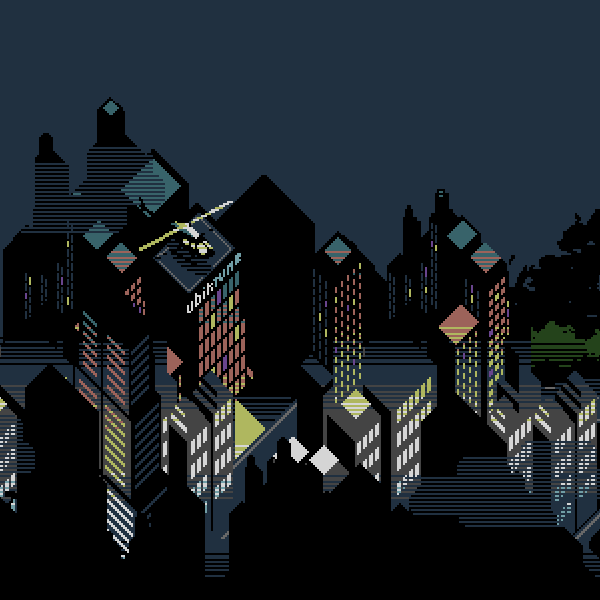
- Video Game Soundtracks: The influence of modern indie game music, specifically the melodic sensibilities of the Shovel Knight original soundtrack (composed by Jake Kaufman), is evident in the album’s lead lines and rhythmic structures.
- Industrial and Alternative Rock: The gritty, rhythmic textures of Nine Inch Nails and the driving, mechanical energy of KMFDM inform the album’s darker moments and its approach to percussion and synthesizer integration.
- Indie Rock: The experimental spirit of acts like Buke and Gase, known for their use of handmade instruments and unconventional tunings, encouraged Behrens to push the boundaries of his own gear.
- Classical and Choral Music: The structural logic of Wolfgang Amadeus Mozart and the lush, harmonic density of contemporary choral composer Eric Whitacre played a role in how Behrens approached the album’s arrangements and vocal harmonies.
By synthesizing these influences, Lunaria avoids the repetitive tropes of both the chiptune and metal genres, instead offering a multifaceted listening experience that appeals to fans of technical proficiency and emotional resonance alike.
Chronology of Development
The timeline of Lunaria’s creation illustrates the meticulous nature of Behrens’ creative process:
- 2011: Release of Roots. Behrens begins performing Game Boy tracks with live guitar but finds the recorded integration difficult.
- 2012–2013: Behrens tours extensively, refining the "live" sound of the Game Boy/guitar hybrid. He collaborates with Zef on Parallel Processing, further honing his production skills.
- 2014: Intensive writing for Lunaria begins. Behrens starts developing the "Giant Impact" concept and begins drafting the character of Lunaria.
- 2015: Recording and collaboration phase. Emily Yancey and Shnabubula record their respective parts. Behrens focuses on the "Axis" composition and the lead single "Behemoth."
- Early 2016: Final mixing and mastering. Artwork is commissioned from Minerva Mopsy to capture the celestial themes of the record.
- March 11, 2016: Official release date for Lunaria.
Technical Innovation in Chiptune Composition
A critical aspect of Lunaria is its use of the Nintendo Game Boy as a primary synthesizer. Unlike modern software synthesizers that offer near-infinite voices and effects, the Game Boy is limited to four channels: two pulse-wave channels, one custom wave channel (often used for bass or low-resolution samples), and one noise channel.
Writing progressive metal within these constraints requires a high degree of mathematical precision. To achieve the "heavy" sound found in tracks like the lead single "Behemoth," Behrens employs advanced techniques such as rapid arpeggiation to simulate chords and precise noise-channel manipulation to emulate the transients of a drum kit. When layered with the organic sustain of a multi-tracked electric guitar, the result is a wall of sound that feels both nostalgic and futuristic. This technical mastery has positioned Behrens as a leading figure in the "chip-prog" movement, a micro-genre that emphasizes high-level musicianship within the context of hardware-limited synthesis.
Distribution and Visual Identity
The visual presentation of Lunaria is handled by artist Minerva Mopsy, whose work captures the ethereal and dramatic tone of the album’s conceptual narrative. The artwork is featured prominently in the physical CD release, which includes a dedicated poster for collectors. This emphasis on physical media reflects a broader trend within the independent and chiptune communities, where fans value tangible artifacts that complement the digital listening experience.
Pre-orders for the album have been launched via Bandcamp, a platform that has become the primary hub for the independent chiptune scene. The release strategy includes a digital version for global accessibility and a physical CD format, catering to the audiophile and collector markets.
Industry Impact and Genre Synthesis
The release of Lunaria is expected to have a significant impact on the chiptune and progressive metal communities. For years, chiptune was often relegated to the realm of "novelty" or "geek culture," but artists like Danimal Cannon are challenging these perceptions by demonstrating that the medium is capable of supporting complex, high-concept musical works.
Industry analysts and peers suggest that Behrens’ ability to bridge the gap between the gaming community and the metal scene provides a blueprint for future cross-genre experimentation. By integrating operatic vocals, classical piano, and scientific theory into a framework of 8-bit sound and heavy metal, Lunaria stands as a testament to the blurring lines of modern music production. It asserts that the tools used to create music—whether they are 30-year-old gaming consoles or traditional orchestral instruments—are secondary to the vision and technical skill of the composer. As March 11 approaches, the anticipation for Lunaria continues to build, marking it as one of the most unique and technically ambitious releases in the current independent music landscape.