Chalid Lutfie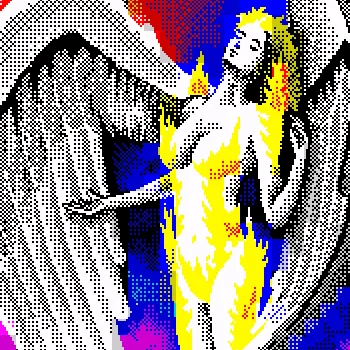
The release of Still Flying represents a pivotal moment in the evolution of the 8-bit music scene, serving as the debut full-length album from the prolific composer C-Jeff, also known as Dmitry Zhemkov. Composed entirely within the constraints of the year 2002, the album was crafted using original ZX Spectrum hardware, a microcomputer that, despite its 1980s origins, remained a cornerstone of creative expression in Eastern Europe and Russia well into the 21st century. Utilizing the Pro Tracker 3 music editor, C-Jeff developed a collection of tracks that he categorized as "lyric music novels," a descriptor that emphasized a shift from the purely technical or aggressive styles often associated with the demoscene toward a more melodic, narrative, and emotive form of chiptune artistry.
The Technical Foundations and Pro Tracker 3 Composition
To understand the significance of Still Flying, one must examine the technical limitations and the specific hardware environment of the time. The ZX Spectrum 128K models, which were the standard for chiptune production in the early 2000s, utilized the AY-3-8912 programmable sound generator (PSG). This chip provided three channels of square-wave sound and a single noise generator. Unlike modern digital audio workstations that offer infinite tracks and effects, the AY chip forced composers to utilize intricate programming techniques to simulate echoes, chords, and complex percussion.
C-Jeff’s choice of Pro Tracker 3 (PT3) as his primary tool was instrumental in defining the album’s sonic character. Pro Tracker 3 was one of the most advanced "trackers" available for the ZX Spectrum, allowing for sophisticated control over envelope shapes, pitch slides, and ornament tables. Composing on a real ZX Spectrum meant dealing with the physical realities of the hardware—the rubber or plastic keys, the specific clock speed of the Z80 processor, and the unique output characteristics of the AY chip. This authenticity ensured that Still Flying was not merely a simulation of 8-bit sound but a true artifact of the machine’s capabilities.
The album’s subtitle, "lyric music novels," reflects C-Jeff’s approach to track structure. Rather than focusing on repetitive dance loops, the compositions in Still Flying often feature progressive movements, shifting harmonies, and a sense of storytelling. This stylistic choice helped bridge the gap between the technical "show-off" nature of the demoscene and the broader world of electronic music.
Chronology of Production and Competitive History
The production timeline of Still Flying is deeply intertwined with the demoscene calendar of 2002, a year of high activity for European computer art festivals. The album was not conceived in a vacuum but was shaped by the competitive environment of demoparties, where programmers and musicians gathered to showcase their latest works.
In mid-2002, C-Jeff participated in the CAFe 2002 demoparty, an event that was central to the Russian and Eastern European scene. For this competition, he submitted the track "My Mind is Free." Due to a then-limited proficiency in the English language, the track was originally titled and released as "My mind free." The composition entered the ZX Spectrum AY Music competition, where it faced stiff rivalry from other veteran composers. It ultimately secured 13th place. While not a podium finish at the time, the track’s inclusion in Still Flying immediately following the party allowed it to be recontextualized within the broader narrative of the album, eventually becoming one of the most recognizable pieces in C-Jeff’s early discography.
Later in the same year, another significant track emerged from the same creative sessions. "Lonely Soul" was written during the core production period of Still Flying and maintained the same atmospheric and melodic direction as the rest of the project. This track was entered into the Paradox 2002 demoparty. The reception at Paradox was significantly more favorable, with "Lonely Soul" earning 2nd place in the ZX Spectrum AY Music competition. This success validated the "lyric music novel" approach and established C-Jeff as a rising force in the international chiptune community. Although "Lonely Soul" was not part of the initial track list during the very first stages of planning, its shared DNA with the rest of the 2002 compositions made its eventual inclusion an essential component of the album’s legacy.
The Musicdisk Release and Collaborative Credits
Approximately 18 months after the completion of the music, Still Flying was elevated from a collection of audio files to a fully realized software product known as a "musicdisk." In the context of the ZX Spectrum community, a musicdisk is a standalone executable program that allows users to listen to an album while viewing custom graphics and synchronized visual effects on the original hardware.
The creation of the Still Flying musicdisk was a collaborative effort involving several prominent figures in the scene:
- Vortex: Responsible for the coding of the musicdisk engine. The code had to be highly optimized to allow for the simultaneous playback of PT3 modules while maintaining a stable frame rate for the visual components.
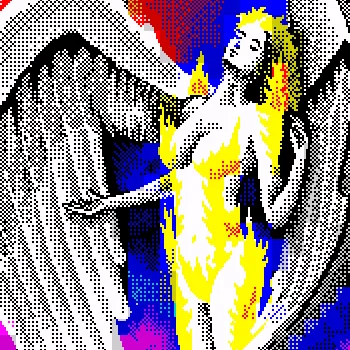
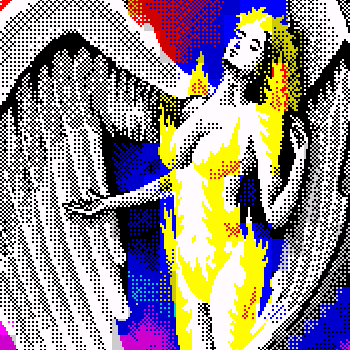
- Schafft: Provided the artwork and visual design. The graphical constraints of the ZX Spectrum—specifically its "attribute clash" which limits colors within 8×8 pixel blocks—required a high level of skill to produce the evocative imagery that accompanied C-Jeff’s music.
- Poisoned CyberJack: Handled the packing and distribution logistics of the software, ensuring that the disk image was compressed and formatted correctly for both real hardware and the emerging wave of ZX Spectrum emulators.
Furthermore, the audio quality of the album was refined through the involvement of MmcM (Sergey Kosov), a legendary figure in the chiptune world. MmcM provided mastering services, ensuring that the frequency balance of the AY chip’s output was optimized for modern listening environments while preserving the raw, nostalgic character of the 8-bit hardware.
Supporting Data and Technical Specifications
The release of Still Flying arrived at a time when the ZX Spectrum scene was transitioning from physical floppy disk exchanges to internet-based distribution. Data from the era suggests that while the hardware was technically obsolete by commercial standards, the creative output was peaking.
- Platform: ZX Spectrum 128K
- Sound Chip: AY-3-8910 / AY-3-8912
- Frequency: 1.75 MHz (standard for the AY chip on Spectrum hardware)
- Software Used: Pro Tracker 3.x
- File Format: .pt3 (Pro Tracker 3 modules)
- Competition Success: 2nd Place at Paradox 2002; 13th Place at CAFe 2002.
The album’s longevity is evidenced by its subsequent migration to digital platforms. While originally intended for the ZX Spectrum, the album was later made available on Bandcamp and other streaming services, allowing a new generation of listeners to experience the 2002 compositions with the clarity of modern digital mastering. This transition highlights the enduring appeal of the "lyric music novel" concept, which prioritizes musicality over the specific hardware used to generate the sound.
Official Responses and Scene Implications
The release of Still Flying had a ripple effect across the demoscene. At the time, many ZX Spectrum musicians were focused on high-tempo, "techno" influenced tracks that pushed the AY chip to its limits in terms of percussion and speed. C-Jeff’s focus on melody and emotional depth provided an alternative path for the genre.
While official press releases in the modern sense did not exist for niche 8-bit albums in 2002, the feedback within the "Pouet" and "Demozoo" communities—the primary archives for demoscene activity—indicates that Still Flying was viewed as a landmark debut. Critics and peers noted that C-Jeff’s work managed to evoke a sense of "space" and "atmosphere" that was rarely achieved on a machine with such limited memory and processing power.
The success of "Lonely Soul" at Paradox 2002, in particular, was cited by many as a turning point. It proved that the "lyric" style could compete with more technically aggressive entries. This encouraged other composers to experiment with longer, more complex melodic structures, contributing to what some historians call the "Second Golden Age" of ZX Spectrum music in the early 2000s.
Broader Impact and Implications for Modern Chiptune
Looking back from a contemporary perspective, Still Flying is more than just a debut album; it is a historical record of a specific cultural moment. It demonstrates the resilience of 8-bit technology and the ability of artists to find profound expression within extreme limitations.
The album served as a springboard for C-Jeff’s career, leading to his involvement in various high-profile projects, including game soundtracks and international chiptune festivals. His transition from the ZX Spectrum to modern production tools never fully abandoned the lessons learned during the 2002 sessions. The "lyric music novel" philosophy continues to be a hallmark of his work, characterized by a sophisticated understanding of harmony and a refusal to be pigeonholed by the sounds of a specific era.
In the broader context of electronic music, Still Flying stands as a testament to the importance of the demoscene as a training ground for musical innovation. The collaborative nature of the musicdisk—bringing together coders, artists, and musicians—foreshadowed the multi-disciplinary nature of modern digital art. As chiptune continues to influence mainstream pop, indie games, and electronic dance music, the foundations laid by albums like Still Flying remain essential study for understanding how the marriage of man and machine can produce works of lasting emotional resonance.
Today, Still Flying remains a staple of the ZX Spectrum discography. Its availability on modern platforms ensures that the 2002 "lyric music novels" continue to fly, reaching ears far beyond the original community of enthusiasts who first heard these tracks through the buzzing speakers of a CRT television. The album remains a definitive example of how technical constraints do not limit creativity but rather provide the very framework upon which timeless art can be built.