Jia Lissa
In the summer of 1980, the global amusement industry stood at a crossroads between the traditional electro-mechanical era and the rapidly accelerating digital age. In a definitive interview with the Japanese trade publication Game Machine, Hayao Nakayama, then the Executive Vice President and Representative Director of Sega Enterprises, Ltd., outlined a comprehensive vision for the company’s future. His remarks provided a rare glimpse into the internal mechanics of a firm that was transforming from a regional coin-op distributor into a global powerhouse of interactive entertainment. As the industry grappled with shifting consumer tastes, international trade complexities, and the rise of software piracy, Nakayama’s strategic directives signaled a pivot toward aggressive technological adoption and global corporate integration.
The Corporate Architecture of the Sega-Gulf & Western Era
The administrative structure of Sega in 1980 was a complex web of international ownership that reflected the era’s trend of corporate diversification. Since 1974, Sega Enterprises, Ltd. had operated as a vital component of the Gulf & Western (G&W) Corporation, a massive American conglomerate that, at the time, ranked 52nd in the United States with annual sales of $5.3 billion. Nakayama clarified that while Sega was functionally integrated into this New York-based empire, its technical hierarchy was multi-layered. Sega of America (Sega Enterprises, Inc.), led by David Rosen, served as the primary link to G&W, with Sega of Japan operating as a subsidiary of the American entity.
This structure allowed for a "grandchild company" status that facilitated rapid expansion. Nakayama highlighted that the group had been aggressively acquiring assets to bolster its manufacturing and distribution capabilities. In 1976, the group acquired the American firm Gremlin Industries, followed by the 1979 acquisition of Esco Trading in Japan. This two-pronged approach established production hubs in the world’s two largest gaming markets, allowing Sega to synthesize Japanese engineering precision with American marketing and creative sensibilities. The synergy between Sega of Japan and Gremlin Industries created a unified front, where R&D efforts were shared, and products were localized to meet the specific demands of each territory.
Fiscal Performance and Operational Scale
The financial data released by Sega in early 1980 underscored the explosive growth of the arcade sector. For the fiscal year ending in April 1979, Sega of Japan reported total sales of 24 billion yen, yielding a declared income of 5.37 billion yen. These figures represented a period of unprecedented stability and growth, supported by a workforce that had expanded to 1,200 employees.

Sega’s domestic footprint in Japan was particularly robust, consisting of three major branch offices in Sapporo, Osaka, and Fukuoka, supplemented by four sales offices and 89 operational centers. This vast network highlighted Sega’s unique position in the market: it was not merely a manufacturer but also a dominant operator of game centers. Nakayama addressed the inherent tension in this dual role, noting that while Sega maintained a manufacturer-first identity, its history as an operator provided invaluable data on player behavior. He emphasized that the company’s "operator mindset" was essential for protecting the interests of independent arcade owners, as it ensured that the machines being built were sustainable and profitable in long-term deployment.
Strategic Shift Toward Television-Based Gaming
One of the most significant revelations from Nakayama was the decision to allocate 70% to 80% of Sega’s development resources toward TV-based game machines. This was a radical departure from the company’s origins in mechanical jukeboxes and electro-mechanical (EM) games. Nakayama argued that the "novelty and entertainment value" of video games had become the primary driver of the industry, surpassing the tactile appeal of traditional machines.
However, this transition was not without its cultural challenges. In 1980, the Japanese market was dominated by "tabletop" or "cocktail" style cabinets, which were frequently installed in coffee shops and small venues. In contrast, the American and European markets favored "upright" cabinets, which offered higher visibility and branding opportunities. Nakayama noted that while Sega was focusing on tabletops to satisfy domestic demand, they remained committed to the upright format for international markets. This flexibility allowed games like Head-On and Deep Scan to find success across different cabinet configurations, though Nakayama admitted that the industry was still in a period of "trial and error" regarding which physical formats would ultimately prevail.
Geographic Market Disparities and Consumer Behavior
A fascinating aspect of Nakayama’s 1980 outlook was the divergence in game popularity between Japan and the West. He pointed to Mini Monaco and Carnival as primary examples of this phenomenon. Mini Monaco, a driving game housed in a compact cabinet, was a massive hit in the United States and Europe due to its spatial efficiency and two-player competitive appeal. In Japan, however, the game failed to gain traction.
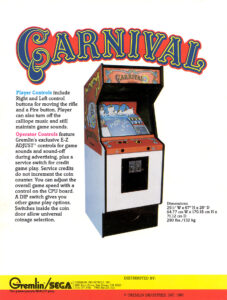
Similarly, the shooting game Carnival, designed by Lane Hauck at Gremlin, was received poorly in Japan despite Nakayama’s personal confidence in the title. Conversely, it outperformed major American hits like Atari’s Missile Command in the U.S. market. Nakayama attributed these discrepancies to "confusing factors" in consumer psychology, suggesting that the global market was far from a monolith. This necessitated a sophisticated approach to licensing; Sega frequently licensed its titles to American companies like Midway or Atari, while also bringing Western technology to Japan.

The Legal Battle Against Counterfeiting and Software Piracy
As the value of video game software skyrocketed, so did the prevalence of unauthorized "clones" and copycat boards. Nakayama identified this as the single greatest threat to the industry’s long-term health. During the "Invader boom" of the late 1970s, many operators turned to copied boards because the supply of original hardware could not meet demand. However, by 1980, the supply chain had stabilized, yet the culture of copying persisted.
Nakayama took a hardline stance, arguing that the lack of established copyright law for software was a temporary hurdle that Sega intended to overcome through litigation. He cited the landmark case where Sega/Gremlin sued Exidy over the game Head-On. Exidy’s eventual admission of fault served as a pivotal moment for the industry, empowering manufacturers to use trademark and unfair competition laws to protect their intellectual property.
Nakayama warned that the proliferation of cheap copies was a "fundamentally wrong" approach that would ultimately harm operators by devaluing the product image and driving up the costs of future hardware. He revealed that Sega was actively developing sophisticated hardware protections to make their games more difficult to copy, even if this resulted in higher retail prices for legitimate customers.
Broader Implications and the Road to the Console Era
The 1980 interview serves as a historical marker for the end of the arcade industry’s "Wild West" phase and the beginning of a more structured, corporate-driven era. Nakayama’s focus on international distribution networks and the professionalization of local distributors indicated a move toward the global "Sega" brand that would eventually challenge Nintendo in the home console market.
While the interview focused heavily on arcade operations, the seeds of Sega’s future were visible in Nakayama’s emphasis on software value over hardware aesthetics. By recognizing that the "game screen is everything," Sega began the transition from a company that sold heavy machinery to a company that sold digital experiences.
Furthermore, Nakayama’s remarks on pinball and medal games showed a pragmatic approach to diversification. While video games were the future, Sega continued to refine its traditional offerings, such as Blackjack and Faro II, to ensure a steady revenue stream from all segments of the amusement market. This balanced portfolio approach, backed by the industrial might of Gulf & Western, positioned Sega as one of the few companies capable of surviving the eventual "video game crash" of 1983 and emerging as a dominant force in the 8-bit and 16-bit eras that followed.
Conclusion: A Legacy of Global Integration
Hayao Nakayama’s 1980 directives reflected a sophisticated understanding of the interplay between technology, law, and culture. His leadership at Sega of Japan, combined with David Rosen’s oversight of Sega of America, created a cross-continental synergy that was ahead of its time. By prioritizing intellectual property rights and embracing the digital shift, Nakayama ensured that Sega would not be a mere footnote in the history of electro-mechanical amusements, but a primary architect of the modern video game industry. His call for the industry to move in a "positive direction" through better regulation and respect for originality remains a cornerstone of the gaming business more than four decades later.