Cecilia Chamidah Nur
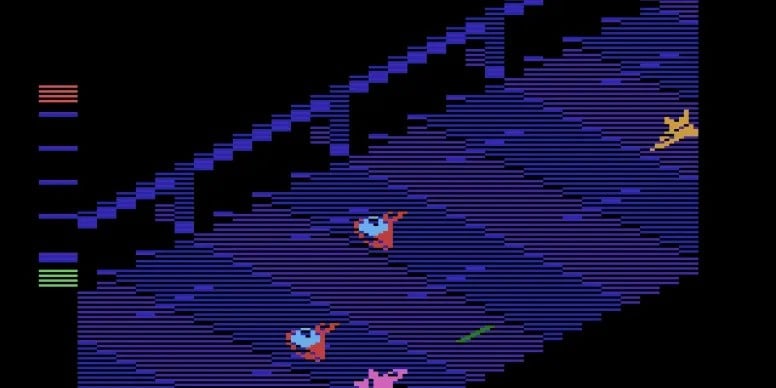
A groundbreaking unofficial port of Sega’s iconic isometric shooter, Zaxxon, is slated for release on the venerable Atari 2600 this October, promising to deliver an arcade-accurate experience previously deemed impossible on the console. Enthusiasts eager to witness this technical marvel can access a demo version immediately from the developer’s website, offering a tantalizing glimpse into what is poised to be a significant achievement in retro gaming homebrew. This ambitious project, titled Zaxxon Arcade, aims to rectify the compromises made in earlier console adaptations, leveraging cutting-edge cartridge-based hardware to achieve a level of graphical and gameplay fidelity unprecedented for the 46-year-old system.
The Genesis of an Arcade Sensation: Zaxxon’s Original Impact
Released in arcades by Sega in 1981, Zaxxon (derived from "Z-axis" and "axon," hinting at its unique perspective) was nothing short of a revelation. At a time when most video games were confined to two-dimensional planes, Zaxxon introduced players to a dynamic, pseudo-3D isometric perspective that simulated depth and height, a feature that immediately set it apart from its contemporaries. Players piloted a space fighter through a heavily fortified, floating fortress, engaging enemy aircraft and ground installations, all while meticulously managing their altitude to avoid collisions and collect fuel. This innovative visual style, combined with challenging gameplay that required precision flying and shooting, quickly propelled Zaxxon to critical acclaim and commercial success. It represented a significant leap forward in arcade game design, influencing numerous titles that followed and cementing Sega’s reputation as an innovator in the burgeoning video game industry. Its success underscored the public’s appetite for graphically advanced and immersive experiences, pushing the boundaries of what arcade hardware could achieve with dedicated processors and custom chips.
Early Home Ports: The Inevitable Compromises
Following its triumphant arcade debut, Zaxxon was a prime candidate for adaptation to the burgeoning home console and computer markets of the early 1980s. However, the technical specifications of these home systems were often vastly inferior to their arcade counterparts, leading to significant compromises during the porting process. The Atari 2600, one of the most popular home consoles of its era, presented a particularly daunting challenge. Launched in 1977, the Atari 2600 was built around the MOS 6507 microprocessor, boasting a mere 128 bytes of RAM and relying on the Television Interface Adaptor (TIA) chip for graphics and sound. Its limited resolution (160×192 pixels) and restrictive color palette made recreating Zaxxon‘s detailed isometric visuals and fluid movement a near-impossible task.
Consequently, the official Atari 2600 and Intellivision ports of Zaxxon—among others—were forced to make drastic alterations. Instead of the signature isometric viewpoint, these versions adopted a simplified third-person, behind-the-ship perspective. This fundamental change, while understandable given the hardware constraints, fundamentally altered the gameplay experience, sacrificing the sense of depth and tactical altitude management that defined the arcade original. For players who had experienced the groundbreaking visuals and immersive gameplay of the arcade cabinet, these home versions were often a source of considerable disappointment, serving as stark reminders of the technological chasm between arcade and home entertainment at the time. The fidelity gap highlighted the struggle developers faced in translating complex arcade experiences to the constrained memory and processing power of early home consoles, often resulting in games that bore only a passing resemblance to their source material.
The Renaissance of Homebrew and Fan-Driven Innovation
Decades later, a vibrant and ever-growing community of homebrew developers and retro gaming enthusiasts has emerged, driven by a passion for classic hardware and a desire to revisit and reimagine gaming history. This movement, often fueled by modern development tools and a deeper understanding of vintage hardware, seeks to push the boundaries of what was once considered impossible on these legacy systems. The motivation behind these fan-driven projects is multifaceted: to correct historical shortcomings, preserve gaming culture, and simply to explore the untapped potential of beloved consoles.
The legal and ethical landscape surrounding homebrew projects, particularly those based on copyrighted intellectual property like Zaxxon, often exists in a grey area. However, for non-commercial, fan-made creations that celebrate and extend the life of classic games, intellectual property holders like Sega often adopt a benevolent stance, recognizing the community’s role in maintaining interest in their historical catalog. This permissive environment has fostered an incredible wave of creativity, allowing developers to create new games, enhance existing ones, and, crucially, to develop "definitive" ports that accurately reflect arcade originals. This dedication to technical excellence and historical accuracy forms the bedrock of projects like Zaxxon Arcade, which represent a culmination of community effort and technological ingenuity.
Champ Games: Architects of the Impossible
Leading the charge in this endeavor is Champ Games, a collaborative effort comprising seasoned homebrew developers John Champeau, Nathan Strum, and Dave Dries. Known for their meticulous attention to detail and their ability to extract unprecedented performance from the Atari 2600, Champ Games has established itself as a premier developer within the retro community. Their previous titles have consistently demonstrated an innovative approach to overcoming the 2600’s inherent limitations, often by integrating advanced cartridge hardware. Their reputation for delivering high-quality, technically impressive games makes them uniquely suited to tackle a project as ambitious as Zaxxon Arcade.
The team’s vision for Zaxxon Arcade is clear: to craft a version of the game for the Atari 2600 that faithfully replicates the original arcade experience, particularly its iconic isometric perspective. This involves not just graphical reproduction but also a commitment to replicating the gameplay mechanics, enemy patterns, and overall feel of the 1981 classic. Their approach goes beyond mere emulation; it’s an act of re-engineering, using contemporary understanding and tools to unlock capabilities that were unimaginable or impractical for commercial developers operating under tight deadlines and technological constraints in the early 1980s.
Technological Marvel: The Melody Board and Expanded Capabilities
The linchpin of Zaxxon Arcade‘s technical prowess lies in its utilization of the Atari Age-developed Melody Board. This advanced homebrew circuit board, integrated directly into the game cartridge, represents a paradigm shift in Atari 2600 development. At its core, the Melody Board incorporates an ARM chip, a modern microcontroller that significantly augments the 2600’s native processing capabilities. More importantly, it provides sophisticated bank-switching techniques, allowing developers to access vastly expanded memory resources. While typical Atari 2600 cartridges in the 1980s were limited to 8K, 16K, or occasionally 32K of ROM, the Melody Board unlocks an astounding 64K of RAM (Random Access Memory), alongside potentially much larger ROM capacities for game data.
This exponential increase in memory and processing power is the secret sauce enabling Zaxxon Arcade to achieve its seemingly impossible feat. The 64K of RAM provides ample space for complex graphical assets, intricate level designs, and sophisticated game logic that would overwhelm the 2600’s meager 128 bytes of native RAM. The ARM chip can offload certain computational tasks, effectively acting as a co-processor, thereby freeing up the 6507 CPU to handle core game operations. This synergy allows for the smooth rendering of the isometric perspective, the display of numerous on-screen sprites without flicker, and the implementation of advanced gameplay features. Projects leveraging the Melody Board demonstrate that the Atari 2600, when augmented with modern hardware, is capable of performances far beyond its original design specifications, fundamentally altering perceptions of its limitations.
Zaxxon Arcade: Features and Gameplay Refinements
Zaxxon Arcade is poised to be more than just a faithful port; it’s an enhanced tribute to the original. The most significant achievement is, of course, the restoration of the classic isometric perspective, which immediately distinguishes it from all previous official Atari 2600 adaptations. This visual fidelity is complemented by a wealth of content and gameplay options designed to appeal to both purists and new players.
The game will feature an impressive 99 distinct maps, drawing inspiration from both the original Zaxxon and its sequel, Super Zaxxon, while also incorporating entirely new, original levels crafted by the Champ Games team. This expansive level roster ensures significant replayability and variety. Players will also be able to tailor their experience through four distinct difficulty options: NOVICE, STANDARD, ADVANCED, and CHALLENGE. These settings will adjust enemy density, speed, and aggression, as well as fuel consumption rates, catering to a wide range of skill levels and providing a gradual learning curve for newcomers while offering a formidable test for seasoned veterans.
Furthermore, Zaxxon Arcade will include support for modern Atari 2600 peripherals, enhancing the user experience. Compatibility with AtariVox/SaveKey allows players to save high scores and potentially other game progress, a feature often absent from original 2600 titles. Support for the Quadtari multilink suggests possibilities for advanced control schemes or even future multiplayer expansions, though the primary focus remains on the single-player arcade experience. The game will be available in both physical cartridge format, complete with the embedded Melody Board, and as a digital ROM. For those opting for the digital version, specific emulator requirements are noted: Gopher2600 or Stella v6.7 or higher (with v7+ personally recommended by the developer) are necessary to accurately simulate the advanced cartridge hardware.
Implications for Retro Gaming and Digital Preservation
The advent of projects like Zaxxon Arcade carries significant implications for the broader retro gaming community and the field of digital preservation. Firstly, it redefines the perceived limitations of classic hardware. By demonstrating that an arcade-perfect isometric Zaxxon is achievable on the Atari 2600, Champ Games shatters long-held assumptions about the console’s capabilities, inspiring other developers to tackle similarly ambitious projects. This pushes the boundaries of homebrew development, fostering innovation and technical mastery within the community.
Secondly, these projects contribute immensely to the preservation of gaming history. When official ports were compromised due to technical limitations, homebrew developers step in to complete the historical record, offering experiences closer to the creators’ original intent. This fan-driven preservation ensures that future generations can experience classic games in their most faithful renditions, even on archaic hardware. The growing market for homebrew cartridges and digital ROMs for classic systems also highlights a vibrant niche within the gaming industry, demonstrating that there is sustained demand for new content on old platforms. This niche economy supports dedicated developers and fosters a deeper appreciation for the technological evolution of video games.
From an industry perspective, while Sega has not issued an official statement, the general reaction from intellectual property holders to non-commercial fan projects is often one of quiet approval or benevolent neglect. These projects, while unauthorized, typically serve to enhance the legacy of the original game and brand, keeping it relevant for new generations without directly competing with commercial endeavors. The retro gaming community, in turn, is expected to react with overwhelming enthusiasm and appreciation for the dedication and technical ingenuity demonstrated by Champ Games, cementing Zaxxon Arcade‘s place as a landmark achievement in Atari 2600 homebrew.
Availability and Future Outlook
The demo for Zaxxon Arcade is currently available for download, offering players an immediate opportunity to experience this technical marvel firsthand. The full release is scheduled for October, allowing ample time for final polish and community anticipation to build. The success of Zaxxon Arcade and similar projects underscores a promising future for homebrew development on classic platforms. As technology continues to advance, providing ever more powerful tools and hardware augmentations, the potential for resurrecting and enhancing beloved classics on their original systems appears limitless. The Atari 2600, far from being a relic of the past, continues to be a vibrant canvas for innovation, proving that passion and ingenuity can truly make the impossible possible.