Cecilia Chamidah Nur
As Sonic the Hedgehog approaches its 35th anniversary, the industry reflects on the foundational era that established Sega’s iconic mascot as a global phenomenon, largely spearheaded by strategic marketing efforts from individuals like Al Nilsen. Nilsen, a former group director and global head of marketing at Sega of America, played a pivotal role in challenging Nintendo’s formidable market dominance in the early 1990s. His insights into the genesis of the Sega Genesis, the creation and promotion of Sonic, and the unexpected collaboration with Michael Jackson offer a unique window into one of gaming’s most transformative periods. This article draws from a previously unpublished interview with Nilsen, originally conducted in 2023, providing a comprehensive look at Sega’s aggressive rise and the innovative tactics that reshaped the console landscape.
Sega’s Uphill Battle: Challenging Nintendo’s Hegemony
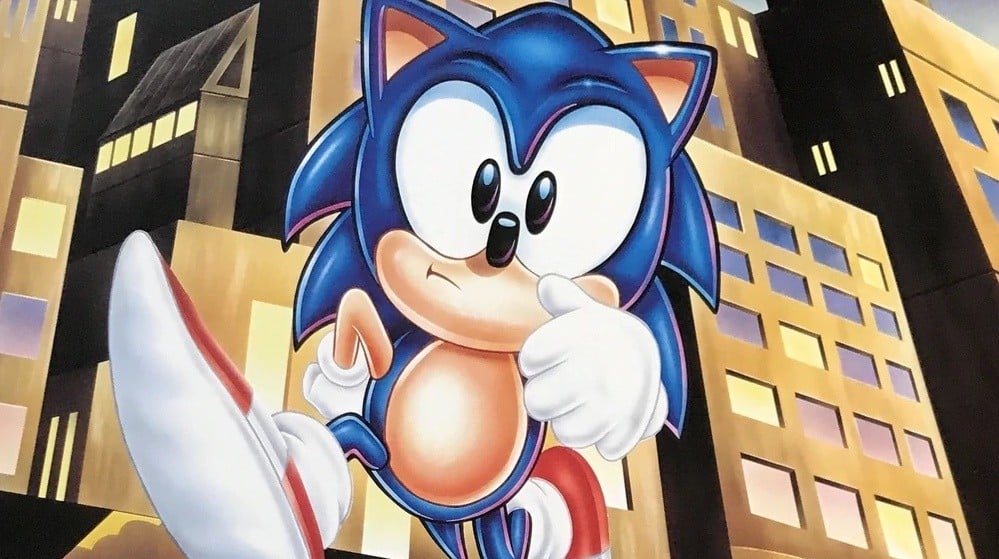
In 1991, when Sonic the Hedgehog first launched, Sega was undeniably the underdog in the fiercely competitive North American video game market. Nintendo, buoyed by the runaway success of the Nintendo Entertainment System (NES) and its beloved mascot Mario, commanded an estimated 90% market share. The video game industry, still recovering from the crash of 1983, had largely been revitalized by Nintendo, making their grip on consumer wallets seemingly unshakeable. Sega, with its earlier Master System struggling to gain significant traction against the NES, needed a bold strategy and a game-changing product to carve out its niche.
Enter the Sega Genesis (Mega Drive in other regions), Sega’s 16-bit console, launched in North America in August 1989. Initially, the console faced an uphill battle. To combat Nintendo’s entrenched position, Sega of America embarked on an aggressive marketing campaign designed to position its new mascot, Sonic, as a direct, superior alternative to Mario. This campaign, famously characterized by the slogan "Genesis Does What Nintendon’t," utilized television advertisements, direct product comparisons, and experiential marketing to persuade players to switch allegiance. Al Nilsen, who joined Sega in 1989 after product management roles at Mattel and Hasbro, was central to developing and executing these audacious strategies. His mandate was clear: elevate Sonic to a household name and drive Genesis sales through the roof.
From Toy Industry Veteran to Sega’s Marketing Architect
Nilsen’s journey to Sega began with an intriguing recruitment process. Prior to Sega, he was at Hasbro, working on a nascent videotape-based gaming system called Control-Vision, a venture that ultimately faltered due to prohibitive DRAM pricing. At the time, Sega was contemplating a radical shift in its US operations. The Master System’s marketing and distribution in North America had been handled by Tonka Toys, with Sega of America primarily managing repairs and game counseling. Sega’s leadership, particularly with the impending launch of the Genesis, sought to control its own destiny and establish a dedicated marketing presence.
"I was kind of a placeholder in the organisation," Nilsen recalled, detailing his interview process. "I had to go and develop a PowerPoint presentation from Sega of America to Sega of Japan explaining why choosing Sega of America for the 16-bit system would be the best choice." This unusual requirement highlighted Sega of Japan’s cautious approach to empowering its American counterpart. At that juncture, Sega of America was a lean operation, comprising only five individuals, including an interim president, a head of sales, a finance person, and an operations person. Nilsen would have been the fifth, tasked with heading marketing if the decision was made to allow the US division to independently market the 16-bit system. The decision ultimately favored Sega of America, paving the way for Nilsen’s official hiring and the subsequent marketing revolution.
Early Innovations and Connectivity Challenges: The TeleGenesis
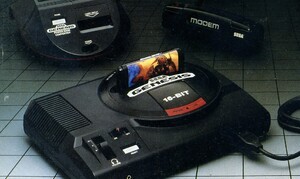
One of Sega’s early, albeit ultimately shelved, innovations was the TeleGenesis modem. Nilsen himself coined the name, a portmanteau combining "telephone" and "Genesis." This device, which was essentially the Japanese Mega Modem adapted for the US market, was even featured in initial Genesis brochures and early advertisements, designed to sit alongside the console. It promised online connectivity, a concept far ahead of its time for home consoles.
"The game we had, which they showed in Japan, was the baseball one," Nilsen recounted, referring to a title likely akin to Sega Meganet Modem Baseball. The TeleGenesis was showcased at the Summer Consumer Electronics Show (CES) in June 1989, coinciding with the Genesis’s US launch. However, the experience proved "less-than-ideal." Nilsen noted the slow connection speeds and the relatively high price point, estimated around $100, as significant deterrents. "We made the decision not to go and bring it into the US because we thought it would not be a big seller, and it just wasn’t an ideal game-playing experience compared to what the experience was with Sega Genesis: playing all of the arcade games and action games and sports games," he explained. This early foray into online gaming, while visionary, ultimately yielded to the immediate priority of delivering fast, engaging offline experiences.
Navigating Cultural Divides: Communication with Sega of Japan
Nilsen’s role often placed him at the crucial interface between Sega of America and its Japanese parent company. This was a complex relationship, marked by cultural differences and varying strategic priorities. While some executives, like former Sega of America president Michael Katz, reported minimal face-to-face contact with Sega of Japan, Nilsen’s position required constant interaction.
"I was at Sega of Japan probably in those days every month or month-and-a-half," Nilsen detailed, highlighting the intense travel schedule. His visits involved meetings on product development, manufacturing schedules, new products, and peripherals. On a daily basis, communication flowed via fax, channeled through a single point of contact in Japan who would then disseminate queries and gather answers. While this system provided a streamlined communication channel, Nilsen emphasized the invaluable nature of in-person interactions, particularly for product development. "Nothing beats going and speaking with people in person, especially in product development. You know, seeing the products and talking with the actual people who were developing them." This constant dialogue was critical for translating Japanese innovations into marketable products for the American audience.

The King of Pop and the Console King: A Star-Studded Collaboration
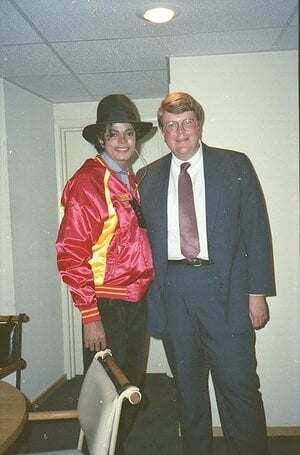
One of the most extraordinary chapters in Nilsen’s career at Sega involved working directly with Michael Jackson, the undisputed King of Pop. In 1989, Sega of Japan brokered a deal with Jackson for both an arcade game and a Genesis title, a collaboration that caught Sega of America by surprise. Nilsen was personally chosen by Sega head Mr. Nakayama to be the liaison between Jackson and Sega of Japan’s development teams.
"One day the head of worldwide consumer products, Dai Sakurai, came into my office, closed the door, and told me that they had just done a deal with Michael Jackson… and that Mr Nakayama… had chosen me to be the interface," Nilsen recounted. His first task: fly to Los Angeles the next day to present game designs to Jackson. The challenge was immediate: the design boards were in Japanese, requiring Nilsen to spend hours on the phone with developers to understand and articulate the concepts in English.
The meeting itself was memorable. Nilsen, arriving with the very first Genesis console from US shipments (it wouldn’t officially launch until August 14th), was met by Jackson. Jackson, recognizing the Altered Beast package art on the Genesis box, exclaimed, "I know that game! That’s a good game!" In a surreal turn, Jackson opted to sit on the floor during the presentation, with Nilsen joining him, as a circle of lawyers and security personnel looked on.
What was initially slated as a brief 10-15 minute meeting stretched to over an hour. Jackson, a genuine gamer, offered enthusiastic feedback on the screenshots, proposing ideas for gameplay and battles. Despite repeated calls from the recording studio where he was working on the Dangerous album, Jackson remained engrossed. Nilsen described it as "just two gamers talking about games and how to make them better." This unique rapport blossomed, leading to further meetings at Jackson’s studio, condo, and even multiple overnight stays at Neverland Ranch. The collaboration resulted in two games, Michael Jackson’s Moonwalker (arcade and Genesis), and Nilsen even learned a new skill: performing ROM upgrades on arcade machines in Jackson’s home. The experience underscored Jackson’s deep passion for gaming and provided Sega with an unparalleled celebrity endorsement.
Birthing a Blue Blur: The Genesis of Sonic
The creation of Sonic the Hedgehog, a character that would define Sega’s golden era, also involved Nilsen’s critical input. In 1990, Mr. Nakayama tasked Nilsen with selecting Sega’s new mascot from a company-wide contest. Nilsen was presented with two distinct concepts: "this egg-shaped character, which I felt would be very pre-school in the US," and a "blue hedgehog."
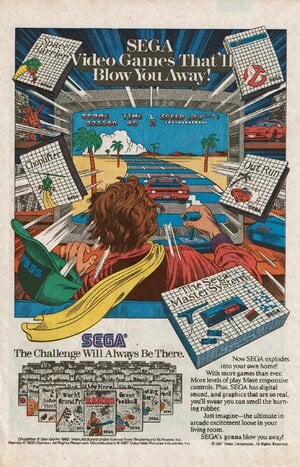
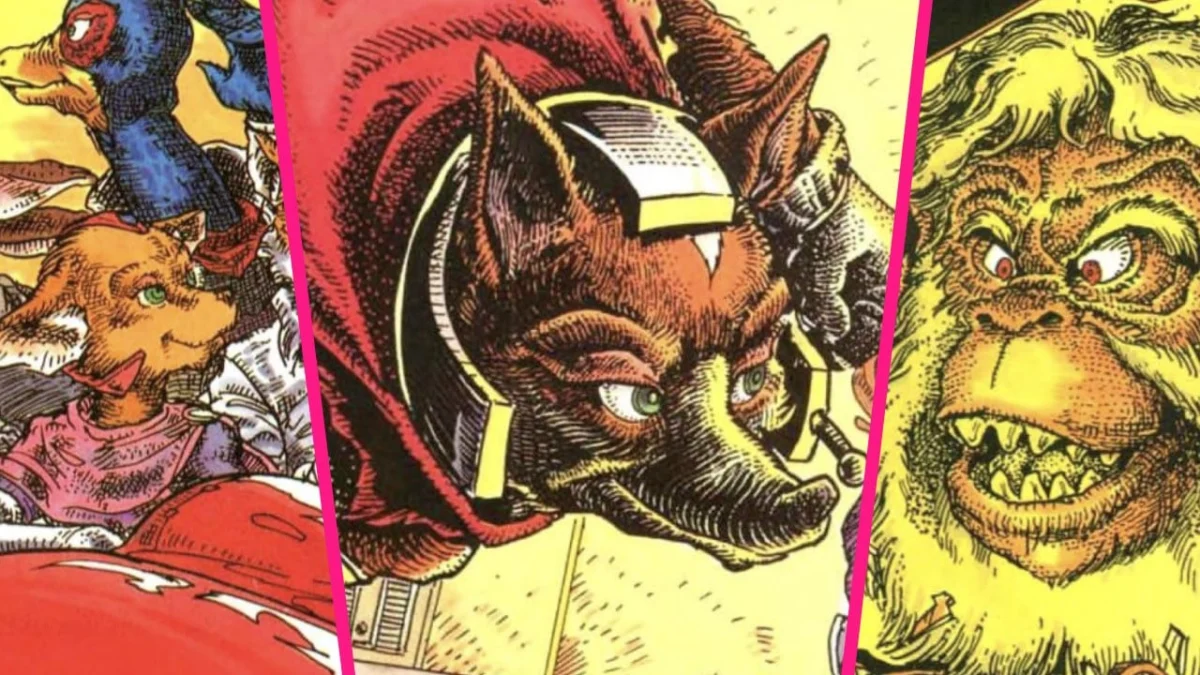
The hedgehog design, initially presented without any accompanying gameplay, featured a rock band and a human girlfriend named Madonna. "It was like, ‘What’s a hedgehog?’" Nilsen mused, ultimately choosing the blue hedgehog as "the lesser of two evils" based solely on concept art. He heard nothing more about the character for nine months.
Then, during a visit to Sega R&D in Japan, Nilsen witnessed a revelation. "From across the room I saw two monitors. On the first monitor was this wireframe with something spinning at super speed," he recalled. It was an early, wireframe rendition of what would become the Green Hill Zone, featuring the hedgehog character in a ball, spinning at an unprecedented velocity. "I have never seen a game like this before, and the speed was amazing," Nilsen stated, instantly recognizing its potential. The adjacent monitor displayed the background of Green Hill Zone, characterized by "beautiful colours – these rich colours – which were just amazing." Upon confirming with co-creator Yuji Naka that the vibrant graphics could be combined with the incredible speed on the Genesis, Nilsen knew Sega had found its "secret weapon."
Unleashing the Hedgehog: A Marketing Blitz
With Sonic’s potential undeniable, Sega of America, led by Nilsen and a collaborative team including Tom Kalinske (then President of Sega of America) and marketing services manager Ellen Beth Van Buskirk Knapp, devised an audacious marketing strategy. The objective was to embed Sonic into popular culture, appealing to both children and their parents.
Sega intentionally kept Sonic "under wraps" until a strategic reveal. This moment arrived at the Consumer Electronics Show (CES) in 1991. Sega set up a daring comparison: a "wall of two big monitors," one showcasing Sonic and the Genesis, and the other featuring the newly launched Super Nintendo/Super Famicom running Super Mario World. This direct challenge immediately generated industry buzz. Nilsen recounted a journalist questioning Genesis’s color palette (512 colors) against the Super Nintendo’s 30,768. "Tom and I walked him over to the wall where we had the two systems running," Nilsen said, demonstrating the Genesis’s superior speed and vibrant, distinct color palette compared to Nintendo’s more pastel tones. The reaction from buyers and attendees was overwhelmingly positive, validating Sega’s bold comparison strategy.
The momentum continued with a nationwide mall tour across America, a groundbreaking initiative for its time. This tour offered the public a unique opportunity not only to play Sonic but also to experience Super Mario World before the Super Nintendo’s official US release. "We were doing Nintendo a favour by letting them see what its new system was," Nilsen quipped, highlighting the confidence in Sonic’s appeal. After playing both, attendees voted on their preference. Remarkably, in Seattle, just five miles from Nintendo’s headquarters, 85-88% chose Sonic over Mario. Pre-release secret playtests had already indicated this trend, with over 90% of self-proclaimed Mario fans preferring Sonic. This data unequivocally proved that Sega had a strong contender.
Global Domination: The "Sonic 2sday" Phenomenon
The success of the first Sonic the Hedgehog laid the groundwork for an even more ambitious marketing feat: the global launch of Sonic the Hedgehog 2 in 1992, famously dubbed "Sonic 2sday." This was Nilsen’s brainchild, a coordinated worldwide release unprecedented in the video game industry.
"Madeline [Canepa, former product manager] and I pulled everything together and then worked on how we could do everything from a PR angle – how could we do everything from a retailer angle," Nilsen explained. The campaign transformed retail spaces like Toys R’ Us into "Sonic boutiques," featuring not just the game but a burgeoning line of licensed products. Promotional efforts included a "Sonic 2 tour" across US retailers and air force bases, while in Europe, London double-decker buses and Sonic balloons promoted the game. It was a concerted, worldwide effort to "Sonic-ise" the public, creating an omnipresent brand presence.
The strategy worked. Word-of-mouth spread like wildfire, with children actively debating Sonic’s superiority ("faster, he’s better") over Mario. This aggressive marketing, combined with a strong TV campaign and PR, propelled Sonic to unprecedented heights. "Sonic went to number one. He had a Q-score rating higher than Mickey Mouse’s. Which was unbelievable," Nilsen stated, underscoring the character’s meteoric rise in popular recognition and appeal. This success cemented Sonic’s strongest appeal in the US, closely followed by Europe.
A Shifting Landscape: Departure from Sega
Despite the monumental success, Nilsen’s tenure at Sega concluded in 1993, mirroring similar concerns expressed by other key executives like Tom Kalinske. A significant factor was the perceived shift in decision-making power back to Sega of Japan, often without sufficient input or understanding from Sega of America.
Nilsen witnessed the early signs of this trend, particularly concerning hardware decisions. He cited the 32X, an add-on for the Genesis, as a "non-starter" due to its high price, limited game lineup, and the impending release of the Sega Saturn. "I knew what was happening from that standpoint. So yes, I did see a change in what was happening in various groups," he reflected.
His own role had evolved at the beginning of 1993, becoming Global Head of Marketing at Sega of America, a testament to the success of the Sonic 2sday global launch. However, this new position brought its own challenges. The extensive travel required to coordinate with Sega of Japan, Sega Europe, and Sega OziSoft (Australia) meant less hands-on involvement with US market products, an aspect he both enjoyed and found impactful. "I was running into problems with Sega of Japan, who wanted to handle everything themselves," Nilsen explained, highlighting the friction in global coordination. The increasing centralization of decisions in Japan, and the relentless travel, proved to be "wearing me out."
An opportunity arose with Viacom, offering Nilsen a role in their new media group, with 25% of his time dedicated to Nickelodeon’s consumer products. Despite requiring a move to New York, it presented a "much better opportunity" than constantly traveling and struggling with diminishing input. Nilsen’s departure, alongside others, foreshadowed the internal struggles that would eventually contribute to Sega’s decline in the console market, as the company grappled with hardware proliferation and a lack of unified global strategy.
Legacy and Lasting Impact
Al Nilsen’s contributions to Sega during its most competitive and vibrant period are undeniable. He was instrumental in transforming Sega from an underdog into a genuine contender against Nintendo, fostering a golden age of innovation and aggressive marketing. His role in bringing Sonic to life, orchestrating the unprecedented Sonic 2sday global launch, and navigating complex corporate and celebrity partnerships showcases a marketing acumen that left an indelible mark on the video game industry. The strategies he helped implement—from direct product comparisons to experiential mall tours and global launch coordination—set new benchmarks for how video games could be marketed and perceived. His reflections provide invaluable historical context, underscoring the blend of vision, collaboration, and sheer audacity that propelled Sega and its blue hedgehog into the annals of gaming legend.