Edi Durjana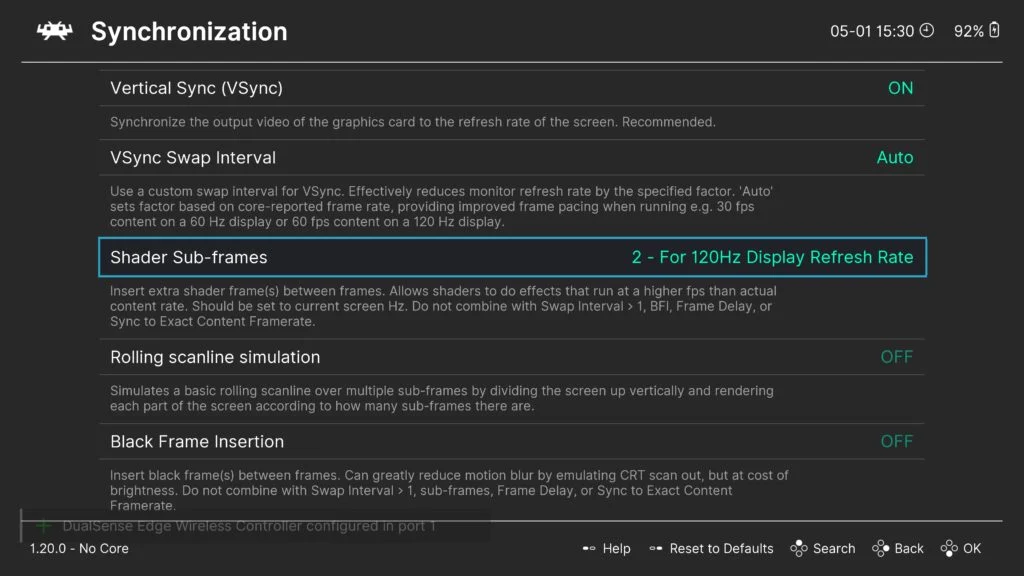
FOR IMMEDIATE RELEASE
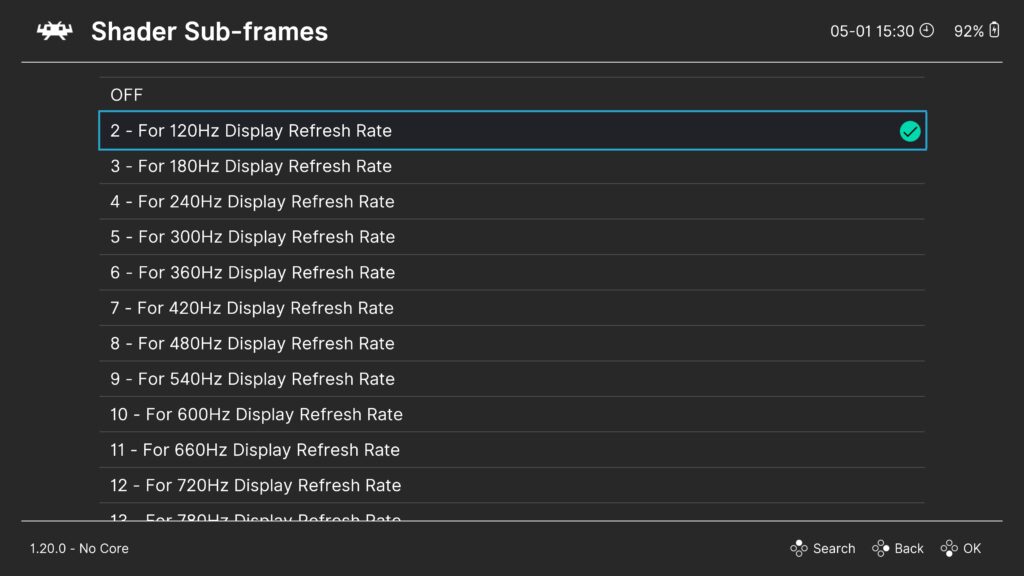
RetroArch, the popular open-source frontend for emulators, game engines, video games, media players, and other applications, has unveiled a groundbreaking new shader designed to dramatically improve motion clarity on modern high-refresh-rate displays. Developed through a collaborative effort between Mark Rejhon of BlurBusters.com, a renowned authority on display technology and motion performance, and Timothy Lottes, the celebrated creator of the original FXAA shader and the highly regarded crt-lottes shaders, this innovation promises to deliver the visual crispness of traditional cathode ray tube (CRT) displays without the inherent compromises typically associated with black-frame insertion (BFI) techniques. The shader leverages RetroArch’s recently introduced "subframe" shader capabilities, allowing it to operate at multiples of the standard content framerate, thereby offering a more sophisticated approach to motion artifact reduction. This advancement requires users to have RetroArch version 1.20.0 or any more recent nightly build, as previous iterations lack the essential Shader Sub-frames feature. The original Shadertoy implementation, serving as the technical foundation for this RetroArch integration, can be explored at www.shadertoy.com/view/XfKfWd.
Understanding the Problem: Motion Clarity in Modern Displays
The quest for perfect motion clarity in digital displays has long been a significant challenge for both display manufacturers and enthusiasts, particularly in the realm of retro gaming emulation. Modern liquid crystal display (LCD) and organic light-emitting diode (OLED) panels predominantly operate on a "sample-and-hold" principle. Unlike the scanning electron beam of a CRT that illuminates pixels for only a fleeting moment before moving on, pixels on a sample-and-hold display remain illuminated and static for the entire duration of a frame. This characteristic, while enabling high brightness and flicker-free images, leads to a phenomenon known as "motion blur" or "sample-and-hold blur" when objects move across the screen. The human eye tracks moving objects, but if the image itself remains static for the duration of a frame, the brain perceives a smear rather than a sharp, continuously moving image. This effect is especially pronounced in fast-paced games and can detract significantly from the authentic retro gaming experience, which was originally designed for the instantaneous pixel response and inherent motion clarity of CRTs.
Traditional attempts to mitigate sample-and-hold blur have often centered on techniques like Black Frame Insertion (BFI). BFI works by inserting a black frame (or turning off the backlight) between each displayed game frame. This brief period of darkness resets the eye’s perception, mimicking the impulse-driven display of a CRT. While effective at reducing perceived motion blur, BFI comes with substantial drawbacks: a noticeable reduction in overall screen brightness, increased flicker that can lead to eye strain and fatigue for some users, and in certain panel types, a risk of "image persistence" or temporary ghosting due to the rapid on-off cycling of pixels. These limitations have made BFI a compromise rather than a universal solution, prompting the search for more advanced methods.
The Genesis of Innovation: Collaboration and Core Technology
The development of this new shader is a testament to the power of collaborative innovation, bringing together leading minds in display technology and graphics programming. Mark Rejhon, widely recognized through his work at BlurBusters.com, has dedicated his career to demystifying and improving motion clarity across various display technologies. His extensive research into human visual perception and display characteristics forms the bedrock of understanding the shortcomings of modern displays and the pathways to overcoming them. Timothy Lottes, a name synonymous with foundational advancements in real-time graphics, particularly with the creation of FXAA (Fast Approximate Anti-Aliasing) and the highly respected crt-lottes shaders, brings unparalleled expertise in crafting efficient and visually compelling graphical effects. His previous work on CRT simulation has already set high standards within the emulation community for achieving authentic visual fidelity.
The catalyst for this breakthrough was RetroArch’s recent introduction of "subframe" shader capabilities. This architectural enhancement allows shaders to operate at a higher frequency than the base content framerate, effectively enabling the display to render intermediate states or perform complex calculations between full frames. This capability is crucial because it provides the necessary temporal resolution to simulate the nuanced behavior of a CRT’s electron beam scanning across the screen, a process far more intricate than simply inserting a black frame. By operating at multiples of the standard framerate (e.g., 120Hz for a 60fps game, or 240Hz for 60fps), the shader can manipulate individual pixels in a more granular fashion, delivering a dynamic visual output that more closely mimics the continuous, scanning motion of a CRT.
A representative from the RetroArch development team, who wished to remain anonymous to emphasize the collaborative nature of the project, commented on the significance: "Integrating a feature like subframe rendering was a strategic move to unlock new possibilities for display accuracy. We understood the community’s desire for perfect motion clarity, and this shader, born from the brilliance of Mark and Timothy, truly demonstrates the potential of our platform to push the boundaries of emulation fidelity. It’s a game-changer for anyone seeking the most authentic retro experience."
Beyond Black Frame Insertion: A New Paradigm
The core innovation of this shader lies in its ability to simulate the scanning behavior of a CRT electron beam, often referred to as "beam racing," without resorting to the blunt instrument of full-screen black frames. Instead, it dynamically adjusts the perceived brightness and state of pixels in a way that creates a rolling "raster line" effect across the screen. This optical illusion effectively fools the eye into perceiving a more continuous, rather than segmented, motion.
The advantages over conventional BFI are substantial and address many of its long-standing limitations:
- Significantly Reduced Brightness Loss: Unlike BFI, which can cut perceived brightness by 50% or more due to half the frames being black, this shader achieves motion clarity with a far less drastic impact on luminance. While some brightness adjustment is inherent to the technique, it is far more tunable and less aggressive than BFI, allowing for a more vibrant image overall.
- Minimized Flicker and Eye Strain: Because the shader doesn’t rely on abrupt, full-screen blackouts, the visual experience is much smoother. The simulated raster line creates a subtle, localized darkening effect rather than a jarring, global flicker, leading to considerably less eye strain and making it comfortable for extended gaming sessions. This is a critical improvement for users sensitive to flicker.
- No Image Persistence Risk on Most Panels: A major concern with BFI, particularly on certain LCD panels, is the potential for voltage accumulation leading to temporary ghosting or image persistence. The new shader sidesteps this issue by not subjecting the entire panel to rapid on/off cycles. OLED panels, known for their per-pixel illumination and instantaneous response, are entirely unaffected by image persistence from this technique. Similarly, monitors operating at specific odd integer multiples of 60 Hz, such as 180 Hz, also mitigate this risk, making the shader a safe and effective choice for a wider range of high-refresh-rate displays.
- Enhanced Authenticity for Retro Content: The visual effect of a "rolling raster line" is not merely a blur reduction technique; it’s a simulation of how CRTs inherently displayed images. This provides a more authentic and immersive experience for retro games, which were designed with this display characteristic in mind. It bridges the gap between modern display technology and the classic aesthetic.
Mark Rejhon of BlurBusters.com articulated the vision behind the shader: "For years, we’ve been pushing the boundaries of motion clarity. BFI was a step, but it always felt like a blunt instrument. Our goal with this project was to achieve CRT-like motion without the heavy compromises. RetroArch’s subframe capabilities were the missing piece, allowing us to implement a more nuanced, ‘beam racing’ simulation that respects the integrity of the image while delivering unparalleled clarity. This isn’t just about reducing blur; it’s about recreating the feel of a CRT."
Technical Underpinnings: RetroArch’s Subframe Capabilities
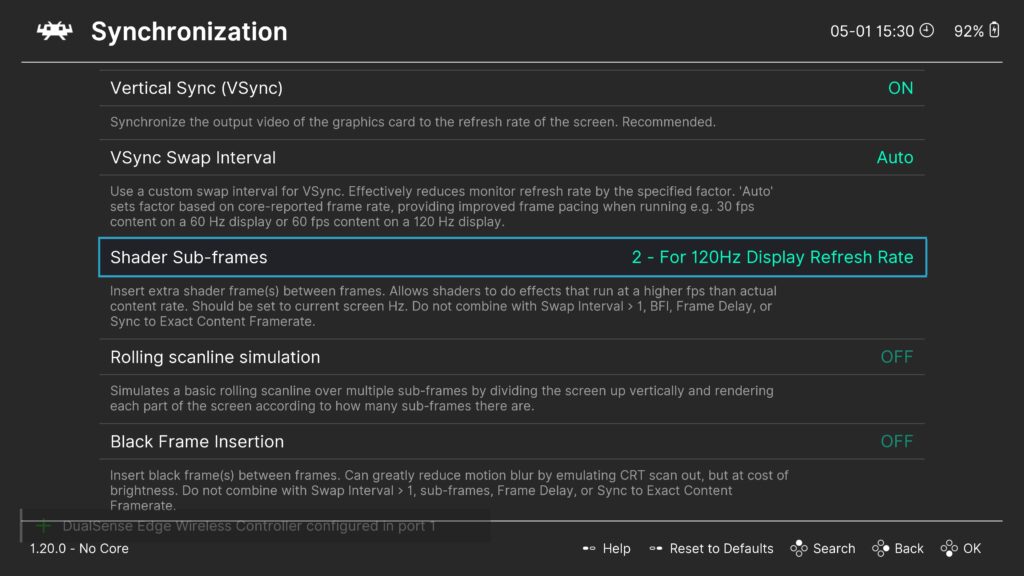
The "subframe" shader feature introduced in RetroArch 1.20.0 is the foundational technology enabling this advanced motion clarity solution. Previously, shaders could only operate on full, rendered frames. With subframes, RetroArch can now instruct the display driver or GPU to render intermediate states between the primary game frames. For instance, if a game runs at 60 frames per second (fps) on a 120 Hz monitor, the display is refreshing twice for every single game frame. The subframe capability allows the shader to dynamically generate unique visual information for each of those two 120 Hz refresh cycles, rather than simply duplicating the same 60 fps frame.
In the context of this new shader, this means that instead of just displaying a game frame and then a black frame, the system can display a game frame, then a slightly modified version of that frame that simulates a part of the CRT’s scanning process, then the next game frame, and so on. This continuous, rapid update, even if the underlying game data hasn’t changed, creates the illusion of a scanning beam. The shader effectively breaks down the "sample-and-hold" effect into smaller, more dynamic segments, preventing the static image from lingering on the retina for too long. For a 120 Hz monitor displaying 60 fps content, there are two subframes per game frame. For a 240 Hz monitor, there are four subframes, allowing for even finer control and potentially superior motion clarity.
Timothy Lottes added his perspective on the technical achievement: "My work on FXAA and CRT shaders has always been about optimizing visual fidelity and performance. The RetroArch subframe feature presented an exciting new canvas. By combining insights from display physics with advanced shader programming, we’ve created something that doesn’t just simulate a look, but simulates a fundamental behavior of CRTs, bringing that characteristic motion clarity to modern panels in a way that was previously impractical."
User Experience and Customization: Tuning for Optimal Performance
Implementing and tuning the new shader for individual setups is straightforward for users with high-refresh-rate monitors (120 Hz or higher). Once RetroArch 1.20.0 or later is installed, users can navigate to the shader options and load the crt-beam-simulator preset. For those wishing to combine this with other visual effects, the shader is designed to be highly compatible and can typically be prepended to existing shader presets, allowing for complex visual stacks (e.g., combining beam racing with a favorite CRT curvature or scanline effect). RetroArch also provides pre-made presets under shaders_slang/presets/crt-beam-simulator for quick access.
A key aspect of the shader’s design is its inclusion of robust runtime parameters, empowering users to fine-tune its behavior to match their specific display and preferences. These parameters include:
- Gamma Adjustment: This allows users to compensate for any perceived darkening and achieve a neutral image, ensuring colors and luminosity remain accurate without unusual dark lines.
- Brightness/Motion Clarity Trade-off: A critical slider enables users to balance the desired level of motion clarity against the remaining screen brightness. For 120 Hz monitors operating with two subframes, a value of approximately 0.5 has been found to offer an excellent balance, while 240 Hz monitors (four subframes) often benefit from a value around 0.7, providing even greater clarity due to the increased temporal resolution.
- Cycle Timing Offset: For specific display types, particularly OLED panels or monitors running at non-standard integer multiples of 60 Hz (e.g., 180 Hz), the risk of image persistence from rapid flickering is naturally low or non-existent. For these users, a runtime parameter exists to disable the "cycle timing offset," which is responsible for the simulated raster line rolling up the screen. Disabling this can provide a smoother experience if persistence is not a concern.
- Raster Line Position: Another adjustable parameter allows users to precisely position the simulated raster line on the screen. This ensures that any residual visual artifacts or perceived darkening can be moved to the least obtrusive spot, maximizing the user’s comfort and visual enjoyment.
Addressing Specific Display Technologies and Potential Issues
The shader’s design also thoughtfully considers the nuances of different display technologies. As mentioned, OLED panels are particularly well-suited for this technology due to their instantaneous per-pixel response and lack of susceptibility to image persistence caused by rapid on/off flickering. Similarly, certain LCD monitors running at specific refresh rates, such as 180 Hz (which is an odd integer multiple of 60 Hz), also exhibit reduced risk of persistence. For these users, the option to disable the cycle timing offset ensures they can enjoy the benefits of motion clarity without any unnecessary visual artifacts.
Despite the careful design, display technologies are complex, and individual setups can vary. Recognizing this, Mr. Rejhon has established a comprehensive FAQ and troubleshooting guide on his GitHub repository, available at https://github.com/blurbusters/crt-beam-simulator/issues/4. This resource serves as a primary point of reference for users encountering any issues or seeking deeper technical explanations. Additionally, RetroArch’s robust community support channels, including Discord, Reddit, and the official Libretro forums, remain available for users to seek assistance and share their experiences. The community-driven nature of RetroArch ensures that feedback can be rapidly integrated and solutions disseminated.
Further insights into the shader’s capabilities and the underlying display technologies can be found in a highly informative video from a respected display technology expert, linked here: https://www.youtube.com/watch?v=PmXmr4Yiz_0. This video provides a visual demonstration and detailed technical explanation, complementing the written documentation.
Broader Implications for Gaming and Display Technology
This new shader represents more than just an incremental update for RetroArch; it signifies a significant leap forward in display simulation and the pursuit of visual authenticity in emulation. For retro gaming enthusiasts, it offers an unprecedented level of fidelity, bringing them closer than ever to the original experience of playing games on a CRT, without the bulk, power consumption, or maintenance of actual vintage hardware. It addresses one of the last major hurdles in creating a truly indistinguishable retro experience on modern flat panels.
Beyond emulation, the techniques and insights gained from developing this shader could have broader implications for display technology research. The innovative use of subframe rendering and the sophisticated simulation of beam-racing demonstrate a powerful alternative to traditional BFI, potentially inspiring future display technologies or software-based solutions to enhance motion clarity in general computing, professional applications, and even mainstream video gaming. The collaboration between a platform like RetroArch, a display expert like Mark Rejhon, and a graphics guru like Timothy Lottes sets a precedent for how specialized knowledge can converge to solve long-standing technical challenges, pushing the boundaries of what is possible in digital display rendering. It underscores a growing industry trend towards maximizing the potential of high-refresh-rate displays not just for higher frame rates, but for superior motion quality and visual accuracy.
As high-refresh-rate monitors become increasingly commonplace, solutions like the RetroArch CRT Beam Simulator shader will play a crucial role in ensuring that older content, as well as new content, can be displayed with optimal clarity and the intended visual characteristics. It marks a pivotal moment where software ingenuity provides a sophisticated answer to hardware limitations, enriching the digital experience for millions of users worldwide.