Farhan hamdan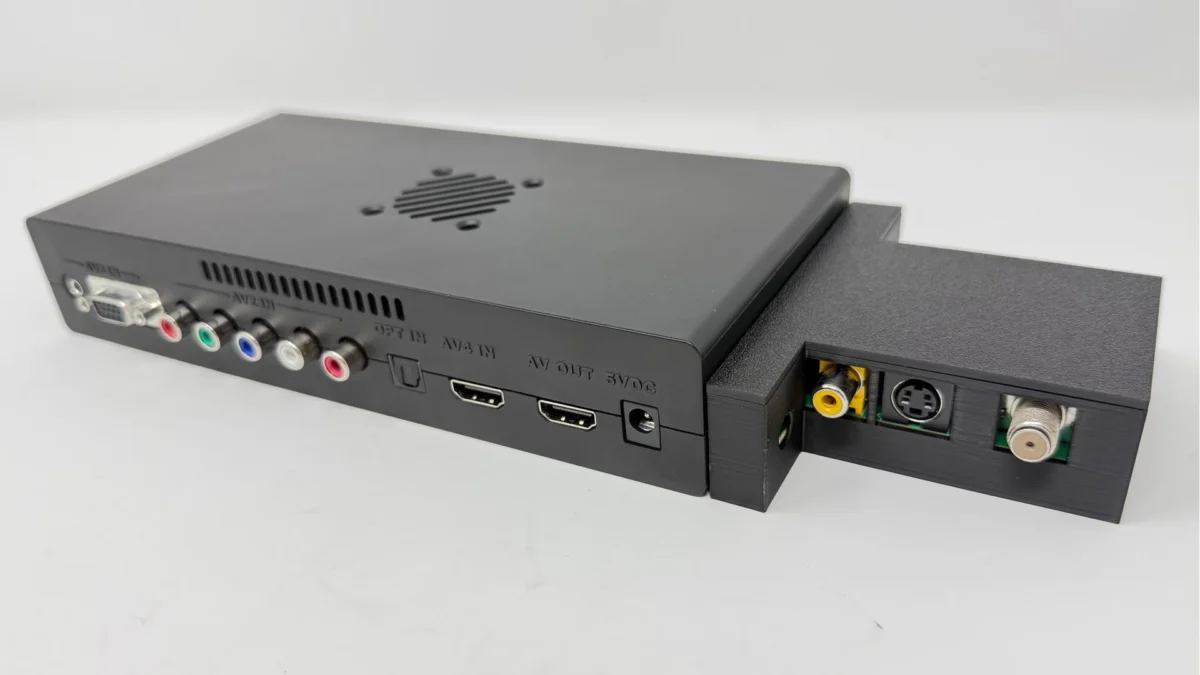
The retro gaming and hardware enthusiast community has received a practical quality-of-life update with the release of a newly modified 3D-printed enclosure designed specifically for the latest iteration of the OSSC Pro Legacy AV-In module featuring RF input. Manufactured and distributed by Dan of Ringer Keys and The Brewing Academy, the enclosure addresses physical protection and stability gaps for modern video upscaling hardware hobbyists who utilize older analog signals.
Priced affordably at just under $20 inclusive of shipping to metropolitan regions such as the New York City area, the accessory is now commercially available to the public. This release bridges a physical design gap for users integrating legacy hardware into high-end modern display chains, offering an accessible solution for protecting delicate electronic add-on boards from electrostatic discharge, physical strain, and everyday wear and tear.
Main Facts and Product Specifications
The newly available 3D-printed case is a direct derivative of Chrissy’s original open-source OSSC Pro legacy AV case, which was initially designed without accommodation for RF input modules. Recognizing the updated module specifications—which incorporate an RF input alongside traditional composite and S-Video ports—Dan modified the foundational blueprints to include a dedicated cut-out for the RF port. Furthermore, the updated design introduces a crucial internal structural modification: an extra support post positioned strategically between the composite and S-Video inputs. This reinforcement is engineered to bear the physical weight and connection pressure associated with frequently plugging and unplugging legacy RCA and multi-pin cables.
Purchasing options are currently live via The Brewing Academy storefront, with broader community resource links managed through platforms like RetroRGB. The assembly process has been purposefully streamlined for end-users. Installation requires simply dropping the Legacy AV-In board into the lower shell by angling the RF and composite video jacks through their designated faceplate apertures, followed by snapping the upper enclosure segment into place.
Despite the snap-fit design, hardware experts strongly advise securing the enclosure with two external screws ranging from 6mm to 10mm in length to prevent structural shifting during regular cable management. Notably, the case design preserves access holes aligned with the mounting screws that attach the module to the primary OSSC Pro scaler unit. This allows enthusiasts to anchor the module securely to the mainboard even after the enclosure has been fully assembled, ensuring that heavy coaxial RF cables do not leverage the board out of its socket.
Background Context and Evolution of the OSSC Pro Ecosystem

To understand the significance of this enclosure, it is necessary to examine the evolution of the Open Source Scan Converter (OSSC) Pro and its role in modern retro-gaming preservation. The OSSC Pro represents the cutting edge of open-source hardware video processing, designed to take low-resolution analog video signals from vintage consoles—such as the Nintendo Entertainment System, Sega Genesis, Sony PlayStation, and numerous others—and upscale them cleanly for modern high-definition and 4K displays.
Unlike traditional software emulation, which processes games digitally, hardware scalers work with the raw analog outputs of original consoles. However, as retro gaming hardware has advanced, the methods for connecting these systems have evolved. While early iterations of the OSSC Pro focused heavily on high-end analog signals like RGB, Component (YPbPr), and SCART, a significant portion of the retro gaming community still relies on composite video, S-Video, and radio frequency (RF) connections, particularly for older fourth-generation consoles, VCRs, and vintage personal computers.
To accommodate these older formats, hardware developers introduced the Legacy AV-In expansion modules for the OSSC Pro. As these expansion boards matured, the inclusion of RF inputs became a highly requested feature for enthusiasts aiming for absolute authenticity or working with older hardware that lacks native composite modifications. However, exposing these delicate printed circuit boards (PCBs) to the open air created risks of static discharge, accidental short circuits, and mechanical strain caused by heavy coaxial and composite cables. The community-driven creation of 3D-printed shells—culminating in Chrissy’s initial open-source designs and Dan’s recent manufacturing run through The Brewing Academy—serves as a vital bridge between open-source hardware design and user-friendly consumer products.
Chronology of Development and Distribution
The trajectory from concept to commercial availability for the OSSC Pro Legacy AV-In RF case highlights the rapid, collaborative nature of the retro hardware community.
- Mid-2023 to Early 2024: The OSSC Pro gains traction among high-end retro gaming enthusiasts following successful fulfillment campaigns and growing community adoption. Developers begin conceptualizing modular expansion boards to handle legacy analog signals.
- Mid-2024: Designer Chrissy publishes open-source 3D printable case models for the initial non-RF OSSC Pro Legacy AV case on community platforms such as Printables, allowing hobbyists with 3D printers to fabricate their own protective enclosures.
- Late 2024 to 2025: Hardware revisions introduce RF input capabilities to the Legacy AV-In module, rendering earlier non-RF case designs obsolete for users adopting the updated revision.
- September 2026: Dan from Ringer Keys and The Brewing Academy introduces a commercially manufactured, modified variant featuring the required RF port cut-out and internal structural support posts. The product goes live for purchase at an accessible price point, accompanied by installation documentation and hardware recommendations.
Supporting Data and Usability Metrics
From a logistical and financial perspective, the availability of mass-produced, community-tailored 3D prints marks a shift in how niche hardware accessories are brought to market. Historically, retro gaming enthusiasts without access to personal 3D printing equipment had to rely on independent print-on-demand services, which often incurred high shipping and handling markups relative to the raw cost of filament.
By utilizing established distribution channels like The Brewing Academy, hardware modifications can be bundled efficiently. The current pricing structure—under $20 shipped domestically within the United States—positions the case as an essential, low-cost insurance policy for an expansion board that costs significantly more to replace.

Technical tolerances for the enclosure have been engineered to match standard metric hardware. Hardware recommendations specify screws between 6mm and 10mm in length, matching the approximate wall-to-post thickness of the printed housing. Furthermore, weight distribution analyses underscore the necessity of the internal support post added by Dan. Coaxial RF connectors and heavy shielded composite cables exert a considerable amount of torque when plugged into a horizontal backplate. Without internal reinforcement and proper chassis screw-down procedures, repeated insertions can fatigue the solder joints connecting the daughterboard to the OSSC Pro main unit. The retention of screwdriver access holes in the new case design ensures that users do not have to compromise structural stability for the sake of modular swapping convenience.
Broader Impact and Implications for the Retro Gaming Community
The release of the modified OSSC Pro Legacy AV-In case underscores several broader trends within the retro video game preservation and hardware modification landscape.
First, it highlights the viability of the open-source hardware ecosystem, where community-designed blueprints can be rapidly iterated, refined by manufacturers, and distributed to end-users on a commercial scale. Open-source repositories like Printables and GitHub continue to serve as incubators for hardware accessories, allowing rapid prototyping that traditional electronics manufacturers often cannot match in terms of speed or responsiveness to niche community demands.
Second, it reflects the growing professionalization of cottage industries within the retro gaming space. Vendors like The Brewing Academy have evolved from simple hobbyist storefronts into reliable logistics hubs that supply specialized enclosures, replacement parts, and diagnostic tools. This maturation ensures that complex hardware setups—once restricted to individuals with advanced electronics labs and custom fabrication tools—are becoming increasingly turnkey for mainstream enthusiasts.
Finally, the focus on physical protection and mechanical longevity speaks to the long-term sustainability of retro gaming hardware. As original consoles and custom-built scalers become scarcer and more expensive, protecting these investments from physical damage is paramount. Simple innovations like a 3D-printed shell with reinforced support posts may seem minor in the grand scheme of digital signal processing, but they play a critical role in preventing hardware failure over years of continuous use.
As the OSSC Pro ecosystem continues to evolve, ongoing collaboration between independent designers, open-source contributors hardware vendors will undoubtedly yield further refinements. For now, owners of the updated Legacy AV-In module with RF input have a reliable, cost-effective, and professionally supported method to house and protect their hardware.