Cecilia Chamidah Nur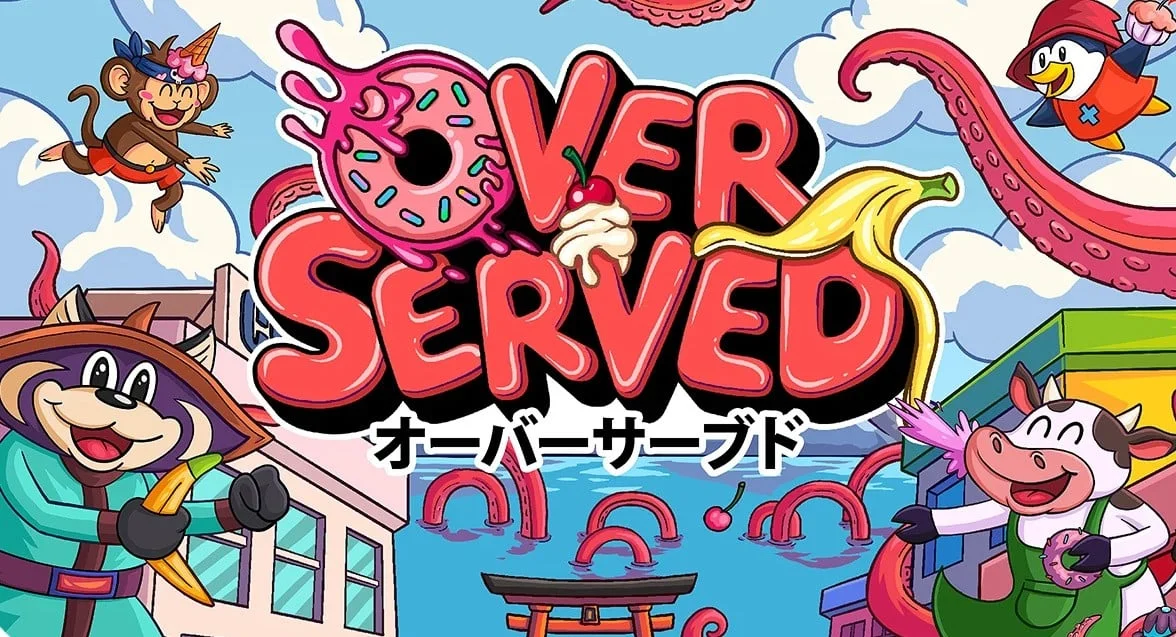
FULLSET’s upcoming title, Overserved: Food Fighters, is poised to redefine the boundaries of retro gaming by bringing unprecedented online and cross-platform multiplayer capabilities to classic consoles, most notably the Neo Geo. This ambitious project, spearheaded by lead developer Sascha Reuter, promises 8-person online and offline multiplayer with cross-play functionality spanning a remarkable array of platforms, from vintage hardware like the Sega Saturn and Sega Dreamcast to modern systems including the Nintendo Switch, PlayStation, Xbox, PC, Mac, Linux, iOS, tvOS, and Android. The innovation extends beyond software, featuring custom Wi-Fi-equipped cartridges for Neo Geo and Sega Saturn, dubbed FSNG-1 and FSST-1 respectively, alongside a revolutionary Neo Geo multitap designed to facilitate expanded local play.
A New Era for Classic Consoles: The Genesis of Overserved
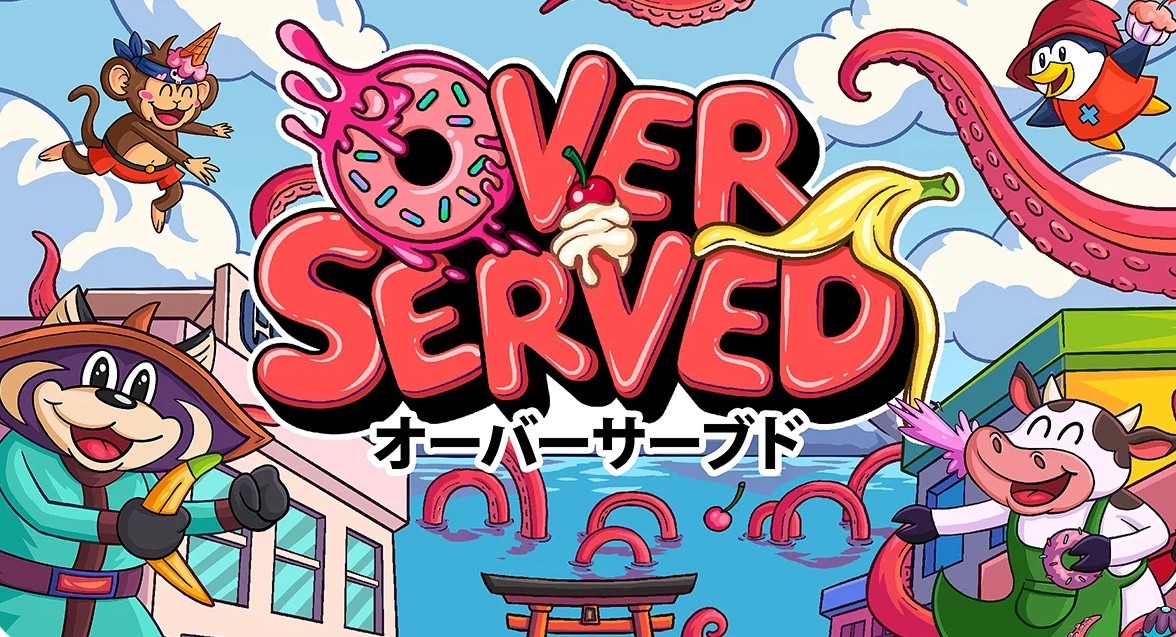
Unveiled to the public with a tease in February 2025 and officially made available for pre-order in May 2026, Overserved: Food Fighters has quickly captured the attention of the retro gaming community. While its surface aesthetic suggests a charming party game reminiscent of classics like Saturn Bomberman, the underlying technological ambition sets it apart. The game’s premise, a family-friendly food fight where players utilize "treats" instead of "weapons," aims for broad accessibility, appealing to both seasoned gamers and casual players. This inclusive design philosophy is mirrored in FULLSET’s determination to bring the experience to as many platforms as possible, ensuring that players can connect regardless of their preferred gaming device.
Sascha Reuter, the visionary behind FULLSET, articulates the inspiration for Overserved as a direct lineage from the beloved Saturn Bomberman. "The main reason why we wanted to do Overserved was my desire to have like a new version or a successor to Saturn Bomberman," Reuter stated, emphasizing the goal of creating an accessible, multi-generational experience. This commitment to accessibility extends not only to the game’s theme and mechanics but crucially to its technical implementation, fostering a connected play environment that bridges decades of gaming hardware.
From Pico-8 to Neo Geo: Sascha Reuter’s Development Odyssey
Reuter’s journey into game development, particularly for retro platforms, is a testament to perseverance and a deep passion for the craft. An 80s child, Reuter’s initial exposure to arcade gaming in Germany was limited, largely confined to sporadic encounters with machines like Wonder Boy and Sega Rally. His formative gaming years were spent with consoles like the Sega Mega Drive and Super Nintendo, with the Neo Geo remaining an elusive, almost mythical system. It wasn’t until adulthood, when he re-engaged with gaming as a hobby, that his path diverged.
"I came to the Neo Geo later than most," Reuter recounted, detailing how his interest blossomed after a period of focusing on startups. Around 2016-2017, he shifted back to his hobbies, leading to his first dedicated game development project in 2019: a Pico-8 version of Project Neon. The Pico-8, a fantasy console known for its strict constraints, served as an ideal environment for Reuter to hone his skills and focus on game completion. This foundational experience led him to port Project Neon to the Game Boy using GBDK, gaining crucial insights into low-level programming.
The success of Project Neon at a local demo scene event propelled Reuter to consider developing for his favorite arcade systems. While the CPS-2 was a contender, its complex documentation and manufacturing challenges led him to the Neo Geo, which offered a more feasible entry point for independent development. Collaborating with local talent, including soundtrack composer Freezedream (who also worked on Tanglewood) and several pixel artists, Project Neon eventually shipped on the Neo Geo in 2024. The prolonged development, initially constrained by his professional commitments, culminated in a pivotal decision in 2026. "I’ve stopped everything, because I’m like, ‘No, I don’t want to do that stuff anymore. At least not right now. It’s too stressful, and it’s not like really where my heart is,’" Reuter declared, signaling his full-time dedication to game development and laying the groundwork for Overserved.
Proprietary Hardware Redefines Connectivity: The FSNG-1 and FSST-1 Cartridges
The ambitious cross-platform vision for Overserved is underpinned by revolutionary custom hardware designed specifically for retro consoles. Central to this innovation are the FSNG-1 and FSST-1 cartridges for the Neo Geo and Sega Saturn, respectively. The genesis of these custom cartridges emerged from Reuter’s experience manufacturing Project Neon, where he found existing solutions unsatisfactory. This led to the realization that building their own manufacturing pipeline opened doors to unprecedented features.
"It seems we need to build this ourselves, which then spiralled into, ‘Well, if we have an ESP32, then we can do like Wi-Fi updates, and we can do online high scores, which we don’t have yet in Project Neon, but totally could,’" Reuter explained. This proactive approach led to a collaboration with renowned programmer Furrtek, a prominent figure in the retro hardware scene. Together, they designed cartridges equipped with Wi-Fi support for over-the-air updates, online play, global high score leaderboards, and local saving of player settings. Furthermore, these cartridges are Bluetooth-enabled, theoretically allowing for additional controller pairing, a crucial feature for Overserved‘s 8-player mode on the Neo Geo.
The Sega Saturn version of Overserved, along with Project Neon, will utilize the FSST-1 cartridge, developed in collaboration with Professor Abrasive. Professor Abrasive is a celebrated figure in the Saturn community, known for cracking the console’s copy protection and developing the Satiator, one of the first Optical Drive Emulators (ODEs) for the system. The FSST-1 leverages much of the FSNG-1’s core technology, sharing platform features like over-the-air updates, Bluetooth controller support, and Wi-Fi capabilities. Reuter hinted at an additional, highly anticipated feature for the FSST-1: the potential for it to function as a wireless Netlink device. This would allow Saturn owners to play compatible games online without the cumbersome setup of a Netlink cartridge, DreamPi, and USB modem, offering "more bang for your buck" as Reuter puts it. While currently theoretical and in the design phase, the prospect of such integrated functionality has generated significant excitement within the Saturn community.
Multiplayer Redefined: The Neo Geo Multitap and Cross-Platform Vision
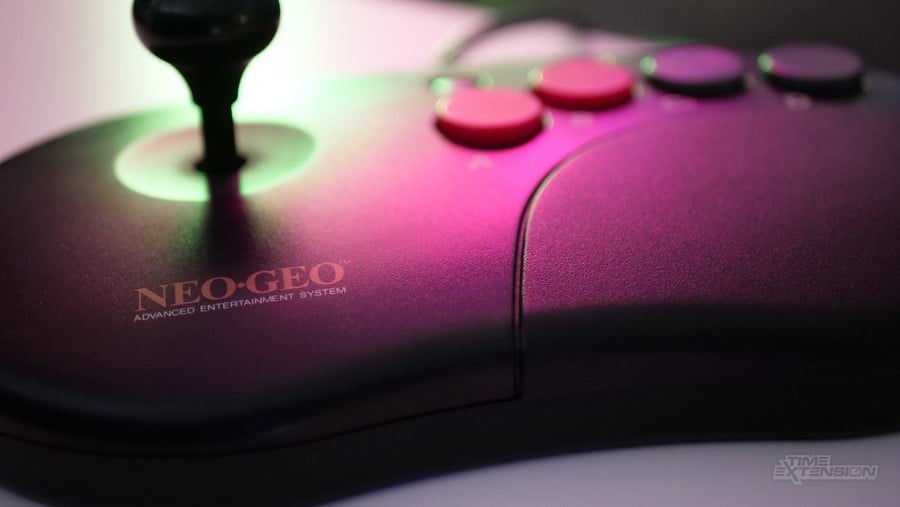
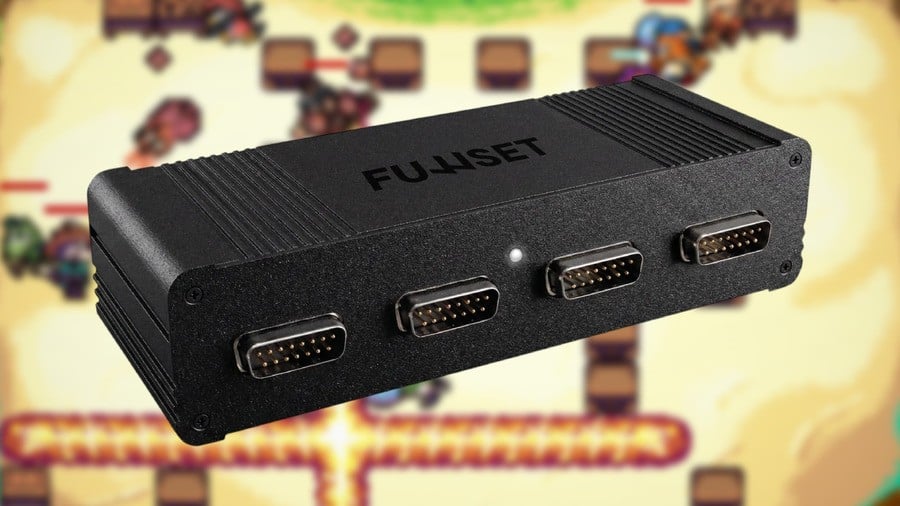
A cornerstone of Overserved: Food Fighters‘ design is its emphasis on expanded multiplayer, a feature rarely seen on the Neo Geo. Inspired by the 8-player capabilities of Saturn Bomberman and earlier Bomberman titles on the Super Nintendo which utilized multitaps, FULLSET has developed a custom Neo Geo multitap. This accessory, also a result of collaboration with Furrtek, addresses a long-standing desire within the Neo Geo community. Historically, only a handful of Neo Geo titles, such as Kizuna Encounter, officially supported expanded player counts, and homebrews like Neotris used custom, multi-cable solutions.
FULLSET’s multitap simplifies connectivity, requiring essentially a single cable to enable up to four players per tap, allowing for 8-player games with two taps. Reuter elaborated on the versatility: "In the case of our game, it can detect, ‘Okay, do I need to run the two cable way? Or do I run in the mode that we use?’ That’s where it just needs the first cable plugged in, so you can plug in another one and have eight players." The multitap also offers dynamic connectivity options, allowing players to mix and match inputs – some via the multitap, others via the cartridge’s Bluetooth, or even remotely via the internet. A particularly intriguing future feature is the multitap’s potential to function as a Neo Geo to USB adapter for PCs, providing four controller ports, a functionality Furrtek is actively developing. This multifaceted approach to input and connectivity underscores FULLSET’s commitment to delivering a truly modern multiplayer experience on classic hardware.
Engineering Cross-Compatibility: The Abstraction Layer and Technical Hurdles
Achieving seamless cross-play across such a diverse range of platforms, from 20th-century consoles to contemporary mobile devices, represents a monumental technical feat. Reuter confirms that basic functionality, including networking, is already operational across all mentioned platforms. The core of this achievement lies in FULLSET’s sophisticated engine design, which utilizes a general abstraction layer.
"For everything, so like the networking, storage, save states, trophies, we basically just have a general abstraction layer, and then we just need to see, ‘Okay, what’s the platform-specific work that we need to do there?’" Reuter explained. This involves building a "shim layer" or adapter that translates generic game engine calls into system-specific instructions, eliminating the need to modify core game code for each platform. For the Neo Geo, FULLSET utilizes an SDK from Neobitz and datlib from HPman. For modern platforms, Windows, Linux, macOS, and mobile versions, SDL serves as a broad compatibility layer. However, the abstraction is not rigidly tied to SDL, allowing for direct API integration where performance demands it. Reuter cited the example of the Dreamcast version: "I actually started with SDL on Dreamcast, and it was way too slow. Then I did it directly with the raw PowerVR APIs, and after a few hours, I was already at a stable 60 FPS." This flexible, performance-driven approach ensures a consistent and high-quality experience across all targeted systems, despite their vastly different architectures and capabilities.
Navigating Modern Ecosystems: Platform Holder Relations and Community Engagement
The ambition of Overserved‘s cross-platform strategy naturally raises questions regarding compatibility and compliance with modern platform holders like Nintendo, Sony, and Microsoft. Reuter expresses confidence in navigating these relationships. "We don’t anticipate problems from any of the platforms," he stated. FULLSET’s strategy revolves around preventing user-generated content and utilizing platform-provided mechanisms for sanitizing usernames across networks. This proactive stance aims to mitigate common concerns related to online moderation and content control that often arise with cross-platform titles.
Moreover, FULLSET demonstrates a strong commitment to community feedback. Reuter highlighted an instance where the Saturn community expressed concerns about the initial use of JoEngine for the Saturn version, which relies on a proprietary Sega graphics library. In response, Reuter dedicated a weekend to switch to libyaul, a fully open-source alternative. "If the community has any concerns, we’d love to hear them and address them head-on," Reuter affirmed, underscoring a development philosophy that values transparency and responsiveness, which is particularly crucial when dealing with passionate retro gaming communities.
Anticipation Builds: Public Demonstrations and Release Outlook
As development progresses, FULLSET is gearing up for a series of public demonstrations to showcase Overserved: Food Fighters‘ innovative features and gather crucial feedback. Initial ad hoc testing at a "Beer and Pixels" event in Sydney yielded positive results, with the game successfully run on Neo Geo and laptop, attracting enthusiastic players, particularly Bomberman fans who reportedly stayed for dozens of games.
Three major testing events are scheduled to further refine the experience and build anticipation:
- Too Many Games (June 2026): FULLSET plans a comprehensive arcade setup with both CRT and modern TVs to demonstrate online play and cross-platform capabilities, excluding current-generation consoles due to logistics.
- Gamescom (August 2026): The game will feature in the Indie Arena, hosting tournaments. While cross-play will be active, the setup might rely on a Steam Deck in the background to manage the network.
- 1UP Arcade (September/October 2026): A release party is planned at Australia’s largest arcade in Brisbane, serving as a pre-launch celebration.
These events are crucial for stress-testing the network infrastructure, gathering player impressions, and fine-tuning the game ahead of its official launch. The phased approach to public demonstrations reflects a meticulous development process aimed at delivering a polished and robust final product.
Implications for the Homebrew Landscape: A Paradigm Shift
Overserved: Food Fighters and FULLSET’s underlying technology represent a significant leap forward for the homebrew and retro gaming communities. The integration of modern connectivity features like Wi-Fi, Bluetooth, and extensive cross-play into vintage hardware sets a new technical precedent. This project challenges the conventional limitations of classic consoles, demonstrating that their potential for new, sophisticated experiences is far from exhausted.
The custom FSNG-1 and FSST-1 cartridges, with their upgradable firmware and multi-functional capabilities (e.g., potential Netlink functionality for Saturn, USB adapter for Neo Geo), transform these inert pieces of plastic into dynamic, evolving platforms. This innovation not only extends the longevity and utility of existing retro hardware but also opens up new avenues for future homebrew development, inspiring other creators to push similar boundaries.
Furthermore, Overserved‘s emphasis on accessibility through its family-friendly theme and widespread cross-platform availability democratizes retro gaming. It allows classic console owners to connect and compete with friends on modern devices, fostering a more inclusive and interconnected gaming landscape. FULLSET’s meticulous engineering, combined with its responsiveness to community input, positions Overserved: Food Fighters not just as a remarkable game, but as a landmark achievement in the ongoing evolution of retro gaming, promising a vibrant and connected future for classic hardware enthusiasts worldwide.