Johny Imanuel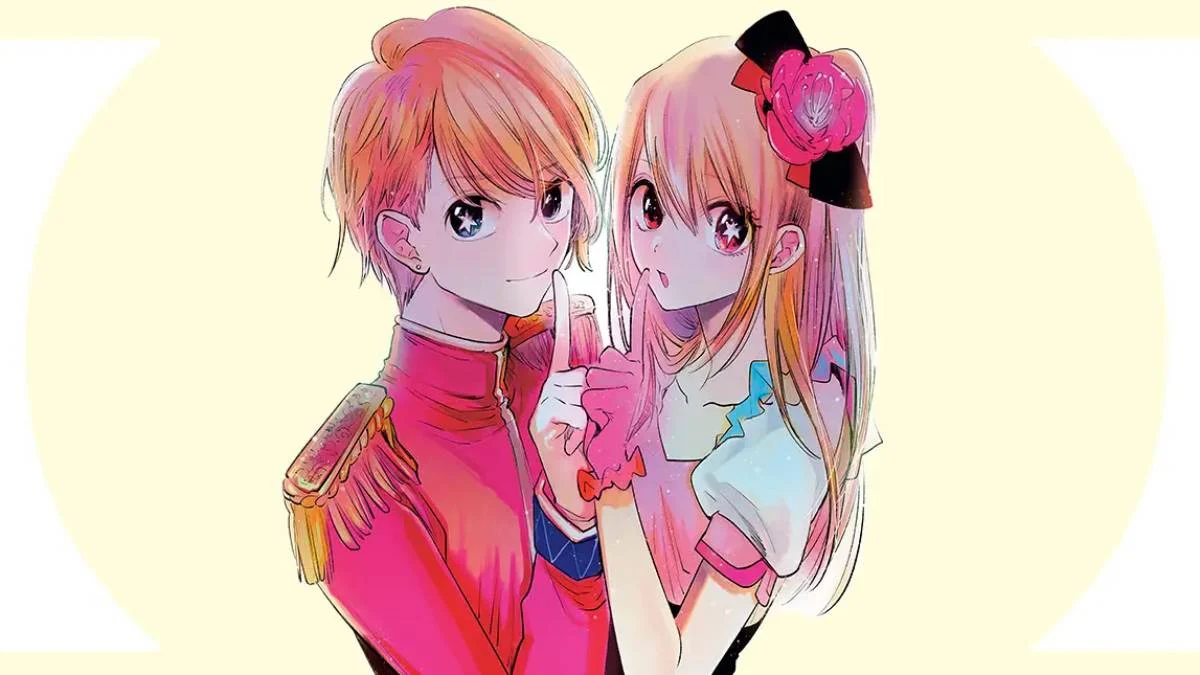
The Context of the Revelation
The central premise of Oshi no Ko involves the supernatural reincarnation of two individuals into the children of the idol Ai Hoshino. Goro Amamiya was a rural gynecologist who cared for Sarina Tendouji, a twelve-year-old girl suffering from an incurable astrocytoma. Following Sarina’s death, Goro became a devotee of the idol group B-Komachi, specifically its center, Ai Hoshino. On the night Ai was set to give birth, Goro was murdered by an obsessed fan, only to be reborn as Ai’s son, Aqua. Simultaneously, Sarina was reborn as Aqua’s twin sister, Ruby.
While both twins were aware of their own previous lives, they remained ignorant of the other’s identity for years. Aqua believed his sister was simply another reincarnated soul, while Ruby remained haunted by the disappearance of "Sensei" (Goro), unaware that he was standing right beside her. Volume 13 breaks this stalemate during a period of intense psychological distress for Ruby, who has spent the latter half of the series descending into a dark pursuit of vengeance.
Chronology of Events Leading to Volume 13
The buildup to this reveal has been meticulously paced across several volumes, characterized by a widening rift between the siblings.
- The Takachiho Trip: In earlier volumes, the cast traveled to Takachiho, the site of Goro’s death and the twins’ birth. It was here that Ruby discovered Goro’s remains, a discovery that triggered her transition from a cheerful idol to a cynical, revenge-driven manipulator.
- The Fall of the "Bright" Ruby: As Ruby’s career skyrocketed, her mental health plummeted. Volume 13 depicts her reaching a breaking point. The realization that her biological mother from her previous life had moved on and started a new, happy family without her served as a devastating blow to her self-worth.
- The Confrontation: The revelation occurs when Aqua finds Ruby in a state of total collapse. She expresses a profound sense of nihilism, believing that everyone she loves is destined for tragedy. To save her from this downward spiral, Aqua produces a keychain—a memento from their past at the hospital—and speaks to her using the specific cadence and knowledge of Goro Amamiya.
Technical and Narrative Analysis of the Identity Reveal
The creative team of Akasaka and Yokoyari utilizes this reveal not merely as a shock tactic, but as a pivot for character development. By revealing himself as Goro, Aqua effectively halts Ruby’s self-destructive path. He re-contextualizes her current life as an idol not as a tool for revenge, but as the fulfillment of the dream Sarina held while she was bedridden.
However, the reveal introduces significant narrative complexity. In their past lives, a teenage Sarina had jokingly (or perhaps earnestly) asked Goro to marry her when she turned sixteen. Goro, believing she would not survive to that age, offered a non-committal promise to soothe a dying patient. In the present timeline, Ruby has surpassed the age of sixteen, and the sudden realization that her brother is her beloved "Sensei" creates a shift in her behavior that has been characterized by observers—both in-universe and among the readership—as intense and potentially problematic.
This shift is observed by supporting characters such as Kana Arima and Mem-cho, who note the sudden change from a frigid, professional distance to an overt, almost obsessive affection from Ruby toward Aqua. This development highlights the "baggage" of reincarnation that Oshi no Ko frequently explores: the difficulty of reconciling the memories and emotions of a past life with the biological and social realities of the current one.
Commercial and Cultural Impact Data
Oshi no Ko has become a dominant force in the manga and anime industry. As of early 2024, the manga has surpassed 17.5 million copies in circulation. The success of the series is attributed to its unique blend of supernatural elements, murder mystery, and a scathing critique of the Japanese entertainment industry.

The anime adaptation, produced by Doga Kobo, significantly boosted the manga’s visibility. The first season’s opening theme, "Idol" by YOASOBI, became a global phenomenon, topping the Billboard Global (Excl. U.S.) chart and amassing over 400 million views on YouTube. This commercial success has put immense pressure on the source material to deliver a satisfying conclusion to its long-standing mysteries. Volume 13 represents the beginning of that "payoff" phase, transitioning the story from the buildup of the "Movie Arc" into the final confrontation with the series’ primary antagonist.
Industry Implications: The "15-Year Lie"
The revelation in Volume 13 coincides with the production of the in-universe film, The 15-Year Lie. This film serves as a meta-narrative device where the characters portray the real-life figures involved in Ai Hoshino’s life and death. Ruby is cast as Ai, while Aqua takes on the role of the stalker who killed Goro.
The identity reveal is a prerequisite for the success of this film project. For Ruby to accurately portray the complexities of Ai Hoshino, she required the emotional stability and direction that only Aqua (as Goro) could provide. From a journalistic perspective, this plot development serves as a commentary on the "method acting" and the emotional exploitation prevalent in high-stakes filmmaking. The twins are essentially using their deepest traumas to create a piece of media intended to expose a murderer, blurring the lines between art and personal catharsis.
Broader Thematic Implications
The reveal in Volume 13 addresses several core themes of the series:
- The Burden of the Past: Both characters have been unable to move forward because they were tethered to their previous identities. By acknowledging each other, they are forced to confront whether they are Goro and Sarina or Aqua and Ruby.
- The Nature of Love: The series explores various forms of love—maternal, platonic, professional, and romantic. The "marriage promise" plot point complicates these definitions, challenging the audience to consider the ethics of their relationship given their shared history.
- Redemption vs. Revenge: Prior to this volume, both twins were consumed by a desire for revenge. The reveal suggests a path toward redemption, where their bond can be used to heal rather than destroy.
Official Status and Availability
Volume 13 of Oshi no Ko is currently available in multiple regions. In North America, Yen Press handles the English localization, maintaining a steady release schedule to catch up with the Japanese serialization in Weekly Young Jump. While Yen Press has not yet confirmed the specific release date for Volume 14, the chapters contained within the upcoming volume are already available digitally via the Manga Plus platform.
The anime adaptation continues to expand the franchise’s reach. The second season, which focuses on the "2.5D Stage Play Arc," has maintained high viewership on platforms like HIDIVE and Crunchyroll. The events of Volume 13 are expected to be the centerpiece of a potential third or fourth season, given the current pacing of the adaptation.
In conclusion, Volume 13 of Oshi no Ko serves as a landmark entry in the series. By resolving the identity mystery that has persisted since the first chapter, Aka Akasaka and Mengo Yokoyari have set the stage for the final act of their tragedy. While the emotional and ethical implications of the reveal remain a subject of debate among the fanbase, its necessity for the progression of the plot and the development of the Hoshino twins is undeniable. The series now moves forward with its protagonists finally on the same page, albeit carrying the heavy weight of two lifetimes.