 Ganda Hendra Perkasa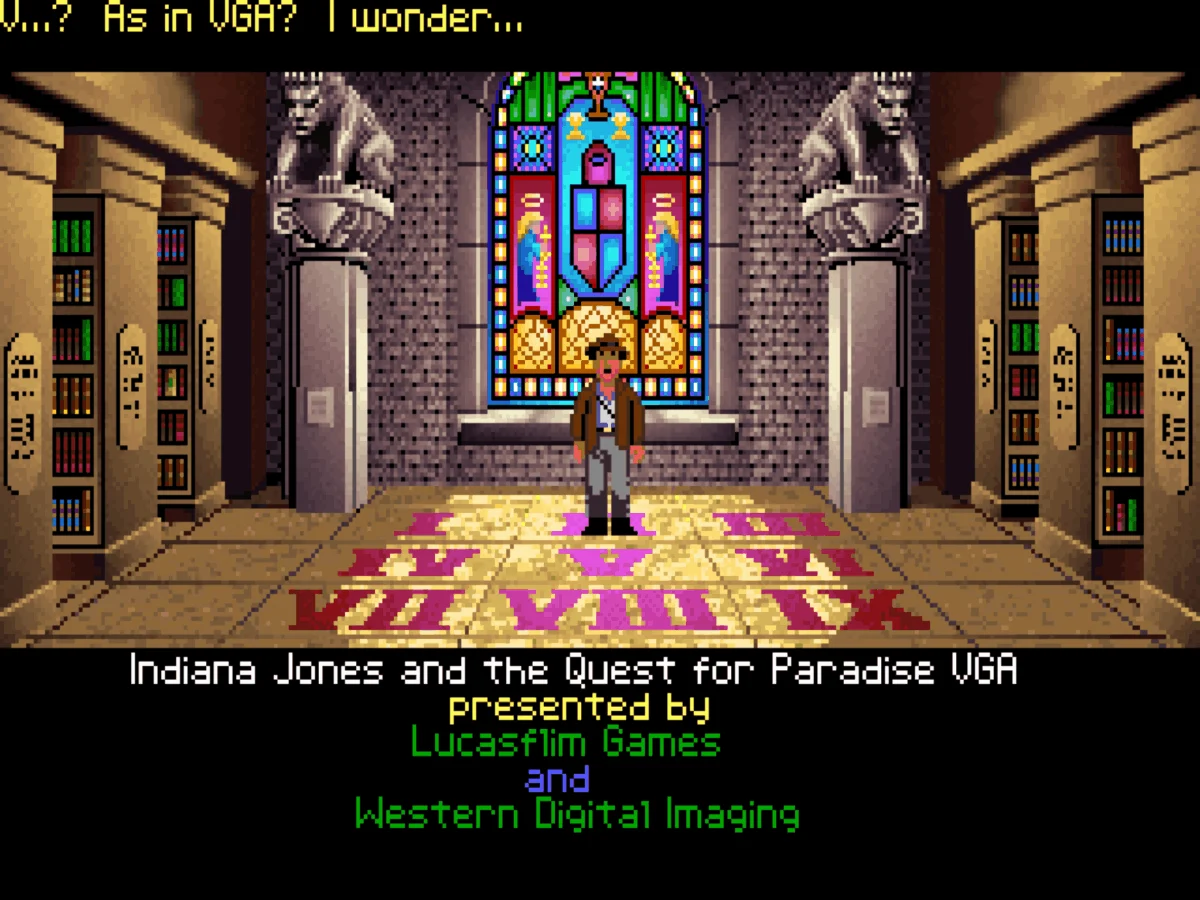
The landscape of computer gaming history has expanded with the unearthing of a previously unknown software artifact originating from the formative era of Lucasfilm Games. Deep within the personal archives of Aric Wilmunder, a principal architect and long-time maintainer of the proprietary SCUMM (Script Creation Utility for Maniac Mansion) adventure game engine, researchers have recovered a digital demo titled Indiana Jones and the Quest for Paradise VGA. This artifact provides a rare window into the commercial strategies, technical transitions, and promotional partnerships that defined the personal computer software market at the dawn of the 1990s.
Far from being a newly discovered playable interactive masterpiece, the newly unveiled software is a non-interactive, automated promotional presentation. It leverages the robust architecture of the SCUMM engine alongside graphical assets originally developed for the critically acclaimed 1989 release, Indiana Jones and the Last Crusade: The Graphic Adventure. The discovery has been cataloged, preserved, and made accessible to the public through the Internet Archive, alongside a video presentation detailing its contents for gaming historians, preservationists, and enthusiasts worldwide.
The Technological Leap: From Standard Graphics to VGA
To understand the significance of the Indiana Jones and the Quest for Paradise VGA demo, one must examine the state of personal computer hardware in 1990. The transition from older graphics standards, such as the Color Graphics Adapter (CGA) and Enhanced Graphics Adapter (EGA), to the Video Graphics Array (VGA) standard represented a monumental shift in digital aesthetics. While EGA supported a palette of 16 simultaneous colors from a total spectrum of 64, the VGA standard introduced support for 256 colors on-screen at a resolution of 320×200 pixels, vastly improving shading, detail, and artistic depth.
However, in 1990, VGA hardware remained an expensive luxury item. Most IBM-compatible personal computer users had not yet upgraded their systems to accommodate the newer cards. Recognizing an opportunity to drive hardware sales while simultaneously updating their software catalog for the emerging standard, hardware manufacturers sought strategic partnerships with prominent software developers.
Western Digital, a dominant manufacturer of storage solutions and graphics hardware—specifically known for its Paradise line of VGA display adapters—entered into a promotional agreement with Lucasfilm Games. Under the terms of this marketing initiative, copies of a newly developed VGA-enhanced version of Indiana Jones and the Last Crusade were bundled directly with Western Digital’s Paradise VGA graphics cards. This served as a powerful incentive for consumers to invest in the costly hardware upgrade, assured that they would immediately receive premier software capable of showcasing the card’s visual capabilities.
Financing the Future: A Double-Dip in Development
The financial and operational mechanics behind the creation of these VGA assets highlight the pragmatic business strategies employed by Lucasfilm Games during the early 1990s. Prior to the partnership with Western Digital, Lucasfilm Games had secured funding from the Japanese electronics and computer corporation Fujitsu. This agreement required Lucasfilm to develop specialized, 256-color iterations of its prominent adventure titles for the FM Towns computer system, which was gaining traction in the Japanese market.
Consequently, the artistic and technical labor required to produce high-color assets had already been fully funded by an external party. When Western Digital approached Lucasfilm Games for a PC-based VGA bundle, the studio was uniquely positioned to leverage these pre-existing 256-color graphical assets as the foundation for the new PC version of the SCUMM engine.
Industry analysts and historians note that this arrangement effectively resulted in Lucasfilm Games being compensated twice for the modernization of its internal technology stack. The studio received initial capital from Fujitsu to develop the high-color FM Towns ports, and subsequently capitalized on those exact assets to secure a lucrative hardware-bundling deal with Western Digital. This dual-revenue model accelerated the studio’s internal transition toward supporting high-resolution, multi-color displays without imposing the entirety of the research and development burden on a single project budget.

Analyzing the Artifact: Mystery and Imperfection
Despite its historical importance, the precise intended function and distribution channel of the Indiana Jones and the Quest for Paradise VGA demo remain shrouded in mystery. Because the software operates entirely as a non-interactive narrative sequence rather than a traditional playable demo where the user controls the protagonist, preservationists have debated how it was meant to be deployed in the marketplace.
Leading hypotheses suggest that the promotional loop may have been designed for exhibition at prominent trade shows, such as the Consumer Electronics Show (CES) or Comdex, where automated kiosk displays were frequently used to capture the attention of passing attendees. Alternatively, it could have been dispatched to computer retail outlets to run on display hardware, encouraging prospective buyers to purchase a Paradise VGA card to experience the full adventure.
However, several anomalies challenge these standard distribution theories. No physical floppy disks containing this specific demo have ever surfaced in retail channels or trade publications prior to this discovery. Furthermore, archival documentation detailing the project’s commissioning, development timeline, or intended deployment is entirely absent from corporate records.
Compounding the mystery is a notable typographical error embedded within the software itself. Throughout the duration of the presentation, the studio’s name is rendered on-screen as “Lucasflim Games” rather than its correct corporate moniker, Lucasfilm Games. This persistent misspelling strongly suggests that the software was abandoned during its developmental or quality assurance phases and was never formally approved for wide commercial release. Current and former developers associated with Lucasfilm Games during this period have reported no active recollection of working on the project, reinforcing the theory that it was an internal prototype or a hastily assembled promotional pitch that fell by the wayside before seeing the light of day.
Preservation and the Broader Impact on Digital History
The recovery and public dissemination of Indiana Jones and the Quest for Paradise VGA underscore the vital ongoing mission of digital preservation organizations, such as the Strong National Museum of Play, the Video Game History Foundation, and the Internet Archive. As early computer media degrades and institutional paper archives are dispersed, forgotten files residing on magnetic storage media face permanent loss.
The identification of this artifact contributes significantly to the academic and historical understanding of 1990s software publishing. It illuminates the symbiotic relationship between hardware manufacturers and software developers during an era when technological standards were rapidly evolving. By examining how companies like Western Digital utilized software incentives to navigate consumer hesitation toward expensive hardware upgrades, contemporary analysts gain a clearer picture of the economic forces that shaped the modern gaming industry.
Furthermore, the discovery highlights the iterative nature of game development during the golden age of the PC adventure genre. Even legendary studios operating at the peak of their creative powers frequently generated experimental builds, promotional proofs-of-concept, and internal pitches that were quietly discarded.
The public can now examine this historical footnote firsthand. The complete demo file has been preserved on the Internet Archive for digital historians and retro-computing enthusiasts, while a captured video playthrough has been made available for broader audiences. As preservationists continue to sort through the personal effects and professional repositories of industry pioneers like Aric Wilmunder, the digital archaeology of early personal computing promises to yield further insights into the foundations of interactive entertainment.