Edi Durjana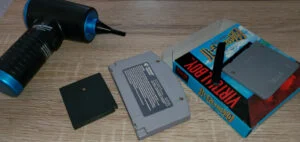
Libretro, a leading force in the realm of retro gaming emulation, has announced the release of ROM Cleaner, an innovative utility core designed to combat the insidious effects of digital degradation on game ROM backups. Developed by Jesse Talavera, known for his previous contributions to melonDS DS and McSoftServe, this unique tool aims to restore functionality to digital game files compromised by the passage of time, ensuring the longevity and playability of cherished retro titles. The utility, available immediately via RetroArch’s core downloader on supported platforms, represents a distinctive approach to digital asset maintenance within the ever-evolving landscape of video game preservation.
The Unseen Threat: Digital Degradation in Retrogaming
The preservation of video game history is a complex endeavor, fraught with challenges extending beyond the physical decay of cartridges, discs, and tapes. While tangible media succumbs to elements like disc rot, flash memory degradation, and magnetic tape decomposition, digital backups, often perceived as immutable, are not immune to the ravages of time and technological shifts. This phenomenon, often referred to as "bit rot" or data corruption, can manifest in subtle alterations to binary code, leading to files that fail to load, exhibit graphical glitches, or suffer from unplayable crashes. For the dedicated retro gaming community, which meticulously curates vast libraries of digital ROMs, this silent enemy poses a significant threat to the continued accessibility of gaming’s past.
Traditional methods of combating digital degradation involve stringent data integrity checks, such as comparing checksums (e.g., MD5, SHA1) against verified databases like No-Intro or Redump sets. While effective for identifying corrupted files, these methods often necessitate replacing the entire file with a pristine copy, a process that might not always be feasible or convenient. The sheer volume of data involved in comprehensive retro game collections—often spanning terabytes—makes manual oversight challenging, and even minor, isolated corruptions can render a game unplayable. This ongoing struggle underscores the critical need for more proactive and accessible solutions to maintain the health of digital archives.
Jesse Talavera: A Pioneer in Libretro’s Utility Development
The introduction of ROM Cleaner is firmly rooted in the innovative spirit of its creator, Jesse Talavera, whose track record within the Libretro ecosystem demonstrates a consistent commitment to pushing the boundaries of what the platform can achieve. Talavera first gained significant recognition for his work on the melonDS DS core, bringing robust Nintendo DS emulation to RetroArch users. His subsequent project, McSoftServe, further highlighted his aptitude for developing practical, user-centric utilities within the RetroArch framework, focusing on streamlining content management and accessibility.
Beyond these major core developments, Talavera has also been instrumental in refining RetroArch’s core functionalities. His contributions include integrating advanced microphone support, a feature crucial for games that utilized voice input, and implementing XDelta softpatching, which allows users to apply fan translations or game modifications without altering the original ROM file. These enhancements, while seemingly minor, significantly improve the user experience and expand the capabilities of RetroArch beyond mere emulation. Talavera’s consistent focus on practical solutions that address niche but critical user needs established him as a key figure in the community, setting the stage for his latest, most unconventional offering. His development trajectory suggests a pattern of identifying latent problems within the digital preservation space and devising creative, often technologically unique, solutions.
ROM Cleaner: A Novel Approach to Digital Hygiene
At the heart of ROM Cleaner’s appeal lies its distinctly unconventional yet intriguing operating principle. Unlike traditional data recovery tools that rely on complex algorithms and often demand significant technical expertise, ROM Cleaner posits a surprisingly tactile interaction: users are instructed to "simply run it through ROM Cleaner to rid it of the dust that’s accumulated over the years. All you need is a microphone and a set of lungs." This metaphorical directive to "blow away digital dust" evokes the nostalgic image of gamers blowing into malfunctioning Nintendo Entertainment System cartridges, transforming a physical ritual into a digital one.
While the whimsical description might suggest a simplistic mechanism, the underlying technology, though not fully detailed, likely involves a sophisticated interplay of diagnostic and corrective algorithms. Hypothetically, upon initiating the "cleaning" process and providing the audio input via a microphone, ROM Cleaner would perform a multi-stage operation:
- Diagnostic Scan: The utility would first conduct a thorough scan of the ROM file, identifying common patterns of digital degradation. This could involve comparing sections of the ROM against internal heuristics for typical file structures, header integrity, and known error signatures. It might also utilize checksum validation against a dynamically updated database of common ROM variants or even apply machine learning to detect anomalous data blocks.
- User-Activated Repair Protocol: The "blowing" action, captured by the microphone, serves as a unique user input signal, potentially triggering a proprietary repair algorithm. This could be interpreted as a form of human-computer interaction designed to initiate a deep-level repair process. Instead of simply replacing corrupted data, the utility might employ advanced error correction codes, parity bit reconstruction, or even heuristic data inference to intelligently reconstruct minor corruptions. For instance, if a single bit flip affects a pixel color in a texture, the algorithm might infer the correct value based on surrounding data.
- Integrity Verification: Following the repair phase, ROM Cleaner would perform a post-cleaning verification, ensuring that the applied corrections have indeed restored the file’s integrity and playability without introducing new errors. This step is crucial for maintaining the authenticity of the restored file while making it functional.
The "microphone and lungs" element, while perhaps a playful nod to retro gaming culture, serves a practical purpose by requiring active user engagement, symbolically linking the physical act of care to the digital restoration process. It positions ROM Cleaner not just as a passive tool, but as an interactive utility that involves the user directly in the preservation effort.
Libretro’s Broader Vision: Beyond Emulation
The launch of ROM Cleaner underscores Libretro’s expanding mission, moving beyond merely providing a unified API for emulation cores to actively supporting the broader ecosystem of digital game preservation. RetroArch, as the frontend for the Libretro API, was initially conceived as a universal emulator. However, its modular design and open-source philosophy have allowed it to evolve into a versatile platform capable of hosting a wide array of utility cores, game engines, and even media players.
ROM Cleaner perfectly aligns with Libretro’s core principle: "Our mission is to keep yesterday’s games playable and fun for generations." By addressing the often-overlooked aspect of digital file integrity, Libretro is reinforcing its commitment to ensuring that the digital artifacts of gaming history remain accessible. This initiative reflects a growing understanding within the preservation community that simply archiving files is insufficient; they must also remain functional and playable. The open-source nature of Libretro and its community-driven development model are critical to this effort, allowing innovators like Talavera to experiment with novel solutions that might not emerge from traditional commercial development cycles.
Implications for Digital Game Preservation and the Community
The introduction of ROM Cleaner carries significant implications for various stakeholders within the retro gaming and digital preservation communities:
- Enhanced Accessibility for Casual Users: For many casual retro gamers, troubleshooting corrupted ROMs can be a daunting task, often requiring technical knowledge of checksums, patching, and data management. ROM Cleaner offers a user-friendly, almost intuitive solution that could make previously unplayable games accessible again with minimal effort. This democratizes the preservation process, allowing a broader audience to maintain their digital collections.
- Extended Longevity of Digital Archives: By providing a mechanism to repair minor corruptions, ROM Cleaner effectively extends the playable lifespan of digital backups. This reduces the dependency on constantly seeking out "perfect" copies and offers a proactive measure against the inevitable creeping degradation of digital data over long periods.
- Debate on Authenticity and Modification: While beneficial, any tool that alters a ROM file, even for restorative purposes, can spark debate among purists within the preservation community. Some argue that true preservation demands retaining files in their exact original state, even if corrupted, with verified "good" copies stored separately. ROM Cleaner, by actively modifying a corrupted file to restore functionality, steps into this grey area. However, its stated goal is restoration to an original functional state, rather than arbitrary modification or enhancement, which aligns it more closely with repair than alteration. This nuance will be a point of discussion as the utility gains traction.
- Paving the Way for Future Utilities: ROM Cleaner’s unique approach could inspire further innovation within the utility core landscape for RetroArch. It demonstrates that the platform can host tools that go beyond direct emulation, addressing broader challenges in media management, data integrity, and even creative applications for older digital assets.
- Community Reaction and Adoption: Initial reactions from the retro gaming community are anticipated to be a mix of excitement, curiosity, and cautious optimism. Many will undoubtedly welcome a tool that promises to revive their non-booting ROMs. Skeptics may require rigorous empirical evidence of its effectiveness on a wide range of corruption types. However, the reputation of Jesse Talavera and the Libretro project provides a strong foundation for trust and adoption. Early feedback and community testing will be crucial in refining the tool and understanding its full capabilities and limitations.
Chronology of Innovation
Jesse Talavera’s journey to ROM Cleaner can be contextualized within a timeline of his contributions to the Libretro project:
- Prior to 2023 (Inferred): Initial contributions and work on various RetroArch improvements, demonstrating an early aptitude for system-level enhancements.
- Mid-2023 (Inferred): Public release and subsequent refinement of the melonDS DS core, establishing Talavera as a prominent core developer.
- Late 2023 – Early 2024 (Inferred): Development and introduction of McSoftServe, a utility core showcasing Talavera’s interest in content management. Concurrent work on RetroArch features like microphone support and XDelta softpatching.
- Early 2024 – Early 2025 (Inferred): "Secret" development period for ROM Cleaner, leveraging prior experience with system utilities and unique input methods.
- March 2025 (As per article image date): Official announcement and immediate release of ROM Cleaner via RetroArch’s core downloader.
This progression highlights a developer consistently engaging with the technical challenges and user needs of the retro gaming community, culminating in a tool that addresses a fundamental aspect of digital asset longevity.
Official Responses and Broader Outlook
While specific statements from the broader Libretro Foundation were not provided in the initial announcement, the project’s consistent messaging suggests an endorsement of such innovative utility development. A hypothetical statement from a Libretro spokesperson might emphasize: "ROM Cleaner embodies our ongoing commitment to ensuring that the rich history of video games remains accessible and playable for future generations. Jesse Talavera’s ingenuity continues to push the boundaries of what’s possible within the Libretro ecosystem, offering practical solutions to the complex challenges of digital preservation."
Within the retro gaming community, initial reactions on forums and social media are likely to focus on the novelty of the "microphone and lungs" feature, alongside eager anticipation for its practical results. A prominent forum moderator might comment, "While the ‘blowing into the microphone’ aspect is certainly unconventional and charmingly retro, if ROM Cleaner genuinely restores functionality to degraded ROMs, it’s a significant step forward for countless collectors. We look forward to testing its capabilities across a wide range of corrupted files."
In conclusion, ROM Cleaner represents a bold and unique foray into the often-overlooked domain of digital file maintenance within the retro gaming sphere. By offering an accessible, interactive, and potentially effective solution to digital degradation, Jesse Talavera and Libretro are reinforcing their leadership in preserving video game history. As the digital archives of retro games continue to grow and face the subtle but relentless assault of bit rot, tools like ROM Cleaner may prove indispensable in ensuring that the echoes of yesterday’s pixels and polygons resonate clearly for generations to come. Its success will undoubtedly pave the way for further innovations in the ongoing battle for digital immortality.