Cecilia Chamidah Nur
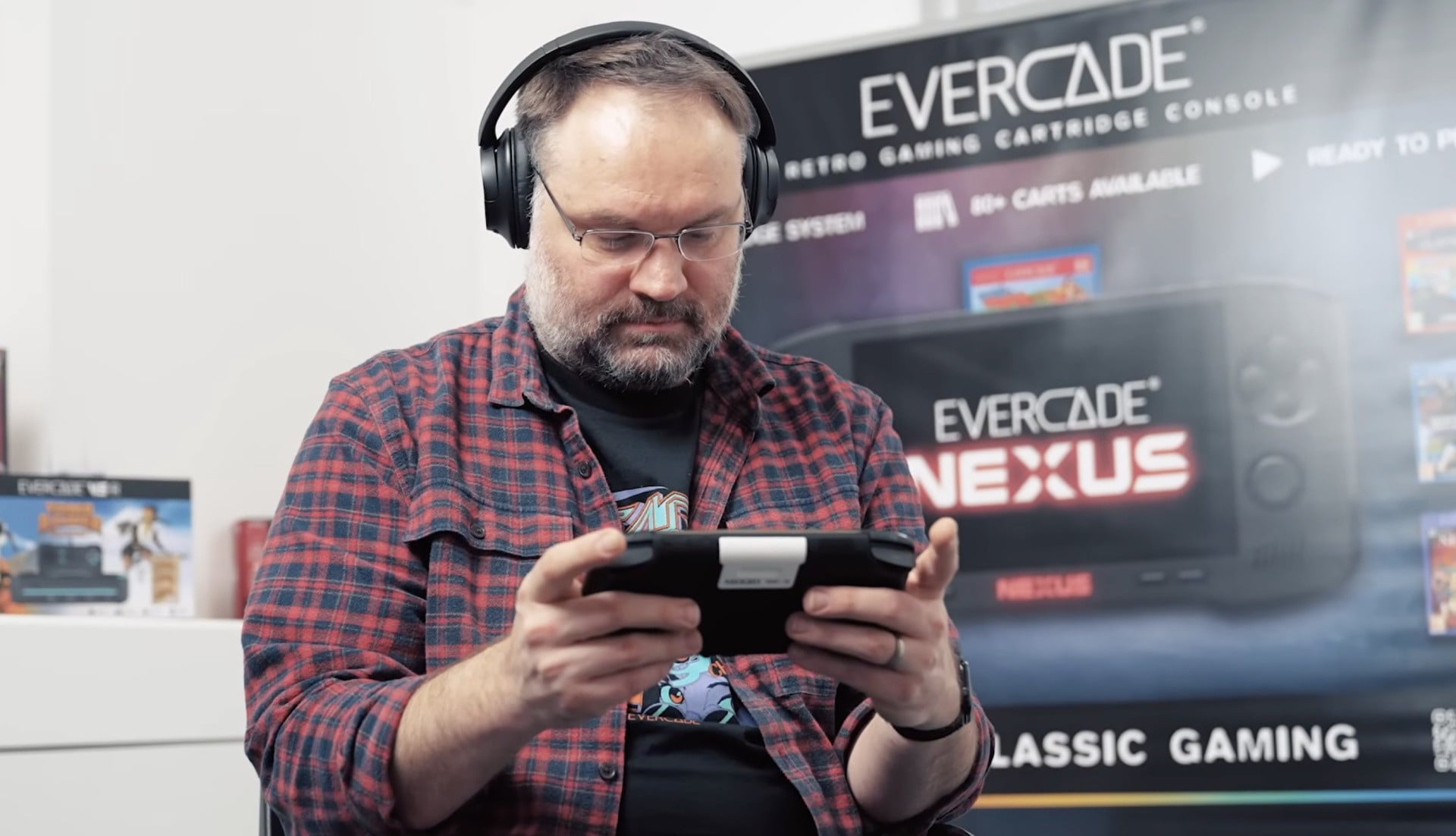
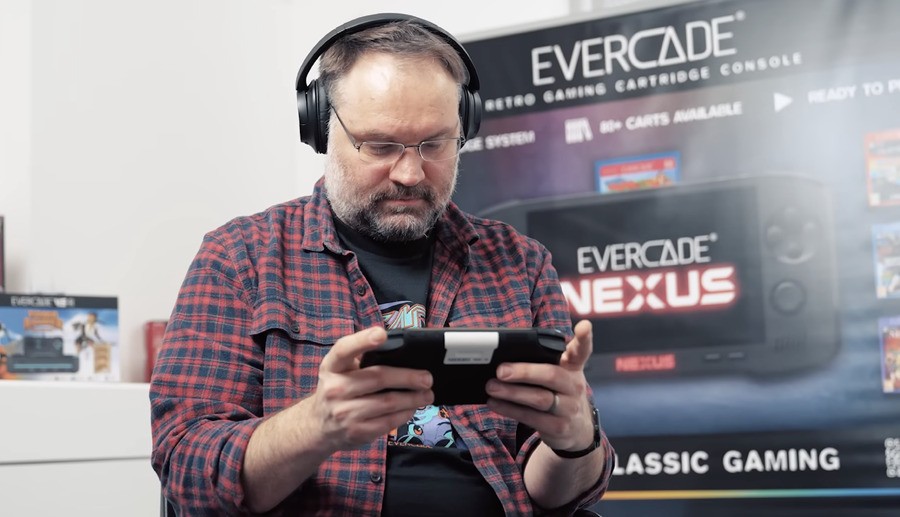
Blaze Entertainment has officially lifted the veil on its highly anticipated Evercade Nexus handheld, presenting the device "in the flesh" for the first time in a dedicated YouTube video. This public debut, spearheaded by Head of Communications Sean Cleaver, offers a comprehensive look at the new system, highlighting a suite of significant improvements over its predecessor, the Evercade EXP. The Nexus is poised to further cement Evercade’s unique position in the retro gaming market, combining modern handheld conveniences with its signature physical cartridge ecosystem.
Key Enhancements and User Experience
The presentation meticulously detailed the Nexus’s key upgrades, signaling Blaze Entertainment’s commitment to refining the Evercade experience. Among the most notable improvements are a larger, presumably higher-quality display, the integration of dual analog controls, a novel game-sharing feature dubbed ‘EverSync’, and native support for wireless headphones. These enhancements collectively aim to deliver a more versatile and immersive retro gaming experience, addressing common user feedback and bringing the platform more in line with contemporary handheld expectations while retaining its core identity.
The display, while specific technical details like resolution or panel type (e.g., IPS, OLED) were not explicitly detailed in the initial announcement, is notably larger than that of the Evercade EXP. For retro gaming, a larger screen often translates to a more comfortable and visually engaging experience, allowing classic pixel art to shine with greater clarity and detail. This improvement is crucial for games that were originally designed for larger CRT televisions or arcade monitors, providing a more faithful representation of their intended visual presentation on a portable device.
Perhaps one of the most significant functional upgrades is the inclusion of dual analog controls. Previous Evercade handhelds primarily relied on D-pads for navigation, which is perfectly suited for many 8-bit and 16-bit era titles. However, the retro gaming landscape extends beyond these generations, encompassing systems like the Nintendo 64, PlayStation, and Dreamcast, where analog input is not just preferable but often essential for proper gameplay. The Nexus’s analog sticks open the door to potentially wider compatibility with future cartridge collections that might feature games from these more advanced console eras, or even enhance the playability of certain arcade titles that originally utilized analog joysticks. This move positions the Nexus as a more versatile platform, capable of handling a broader spectrum of classic game genres and control schemes.
A groundbreaking new feature introduced with the Nexus is ‘EverSync’. While the specifics of its operation are still being fully elucidated, it is described as an ability to "share games with other Nexus owners." This feature has the potential to foster a more communal and interactive experience among Evercade enthusiasts. It could involve the wireless transfer of save states, allowing players to pick up where a friend left off, or perhaps even a limited form of game sharing for local multiplayer sessions where only one cartridge is needed. If EverSync allows for temporary digital access to a game owned on a physical cartridge by another Nexus user nearby, it would be a significant innovation, blending the tactile appeal of physical media with the convenience of digital access in a controlled, local environment. Such a feature would be reminiscent of Nintendo’s DS/3DS Download Play, where multiple users could join a multiplayer game or even demo a title from a single game card, a highly consumer-friendly approach.
Complementing the modern user experience, the Evercade Nexus will support wireless headphones. This is a widely expected feature in contemporary portable electronics, offering users the freedom of movement and convenience of Bluetooth audio without the hassle of tangled wires. For a device focused on entertainment, especially one designed for on-the-go use, this is a welcome addition that enhances portability and user comfort.
Moreover, the Nexus retains the innovative TATE mode, a feature inherited from the EXP. TATE mode allows users to rotate the handheld 90 degrees clockwise, optimizing the display for vertically oriented arcade games. This is a beloved feature for fans of classic shoot ’em ups (shmups) and other arcade titles, which were often designed with a vertical aspect ratio. The dedicated hardware design to support TATE mode underscores Blaze Entertainment’s commitment to authenticity and providing the best possible experience for specific retro genres. Games like Donkey Kong, Pac-Man, or numerous bullet-hell shooters can be played in their original arcade aspect ratio, offering a more genuine retro experience.
Launch Details and Pricing
The Evercade Nexus is slated for an October release, positioning it as a prime candidate for the holiday season. It will be compatible with the rapidly expanding Evercade family of cartridges, ensuring that existing collectors can seamlessly transfer their libraries to the new device and continue to grow their collections. The pricing has been confirmed at £169.99 / €199.99 / $199.99, placing it in a competitive segment of the handheld market. This price point positions the Nexus as a premium retro gaming device, offering officially licensed content and a physical media model, distinguishing it from both budget emulation handhelds and high-end devices like the Steam Deck or Nintendo Switch.
The Evercade Ecosystem: A Growing Family

The Evercade Nexus does not arrive in isolation but joins a robust and diverse ecosystem of retro gaming hardware developed by Blaze Entertainment. This ecosystem is built around the core concept of officially licensed, physical cartridge-based retro game collections, a philosophy that has resonated strongly with collectors and retro enthusiasts globally.
The journey began with the original Evercade Handheld, a pioneering device that introduced the world to the concept of multi-game cartridges featuring curated collections from various publishers. This initial success paved the way for expansion.
The Evercade VS then brought the Evercade experience to the living room. As a home console, the VS allowed users to enjoy their cartridge collections on a television, often with up to four players, further broadening the appeal of the platform. Its dual cartridge slots were a particular highlight, allowing for massive libraries to be accessible simultaneously.
The Evercade EXP followed as the second-generation handheld, introducing significant improvements such as a higher-resolution IPS screen, built-in Wi-Fi for firmware updates, and the innovative TATE mode, which the Nexus now inherits. It also came with a bundled Capcom Heroes cartridge, showcasing the platform’s ability to attract major publishers. Recently, Blaze also released the Evercade EXP-R and VS-R models, which were essentially refreshed versions of their predecessors, offering slight cost reductions or minor component changes, demonstrating Blaze’s continuous iteration on its core products.
Beyond the main console and handheld lines, Blaze Entertainment has also diversified with products like the Evercade Alpha and the Super Pocket series. The Evercade Alpha represents a foray into the bartop arcade market, offering a dedicated, self-contained arcade experience pre-loaded with classic titles, still leveraging the Evercade cartridge system for expansion. The Super Pocket, developed in partnership with Hyper Mega Tech, offers a more budget-friendly, Game Boy-style retro handheld, often bundled with specific game collections, serving as an accessible entry point into the Evercade universe. This broad portfolio underscores Blaze’s strategy to cater to different segments of the retro gaming market, from dedicated collectors to casual players, all unified by the Evercade cartridge format.
Blaze Entertainment’s Vision and Market Impact
Blaze Entertainment, a UK-based company, launched the Evercade platform with a clear vision: to offer a legitimate, accessible, and collectible way to play retro video games. In an era dominated by digital downloads, subscription services, and often legally grey emulation solutions, Evercade carved out a niche by focusing on officially licensed content delivered on physical cartridges. This approach not only ensures that game developers and publishers receive fair compensation but also provides consumers with a tangible product that holds intrinsic value as a collectible.
The company’s commitment to game preservation is also noteworthy. By working directly with rights holders, Evercade helps to keep classic games alive and accessible on modern hardware, often introducing them to new generations of players. This stands in contrast to the transient nature of some digital storefronts, where games can be delisted or become unplayable due to platform changes. The physical nature of Evercade cartridges ensures that once purchased, a game collection remains playable as long as the hardware functions.
The introduction of the Evercade Nexus marks a significant step in the platform’s evolution. It demonstrates Blaze Entertainment’s responsiveness to user feedback and its dedication to iterating on its hardware to provide a more refined experience. The inclusion of analog controls and wireless audio, in particular, suggests an ambition to broaden the appeal of the Evercade to players accustomed to modern gaming amenities, without abandoning the retro core.
The ‘EverSync’ feature, if it lives up to its potential, could be a game-changer for the social aspect of retro gaming. While retro gaming is often a solitary pursuit, the ability to easily share game experiences or progress locally could foster a stronger community feel among Evercade owners. This innovation showcases Blaze’s willingness to experiment and push the boundaries of what a physical-media-centric platform can offer.
From a market perspective, the Evercade Nexus competes in a crowded space. On one end, there are numerous budget-friendly Linux-based emulation handhelds from companies like Anbernic and Miyoo, offering extensive game libraries via ROMs, often at lower price points. On the other, high-end devices like the Steam Deck or even the Nintendo Switch offer vastly superior performance and modern game libraries, albeit at a significantly higher cost. The Evercade Nexus, with its price point and unique proposition, firmly occupies the middle ground. It appeals to a specific demographic: those who value official licensing, physical media, ease of use (no complex setup required), and a curated experience over raw power or the legal ambiguities of emulation.
The growing library of Evercade cartridges, which spans hundreds of titles from dozens of publishers (including Atari, Capcom, Irem, Jaleco, Interplay, and many indie developers), is the platform’s lifeblood. Each cartridge typically contains multiple games, offering excellent value. The continuous release of new collections ensures that the ecosystem remains vibrant and appealing to collectors. The Nexus, by offering enhanced hardware, makes these existing and future collections even more enjoyable.
Implications for the Retro Gaming Community
The launch of the Evercade Nexus carries several implications for the broader retro gaming community. Firstly, it reinforces the enduring appeal and commercial viability of physical media in gaming, especially for retro titles. In an industry increasingly moving towards digital-only distribution, Evercade stands as a testament to the demand for tangible game collections.
Secondly, it further legitimizes the business of retro gaming. By obtaining official licenses and working with original developers and publishers, Blaze Entertainment provides a model for how the history of video games can be celebrated and monetized ethically. This helps to ensure that the creators of these classic experiences benefit from their continued popularity.
Finally, the Nexus’s improved hardware could inspire further innovation within the retro handheld market. Features like EverSync, if successful, might prompt other manufacturers to consider similar social or convenience features that go beyond mere emulation. The commitment to a larger, better screen and analog controls suggests a maturation of the retro handheld segment, where user experience is prioritized alongside game compatibility.
As October approaches, anticipation will undoubtedly build for the Evercade Nexus. With its blend of nostalgic appeal, modern enhancements, and a unique physical media model, it represents a compelling proposition for retro gaming enthusiasts worldwide. The device not only promises to elevate the Evercade experience but also reinforces Blaze Entertainment’s role as a significant player in the preservation and celebration of video game history.
[source youtube.com]