Farhan hamdan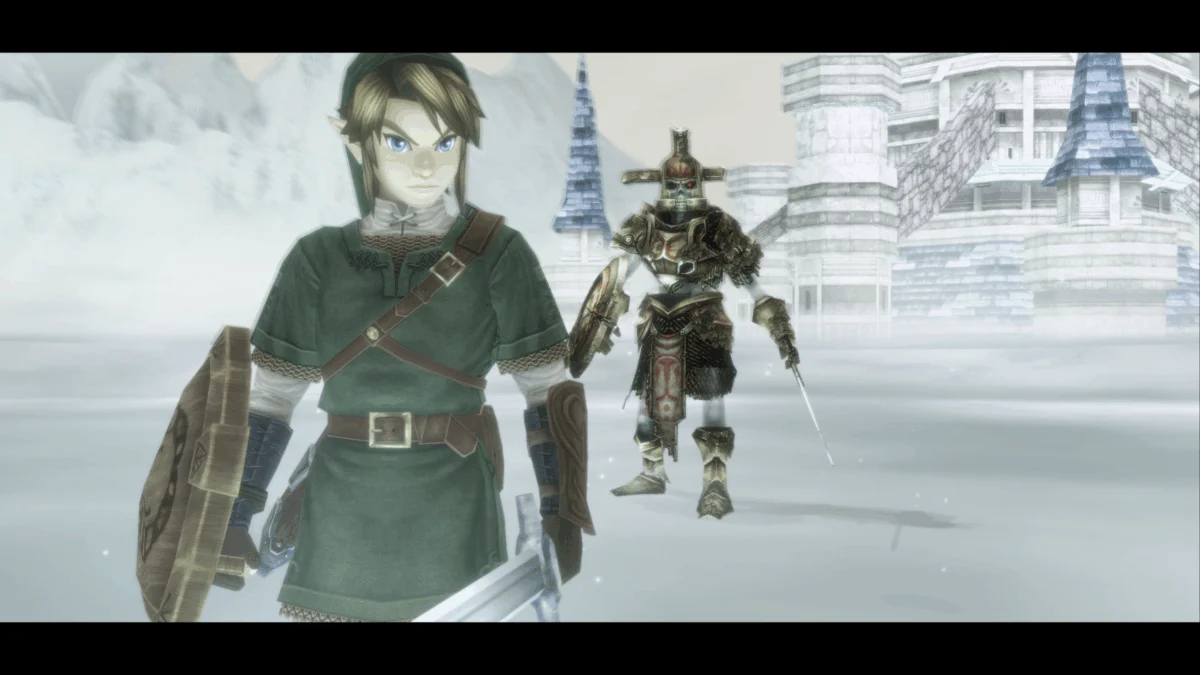
Unprecedented Multi-Platform Launch and Technical Excellence
The "Dusk" project distinguishes itself with its ambitious simultaneous release on Windows, macOS, Linux, Android, and iOS. This broad platform support is a monumental achievement for a fan-made endeavor, showcasing exceptional technical prowess and cross-platform development expertise. For Linux users, specifically, the port offers a streamlined installation via a simple AppImage from the official Dusk GitHub downloads page, as demonstrated by Try from "My Life in Gaming" during a recent livestream. The ease of access, combined with the sheer scope of supported operating systems, underscores the developers’ commitment to making Twilight Princess as accessible as possible to a global audience. This level of multi-platform deployment often requires significant resources even for professional studios, making "Dusk"’s accomplishment particularly commendable.
Upon launch, users are prompted to direct the application to their GameCube Twilight Princess .iso file, facilitating a quick and hassle-free setup process. The initial user experience has been lauded for its intuitiveness, a stark contrast to many other fan-made ports that often present complex configuration challenges. The in-game settings menu further exemplifies this user-centric design, offering seamless navigation with both mouse and controller input – a crucial detail often overlooked in similar projects. The inclusion of subtle but impactful elements, such as sound effects within the settings menu, contributes to a polished and professional feel, elevating the overall user experience beyond typical fan expectations. Players can even access the settings menu mid-game by pressing R+Start, allowing for real-time adjustments and observation of changes, a testament to the developers’ attention to detail and commitment to player convenience.

Enhanced Visuals and Performance: A Modern Take on a Classic
One of the most significant enhancements offered by the "Dusk" port is its flexible internal rendering resolution. Players can scale the game from its original resolution to any integer multiplier, with anti-aliasing effectively managed through downsampling from a higher rendering resolution to the chosen output. This capability allows Twilight Princess to shine on modern high-resolution displays, from 1080p monitors to 4K televisions. While the current settings menu may appear small on 2160p displays in full-screen mode, this minor interface issue is a small concession for the otherwise pristine visual fidelity. The development team has acknowledged such feedback, indicating potential future updates to address UI scaling.
Performance metrics reported by early testers are equally impressive. The game supports high refresh rates, with smooth gameplay observed at up to 120Hz. While the core game logic intelligently remains locked at 30 frames per second to prevent unintended gameplay alterations or glitches, the port intelligently adapts polygon motion to match the display’s refresh rate. This sophisticated interpolation technique results in a fluid and responsive experience, significantly surpassing the original console versions. Although minor temporal incongruities might occasionally be noticeable in some low-priority animated effects, the overwhelming benefits of playing at 60 or 120 frames per second far outweigh these infrequent occurrences, offering a fresh perspective on the game’s dynamic combat and exploration.
Modding, Quality-of-Life, and Future Developments

The "Dusk" port embraces the spirit of community enhancement by supporting existing high-resolution texture packs originally designed for emulators like Dolphin. Integrating these texture packs is remarkably straightforward: users simply place the texture pack folder into the designated texture replacements directory within the game’s install folder, and the changes are automatically applied. This feature significantly elevates the visual quality, addressing the noticeable low-resolution textures of the original GameCube version when rendered in HD or 4K. Community-made texture packs have been praised for their tasteful enhancements, preserving the game’s iconic art direction while bringing it into the modern era. While current functionality only allows for automatic application without in-game toggling or selection of multiple packs, future updates are expected to introduce more explicit support for texture replacements and a broader modding ecosystem.
A notable aspiration for the project is to enable builds based on the Wii and Wii U versions of Twilight Princess, in addition to the current GameCube requirement. This would open doors for incorporating assets and features from these later iterations, potentially offering even higher fidelity textures or specific quality-of-life adjustments. Currently, players can choose between the GameCube’s original world layout or the mirrored Wii world layout, catering to different player preferences and historical playthroughs. Many aficionados consider the non-mirrored GameCube world to be the more "canonical" experience.
Addressing another common request, the developers are reportedly working on implementing support for high-resolution fonts. This enhancement is crucial, as in-game text often remains visibly pixelated even with high-res texture packs, detracting from the otherwise sharp visuals. The presence of developers in community chats, engaging directly with feedback, highlights the project’s open and iterative development philosophy. Beyond graphical enhancements, "Dusk" already includes a wealth of quality-of-life options, settings mirroring tweaks found in the Wii U version, and even built-in cheats, allowing for a highly customizable gameplay experience. Discussions are also underway for a feature or mod that would allow mapping items to additional buttons beyond just X and Y, further enhancing control customization.
Revolutionizing Control: Gyro Aiming and Modern Input

A standout feature that significantly elevates the gameplay experience is the seamless integration of modern control schemes. The ability to map buttons one-to-one with the original game’s HUD ensures familiarity, but it’s the unexpected addition of gyro support that truly shines. Utilizing a Nintendo Switch 2 GameCube controller, which surprisingly includes built-in gyro capabilities, players can leverage Steam Input to map gyro movements to mouse input. This automatically activates gyro aiming whenever entering a first-person view, such as when aiming Link’s bow or boomerang. This functionality is a "massive help" for precision aiming and general camera control, bringing a modern sensibility to Twilight Princess‘s combat and puzzle-solving. The strong advocacy for developers who implement gyro look/aim reflects a growing demand for more immersive and precise input methods in contemporary gaming.
The Broader Significance: Game Preservation and Community Empowerment
The "Dusk" project is more than just a PC port; it represents a significant victory for game preservation and the broader open-source gaming community. Decompilation projects, while technically complex and existing in a legal grey area, are critical for ensuring the longevity and accessibility of classic titles. Unlike emulation, which simulates original hardware, a native port runs the game’s code directly on modern systems, often allowing for performance and graphical enhancements that would be impossible through emulation alone. This process safeguards games from hardware obsolescence and provides a foundation for future community-driven innovation.
The Legend of Zelda: Twilight Princess, originally released in 2006 for the GameCube and as a launch title for the Wii, holds a special place in the hearts of many gamers. It was lauded for its darker narrative, mature themes, and expansive world, serving as a critical bridge between the series’ traditional roots and more modern design philosophies. The "Dusk" port ensures that this iconic chapter in Zelda history remains not only playable but also enhanced for new generations and veteran fans alike. It stands as a testament to the passion and technical skill of fan communities, who often go above and beyond official efforts to maintain and improve beloved games. The project’s open-source nature fosters collaboration and continuous improvement, promising a dynamic future for the port.

Timeline and Background of Decompilation Efforts
The journey to a native Twilight Princess PC port is rooted in years of painstaking reverse-engineering and decompilation efforts by various community groups. Unlike traditional emulation, which simulates the original console’s hardware, decompilation involves reconstructing the game’s original source code from its compiled binary. This arduous process allows developers to build new executables that run natively on different platforms, providing superior performance, stability, and opportunities for modern enhancements without relying on hardware abstraction layers. The Twilight Princess decompilation project, like those for Super Mario 64 and Ocarina of Time, represents hundreds, if not thousands, of collective hours spent by volunteer programmers meticulously analyzing and rebuilding the game’s intricate logic. The "Dusk" project is the culmination of these efforts, taking the decompiled source and crafting a polished, user-friendly application.
Future Outlook and Community Impact
The initial release of "Dusk" is merely the beginning. The active engagement of developers with the community, coupled with a robust roadmap for future updates, suggests a promising trajectory for the project. Anticipated enhancements include more sophisticated modding support, broader compatibility with Wii and Wii U game versions, and further quality-of-life improvements. The collaborative, open-source model ensures that the port will continue to evolve, addressing community feedback and incorporating new features.

In conclusion, the "Dusk" project’s native multi-platform port of The Legend of Zelda: Twilight Princess is a landmark achievement in game preservation and fan-driven development. Its astonishingly polished launch across a wide array of devices, combined with significant technical enhancements and thoughtful user experience design, solidifies its position as arguably the most accessible, fun, and definitive way to experience this iconic title going forward. It underscores the invaluable role of dedicated communities in safeguarding gaming history and pushing the boundaries of what’s possible outside traditional commercial development cycles.