Johny Imanuel
The announcement comes at a time when the retro gaming market continues to show robust growth, driven by a combination of licensed hardware re-releases and a burgeoning community of enthusiasts seeking high-quality physical media and dedicated devices. Blaze Entertainment, through its HyperMegaTech! brand, has established a reputation for delivering curated gaming experiences that prioritize ease of use without sacrificing the aesthetic charm of the original hardware. THEC64 and The Spectrum Handhelds are the latest manifestation of this philosophy, integrating licensed software libraries with hardware that mimics the iconic visual identities of the Commodore 64 and the Sinclair ZX Spectrum.
Hardware Specifications and Design Philosophy
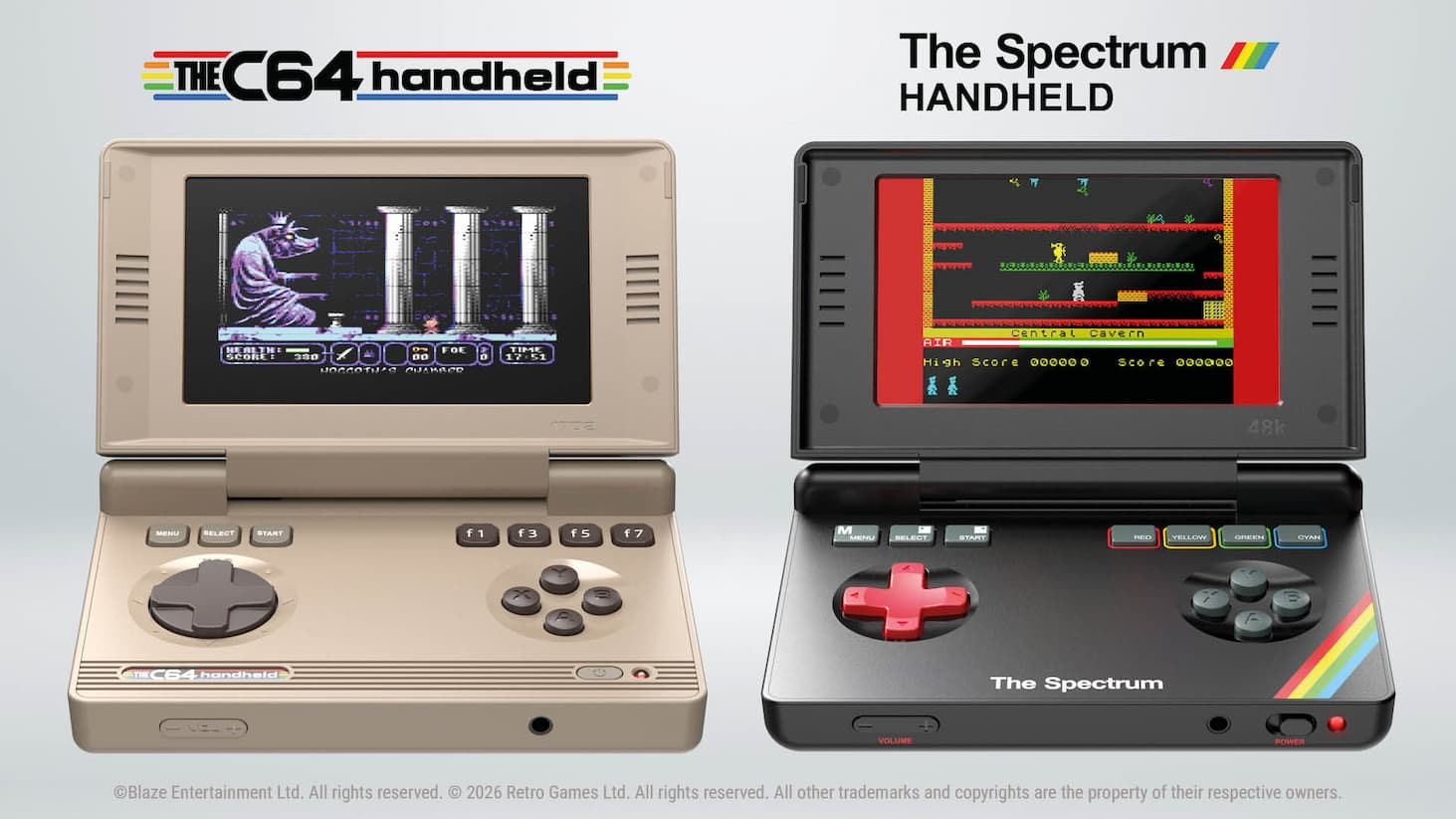
The primary design feature of both THEC64 and The Spectrum handhelds is the clamshell form factor. This choice, reminiscent of the Nintendo DS and 3DS families, provides a dual benefit: it protects the internal screen and controls during transport and offers a compact footprint for portable play. Each device is equipped with a 4.3-inch IPS (In-Plane Switching) display. The use of an IPS panel is a critical technical detail, as it ensures wide viewing angles and superior color accuracy compared to cheaper TN panels often found in budget handhelds. The resolution is set at 800×480, providing a sharp reproduction of the original 8-bit graphics while maintaining the correct aspect ratios necessary for authentic gameplay.
Control schemes for both devices have been tailored to reflect their respective inspirations. The units feature built-in tactical buttons and directional inputs designed to handle the often-demanding precision of 1980s arcade ports. Furthermore, Blaze Entertainment has addressed the primary limitation of many retro handhelds—the lack of traditional computer inputs—by including ports on the rear of the units. These ports allow users to connect external keyboards and joysticks, effectively transforming the handheld into a micro-desktop computer. This modularity ensures that games requiring keyboard-heavy inputs or specific joystick configurations remain fully playable in their intended form.
For users seeking to expand their gaming horizons beyond the pre-installed titles, both systems include a microSD card slot. This feature allows for the loading of user-provided ROM files, ensuring that the hardware remains a versatile tool for legacy software preservation. This "open" approach to the library is a strategic move that distinguishes these devices from the more restricted "closed-loop" mini-consoles produced by major first-party manufacturers in recent years.
Software Libraries and Licensing
Both THEC64 and The Spectrum will arrive pre-loaded with 25 licensed games. While the full exhaustive list for every region is often subject to final licensing refinements, the core selection aims to represent a diverse cross-section of the 8-bit era. The Commodore 64, recognized by the Guinness World Records as the highest-selling single computer model of all time, possesses a library of over 10,000 titles. THEC64 Handheld will focus on the "best-of" selections that defined the platform’s era of dominance in the mid-1980s, featuring a mix of side-scrolling shooters, platformers, and early strategy titles.
The Spectrum Handheld focuses on the Sinclair ZX Spectrum, a machine that was instrumental in the birth of the British video game industry. The 25 games included on this device are expected to highlight the unique visual style of the Spectrum—noted for its distinct color clash and high-resolution (for the time) monochrome sprites. By securing official licenses for these titles, Blaze Entertainment ensures that developers and rights holders are compensated, providing a legal and ethical alternative to the grey-market emulation handhelds that currently saturate the online marketplace.
Pricing Structures and Collector’s Editions
Blaze Entertainment has outlined a tiered pricing strategy to accommodate different segments of the consumer market. The standard editions of THEC64 and The Spectrum will be priced at $129.99 in North America, £109.99 in the United Kingdom, and €129.99 across Europe. These units will include the handheld device, a charging cable, and the pre-installed software library.
For the dedicated hobbyist, Blaze is offering Collector’s Editions priced at $149.99 / £129.99 / €149.99. These premium packages include a protective carrying case and physical copies of specialized retro gaming magazines. Specifically, the Commodore 64 variant will include a copy of Zzap!64, while the Spectrum variant will feature Crash magazine. These publications were the "bibles" of the 8-bit computing era in Europe and the UK, and their inclusion serves as a profound nod to the culture that surrounded these machines. The magazines included are expected to be modern "annual" or "special" editions produced in collaboration with the current rights holders of those legendary mastheads.
Historical Context: The 8-Bit Home Computer Revolution
To understand the significance of these handhelds, one must look back at the "Home Computer Wars" of the early 1980s. The Commodore 64, launched in 1982 by Commodore International, brought high-quality sound (via the legendary SID chip) and impressive graphical capabilities to the masses at a price point that undercut competitors like Apple and Atari. It became a cultural phenomenon, serving as the entry point for a generation of programmers and gamers.
In contrast, the ZX Spectrum, released by Sinclair Research in the UK, became the definitive British gaming machine. Its affordable price and quirky hardware limitations forced developers to be incredibly creative, leading to the "bedroom coder" revolution. Many of today’s leading game development studios, particularly in the UK and Europe, can trace their origins back to teenagers writing code on a Spectrum. By shrinking these behemoths of computing history into a handheld form factor, Blaze Entertainment is not just selling a gaming device; they are selling a portable piece of industrial and cultural history.
Synergies with the Evercade Ecosystem
The announcement of THEC64 and The Spectrum handhelds coincides with broader developments within Blaze Entertainment’s primary ecosystem, the Evercade. In October 2026, alongside these new handhelds, the company will release the Evercade Nexus. The Nexus is positioned as a high-end evolution of their cartridge-based handheld line. Of particular note is the "64 variant" of the Nexus, which will be bundled with a Banjo-Kazooie Double Pack cartridge.
This move signals a significant expansion of Blaze’s licensing power, bringing iconic Rare-developed IP to their platform. The simultaneous release of the Commodore/Spectrum handhelds and the Evercade Nexus suggests a coordinated 2026 launch window designed to dominate the retro hardware conversation. While THEC64 and The Spectrum are standalone devices with internal storage and SD expansion, they benefit from the manufacturing and distribution infrastructure Blaze has built for the Evercade, ensuring high build quality and reliable retail availability.
Market Implications and Analysis
The release of these devices in 2026 indicates a long-term confidence in the physical hardware market. While digital emulation is widely available on smartphones and PCs, the demand for "purpose-built" hardware remains high. Collectors often prefer devices that feature physical controls tailored to the era, as well as the tactile satisfaction of a dedicated unit.
Furthermore, the inclusion of an SD card slot is a vital concession to the reality of the retro market. Many users own vast libraries of "abandonware" or personal backups of their original tapes and disks. By allowing these files to be played on a high-quality IPS screen with modern battery life, Blaze is positioning THEC64 and The Spectrum as the definitive way to experience these libraries in the 21st century.
From a competitive standpoint, Blaze is positioning itself between the high-end boutique manufacturers (such as Analogue, which focuses on FPGA hardware) and the mass-market budget emulators. At the $130 price point, Blaze is offering a licensed, polished, and warrantied product that appeals to a more mainstream consumer who may be intimidated by the technical hurdles of setting up an open-source emulation handheld.
Timeline to Launch
As of late 2024, the development of THEC64 and The Spectrum handhelds has moved into the final hardware refinement stages. The timeline for the next two years is expected to follow a standard consumer electronics trajectory:
- Late 2024 – Mid 2025: Finalization of the licensed game lists and software optimization for the 800×480 display.
- Late 2025: Production of prototype units for trade shows and media previews.
- Early 2026: Opening of pre-orders through major retailers such as Amazon, Best Buy, and specialized gaming outlets.
- October 2026: Global retail launch in North America and Europe.
Blaze Entertainment has confirmed that both systems will receive post-launch support in the form of firmware updates, ensuring that any compatibility issues with user-provided files are addressed and that the emulation remains as accurate as possible to the original MOS 6510 (C64) and Zilog Z80 (Spectrum) architectures.
Conclusion
The introduction of THEC64 and The Spectrum handhelds marks a pivotal moment for Blaze Entertainment and the broader retro gaming community. By taking two of the most influential home computers in history and reimagining them as modern, clamshell handhelds, the company is preserving a vital era of digital history for a new generation. With a focus on high-quality displays, peripheral connectivity, and a blend of pre-installed and user-expandable content, these devices are poised to become essential hardware for fans of 8-bit gaming. As October 2026 approaches, the anticipation for these units reflects a enduring truth in the technology industry: while hardware evolves at a staggering pace, the appeal of the classics remains timeless.