Farhan hamdan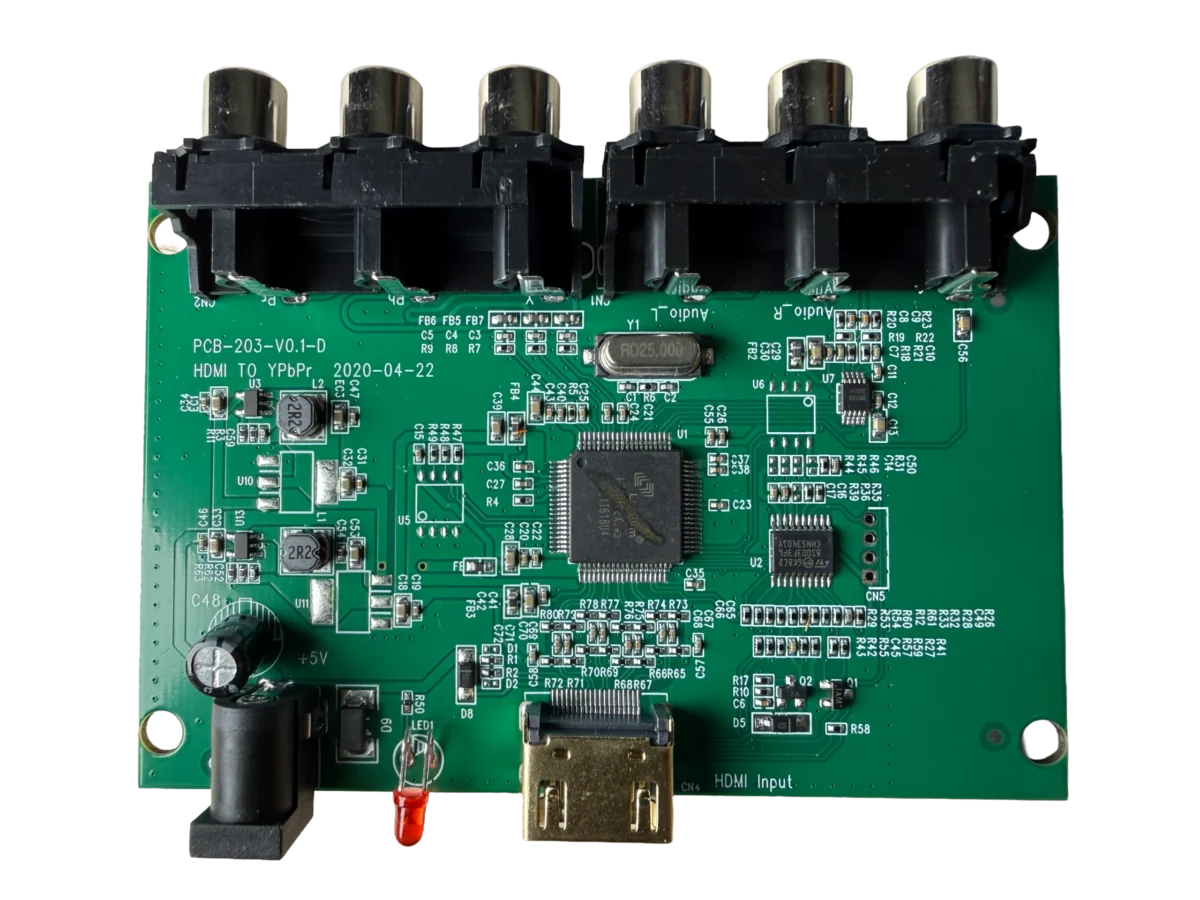
The discovery of a remarkably inexpensive HDMI to YPbPr component video Digital-to-Analog Converter (DAC), priced under $20, has generated considerable interest within the retro gaming community due to its crucial compatibility with legacy 15kHz 240p and 480i signals. This particular device, characterized by a specific motherboard design and a Lontium chip, addresses a persistent challenge faced by enthusiasts seeking to connect modern digital sources to vintage analog displays. While acknowledged as "quirky" and subject to potential stock volatility, its affordability and specific signal support position it as a significant, albeit imperfect, budget option in a market segment often dominated by either high-end solutions or unreliable, incompatible alternatives.
The Technical Imperative: Bridging Digital and Analog Divides
The demand for such a specific DAC stems from a fundamental incompatibility between contemporary video output standards and the display technologies prevalent during the golden age of console gaming. Modern gaming consoles, streaming devices, and personal computers exclusively utilize HDMI (High-Definition Multimedia Interface), a fully digital standard designed for high-bandwidth, high-resolution transmission to digital displays like LCDs, LEDs, and OLEDs. Conversely, iconic retro gaming systems from the 1980s, 1990s, and early 2000s were designed to output analog signals, primarily through Composite, S-Video, or Component (YPbPr) video, destined for Cathode Ray Tube (CRT) televisions or professional video monitors (PVMs/BVMs).
Component video (YPbPr) represents the pinnacle of analog consumer video quality, separating the luminance (Y) and two color-difference signals (Pb and Pr) to minimize artifacts and achieve a clearer picture than composite or S-Video. Crucially, many classic gaming consoles natively output signals like 240p (a progressive scan resolution often interpreted by modern displays as 480i) and 480i (interlaced), both operating at a horizontal scan rate of approximately 15kHz. CRTs are inherently designed to process these scan rates, rendering them with authentic scanlines and zero input lag, which are highly valued by retro gaming purists. The challenge lies in converting the high-frequency, digital data stream of HDMI into a stable, low-frequency analog YPbPr signal that faithfully preserves these original resolutions and scan rates. Many generic HDMI-to-Component converters fail this test, either dropping 240p support entirely, misinterpreting it as 480i, or introducing noticeable processing delays, thereby undermining the authentic retro experience.
The Resurgence of Retro Gaming and Display Preferences
The past decade has witnessed a dramatic resurgence in the popularity of retro gaming, evolving from a niche hobby into a significant cultural and commercial phenomenon. This revival is driven by a combination of nostalgia, the historical significance of classic titles, and a growing appreciation for the unique aesthetics and gameplay mechanics of older systems. A core tenet for many enthusiasts is the pursuit of an "authentic" experience, which often extends beyond merely playing the games to replicating the original display environment.

CRTs, once ubiquitous, are now highly sought after for their specific visual characteristics. Unlike modern digital displays that scale and interpolate lower-resolution signals, CRTs render each pixel distinctly, creating natural scanlines that were an integral part of how games were designed to be viewed. Furthermore, CRTs inherently process analog signals with virtually no input lag, a critical factor for precision-dependent retro titles. This preference for original analog displays creates a significant connectivity gap: while many retro consoles can be modded for higher-quality analog output (like Component or RGB), modern gaming solutions – including FPGA-based hardware like the MiSTer, Raspberry Pi-based emulators, and even HDMI-modded original consoles (e.g., GameCube Carby) – primarily output through HDMI. This necessitates reliable and accurate digital-to-analog conversion to bridge the gap to beloved CRTs.
Market Dynamics and the Quest for Affordable Solutions
The market for video conversion hardware for retro gaming is bifurcated. On one end, there are premium, feature-rich DACs such as the Reflex Prism or advanced devices like the HDFury 4. These high-end solutions offer robust performance, extensive compatibility, and often additional features like scaling, deinterlacing, and advanced signal processing. However, their price points, often exceeding $100 or even several hundred dollars, can be prohibitive for many casual enthusiasts or those on a strict budget.
On the other end of the spectrum, the budget segment has historically been a minefield of inconsistent quality. Numerous generic HDMI-to-Component converters are available from online marketplaces, but very few reliably support the critical 15kHz 240p and 480i signals without issues. Many introduce visual artifacts, color inaccuracies, or significant input lag, rendering them unsuitable for discerning retro gamers. This scarcity of reliable, affordable options has created a substantial unmet demand.
The discovery of the Lontium chip-based DAC, despite its potential "quirks" and uncertain stock, fills a crucial void. Its sub-$20 price point makes it accessible to a much broader audience, enabling more enthusiasts to connect their modern HDMI-outputting retro setups to their analog displays. However, the accompanying concern about stock availability, a common issue with niche electronics sourced from various manufacturers, highlights a broader vulnerability in the supply chain for retro gaming hardware. The original article’s author, reflecting a sentiment widely shared within the community, expressed skepticism about the vendor’s assurance of "plenty of units available," underscoring the precarious nature of relying on such fleeting product listings. This situation often leads to a "hunt" for specific revisions or chipsets, where community members share links and information to help others acquire compatible devices.
In-Depth Look at the Featured DAC and Ecosystem
The specific DAC in question is distinguished by its internal components, primarily the Lontium chip and a particular motherboard layout. These identifiers are critical for potential buyers, as visually identical external casings can house vastly different internal hardware with varying performance characteristics. The accompanying video review provides essential information, detailing its functionality, potential limitations, and specific setup requirements. While referred to as "quirky," this typically implies that users might need to experiment with input resolutions, display settings, or even power cycling to achieve optimal performance, a common characteristic of budget-tier electronics that lack the sophisticated error correction and signal processing of higher-end units.

The context of this DAC’s utility is further illuminated by other devices mentioned in the original content, which collectively form a comprehensive retro gaming ecosystem:
- GameCube Carby: An HDMI adapter for the Nintendo GameCube, allowing the console to output a digital signal directly from its digital AV port. This device, while offering a modern output, still requires an analog conversion solution like the discussed DAC if the user wishes to connect to a CRT.
- RePlayOS: A specialized operating system often used on single-board computers or FPGA platforms for retro gaming emulation, particularly known for its focus on low-latency and accurate hardware simulation.
- Raspberry Pi: A ubiquitous series of single-board computers widely used for emulation platforms (e.g., RetroPie, Batocera), media centers, and various DIY projects. Modern Raspberry Pis output exclusively via HDMI, making an HDMI-to-YPbPr DAC essential for CRT connectivity.
- HDFury 4: A high-end video processor known for its extensive signal manipulation capabilities, including advanced scaling, EDID management, and the ability to convert between various digital and analog formats. It serves as a stark contrast to the budget DAC, representing the pinnacle of professional-grade conversion.
- Reflex Prism: Mentioned as a "higher-end DAC with all the extra features," the Reflex Prism exemplifies the robust, purpose-built solutions available for serious enthusiasts. These devices typically offer superior image quality, wider compatibility, and advanced settings, justifying their higher price point.
- MiSTer FPGA: A highly accurate hardware simulation platform based on Field-Programmable Gate Arrays. MiSTer can simulate a wide range of retro consoles and arcade boards with extremely low latency and high fidelity. While it can output analog signals directly with specific add-ons, its primary output is HDMI, making a reliable DAC crucial for CRT users.
The inclusion of these diverse components highlights the intricate landscape of retro gaming hardware, where solutions range from direct console mods to sophisticated emulation platforms, all converging on the challenge of display compatibility.
Challenges and Future Outlook for Retro Hardware
The emergence of this budget HDMI to YPbPr DAC, despite its inherent limitations, underscores a persistent and evolving challenge in the consumer electronics landscape: the reconciliation of rapidly advancing digital standards with the enduring appeal of legacy analog hardware. As display technology continues its march towards higher resolutions, refresh rates, and digital-only interfaces, the ability to accurately and affordably bridge to older, analog displays becomes increasingly complex.
The implications for the retro gaming community are multi-faceted. Firstly, the availability of an inexpensive, compatible DAC lowers the barrier to entry for new enthusiasts who might otherwise be deterred by the cost of high-end converters or the complexity of advanced setups. This democratizes access to authentic retro gaming experiences on CRTs. Secondly, it highlights the critical role of community-driven efforts in identifying, testing, and documenting such niche hardware. In a market where large manufacturers often overlook the specific needs of retro enthusiasts, the collective knowledge and shared experiences of the community become invaluable for navigating inconsistent product offerings.
Looking ahead, the situation presents both challenges and opportunities. The call for a "real solution"—a community-designed, basic, reliable, sub-$50 HDMI to YPbPr DAC—is a significant indicator of the market’s needs. Such a project, potentially open-source, could offer a stable and consistent supply, free from the vagaries of unpredictable online vendors. This could foster further innovation in custom retro hardware development, potentially leading to more specialized and user-friendly solutions. Furthermore, the continued demand for such converters could prompt smaller, specialized manufacturers to enter this niche, offering purpose-built devices that combine affordability with reliable performance. The ongoing quest for the perfect balance between modern convenience and retro authenticity ensures that the demand for innovative bridging solutions will persist, driving both commercial and community-led endeavors in the retro gaming hardware space.
In conclusion, while the recently highlighted budget HDMI to YPbPr DAC offers a pragmatic, albeit temporary, solution for a pressing need, its very existence and the surrounding discussions underscore the vibrant and complex ecosystem of retro gaming. It serves as a testament to the community’s ingenuity in adapting modern technology to preserve historical gaming experiences, while simultaneously illuminating the ongoing need for more robust, accessible, and consistently available hardware solutions.