Farhan hamdan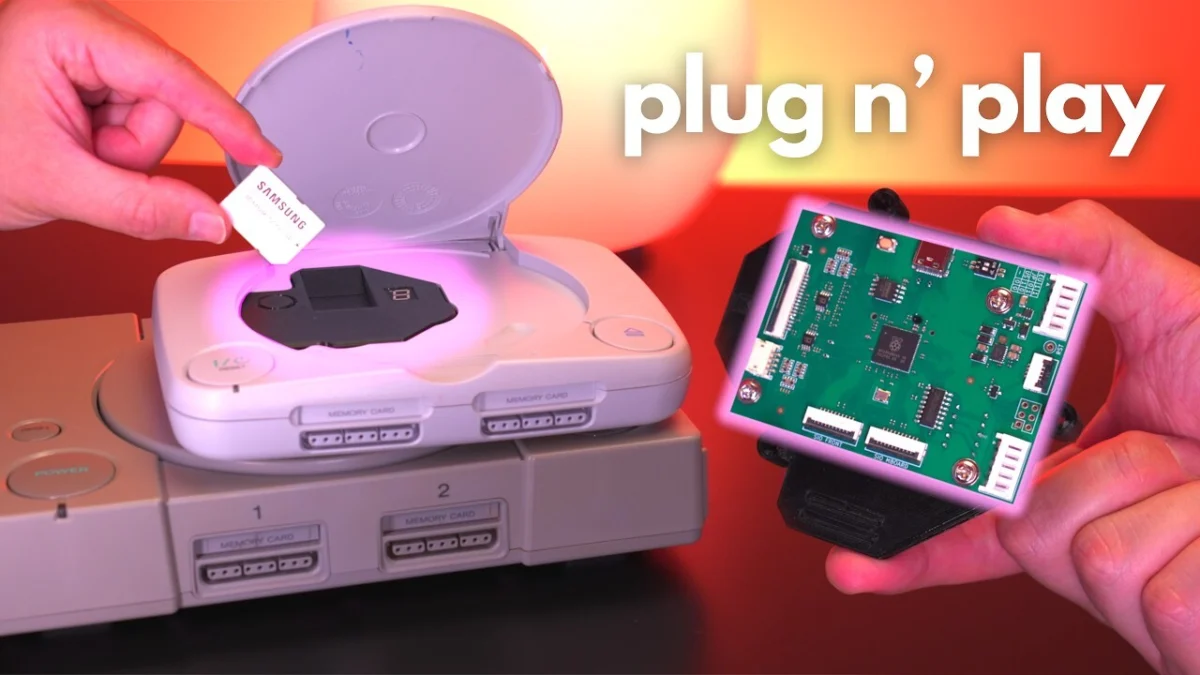
The landscape of retro gaming preservation has witnessed a significant advancement with the unveiling of ArcStation, an innovative Optical Drive Emulator (ODE) designed to breathe new life into Sony’s iconic PlayStation 1 console. This plug-and-play device distinguishes itself by offering a solder-free installation across all models of the original PlayStation 1, a feature poised to democratize console modification and preservation efforts for a broader audience of enthusiasts. The ArcStation achieves its universal compatibility and ease of use by precisely emulating the Radio Frequency (RF) signal directly from the console’s original CD-ROM assembly, presenting a signal identical to what the PS1’s motherboard expects from a functioning optical drive. This sophisticated approach promises full compatibility with the console’s extensive game library without requiring intricate modifications, making it an appealing solution for both seasoned modders and novices.
The capabilities and straightforward installation process of ArcStation were recently highlighted in a comprehensive video presentation by Tito from Macho Nacho Productions, a respected voice within the retro gaming community known for his detailed technical reviews and tutorials. Tito’s demonstration meticulously walked viewers through the installation procedure on both the larger, original "phat" PlayStation 1 models and the more compact "slim PSOne" revision, subsequently showcasing the device in active gameplay. His endorsement underscores the product’s potential to simplify the often-complex world of console hardware modification.
Technical Ingenuity: The RF Signal Emulation Advantage
At the core of ArcStation’s innovation lies its unique method of RF signal emulation. Unlike many other Optical Drive Emulators that interface with the console at a digital data level, often requiring specific firmware or modifications to the motherboard’s data lines, ArcStation operates by mimicking the analog RF signal generated by the CD-ROM’s laser pickup. This signal is fundamental to how the PlayStation 1’s system controller interprets disc presence, rotational speed, and data integrity. By replicating this low-level signal, ArcStation effectively "tricks" the console into believing a physical CD-ROM drive is present and functioning optimally, even when no optical drive is physically connected or operational.
This design choice offers several critical advantages. Firstly, it ensures an exceptionally high degree of compatibility across the myriad of PlayStation 1 hardware revisions. The PS1, throughout its production run from 1994 to 2006, saw numerous motherboard revisions (e.g., SCPH-100x, SCPH-550x, SCPH-700x, SCPH-900x, and the later SCPH-10x for the PSOne). These revisions often featured subtle differences in component layouts and timing, which can pose significant challenges for ODEs that rely on direct digital interfacing. ArcStation’s RF emulation bypasses many of these potential compatibility pitfalls by operating at a more fundamental, universally consistent signal level.
Secondly, the RF emulation strategy contributes directly to the "no-solder" installation claim. Traditional ODEs often necessitate soldering wires to specific points on the motherboard, sometimes involving intricate surface-mount components, which requires specialized tools, a steady hand, and a certain level of technical proficiency. For many retro gaming enthusiasts, the prospect of irreversible modifications to their cherished consoles, especially involving soldering, is a significant barrier. ArcStation’s plug-and-play nature removes this hurdle, making it accessible to a much broader demographic who wish to preserve their consoles without risking damage or requiring professional installation services. The installation typically involves simply disconnecting the ribbon cable from the original CD-ROM drive and connecting the ArcStation in its place, making it as straightforward as installing an internal hard drive in a modern PC.
Installation and Cross-Model Compatibility
Tito’s demonstration lucidly illustrated the installation process, showcasing its simplicity on both the original "phat" PlayStation 1 and the more streamlined "slim PSOne" model. The "phat" models, encompassing a wide range of SCPH numbers, generally feature a more modular internal design, making component access relatively straightforward. The PSOne (SCPH-10x), introduced in 2000, presented a redesigned, more compact form factor, often leading to tighter internal layouts and sometimes different internal connectors or board revisions. The fact that ArcStation seamlessly integrates with both architectural extremes without requiring distinct installation methods or additional adapters is a testament to its robust design. This universal compatibility is a significant achievement, given the historical fragmentation of PS1 ODE solutions, where some devices might only support a specific subset of motherboard revisions.
The ability to operate across such a diverse hardware spectrum simplifies the user experience considerably. Owners no longer need to meticulously identify their console’s specific revision number to ensure compatibility, a common pre-purchase step for many retro modification projects. This broad compatibility not only enhances user convenience but also solidifies ArcStation’s position as a versatile and future-proof solution for PS1 preservation.
Key Features and Critical Operational Notes
Beyond its core function as an optical drive emulator, ArcStation integrates several quality-of-life features aimed at enhancing the retro gaming experience. One notable addition is the Virtual Memory Card (VMC) function. This feature allows users to store game saves directly on the ArcStation’s internal storage, effectively eliminating the need for physical PlayStation memory cards. This is particularly beneficial for modern players who may not possess physical memory cards, or for those who wish to consolidate their saves digitally for easier backup and management.

However, a crucial caveat accompanies the VMC function, especially for users of the "phat" PlayStation 1 models. The official documentation and community advisories strongly caution against inserting a physical memory card into the console’s memory card slot while the ArcStation’s VMC function is active. Doing so carries a significant risk of data corruption, potentially destroying valuable game saves on both the physical card and the virtual memory card. This warning underscores the importance of understanding the device’s operational nuances. For users who already own or prefer to use physical memory cards, the prudent recommendation is to disable the VMC feature within ArcStation’s menu settings to prevent any accidental data loss. It’s important to note that for PSOne users, the VMC functionality, along with the in-game reset feature, is not supported, rendering this specific warning irrelevant for that particular console revision.
The in-game reset feature, when available (i.e., on "phat" PS1 models), offers a convenient way to soft-reset the console and return to the ArcStation’s menu without needing to physically power cycle the unit. This streamlines the process of switching between games or accessing system settings, further enhancing the user experience.
The Broader Context: The Rise of Optical Drive Emulators in Retro Gaming
ArcStation emerges into a vibrant and growing market for retro gaming preservation tools, particularly Optical Drive Emulators. The impetus behind the development and adoption of ODEs stems from several inherent challenges associated with aging console hardware. The CD-ROM drives in original PlayStation 1 consoles are mechanical components, prone to wear and tear over decades of use. Common issues include:
- Mechanical Failure: Deterioration of spindle motors, tray mechanisms, and gears.
- Laser Degradation: The laser diode, crucial for reading discs, weakens over time, leading to read errors, skipped audio, and inability to load games.
- Disc Rot: Physical game discs themselves are susceptible to degradation, especially early CD-ROMs, where the data layer can separate or oxidize, rendering them unreadable.
- Noise and Speed: Original drives can be noisy and notoriously slow, leading to prolonged loading times that detract from the modern gaming experience.
ODEs like ArcStation provide a comprehensive solution to these problems. By replacing the physical optical drive with a digital storage medium (typically an SD card or USB drive), they eliminate all mechanical failure points, ensure consistent read performance, and dramatically reduce loading times. This not only preserves the original console hardware by minimizing its operational stress but also provides a superior, more reliable gaming experience.
The PlayStation 1 ODE market has seen several notable contenders prior to ArcStation. Devices like the PSIO (PlayStation I/O) and XStation have garnered significant acclaim within the community. The PSIO, an earlier entrant, requires a complex soldering installation to a specific port on the motherboard and often necessitates an external switch board. The XStation, known for its high compatibility and robust performance, also requires significant soldering skills, involving the removal of the original CD-ROM controller chip and soldering to delicate points on the motherboard. In this context, ArcStation’s "no-solder" installation is a distinct market differentiator, significantly lowering the barrier to entry for many potential users. It caters to a segment of the retro gaming community that prioritizes ease of installation and non-invasive modifications.
Development, Pre-orders, and Supply Chain Dynamics
The announcement of ArcStation and the initial availability of pre-orders generated considerable excitement within the retro gaming community. Many enthusiasts, including prominent figures like the author of the original article, were able to secure an early unit. However, the pre-order phase was subsequently suspended due to unspecified "payment issues." This situation is not uncommon in the niche hardware market, where small-scale manufacturers often face challenges related to payment processing, international financial regulations, or unexpected surges in demand that strain their operational capacity.
Such suspensions, while frustrating for eager consumers, often indicate a commitment from the manufacturer to resolve underlying issues before scaling production. Inferred statements from developers in similar situations often emphasize ensuring a smooth transaction process, reliable shipping, and adequate customer support, all of which can be impacted by payment gateway complexities. The anticipation for the re-opening of orders remains high, with the community closely monitoring updates from the ArcStation team. Journalists and content creators, like the author of the original piece, are poised to provide hands-on reviews of production units once they become available, further informing potential buyers.
Broader Implications for Retro Gaming and Preservation
The introduction of ArcStation carries several significant implications for the broader retro gaming ecosystem:
- Increased Accessibility: By offering a solder-free, plug-and-play solution, ArcStation dramatically lowers the technical barrier for PlayStation 1 preservation. This means more casual enthusiasts can easily extend the life of their consoles and enjoy its vast library without needing specialized skills or tools, fostering a more inclusive retro gaming community.
- Enhanced Longevity of Consoles: With original optical drives failing at an accelerating rate, ODEs like ArcStation are crucial for the long-term sustainability of original hardware. They allow consoles to remain operational for decades to come, preventing them from becoming non-functional relics.
- Economic Impact and Niche Market Growth: The sustained demand for innovative retro hardware solutions demonstrates the economic viability of this niche market. Companies developing products like ArcStation contribute to a vibrant ecosystem of modders, developers, and content creators, driving innovation and providing specialized employment opportunities.
- Preservation of Digital Heritage: While copyright issues surrounding ROMs and disc images remain a complex topic, ODEs play an undeniable role in the digital preservation of video game history. As physical media degrades, digital backups become increasingly vital to ensure that future generations can access and experience these cultural artifacts. ArcStation facilitates this by providing a robust and user-friendly platform for playing legally backed-up game images.
- Innovation in Modding: ArcStation’s unique RF signal emulation strategy showcases continued innovation in console modding. It demonstrates that there are still novel ways to interface with classic hardware, pushing the boundaries of what is considered possible for retrofitting vintage systems with modern conveniences.
In conclusion, ArcStation represents a significant leap forward in PlayStation 1 preservation technology. Its no-solder, plug-and-play design, coupled with its advanced RF signal emulation, positions it as a highly accessible and compatible solution for extending the life and enhancing the playability of the iconic console. While the temporary suspension of pre-orders highlights the inherent challenges in bringing such specialized hardware to market, the anticipation surrounding its full availability underscores its perceived value. Once widely released, ArcStation is poised to become a cornerstone product for PlayStation 1 enthusiasts, ensuring that the console’s rich legacy of games remains easily accessible and enjoyable for years to come.