Johny Imanuel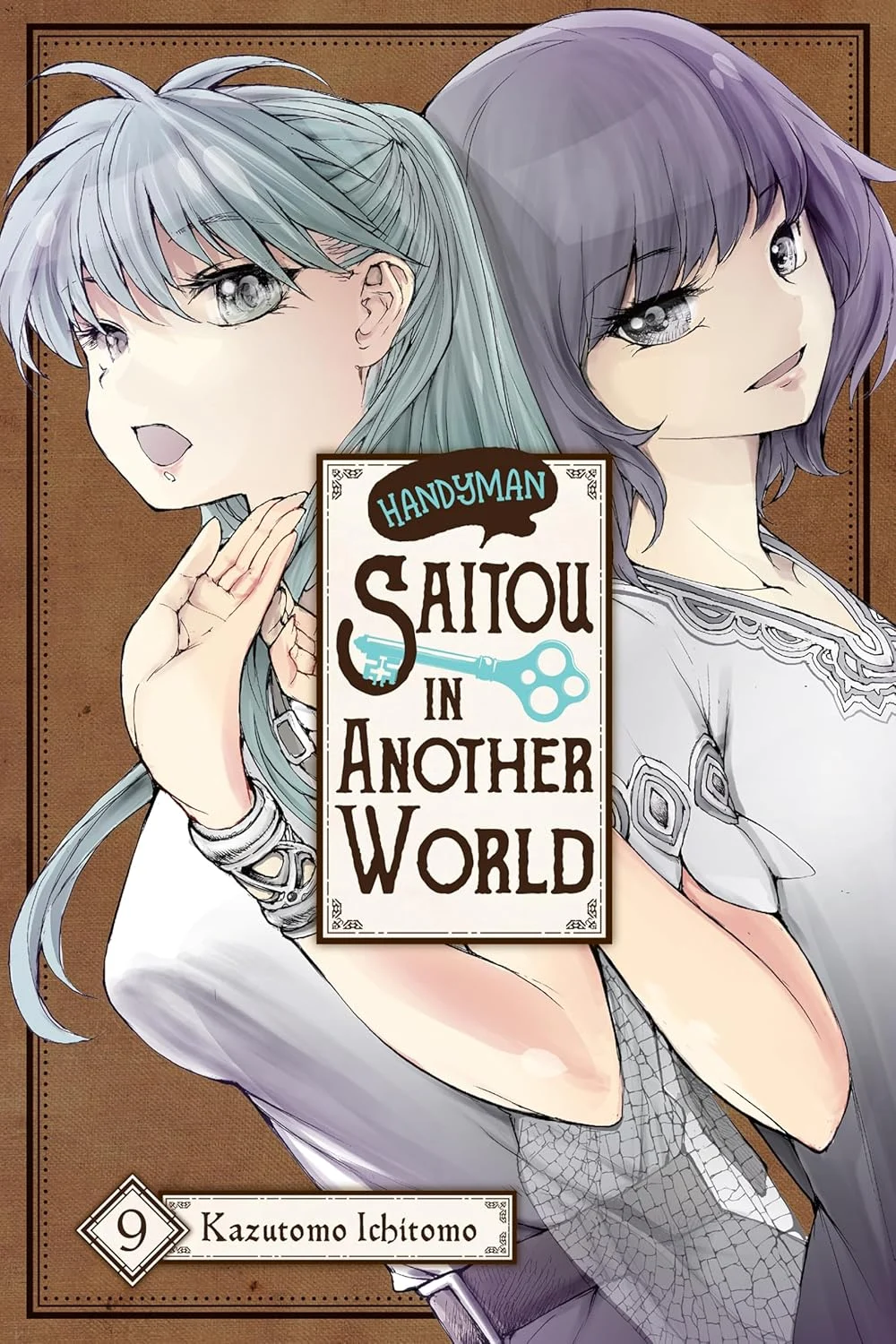
Narrative Foundations and the Evolution of the Handyman Series
Handyman Saitou in Another World (Benriya Saitou-san, Isekai ni Iku) began its serialization as a web manga on Kadokawa’s ComicWalker service in 2018. The series distinguished itself from the crowded isekai genre by eschewing traditional "overpowered" protagonist tropes. Instead, it follows Saitou, an ordinary Japanese repairman who finds that his practical skills—such as lockpicking, knot-tying, and precise measurement—are invaluable to a party of high-level adventurers.
The core group consists of Saitou; Raelza, a formidable female warrior; Morlock, a powerful but senile wizard; and Lafanpan, a Moonlight Fairy. Until the events of Volume 9, the series balanced its time between comedic vignettes and serious character backstories, such as Morlock’s tragic history and Saitou’s feelings of inadequacy as the only member of the group without magical or superhuman abilities. However, the ninth volume represents a maturation of the plot, addressing the "Moonlight Fairy Curse" which has been a recurring, though often understated, element of the series since its inception.
The Mechanics of the Moonlight Fairy Curse
From the earliest chapters of the manga, Lafanpan’s behavior was often characterized by an intense focus on gold and material wealth. While this was initially played for comedic effect, Ichitomo gradually revealed a darker reality: the Moonlight Fairies are victims of a perpetual curse imposed by the Goddess of the Moon. This divine affliction requires every member of the species to provide regular offerings of gold coins to the Goddess.
Failure to meet these financial quotas results in physical regression; the fairies begin to shrink and will eventually vanish or perish if the offerings cease. This biological and spiritual burden explains Lafanpan’s perceived "stinginess." For her, the acquisition of gold is not a matter of greed, but a fundamental requirement for survival. Volume 9 takes this established lore and moves it from the background into the primary conflict, challenging the party to find a permanent solution to a curse that has plagued an entire race for generations.
Chronology of Events in Volume 9
The narrative progression of Volume 9 is structured around a quest for redemption and debt repayment. The story arc begins with Primas, the Black Crystal Fairy first introduced in Volume 2, who discovers a mysterious key within the residence of the witch Lavella. Seeking to repay a long-standing debt to Lafanpan, Primas—accompanied by her companion Kisurigi—secures the key and travels to the Moonlight Forest.
The forest serves as the primary setting for the volume’s middle act. At this juncture, Saitou, Lafanpan, Raelza, and Morlock are already engaged in an adventure within the woods. The convergence of these two groups sets the stage for a confrontation with the source of the fairies’ misery. The volume’s timeline can be broken down into three distinct phases:
- The Discovery Phase: Primas and Kisurigi identify a relic capable of breaking the Moonlight Fairy curse, establishing the stakes for the volume.
- The Conflict Phase: The party encounters various threats, including a faction of insect people. This section highlights the group’s combat synergy and Lafanpan’s specialized healing magic, which is noted by Primas to be significantly enhanced by her emotional bonds with her teammates.
- The Resolution Phase: The group confronts the Goddess of the Moon. This climax utilizes foreshadowing from earlier volumes to explain the true nature of the curse and Lafanpan’s inherent kindness, even toward those who have wronged her.
Character Dynamics and Interpersonal Growth
Volume 9 is notable for how it reinforces the familial bonds between the party members. In a departure from his usual role as a support specialist, Saitou demonstrates a willingness to engage in extreme physical risk to ensure Lafanpan’s safety. Despite being the "weakest" member in terms of raw power, his protective instincts highlight the shift from a professional working relationship to a deep, personal connection.
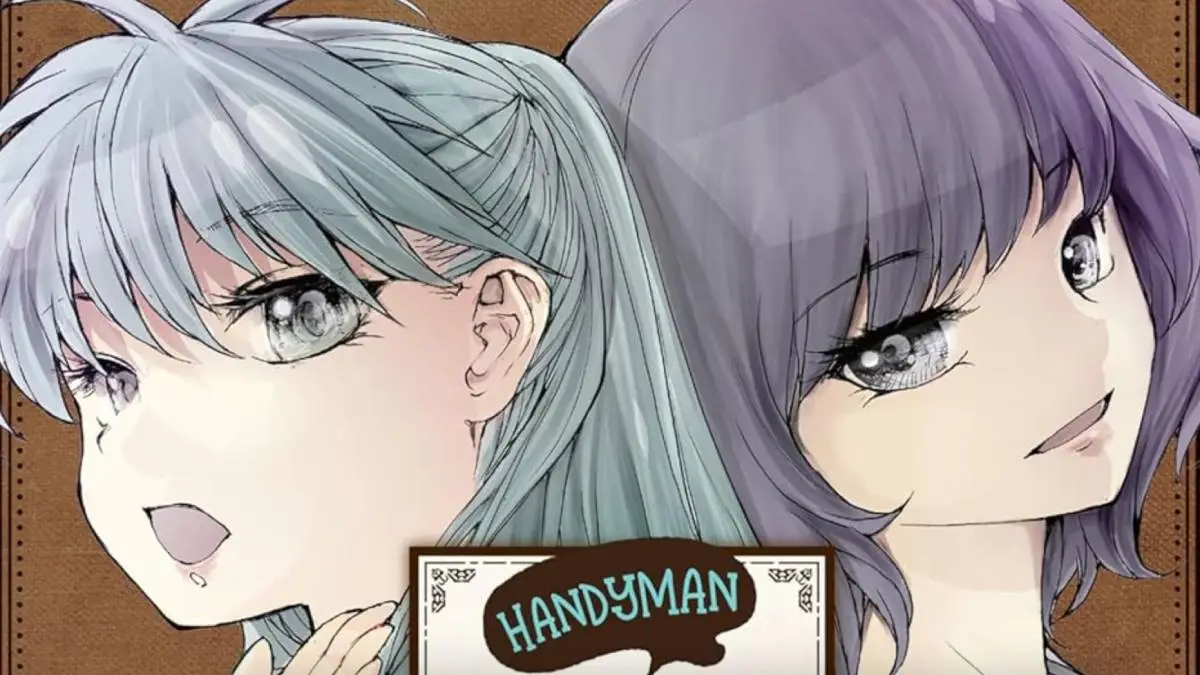
Furthermore, the paternal role of Morlock is solidified in this volume. The elderly wizard explicitly refers to Lafanpan as his daughter, placing her on the same emotional level as Raelza. This development provides a stark contrast to the early chapters of the series, where the characters were often viewed through the lens of their utility to the party. By addressing the curse, Ichitomo allows Lafanpan to move beyond her "money-hungry" archetype, revealing a selfless and merciful nature that persists even when dealing with hostile entities.
Supporting Data and Production Context
The English localization of Handyman Saitou in Another World is handled by Yen Press, a leading publisher of manga and light novels in North America. The series saw a significant surge in international popularity following the 2023 anime adaptation produced by Studio C2C. The anime’s success has been credited with driving interest back to the source material, particularly for its ability to blend high-fantasy world-building with grounded, human stories.
Market data suggests that "niche" isekai titles—those focusing on specific professions or non-traditional protagonists—have seen a 15% increase in reader retention compared to standard "hero" narratives. Handyman Saitou sits at the forefront of this trend. According to current publication schedules, Volume 10 of the manga is slated for release on November 24, 2026. The extended gap between releases reflects the detailed nature of Ichitomo’s artwork and the intricate narrative threads that require careful translation and cultural localization.
Editorial Analysis: Implications for the Series
The resolution of the Moonlight Fairy curse in Volume 9 carries significant implications for the future of the series. By removing the immediate threat of the curse, the author has fundamentally altered Lafanpan’s primary motivation. This allows for a new phase of character development where her actions are no longer dictated by the fear of shrinking or death, but by her own agency and moral compass.
Moreover, the confrontation with the Goddess of the Moon expands the scope of the series. What began as a story about exploring local dungeons has evolved into a narrative involving divine intervention and the challenging of celestial status quos. This "de-escalation of the curse" actually serves to "escalate the stakes" of the world-building, suggesting that other members of the party—or other races within the world—may have their own divine or historical burdens to overcome.
Broader Impact on the Isekai Genre
Handyman Saitou in Another World continues to be a case study in how to effectively manage a large supporting cast. Volume 9’s inclusion of Primas and Kisurigi demonstrates the series’ commitment to narrative continuity; characters are rarely "discarded" after their initial arc. Instead, they remain part of the world’s ecosystem, contributing to the growth of the main protagonists.
The series also challenges the "disposable" nature of isekai worlds. By investing heavily in the lore of the Moonlight Fairies, Ichitomo creates a world that feels lived-in and burdened by history, rather than a mere playground for the protagonist. Saitou’s role as an observer and facilitator remains his greatest strength; he does not solve the curse through a "cheat ability," but by supporting the people who have the power to change their own fates.
As the series moves toward Volume 10 and beyond, the focus is expected to remain on these intricate character studies. The "Handyman" remains a vital part of the group, not because he can defeat gods, but because he provides the stability and practical support that allows the legendary figures around him to find their own humanity. Volume 9 stands as a testament to this philosophy, proving that even in a world of magic and curses, the most powerful force is the bond of a found family.