Farhan hamdan
The landscape of retro video game preservation and hardware modification has reached a significant milestone with the official shipping and market release of the ArcStation optical drive emulator (ODE). Designed specifically for Sony’s iconic PlayStation 1 console, the device enters a mature market of hardware modifications, aiming to distinguish itself through unprecedented installation simplicity and universal hardware compatibility. Unlike predecessor ODEs that require intricate soldering, trace cutting, or model-specific circuit board variations, the ArcStation relies on a unique signal emulation architecture that directly replicates the radio frequency (RF) output of the original CD-ROM assembly. This technological approach allows the PlayStation 1 to interact with the emulator as though it were reading a factory-standard physical compact disc, theoretically offering flawless compatibility with the console’s entire software library.
Main Facts and Technological Overview
The ArcStation is fundamentally an alternative storage and loading mechanism for original PlayStation hardware, replacing aging mechanical disc drives with modern solid-state storage via an SD card interface. Priced at approximately $167 inclusive of shipping costs, the unit is positioned slightly higher than some established competitors, such as the popular XStation, which retails for roughly $127. However, industry analysts and hardware enthusiasts note that pricing parity quickly shifts when factoring in professional installation labor costs. Because traditional ODEs often require advanced micro-soldering skills, end-users frequently pay third-party technicians for installation services, driving the total cost of ownership well above the initial hardware purchase price.
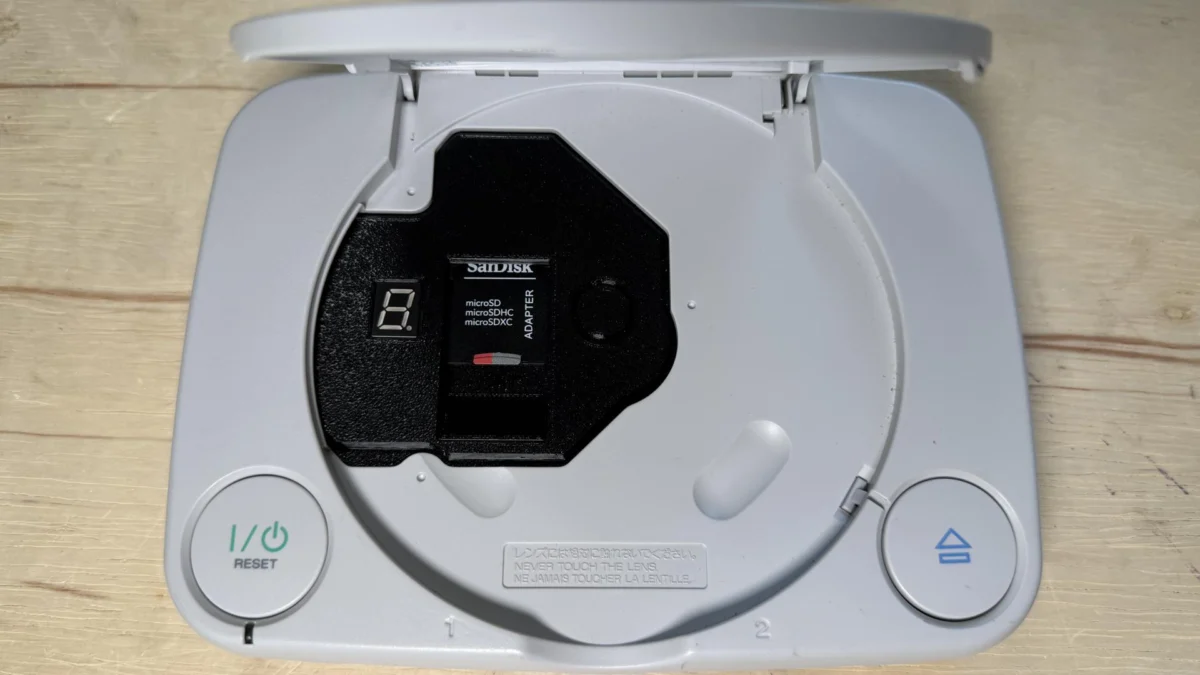
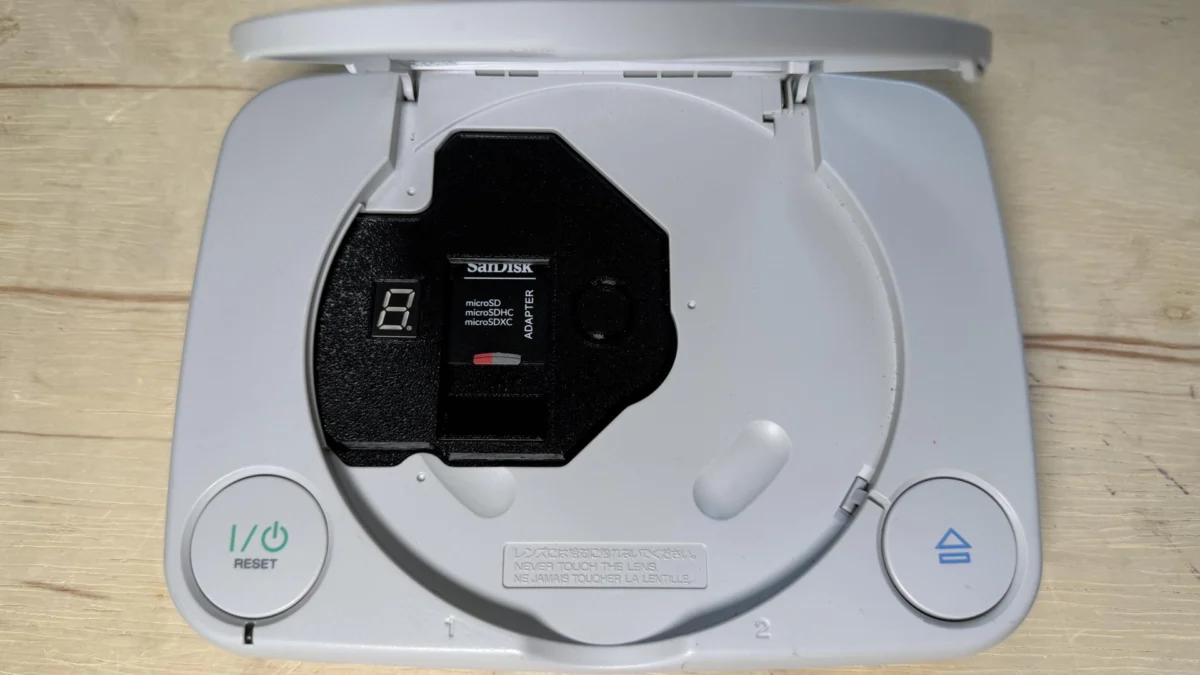
The physical installation process for the ArcStation requires only a standard screwdriver. Users simply unbolt the console chassis, disconnect and remove the factory optical disc drive, and insert the ArcStation unit directly into the existing port connectors. Setup on the software side is similarly streamlined; the SD card must be formatted to the exFAT file system, after which disc image backups (typically in bin/cue format) can be copied directly onto the storage medium. The device supports sophisticated directory organization, allowing users to arrange their libraries by region, genre, or alphabetical categorization. Furthermore, directories containing valid game files automatically populate the user interface menu as direct-launch items, eliminating the need to navigate nested folders.
Chronology and Market Availability
The commercial rollout of the ArcStation follows a rigorous development cycle aimed at solving long-standing hardware fragmentation issues within the PlayStation 1 ecosystem. Sony released numerous hardware revisions throughout the lifespan of the original PlayStation and the redesigned PSOne, resulting in drastically different motherboard layouts, power delivery systems, and internal connectors. Historically, ODE developers were forced to design distinct hardware iterations tailored to specific motherboard models, complicating manufacturing and limiting consumer accessibility.
By engineering a device that interfaces via the optical drive’s native data bus and emulates the drive’s RF signal, the creators of the ArcStation achieved cross-compatibility spanning every official hardware revision—from early SCPH-1001 models featuring parallel ports down to the late-stage, compact PSOne (PM-41 motherboard revisions). Following the initial wave of customer shipments, manufacturing schedules indicate that the next inventory batch will become available in November, utilizing a direct-shipping model without pre-order queues to ensure prompt fulfillment for consumers.
Supporting Data and Performance Analysis
Real-world hardware testing conducted upon the initial wave of shipments has yielded positive indicators regarding system stability, multi-disc handling, and regional software execution. During benchmark evaluations utilizing an unmodded PSOne console, technicians tested various software titles historically known for aggressive copy protection routines and hardware compatibility anomalies. These titles executed successfully without requiring specialized boot discs or secondary patches.

Multi-disc software titles—such as sprawling role-playing games distributed across multiple compact discs—function seamlessly when structured within designated parent directories. For instance, a title with multiple media volumes requires a main directory containing appropriately labeled subdirectories for each individual disc image. Upon system boot, the ArcStation hardware illuminates an onboard LED indicator corresponding to the active disc number. Users can cycle between media volumes manually by opening the console’s lid, pressing a tactile selection button to cycle to the desired disc, and closing the lid to resume gameplay execution.
Regional software compatibility adheres to standard hardware constraints inherent to the PlayStation 1 architecture. PAL-formatted software titles tested on NTSC-region hardware correctly initialize and switch into 576i display modes upon launch. However, native display refresh rates remain locked to the host console’s regional crystal oscillator frequency (60Hz for NTSC systems). Achieving true dual-frequency operation (switching dynamically between 50Hz and 58/60Hz modes) continues to require physical hardware modifications, specifically the installation of a dual-frequency oscillator (DFO), a limitation that applies universally to all PlayStation 1 ODE solutions and regional modchips.
Technical Considerations: Virtual Memory Cards and Feature Trade-Offs
While the foundational ODE functionality operates entirely solder-free across all console revisions, advanced peripheral emulation features require distinct installation methodologies depending on the specific hardware model. The ArcStation supports Virtual Memory Card (VMC) and In-Game Reset (IGR) functionalities natively as plug-and-play features on original "phat" PlayStation 1 hardware revisions.
However, deploying these specific features on the smaller PSOne hardware revision necessitates supplementary hardware components and micro-soldering to the console’s SIO0 serial communication ports, as documented in official technical implementation guides provided by the manufacturer. Hardware specialists advise caution regarding the simultaneous use of virtual memory card features and physical memory cards (whether official Sony peripherals or third-party alternatives), as concurrent write cycles in certain configurations present a documented risk of save data corruption. Consequently, many purists and power users elect to bypass onboard virtual storage solutions in favor of dedicated standalone accessories, such as the MemCard Pro, leaving VMC features disabled even on compatible hardware revisions.
Broader Impact and Industry Implications
The commercial maturation of universal, drop-in optical drive emulators reflects a broader shift within the retro gaming community toward non-destructive, modular preservation hardware. As original mechanical disc drives face inevitable laser diode degradation, spindle motor failure, and mechanical wear, optical drive emulators have transitioned from niche experimental projects into essential infrastructure for long-grade hardware maintenance.
The ability to transfer an ArcStation unit between different console revisions using only basic hand tools provides consumers with a high degree of future-proofing. If a primary console chassis suffers catastrophic motherboard failure, the storage medium and the ODE core can be migrated to a replacement system in minutes. This modularity reduces electronic waste and shields consumers from hardware obsolescence.
As manufacturing output scales heading toward the end of the year, the ArcStation establishes a new performance benchmark for optical drive emulation. By eliminating the steep technical barriers traditionally associated with hardware-level PlayStation modifications, the device broadens access to the platform’s extensive library, ensuring that physical wear and tear on legacy media will not impede the continued study, archiving, and enjoyment of fifth-generation console software.