Vera Clarissa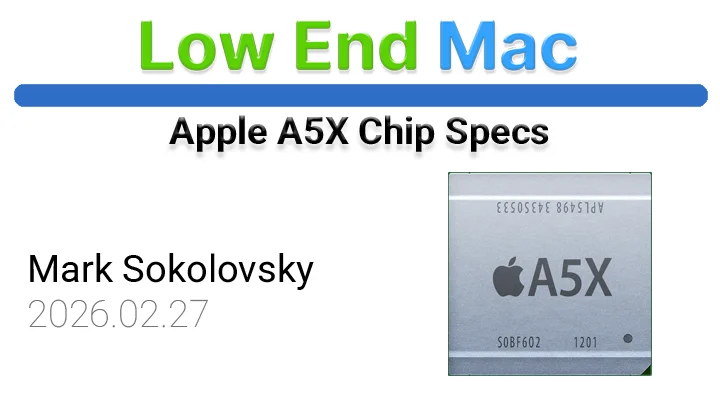
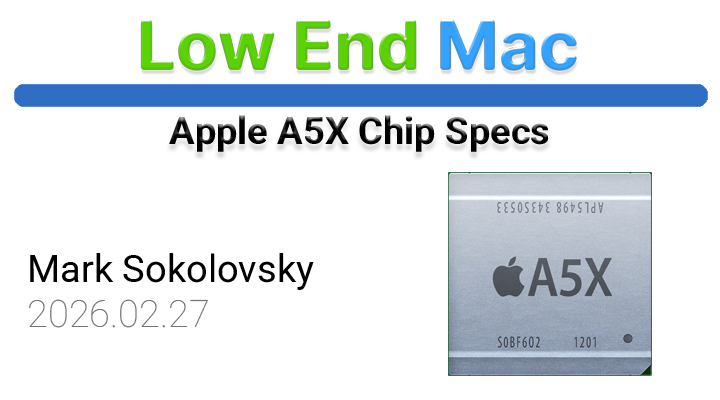
The Apple A5X System-on-Chip (SoC) represents a significant step in mobile processor evolution, detailed comprehensively in this hardware profile. Manufactured by Samsung, the A5X was released on March 16th, 2012, under the codename APL5498 and part number S5L8945. Built on a 45-nanometer fabrication process, this chip was instrumental in powering Apple’s next generation of devices, pushing the boundaries of performance and graphical capabilities for its time. While the exact transistor count remains undisclosed by Apple, its specifications reveal a sophisticated architecture designed for demanding mobile applications.
Core Architecture and Performance
The A5X employs an ARMv7 instruction set architecture, operating in 32-bit mode. At its heart are two high-performance cores, each clocked at 1 GHz. These "P-Cores" were the primary drivers of the chip’s computational power. Unlike later Apple Silicon designs that feature a mix of performance and efficiency cores, the A5X focused solely on performance, indicating a design philosophy prioritizing raw speed for its targeted devices.
The cache hierarchy within the A5X is designed for rapid data access. Each performance core is equipped with 32 KB of L1 instruction cache (L1i) and 32 KB of L1 data cache (L1d), totaling 64 KB for each type per core. This configuration allows for quick retrieval and processing of instructions and data, minimizing latency. Furthermore, a unified 1 MB L2 cache is shared between the two performance cores, providing a substantial buffer for frequently accessed information and further enhancing overall processing efficiency. The absence of efficiency cores and dedicated system-level caches in the A5X’s published specifications highlights its focus on delivering maximum performance without the power-saving considerations that have become standard in subsequent generations.
Memory Subsystem: Enabling Richer Experiences
A critical component of the A5X’s performance is its advanced memory subsystem. The chip features a 128-bit wide memory bus, a notable increase over previous generations, facilitating a significantly higher bandwidth. This bus is configured with four independent channels, each operating at 32 bits, allowing for parallel data transfer and reduced contention.
The memory type utilized is LPDDR2-800, operating at an effective frequency of 400 MHz. This combination of wide bus, multiple channels, and relatively high clock speed contributes to an impressive theoretical memory bandwidth of approximately 12.8 GB/s. This substantial bandwidth was crucial for supporting the high-resolution displays and complex graphics processing that the A5X was designed for, enabling smoother multitasking and more immersive visual experiences. The A5X is equipped with 512 MB of RAM, a capacity that was considered generous for mobile devices at the time of its release, ensuring sufficient resources for demanding applications and operating system functions.

Graphical Prowess: Powering Visual Fidelity
The graphical capabilities of the A5X were a significant leap forward, particularly evident in its GPU. The chip incorporates a quad-core GPU, a substantial increase in graphical processing units compared to its predecessors. Each of these GPU cores is further divided, featuring 8 SIMD (Single Instruction, Multiple Data) execution units (EUs) and 64 FP32 (Floating-Point 32-bit) arithmetic logic units (ALUs).
Operating at a clock speed of 200 MHz, the GPU delivers an estimated 25.6 GFLOPs (Giga Floating-point Operations Per Second) of raw processing power. This metric is a key indicator of a GPU’s theoretical performance in handling complex floating-point calculations, essential for rendering sophisticated graphics, accelerating video playback, and powering interactive applications. The significant increase in GPU cores and the resulting increase in GFLOPs directly translated to improved visual fidelity, smoother animations, and enhanced gaming experiences on devices equipped with the A5X.
Context and Timeline of Development
The release of the A5X in March 2012 was not an isolated event but a culmination of Apple’s strategic advancements in custom silicon. Following the success of the A4 and A5 chips, which had already established Apple as a leader in mobile processor design, the A5X was engineered to meet the growing demands of its expanding product line. The emphasis on graphical performance was particularly timely, as mobile devices were increasingly being used for media consumption, gaming, and productivity tasks that required more sophisticated visual rendering.

The A5X’s architecture reflects a period where Apple was heavily investing in its in-house chip design capabilities, a move that would prove to be a cornerstone of its competitive advantage. By controlling the design and manufacturing process, Apple could optimize its chips for specific hardware and software integrations, ensuring a seamless and powerful user experience across its ecosystem. This vertical integration allowed for tighter control over performance, power efficiency, and feature sets, differentiating its products from competitors relying on off-the-shelf components.
Broader Impact and Implications
The introduction of the A5X had a tangible impact on the mobile computing landscape. Devices powered by this SoC were capable of handling tasks that were previously reserved for more powerful desktop or laptop computers. The enhanced graphics processing, coupled with the robust CPU and memory architecture, enabled a new class of mobile applications and experiences. This included higher-fidelity gaming, more fluid video editing, and the ability to run complex productivity software on the go.
From a competitive standpoint, the A5X solidified Apple’s position as an innovator in mobile processor technology. The performance gains offered by the A5X provided a significant differentiator for its products, allowing them to outperform many competitors in terms of speed and graphical capabilities. This focus on custom silicon also laid the groundwork for future Apple Silicon generations, which would continue to push the boundaries of performance and efficiency across a wider range of Apple devices.

The A5X’s specification highlights a clear design philosophy aimed at delivering maximum performance for its intended use cases. The absence of specialized AI cores or efficiency cores suggests a focus on raw computational power and graphics, which were paramount for the high-end mobile devices of 2012. While the technological landscape has evolved dramatically since its release, the A5X remains a testament to Apple’s early vision and execution in the field of custom silicon design, setting a precedent for the powerful and integrated computing experiences that define its products today. The chip’s legacy is one of enabling richer, more interactive mobile experiences and driving the demand for increasingly powerful and sophisticated mobile hardware.
The precise iDevices that utilized the A5X are not explicitly listed in the provided data, but historically, the A5X chip was primarily featured in the third-generation iPad, released in March 2012. This device was lauded for its Retina display, which demanded significant graphical horsepower to render its high resolution effectively, making the A5X’s capabilities particularly crucial for its success. The A5X was a key component in making the high-resolution display a truly viable and impressive feature, setting a new standard for visual clarity in tablet computing.
This detailed examination of the Apple A5X SoC underscores its importance as a foundational piece of Apple’s custom silicon strategy. Its robust CPU, advanced memory architecture, and powerful GPU were critical for delivering the next generation of mobile computing experiences. The manufacturing by Samsung, the specific release date, and the technical specifications all contribute to a comprehensive understanding of this influential chip. The A5X served as a stepping stone, paving the way for subsequent innovations that have continued to redefine the capabilities of personal technology.