Cecilia Chamidah Nur
When Super Mario 64 burst onto the scene with the Nintendo 64 in 1996, it was immediately hailed as a monumental achievement, fundamentally redrawing the blueprint for 3D game design and movement. Its influence permeated the industry, inspiring a generation of developers who grappled with the nascent challenges of three-dimensional virtual worlds. Esteemed creators like Tetsuya Nomura, director of the Kingdom Hearts series, recently articulated its profound impact, calling it "the game that truly shaped my current guiding principle" regarding free 3D movement. Similarly, Banjo-Kazooie co-creator Gregg Mayles and Spyro the Dragon designer Michael John have lauded Super Mario 64 as an industry-defining masterpiece, a testament to its widespread and enduring acclaim.
However, a newly translated interview from 1996, originally published shortly after the game’s release in a special edition of Game Hihyou titled The Book of Kenji Eno as part of his "Crosstalks" series, presents a fascinatingly divergent perspective. In this rare dialogue, the provocative Japanese musician and game developer Kenji Eno offered a surprisingly critical assessment of Super Mario 64, arguing that the final retail version failed to capture the exhilarating promise and boundless freedom he experienced in its groundbreaking Shoshinkai demo. What makes this exchange particularly remarkable is the unvarnished candor of both participants, especially Nintendo’s legendary designer Shigeru Miyamoto, who, instead of dismissing Eno’s critique, engaged with it thoughtfully, revealing his own internal conflicts and the complex compromises inherent in bringing such a revolutionary title to a mass audience.
The Genesis of a Revolution: Anticipation and the Shoshinkai Demo
The mid-1990s marked a pivotal transition in the video game industry, moving from the pixelated sprites of 2D to the polygonal landscapes of 3D. Developers across the globe were experimenting with this new dimension, often with mixed results, struggling to translate intuitive 2D controls into a coherent 3D experience. Nintendo, with its long history of innovation, was under immense pressure to deliver a flagship title for its upcoming console, the Nintendo 64, that would redefine 3D gaming. Super Mario 64 was that torchbearer, designed to showcase the N64’s capabilities and, more importantly, to establish a new paradigm for character control and environmental interaction in a 3D space.
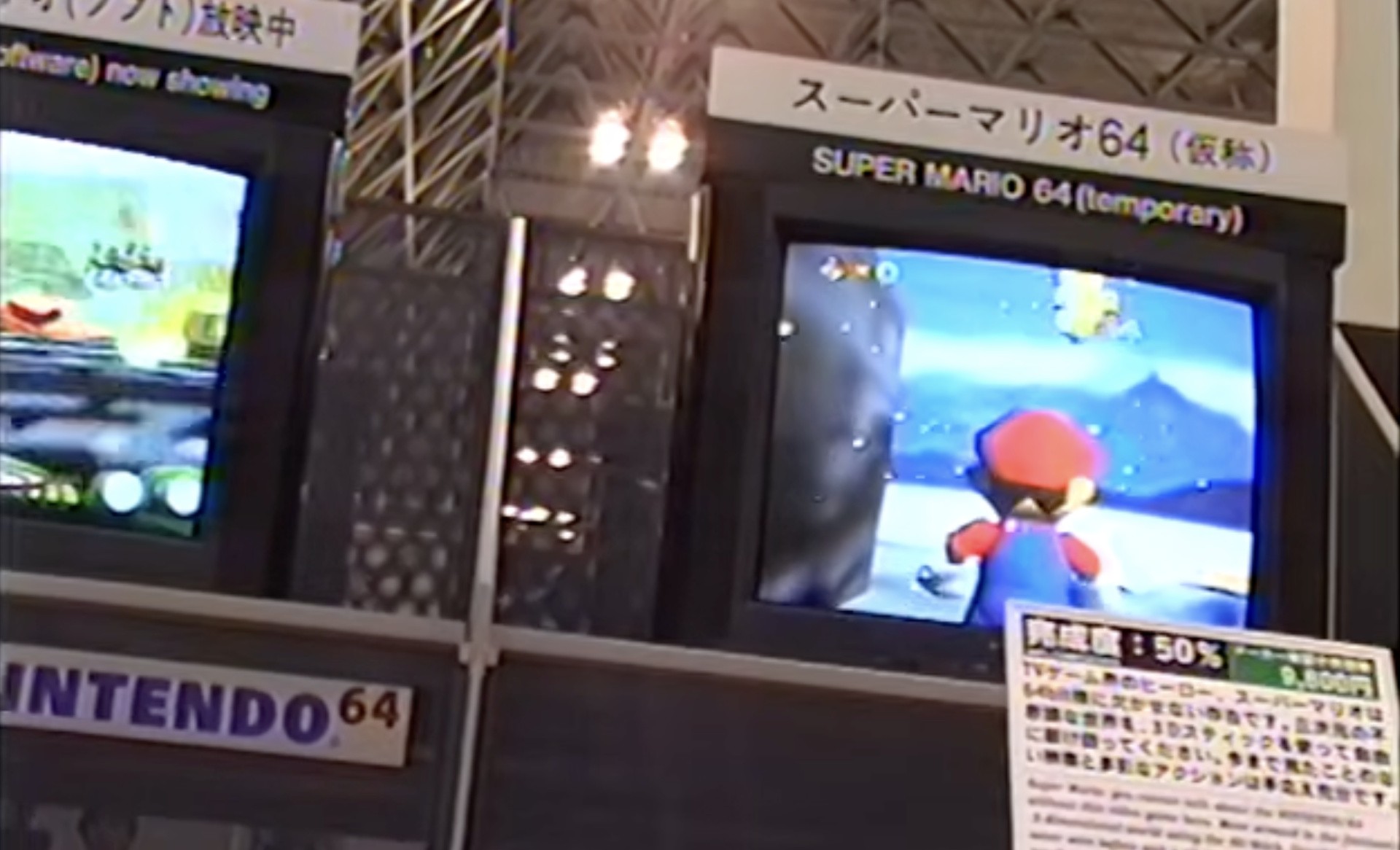
The anticipation surrounding Super Mario 64 reached a fever pitch at the 1995 Shoshinkai show (Nintendo’s annual trade exhibition, a precursor to Space World). Here, Nintendo unveiled an early playable demo of the game, offering attendees a tantalizing glimpse into Mario’s new three-dimensional world. This demo was not merely a technical showcase; it was a revelation. Players were mesmerized by the ability to freely roam, jump, and interact within a vibrant, expansive environment. Reports from the time spoke of an unprecedented sense of agency, allowing players to simply "mess around aimlessly" – chasing birds, exploring waterfalls, and soaring through the sky with an unparalleled sense of freedom. This early build, while showcasing foundational mechanics, emphasized exploration and emergent play, leaving an indelible impression on many who experienced it, including Kenji Eno. It hinted at a world where objectives were secondary to the sheer joy of movement and discovery, setting a high, perhaps impossibly high, bar for the final product.
Kenji Eno: The Provocateur’s Perspective
To understand the weight of Eno’s critique, it’s essential to appreciate his standing and unique philosophy within the Japanese game development scene. Kenji Eno (1970–2013) was a maverick, known for his experimental and often unsettling titles like D (1995) and Enemy Zero (1996), developed under his company WARP Inc. He challenged conventional gaming norms, pushing boundaries in storytelling, sound design, and interactive experiences. Eno was not one to shy away from controversy or to offer uncritical praise, especially when he felt a game fell short of its artistic potential. His "Crosstalks" series, in which this interview was featured, was designed precisely for candid, in-depth discussions with fellow industry figures, moving beyond typical promotional soundbites to explore the deeper philosophies of game creation.
Despite his avant-garde tendencies, Eno harbored a deep, almost nostalgic affection for Nintendo’s flagship franchise. He confessed his personal devotion to the series, recounting how he "left his Famicom on for so long playing Super Mario Bros. 3 that the console would overheat." This admission underscores that his critique of Super Mario 64 stemmed not from a general disdain for Mario, but from a profound disappointment that the final version of a beloved series seemed to depart from its own initial promise. This personal investment made his subsequent observations all the more poignant and impactful.
The Core Critique: Freedom Versus Structure
Eno articulated his dissatisfaction by drawing a stark contrast between the Shoshinkai demo and the retail version. For him, the demo embodied an "incredible sense of freedom." He vividly recalled the spontaneous joys of being "carried away by a bird, run through a field of flowers and be startled by butterflies, plunge down a waterfall, or fly through the sky." It was a world designed for unbridled exploration, where one could "just mess around aimlessly" and discover depth at their own pace. This vision aligned with what he cherished about early Super Mario Bros.: a seemingly simple premise that offered unexpected layers of joy and discovery.
The final Super Mario 64, however, felt dramatically different. Eno likened the experience to suddenly joining "a really strict after-school sports club," where the emphasis shifted from boundless exploration to meticulous objective completion. He struggled to adopt the mindset of "meticulously reading every signpost or trying to collect dozens of stars." This structured approach, he argued, clashed fundamentally with the "very loose, free atmosphere" he had initially anticipated. His most evocative metaphor compared the transformation to a "yonkoma (four-panel comic) strip suddenly turned into a gritty graphic novel" – a shift from lighthearted, accessible charm to a more demanding, realistic, and goal-oriented experience. Eno felt that the game’s pursuit of a certain "realism" and its tight mission-based structure were antithetical to the liberating spirit he believed the series, and specifically its 3D debut, should embody.
Miyamoto’s Candid Response: A Master’s Reflection
What makes this interview a historical gem is not just Eno’s bold critique, but Miyamoto’s remarkably humble and insightful response. Far from rejecting Eno’s analysis, Miyamoto engaged with it thoughtfully, displaying a rare degree of introspection for a creator of his stature discussing a recently released, universally acclaimed work.
Miyamoto first sought to distill the essence of Eno’s argument, suggesting, "What you’re saying is that the boundary between Mario and Zelda has started to disappear." This was a profound observation, hinting at the internal design pressures within Nintendo. He elaborated that Super Mario 64 and The Legend of Zelda: Ocarina of Time were developed concurrently, leading to a degree of conceptual overlap. In an effort to "jam in every single idea that seemed interesting," the development team might have moved away "from having a specific vision of what we wanted to create." This simultaneous development, Miyamoto implied, inadvertently infused Mario 64 with elements of structured adventure and objective-driven progression more characteristic of the Zelda series, thus reducing the "room for free, open-ended play" that Eno cherished.
Miyamoto openly admitted to feeling "conflicted" about these outcomes. He acknowledged the allure of a "lighthearted and open" design, conceding that "the Shoshinkai version held more potential in that regard." Yet, he balanced this artistic inclination with pragmatic considerations, asserting that "the retail version has a better level of polish." He recognized that a broader audience also craved "a proper sense of tension alongside a moderate amount of freedom." This revealed Miyamoto’s internal struggle: the artistic desire for unconstrained play versus the commercial necessity of delivering a refined, accessible, and engaging experience for millions.
This commercial imperative was further highlighted when Miyamoto stated, "And while I’m not carrying the cross of Nintendo on my back, I am conscious of the need to reach a larger audience than before." He pragmatically noted that a game "too extreme in either direction" (too loose or too strict) might not "mobilise millions of people." He referenced Aquanaut’s Holiday, a contemporary PlayStation title with high artistic ambitions but limited commercial success, as a cautionary tale. This demonstrated his awareness that groundbreaking art, while valuable, must also resonate with a broad consumer base to justify the massive investment required for a tentpole release like Super Mario 64.
Perhaps the most revealing part of Miyamoto’s response was his distinction between "well-made games and interesting games." He lamented that "the public perception of Nintendo’s games has gradually shifted from ‘interesting’ to ‘well-made.’" He felt that the team had "ended up pouring a lot of our energy into that side of things" with Mario 64. While proud of proving Nintendo’s capability to "make a solid 3D action game," he expressed a clear ambition: "Because of that, I think we can aim for something more interesting next time." This candid admission speaks volumes about the pressures of leading a technological revolution while simultaneously striving for artistic purity and commercial viability. It suggests that even in a celebrated triumph, Miyamoto saw room for growth and a return to the "interesting" qualities that first captivated players.
Broader Implications and Enduring Legacy
The dialogue between Kenji Eno and Shigeru Miyamoto offers a rare glimpse into the complex considerations that shape game development at its highest echelons. Super Mario 64 is often held in such high regard that critical reappraisal, especially concerning its fundamental design choices, is uncommon. This 1996 interview provides invaluable historical context, demonstrating that even a universally lauded masterpiece was not immune to thoughtful critique from its contemporaries, and that its own creator harbored nuanced feelings about its final form.
This conversation touches upon enduring debates in game design: the balance between player freedom and structured objectives, the tension between artistic vision and commercial viability, and the definition of what constitutes a "good" or "interesting" game. Miyamoto’s recognition of the blurring lines between Mario and Zelda foreshadows a continuous evolution in Nintendo’s design philosophy, particularly regarding open-world versus linear progression. While Ocarina of Time (released two years later) leaned heavily into structured adventure, later Mario titles, such as Super Mario Sunshine (2002) with its hub-world design and Super Mario Odyssey (2017) with its expansive, exploration-focused kingdoms, arguably revisited some of the "loose, free atmosphere" that Eno advocated for. These subsequent developments suggest that Miyamoto’s internal conflicts and Eno’s critique may have, in some subtle ways, informed the trajectory of Nintendo’s most iconic franchises.
The interview also underscores the importance of critical discourse in fostering growth within any creative medium. By challenging even the most celebrated works, creators and critics push the boundaries of understanding and inspire future innovations. It reminds us that behind every polished product lies a series of creative decisions, compromises, and often, unfulfilled potentials that contribute to its unique place in history.
Nearly three decades later, this newly translated interview from Shmupulations remains a powerful testament to the complexity of game creation, the courage of genuine critical inquiry, and the humility of a master designer. It invites us to look beyond the surface of universally acclaimed titles and appreciate the rich tapestry of ideas, debates, and personal reflections that shape them. The full interview, which delves into topics like Mario 64‘s camera, Miyamoto’s quest for a superior jump mechanic, and his personal requests for The Legend of Zelda: Ocarina of Time, is a recommended read for anyone interested in the foundational philosophy of modern game design.
[Source: shmuplations.com]