Farhan hamdan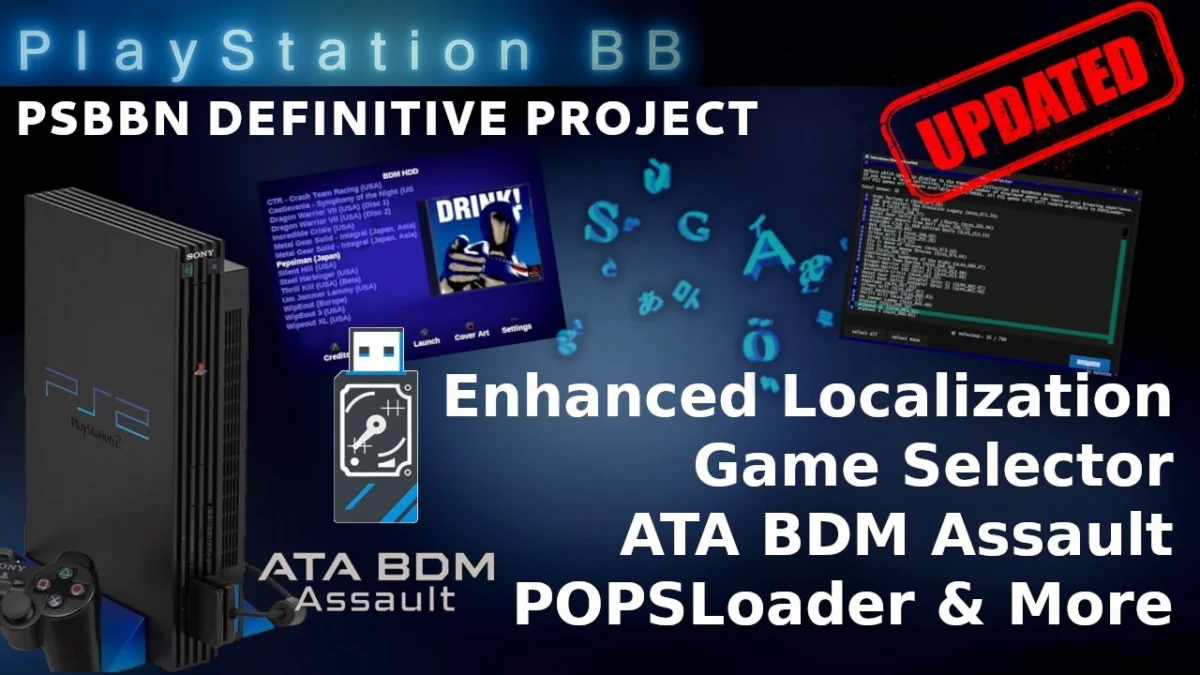
The developer CosmicScale has released a significant update to the PlayStation Broadband Navigator (PSBBN) Definitive Project, a comprehensive enhancement and full translation effort for the original PlayStation 2 peripheral software. This latest iteration introduces a suite of critical improvements, focusing on enhanced localization across multiple languages, a refined Game Selector, native PlayStation 1 (PS1) game support on exFAT file systems, and integration with POPSLoader, among other quality-of-life additions. The update is detailed in an accompanying video and a comprehensive changelog available on the project’s GitHub page, signaling a major step forward for PS2 homebrew and preservation enthusiasts globally.
The PlayStation Broadband Navigator: A Historical Context
To fully appreciate the significance of CosmicScale’s work, it is essential to understand the original context of the PlayStation Broadband Navigator. Released by Sony in Japan in 2001, the PSBBN was an ambitious, albeit niche, peripheral for the PlayStation 2. It was designed to leverage the PS2’s network adapter, transforming the console into a multimedia hub capable of basic web browsing, email, and, crucially, managing games on an internal hard disk drive (HDD). At a time when home internet penetration was still growing and consoles were primarily standalone gaming devices, the PSBBN represented a forward-thinking attempt to integrate the PS2 into a broader digital ecosystem. It allowed users to download game patches, manage saved data, and even play some online-enabled games directly from the HDD, offering faster loading times and convenience compared to disc-based play.
However, the PSBBN’s reach was limited. It was primarily released in Japan, with a more rudimentary version, the HDD Utility Disc, seeing a release in North America and Europe. Its functionality was also deeply tied to Sony’s online services, which were eventually discontinued as the PS2 era waned. As a result, the original PSBBN became largely obsolete, a historical artifact of an early internet-connected console vision. Despite its obsolescence, the underlying hardware—the PS2’s Network Adapter and HDD—remained valuable to the burgeoning homebrew community, particularly for game preservation and loading backups.
The Evolution of PS2 Homebrew and Preservation Efforts
The PlayStation 2, with over 155 million units sold worldwide, stands as the best-selling video game console of all time. Its immense popularity and robust hardware, including the ability to connect an internal HDD, laid fertile ground for a dedicated homebrew community long after its commercial lifecycle concluded. The advent of tools like Free McBoot (FMCB), a soft-mod allowing users to launch unsigned code from a memory card, revolutionized PS2 homebrew. FMCB enabled the use of applications such as Open PS2 Loader (OPL), which allows users to load PS2 games from various sources—USB drives, network shares (SMB), or an internal HDD—bypassing the need for physical discs.
These homebrew developments were driven by a collective desire to preserve the console’s vast library, enhance its functionality for modern setups, and extend its usability beyond official support. The PS2’s original online infrastructure crumbled years ago, and disc drives are prone to failure, making HDD-based solutions and network streaming critical for long-term preservation and continued enjoyment. CosmicScale’s PSBBN Definitive Project emerges from this lineage, aiming to revitalize a historically significant piece of PS2 software, not merely for nostalgic curiosity but for practical utility within the modern homebrew ecosystem. By bringing the PSBBN up to contemporary standards, the project offers a new, feature-rich interface for managing and launching games, complementing existing homebrew solutions.
CosmicScale’s Definitive Project: Revitalizing a Legacy
The PSBBN Definitive Project, spearheaded by developer CosmicScale, seeks to transform the original, Japanese-centric PlayStation Broadband Navigator into a globally accessible and highly functional homebrew utility. The project’s overarching goal is to unlock the full potential of the PS2’s HDD capabilities, offering a modern, user-friendly interface for game management that integrates seamlessly with existing homebrew tools. Prior to this latest update, the project had already made strides in translating the core software and implementing fundamental enhancements. This current release, however, represents a significant leap in both accessibility and functionality, addressing long-standing challenges within the PS2 homebrew scene.
The update underscores CosmicScale’s commitment to community-driven development and the preservation of gaming history. By focusing on areas such as localization and expanded storage compatibility, the project not only makes the PSBBN accessible to a wider international audience but also future-proofs the system for modern storage solutions. The open-source nature of the project, hosted on GitHub, further encourages community contributions and transparency, fostering an environment of continuous improvement and collaborative development.
Key Enhancements in the Latest Update
The recent update introduces several pivotal features that significantly elevate the PSBBN Definitive Project’s utility and reach:
-
Enhanced Localization: Breaking Down Language Barriers
Perhaps the most impactful addition for a global audience is the comprehensive localization of the project’s scripts. The PSBBN Definitive Project now boasts full translations into English, Japanese, French, Spanish, German, Italian, and Brazilian Portuguese. This extensive linguistic support dramatically expands the project’s accessibility, allowing a much broader demographic of PS2 owners worldwide to utilize its features without the barrier of language. Localizing complex software, especially for a legacy system, involves meticulous work, including translating user interfaces, system messages, and internal documentation. This effort not only makes the software usable but also fosters a deeper connection with the content for non-Japanese speakers, transforming a once obscure Japanese peripheral into a universally approachable tool. The inclusion of major European languages and Brazilian Portuguese reflects an understanding of the global PS2 user base and the widespread interest in retro gaming across these regions. This commitment to multilingual support is a testament to the project’s dedication to inclusivity and community outreach.
-
The Game Selector: Streamlining User Experience
The introduction of an enhanced Game Selector is a significant quality-of-life improvement. While specific details of its functionality would be in the video or GitHub, such a feature typically provides a more intuitive and efficient way for users to browse, select, and launch games stored on the PS2’s internal HDD or other connected storage. In contrast to older, more cumbersome methods of navigating game libraries, a refined Game Selector streamlines the user experience, making the PS2 feel more like a modern media center. This is particularly beneficial for users with extensive game collections, allowing for quicker access and reducing the time spent in menus. It likely integrates with the project’s broader interface, offering visual cues, sorting options, and perhaps even game metadata display, akin to modern console dashboards. -
PS1 on exFAT via POPSLoader: A Leap in Compatibility and Storage
One of the most technically demanding and highly anticipated features is the support for PlayStation 1 games on exFAT formatted storage through POPSLoader. This addresses multiple long-standing challenges in the PS2 homebrew scene:- PS1 Emulation on PS2: While the PS2 has hardware backward compatibility for PS1 games, running them from an HDD or other storage required specific solutions like POPStarter. POPStarter is a community-developed tool that allows PS1 backups to be run on a PS2 via its built-in PlayStation emulation capabilities. Integrating POPSLoader into the PSBBN Definitive Project means users can now launch their PS1 titles directly from the same interface used for PS2 games, offering a unified experience.
- exFAT File System Support: Traditionally, PS2 homebrew tools primarily supported FAT32 file systems for USB drives and sometimes for HDDs (though internal HDDs often used a proprietary format). FAT32 has a significant limitation: it cannot store files larger than 4GB. This became an issue for larger PS2 game ISOs and, importantly, for modern USB drives which often come pre-formatted as exFAT or NTFS, neither of which were natively supported by older PS2 homebrew. exFAT, a more modern file system, overcomes the 4GB file size limit and is widely supported by contemporary operating systems and storage devices. Its integration into the PSBBN Definitive Project means users can now use larger USB drives and potentially larger HDD partitions without needing to reformat them to the restrictive FAT32, simplifying the setup process and expanding storage capacity for both PS1 and PS2 games. This is a monumental step in bringing the PS2’s homebrew capabilities into the 21st century regarding storage management.
-
Additional Improvements and Quality of Life Features:
While the article highlights the major updates, the accompanying video and GitHub page undoubtedly detail numerous other minor yet impactful additions. These often include bug fixes, performance optimizations, improved stability, and user interface refinements. Such incremental improvements contribute significantly to the overall robustness and usability of the software, addressing user feedback and enhancing the overall experience. The continuous iteration on such projects is crucial for their long-term viability and adoption within the community.
Developer Spotlight: CosmicScale and Community Contributions
CosmicScale’s dedication to the PSBBN Definitive Project exemplifies the spirit of community-driven development within the retro gaming sphere. Projects of this nature are often undertaken by passionate individuals or small teams, working voluntarily to preserve and enhance legacy hardware and software. The project’s presence on GitHub, a platform for collaborative software development, highlights its open-source philosophy. This transparency allows other developers to inspect the code, suggest improvements, and potentially contribute to future iterations, fostering a vibrant ecosystem around the PS2.
The ability for users to support CosmicScale via platforms like Ko-fi further underscores the reliance of such projects on community backing. These contributions, whether financial or through bug reports and feature suggestions, are vital for sustaining the development effort, enabling developers to dedicate time and resources to these complex, time-consuming endeavors. The success and continuous evolution of the PSBBN Definitive Project are a direct reflection of this symbiotic relationship between developer and community.
Broader Implications for PS2 Preservation and Accessibility
The PSBBN Definitive Project’s latest update carries significant implications for the broader PS2 homebrew landscape and the ongoing efforts in video game preservation:
- Enhanced Accessibility and User Adoption: By offering extensive localization and a more intuitive game selector, the project lowers the barrier to entry for new users and those who were previously deterred by language or technical complexity. This could lead to wider adoption of HDD-based PS2 gaming, exposing more individuals to the benefits of homebrew.
- Modernizing Legacy Hardware: The support for exFAT is a crucial step in bridging the gap between legacy PS2 hardware and modern storage solutions. It eliminates a major headache for users trying to integrate contemporary USB drives or large capacity internal HDDs, making the PS2 feel more relevant and convenient in a modern setup.
- Unified Gaming Experience: The seamless integration of PS1 game launching through POPSLoader within the PSBBN interface offers a more cohesive retro gaming experience. Instead of switching between different applications or boot methods, users can manage both their PS1 and PS2 libraries from a single, enhanced dashboard.
- Long-Term Preservation: By revitalizing and modernizing the PSBBN, the project contributes to the broader goal of video game preservation. It ensures that a piece of the PS2’s historical software is not only saved but made functional and relevant for future generations. Furthermore, by making it easier to run games from non-optical media, it reduces reliance on aging disc drives, extending the practical lifespan of the console itself.
- Catalyst for Further Innovation: The advancements in this project could inspire other developers to explore similar enhancements for different aspects of PS2 homebrew, fostering a continuous cycle of innovation within the community.
The Ecosystem of PS2 Homebrew: A Comparative Glance
It is important to place the PSBBN Definitive Project within the larger context of PS2 homebrew. Solutions like Open PS2 Loader (OPL) remain incredibly popular for their robust support of PS2 game loading via USB, SMB, and HDD. Many users, as noted in the original article, have well-established setups using OPL or even integrated solutions like RetroNAS for network streaming. The PSBBN Definitive Project doesn’t necessarily replace these tools but offers an alternative or complementary front-end experience. Its strength lies in its historical roots as an official Sony peripheral, now reimagined, and its unique integration capabilities, particularly with PS1 games and exFAT. Users may find its interface appealing, or its specific feature set (like the enhanced Game Selector) more aligned with their preferences, offering valuable diversity within the homebrew ecosystem.
Community Engagement and Future Outlook
The positive reception within the retro gaming community is evident through coverage by prominent content creators. Tito from Macho Nacho Productions, for instance, recently published a comprehensive video demoing the project, underscoring its impact and utility. Such endorsements from influential community figures significantly boost visibility and encourage wider adoption, acting as a crucial bridge between developers and the end-user base. The enthusiastic response from the community is a strong indicator of the demand for high-quality, feature-rich homebrew solutions that extend the life and functionality of beloved classic consoles.
Looking ahead, the PSBBN Definitive Project, under CosmicScale’s continued development and with ongoing community support, holds the potential for further refinements and expansions. The modular nature of homebrew development often allows for incremental additions, such as support for more esoteric file systems, advanced networking features, or even further UI customization. The project’s trajectory suggests a future where the PlayStation 2, through community ingenuity, remains a vibrant and versatile gaming platform, far beyond its commercial lifespan.
In conclusion, CosmicScale’s latest update to the PlayStation Broadband Navigator Definitive Project is a testament to the enduring passion and technical prowess within the retro gaming homebrew community. By delivering enhanced localization, a streamlined game selector, and crucial support for PS1 games on exFAT storage via POPSLoader, the project not only revitalizes a piece of PS2 history but also significantly elevates the accessibility, convenience, and longevity of the console for a global audience. This development represents a pivotal moment in PS2 preservation, ensuring that the legacy of this iconic console continues to thrive in the modern era.