Farhan hamdan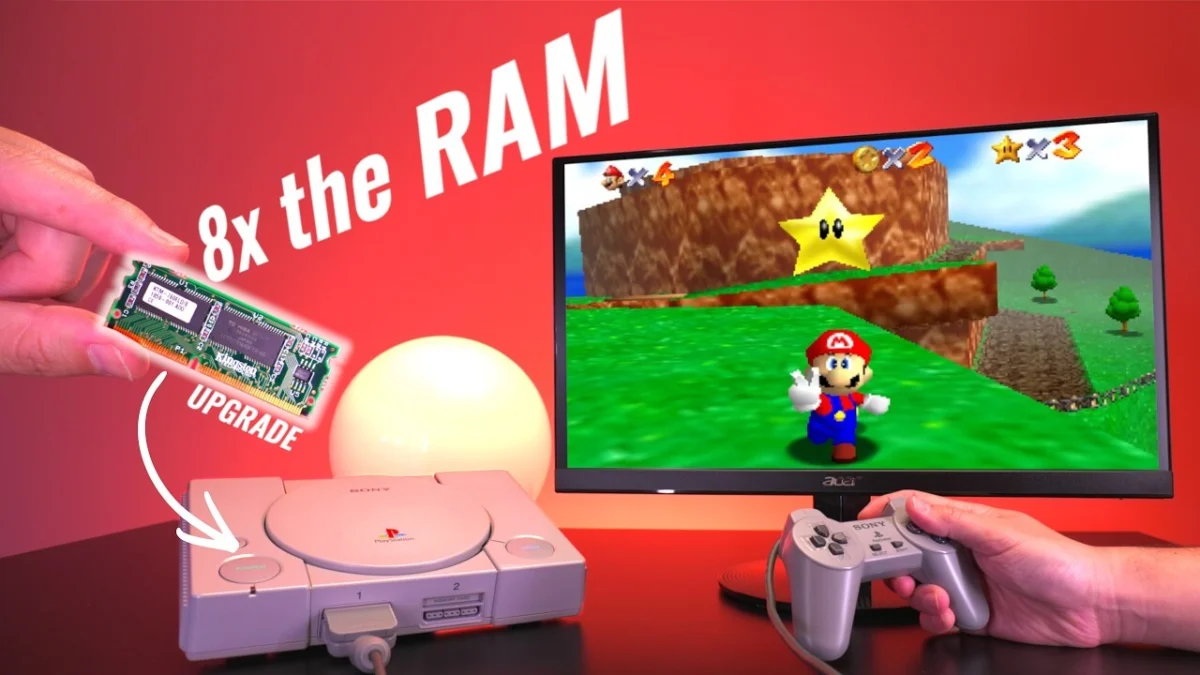
In a significant development for the retro gaming community, Tito from Macho Nacho Productions recently unveiled a proof-of-concept demonstration of a 16MB RAM upgrade for the original Sony PlayStation. This ambitious modification, detailed in a comprehensive video, pushes the boundaries of what was previously thought possible for the iconic 32-bit console, potentially heralding a new era for homebrew development and game preservation efforts. While currently a theoretical exercise with no direct software support, the underlying principles are robust, suggesting a future where the PlayStation could run games with unprecedented levels of detail and complexity.
Technical Feasibility and Historical Context of the PlayStation’s Architecture
The original Sony PlayStation, first released in Japan in December 1994 and globally in September 1995, was a revolutionary console that ushered in the era of mainstream 3D gaming. At its heart lay the MIPS R3000A CPU, clocked at 33.8688 MHz, a powerful processor for its time. However, the console’s memory configuration was comparatively modest: 2MB of main RAM, 1MB of VRAM (Video RAM), and 0.5MB of SPU (Sound Processing Unit) RAM. These specifications, while adequate for the pioneering 3D titles of the mid-90s, often forced developers to employ ingenious tricks and compromises to manage textures, draw distances, and object counts within such tight memory constraints.
The fundamental premise behind the 16MB RAM mod lies in the MIPS R3000A CPU’s inherent addressing capabilities. Despite the console being shipped with only 2MB of main RAM, the CPU itself is a 32-bit processor capable of addressing a much larger memory space—theoretically up to 4 gigabytes. More practically, certain arcade hardware, such as the Namco System 11 and System 12 (which shared significant architectural similarities with the PlayStation), were known to feature larger RAM configurations, sometimes exceeding the PlayStation’s standard 2MB. This architectural commonality has long fueled speculation within the hardware hacking community about the PlayStation’s untapped memory potential. Tito’s work capitalizes on this theoretical headroom, demonstrating that the console’s core hardware can indeed recognize and utilize a significantly expanded memory pool.
The 16MB RAM upgrade represents an astonishing eightfold increase over the PlayStation’s original 2MB main RAM. To put this in perspective, this is a leap comparable to upgrading a modern PC from 8GB to 64GB of RAM. Such a dramatic expansion opens up a myriad of possibilities for game developers, particularly those operating within the vibrant homebrew scene.
The Mechanics of the Mod: A Quick Solder Board (QSB) Solution
Implementing such a significant hardware modification is no trivial task. The 16MB RAM mod involves replacing the console’s original RAM chips with higher-capacity alternatives and often requires a custom Quick Solder Board (QSB) to facilitate the installation process, especially for complex memory remapping. Tito’s video details the use of a QSB designed by "Hidden0-prj," available on GitHub, which streamlines the soldering and wiring necessary for the upgrade on specific PlayStation board revisions (like the PU-18). The QSB acts as an intermediary, correctly routing the additional memory lines to the CPU.

Verification of the mod’s success is crucial, and for this, a specialized RAM tester application, developed by "spicyjpeg" and also available on GitHub, is employed. This diagnostic tool allows users to confirm that the console correctly detects and can access the full 16MB of installed RAM, ensuring the hardware modification is stable and functional. These open-source resources are vital for anyone contemplating this advanced modification, providing both the means for installation and verification.
Precedent and Progression: The 8MB RAM Mod
While the 16MB mod is groundbreaking, it is not without precedent. The concept of expanding the PlayStation’s RAM has been explored previously, most notably with the 8MB RAM mod. This earlier modification, which doubled the console’s main memory, gained traction within the homebrew community, leading to a modest but impactful library of patched games.
These 8MB-patched titles often demonstrated the tangible benefits of increased memory, such as:
- Increased Level of Detail (LOD): More complex geometry and environmental elements could be loaded, reducing pop-in effects.
- Higher Resolution Textures: Although limited by the PlayStation’s native texture mapping capabilities and VRAM, some games could utilize larger texture caches.
- Expanded Draw Distances: Worlds could appear larger and more cohesive without fog or aggressive culling techniques.
- Faster Loading Times: More data could be pre-loaded into RAM, reducing reliance on the slower CD-ROM drive.
However, the 8MB mod also highlighted potential challenges. While some games benefited significantly, others experienced issues like slowdown, primarily because the original game code was not optimized for the expanded memory. Developers had to carefully manage the additional resources, as simply having more RAM did not automatically translate to improved performance without corresponding software adjustments. Despite these hurdles, the 8MB mod proved the viability of memory expansion and paved the way for more ambitious projects like the 16MB variant. Crucially, the 16MB mod is designed to be backward compatible with existing 8MB patches, meaning any game optimized for 8MB will still function on a 16MB system.
The Vision: Untapped Potential for Homebrew and Preservation
The current state of the 16MB mod is a "proof of concept." No commercial PlayStation game was ever designed to natively utilize 16MB of main RAM. This means the immediate impact for average users is limited. However, the true potential lies in the hands of the dedicated homebrew development community.
With 16MB of RAM at their disposal, homebrew developers could:

- Patch Existing Games: Similar to the 8MB efforts, but with even greater scope. This could involve dramatically increasing texture quality (within the limits of the console’s VRAM and rendering pipeline), extending draw distances to unprecedented lengths, adding more on-screen characters or objects, and even potentially improving frame rates by reducing asset streaming bottlenecks. The example screenshot from Tito’s video, showcasing increased detail in an 8MB-patched game, offers a glimpse into this potential, even if further optimization is required to mitigate issues like slowdown.
- Port Arcade Games: Many arcade titles from the mid-to-late 90s utilized PlayStation-derived hardware but often boasted more RAM. With 16MB, direct and faithful ports of these arcade classics to the home console become significantly more feasible, bridging the fidelity gap that often existed between arcade and console versions.
- Develop Entirely New Homebrew Titles: This is perhaps the most exciting prospect. Developers could create new games from the ground up, specifically designed to leverage the expanded memory. This could enable more complex game worlds, richer environments, more sophisticated AI, and new gameplay mechanics that were simply impossible within the original 2MB limitation. Imagine open-world concepts, real-time strategy games with larger unit counts, or adventure titles with more intricate scenes.
Challenges and Considerations for Widespread Adoption
While the technical achievement is commendable, several challenges must be addressed before the 16MB RAM mod can achieve widespread adoption and impact:
- Software Development Effort: The biggest hurdle is the lack of native software support. Patching existing games or developing new ones to utilize 16MB is a time-consuming and technically demanding process. It requires deep knowledge of the PlayStation’s architecture, memory management, and often involves reverse engineering existing game code. The homebrew community, while passionate, is small, and coordinated efforts are crucial.
- Hardware Installation Difficulty: The mod itself is not for the novice. It requires advanced soldering skills and a steady hand. Incorrect installation can permanently damage the console. While QSBs simplify the process, it remains a task best left to experienced modders or professional installation services.
- Potential for Unforeseen Issues: Introducing such a significant hardware change can lead to unexpected glitches or instability, even if the RAM tester confirms functionality. Games are often tightly optimized for their original memory footprint, and altering it could expose latent bugs or cause performance regressions if not carefully managed by software patches.
- Cost and Accessibility: Acquiring the necessary QSB, RAM chips, and potentially paying for professional installation services adds to the overall cost, making it a niche pursuit for dedicated enthusiasts rather than a mainstream upgrade.
- Legal and Ethical Considerations: Modifying copyrighted game software, even for personal use, resides in a grey area of intellectual property law. While typically tolerated within the retro gaming scene, it is a factor for broader community initiatives.
Broader Implications for Retro Gaming and Digital Preservation
The 16MB RAM mod transcends a mere hardware hack; it represents a significant philosophical statement within the retro gaming and digital preservation movements. It challenges the perceived limitations of classic hardware, demonstrating that even decades after their release, consoles like the PlayStation still hold untapped potential.
- Extending Console Lifespan: By enabling new experiences, such mods breathe new life into aging hardware, encouraging enthusiasts to keep their original consoles functional and relevant.
- Historical Exploration: It allows for a deeper understanding of the console’s architecture and the decisions made by original developers. By removing some of the memory constraints, modders can explore how games might have been if different hardware decisions had been made.
- Community Empowerment: Projects like this foster a sense of collaboration and innovation within the retro gaming community, empowering individuals to push technological boundaries.
- Preservation of Art: By potentially enhancing existing titles or enabling faithful arcade ports, these mods contribute to the comprehensive preservation of video game history, allowing future generations to experience classic games in their most realized forms.
Looking Ahead: A Glimpse into the Future of PlayStation Modding
Tito’s demonstration from Macho Nacho Productions is a pioneering effort that provides a tantalizing glimpse into a future where the original PlayStation is not just celebrated for its past achievements, but also for its newfound capabilities. While immediate widespread adoption is unlikely, the project lays critical groundwork for future developments.
The coming months and years will likely see dedicated homebrew developers experimenting with the 16MB memory space, crafting custom patches, and perhaps even entirely new games that redefine the visual and experiential boundaries of the console. The shared resources on GitHub for the QSB and RAM tester are crucial catalysts for this evolution, inviting others to participate in this ambitious endeavor.
For now, the 16MB RAM mod remains a fascinating "what if" scenario, a testament to the ingenuity of the retro gaming community. It’s a project to be closely watched, as it holds the promise of unlocking a hidden chapter in the PlayStation’s storied legacy, revealing capabilities that were always within its grasp but never fully realized until now. This endeavor underscores the enduring passion for classic hardware and the relentless pursuit of pushing technological limits, even decades after a console’s prime.