Ganda Hendra Perkasa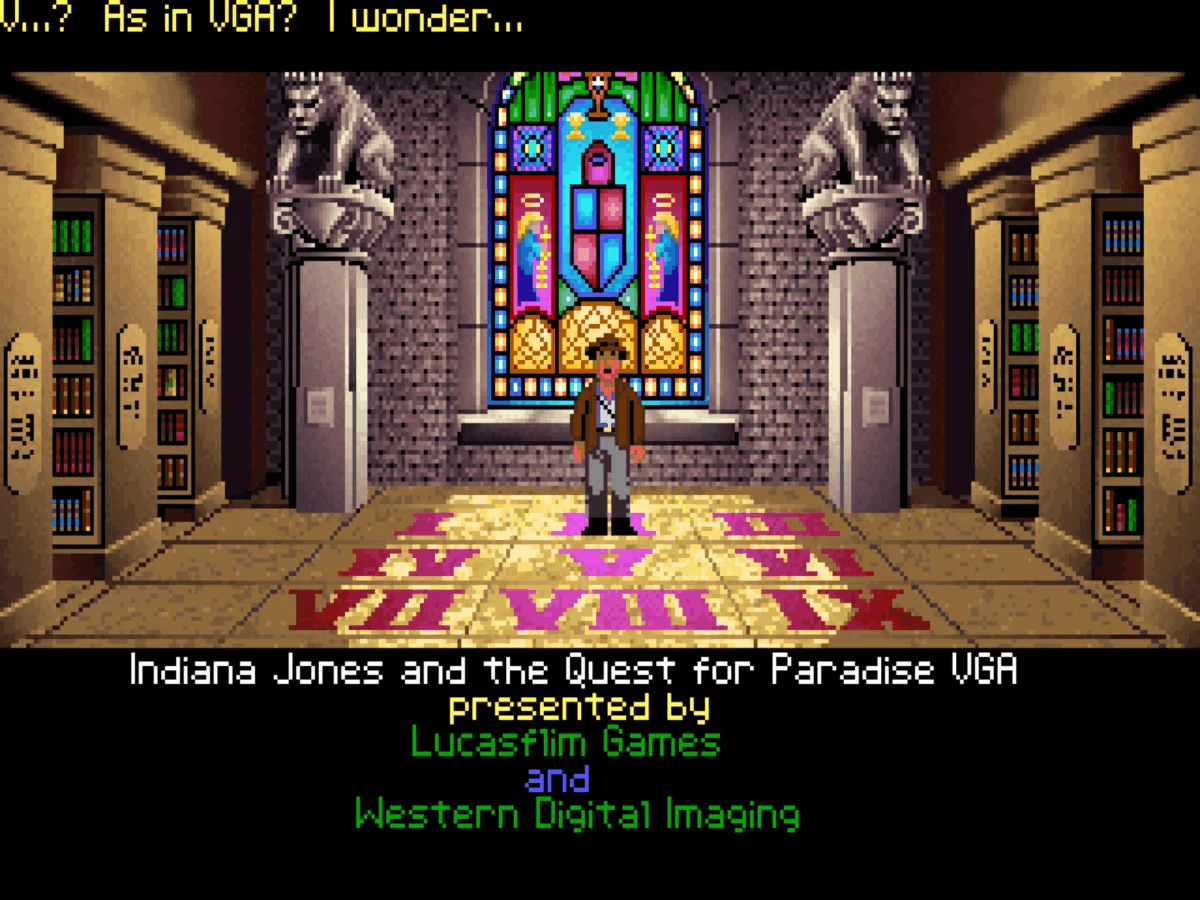
A remarkable discovery has emerged from the digital catacombs of gaming history, offering a tantalizing glimpse into a never-before-realized Indiana Jones adventure. Archivists have unearthed "Indiana Jones and the Quest for Paradise VGA," a non-interactive demo that leverages the renowned SCUMM adventure game engine developed by Lucasfilm Games. This intriguing artifact was found during the meticulous sorting of the personal archives of Aric Wilmunder, a pivotal figure in the maintenance and evolution of the SCUMM engine at Lucasfilm. While not a complete game, this demo utilizes assets originally created for the critically acclaimed "Indiana Jones and the Last Crusade" adventure game, specifically its VGA-enhanced iteration, presenting a unique piece of interactive entertainment history.
The Genesis of a VGA Tie-In
The discovery of "Indiana Jones and the Quest for Paradise VGA" is intrinsically linked to the technological advancements and marketing strategies of the early 1990s, a period when graphical capabilities in personal computing were undergoing a significant revolution. The VGA (Video Graphics Array) standard, introduced by IBM in 1987, represented a substantial leap forward from the previous CGA and EGA standards. While VGA offered a palette of 256 simultaneous colors, a dramatic increase from the 16 colors offered by EGA, it was still a relatively high-end feature. In 1990, when this demo likely originated, VGA cards were considered a luxury, and ownership was far from ubiquitous among IBM PC users.
This technological landscape set the stage for a strategic marketing partnership between Lucasfilm Games and Western Digital Imaging, a prominent manufacturer of graphics cards. Western Digital sought to boost the adoption of its "Paradise VGA" graphics cards by bundling them with popular software titles. Lucasfilm Games, already a titan in the adventure game genre, proved to be an ideal partner. The decision to bundle a VGA version of "Indiana Jones and the Last Crusade" with Western Digital’s hardware was a calculated move designed to showcase the enhanced visual fidelity of the new graphics standard to a wider audience. This collaboration not only served Western Digital’s marketing objectives but also provided Lucasfilm Games with a compelling reason and the necessary resources to develop higher-color versions of its games.
Leveraging Existing Assets for a New Vision
The development of "Indiana Jones and the Quest for Paradise VGA" was facilitated by Lucasfilm Games’ existing investment in 256-color technology. Prior to the Western Digital deal, Lucasfilm Games had already entered into an agreement with Fujitsu to create 256-color versions of its games for the Japanese FM Towns computer system. This collaboration meant that the studio possessed a substantial library of higher-resolution, more colorful assets. These assets, originally developed for the FM Towns versions of games like "Indiana Jones and the Last Crusade," provided a ready-made foundation for creating the VGA-enhanced version.
The SCUMM (Script Creation Utility for Maniac Mansion) engine, the backbone of Lucasfilm Games’ graphical adventure titles, was remarkably adaptable. Its modular design allowed developers to easily integrate new graphical assets and adapt to evolving hardware standards. By utilizing the 256-color assets already in their possession and integrating them into the SCUMM engine, Lucasfilm Games was effectively able to fulfill two lucrative marketing agreements—one with Fujitsu and another with Western Digital—while simultaneously advancing their internal graphics technology towards the emerging VGA standard. This synergy allowed them to be "paid two times over to upgrade their own tech," as noted in the discovery’s initial report, demonstrating a shrewd approach to resource allocation and technological development.
The Mystery of "Quest for Paradise"
The exact nature and intended purpose of "Indiana Jones and the Quest for Paradise VGA" remain somewhat enigmatic. The demo is a non-interactive movie, meaning players cannot control Indiana Jones’s actions. Instead, it presents a scripted sequence, likely designed to showcase the visual improvements offered by the VGA graphics. The title itself, "Quest for Paradise," suggests a narrative that was either a planned spin-off or a conceptual exploration that never materialized into a full game.
The visual evidence from the unearthed demo offers intriguing clues. A screenshot depicts Indiana Jones standing in an Italian library, contemplating a tile bearing the Roman numeral "V." His dialogue, "V…? As in VGA? I wonder…", directly references the graphics standard, reinforcing its role as a promotional tool. The scene is explicitly captioned "Indiana Jones and the Quest for Paradise VGA presented by Lucasflim (sic) Games and Western Digital Imaging." The misspelling of "Lucasfilm" as "Lucasflim" is a significant detail, raising questions about the demo’s level of completion and polish.
This misspelling, coupled with the lack of any accompanying documentation or recollection from individuals involved in SCUMM’s development, suggests that "Quest for Paradise VGA" may have been an internal prototype or a very early demonstration piece that was never intended for public release. The discoverers speculate that if it were meant for wider distribution, such as in retail stores to demonstrate the bundled game, a physical media release (like a floppy disk) would likely have surfaced by now. The possibility that this demo was never actually seen by anyone outside of Lucasfilm Games or Western Digital is a distinct consideration.

Unpacking the Chronology and Context
The timeline of events leading to this discovery can be broadly outlined:
- Mid-to-late 1980s: Lucasfilm Games develops the SCUMM engine, revolutionizing the adventure game genre.
- 1987: IBM introduces the VGA graphics standard.
- Late 1980s/Early 1990s: Lucasfilm Games collaborates with Fujitsu to create 256-color versions of its games for the FM Towns system, accumulating valuable high-color assets.
- 1990 (Estimated): Western Digital partners with Lucasfilm Games to bundle a VGA version of "Indiana Jones and the Last Crusade" with its Paradise VGA graphics cards. Concurrently, the "Indiana Jones and the Quest for Paradise VGA" demo is likely produced using existing 256-color assets from "Last Crusade" and the SCUMM engine.
- Present Day: The demo is discovered within the personal archives of Aric Wilmunder.
- Post-Discovery: The demo is uploaded to the Internet Archive, making it accessible to the public.
The context of the early 1990s PC gaming market is crucial to understanding this discovery. The transition from 16-color graphics to 256-color VGA was a significant graphical leap, but the hardware was expensive and not universally adopted. Promotional materials and bundled software were vital marketing tools for hardware manufacturers. Lucasfilm Games, with its popular franchises and advanced game engine, was perfectly positioned to benefit from and contribute to these marketing efforts.
Supporting Data and Technical Implications
The technical foundation of "Indiana Jones and the Quest for Paradise VGA" lies in the SCUMM engine’s ability to handle varying color depths and resolutions. The original "Indiana Jones and the Last Crusade" adventure game was released in various versions, including an EGA (16-color) version. The development of a VGA (256-color) version, and subsequently this demo, required adapting the game’s art assets and potentially its scripting to take advantage of the increased color palette.
The use of assets from the VGA version of "Indiana Jones and the Last Crusade" means that the graphical elements in "Quest for Paradise VGA" would have been significantly more detailed and vibrant than their EGA counterparts. This would have included richer character sprites, more nuanced environmental textures, and a generally more immersive visual experience. The SCUMM engine’s design, which separated game logic from art assets, facilitated this kind of upgrade. Developers could swap out graphical resources without fundamentally altering the underlying game engine, making it highly efficient for porting and enhancing games across different hardware specifications.
The decision to use a non-interactive movie format for the demo is also noteworthy. This approach allowed Lucasfilm Games and Western Digital to present a curated showcase of the VGA graphics without the complexities of interactive gameplay. A non-interactive demo is simpler to produce and control, ensuring that the intended visual message is delivered clearly. It effectively functions as a short animated advertisement, highlighting the visual prowess of the bundled hardware.
Broader Impact and Implications for Game History
The discovery of "Indiana Jones and the Quest for Paradise VGA" is a significant event for game historians and enthusiasts for several reasons:
- Preservation of Lost Media: It represents the recovery of a piece of digital history that might otherwise have been lost forever. Such discoveries underscore the importance of archival efforts for preserving the legacy of video games.
- Insight into Development Practices: The demo provides a concrete example of Lucasfilm Games’ innovative use of its SCUMM engine and its strategic partnerships for marketing and technological advancement. It sheds light on the business and technical considerations driving game development in the early 1990s.
- Understanding Technological Transitions: The demo serves as a tangible artifact illustrating the transition from 16-color to 256-color graphics, a pivotal moment in the evolution of PC gaming. It highlights how marketing deals facilitated the adoption of new technologies.
- Unveiling Unreleased Concepts: While not a full game, "Quest for Paradise" offers a glimpse into a potential Indiana Jones narrative that was never fully explored. It sparks curiosity about the creative ideas that were in development at Lucasfilm Games during this era.
The implication of this discovery is that there may be other such "lost" or partially developed projects within the archives of major game development studios. The careful cataloging and preservation of personal and professional archives are crucial for uncovering these hidden gems. The existence of "Indiana Jones and the Quest for Paradise VGA" reinforces the idea that the history of video games is an ongoing narrative, with new chapters continually being written through diligent research and archival work.
The accessibility of the demo through the Internet Archive ensures that it can be studied, appreciated, and shared by a global audience. The invitation to view the video at "2x speed" acknowledges the potentially slow pacing of early adventure game cutscenes while still encouraging engagement with the unearthed content. This democratization of access is a cornerstone of modern historical scholarship, allowing a wider community to participate in the exploration and understanding of cultural artifacts like this lost Indiana Jones adventure. The misspelling, while potentially indicating an unfinished state, paradoxically adds to its charm and authenticity as a rare glimpse into the imperfect, yet groundbreaking, world of early digital entertainment development.