Indra Gunadi
The Enduring Appeal of the Nintendo Entertainment System in 2026
The release of "Delete Me Hard" in 2026 underscores a remarkable phenomenon: the sustained and growing interest in developing new software for platforms that ceased commercial production decades ago. The Nintendo Entertainment System, originally launched in Japan as the Famicom in 1983 and internationally in 1985, remains a touchstone for a global community of developers, enthusiasts, and players. Its 8-bit aesthetic, iconic sound chip, and challenging gameplay mechanics continue to resonate, appealing to both those who grew up with the console and newer generations discovering its legacy.
The allure of the NES is multifaceted. For many, it evokes a powerful sense of nostalgia, representing a simpler era of gaming where direct, skill-based challenges predominated. For developers like ilmenit, the console’s inherent limitations are not constraints but catalysts for creativity. The finite processing power of its Ricoh 2A03 CPU (a customized MOS Technology 6502 processor clocked at approximately 1.79 MHz in NTSC regions), the 2KB of RAM, and the Picture Processing Unit (PPU) offering a palette of 64 colors (25 active per scanline) demand ingenious optimization and a deep understanding of hardware. This environment fosters a unique form of digital craftsmanship, where every byte and CPU cycle must be meticulously managed to achieve desired graphical and gameplay outcomes.
"Delete Me Hard": A Deep Dive into Gameplay and Technical Prowess
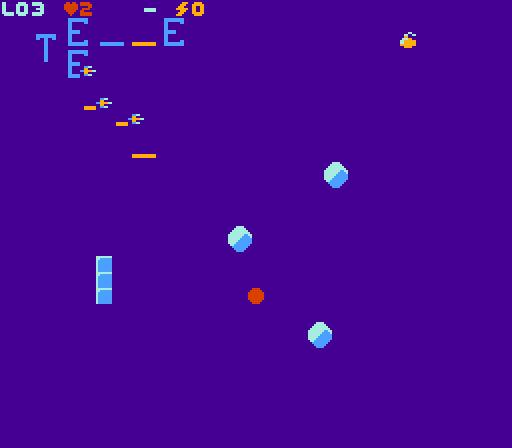
"Delete Me Hard" positions itself within the arcade shooter genre, a staple of the NES era. Players are tasked with eliminating a dynamic ‘DELETE_ME’ snake, which implies a moving, potentially segmented enemy that evolves or presents varied attack patterns across the game’s 30 levels. The concept of "managing arena upgrades" suggests a strategic element beyond pure reflex, where players must decide when and how to utilize power-ups or environmental modifications to gain an advantage. This blend of classic arcade action with strategic resource management offers a potentially fresh take on established mechanics.
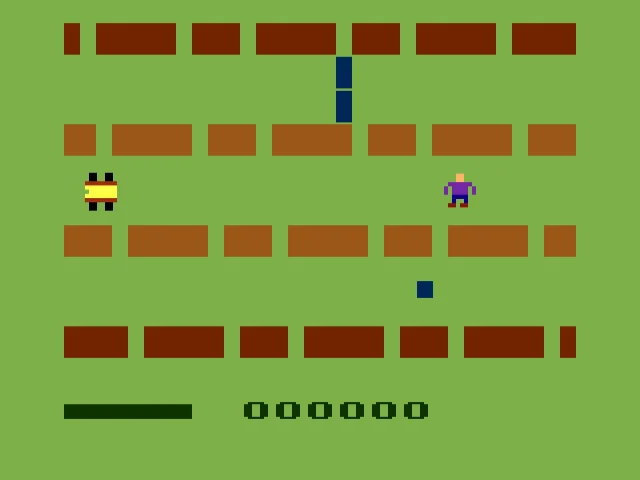
The game’s 30 levels promise a substantial challenge, indicating a progressive difficulty curve and varied level designs to maintain player engagement. The 8-bit graphical style, as evidenced by the accompanying screenshot, is faithful to the NES’s capabilities, utilizing pixel art that is both nostalgic and functional. The choice of an arcade shooter genre aligns well with the NES’s strengths, allowing for fast-paced action and responsive controls, which were hallmarks of many beloved titles on the platform.
However, the most compelling technical detail is the revelation that "Delete Me Hard" is "entirely written in assembly code." This is a critical distinction that elevates the project beyond typical homebrew endeavors. Assembly language programming involves writing instructions directly in a low-level symbolic code that closely maps to the machine’s native instruction set. For the NES’s 6502-based CPU, this means manipulating registers, memory addresses, and CPU flags with granular precision.
Developing a game of this scope—30 levels with dynamic enemies and upgrade systems—entirely in assembly is an arduous task. It requires an intimate knowledge of the NES hardware, including its CPU, PPU, and Audio Processing Unit (APU), and an exceptional ability to optimize code for performance and memory footprint. While higher-level languages like C can be cross-compiled for the NES, they often introduce overhead or limit the direct control necessary for pushing the console’s boundaries. Assembly, conversely, allows for maximum efficiency, enabling developers to squeeze every last bit of performance out of the hardware, resulting in smoother gameplay, more complex visuals, or richer audio than might otherwise be possible. This commitment to assembly is often seen within the homebrew community as a mark of true dedication and technical virtuosity, reminiscent of the development practices during the NES’s commercial heyday.
ilmenit and the Global Homebrew Development Landscape
ilmenit, the developer behind "Delete Me Hard," is part of a growing global community of independent creators dedicated to retro gaming platforms. This community, often centered around online forums like NESDev, actively shares tools, knowledge, and open-source projects, fostering an environment of collaborative innovation. Developers within this scene are motivated by a variety of factors: a passion for specific consoles, a desire to learn low-level programming, the challenge of creating within strict limitations, or simply to contribute new experiences to beloved systems.
The process typically involves using specialized toolchains, including cross-assemblers (like ca65 from the cc65 suite) and emulators for testing. Modern development environments often run on contemporary PCs, allowing for more efficient coding, debugging, and iteration than was possible with original 1980s tools. Platforms like itch.io have become vital distribution channels for these independent projects, offering an accessible storefront for developers to share their ROMs (Read-Only Memory files) with a global audience. These digital storefronts allow developers to set their own prices, offer games for free, or implement "pay-what-you-want" models, directly supporting their creative efforts.
A Chronology of Modern NES Development
The story of new NES game development extends far beyond the console’s commercial lifespan. After Nintendo officially discontinued the NES in 1995 (1997 in Japan), a dedicated community began to reverse-engineer the hardware and develop unofficial tools.
- Late 1990s – Early 2000s: The nascent homebrew scene emerged. Early efforts focused on creating simple demos, utilities, and translations of Japanese Famicom games. Emulators like NEStopia and FCEUX became crucial testing grounds. Online communities and forums started to coalesce, sharing knowledge about the 6502 CPU and NES PPU.
- Mid-2000s: The first wave of more substantial homebrew games began to appear. These were often simple arcade-style titles or puzzle games, demonstrating increasing sophistication in programming techniques. Tools like the cc65 C compiler suite began to offer higher-level language options, democratizing development somewhat, though assembly remained critical for performance-intensive projects.
- 2010s: The homebrew scene matured considerably. Projects became more ambitious, featuring custom sound engines, advanced scrolling techniques, and even cartridge-based releases. Kickstarter and similar crowdfunding platforms provided avenues for developers to fund physical cartridge runs, often complete with authentic packaging and manuals. Titles like Battle Kid: Fortress of Peril (2010) and Micro Mages (2019) garnered significant attention for their quality and technical polish, proving that new NES games could compete with commercial releases of the era.
- 2020s and Beyond: The scene continues to thrive. With enhanced development tools, a wealth of online resources, and a receptive audience, developers are pushing the boundaries of what is thought possible on the 8-bit hardware. The release of "Delete Me Hard" in 2026 is a continuation of this trend, showcasing sustained innovation and a commitment to the platform. The fact that it is being released mid-decade further solidifies the long-term viability of this niche market.
The Technical Craftsmanship: Assembly Language and the 6502 Microprocessor
To fully appreciate "Delete Me Hard’s" assembly-coded nature, it’s essential to understand the technical environment of the NES. The console’s central processing unit, the Ricoh 2A03, is an 8-bit microprocessor derived from the MOS Technology 6502. This CPU operates with a very limited set of registers (A, X, Y for general purpose, S for stack pointer, P for processor status). Memory access is direct and sequential, often requiring explicit loading and storing of values.
Programming in assembly for the 6502 means directly instructing the CPU using mnemonics like LDA (Load Accumulator), STA (Store Accumulator), JMP (Jump), JSR (Jump to Subroutine), and various arithmetic and logical operations. This contrasts sharply with modern high-level languages where memory management, register allocation, and instruction sequencing are handled automatically by compilers. In assembly, the developer is the compiler, meticulously crafting each instruction to optimize for speed, memory usage, or both.
For an NES game, this level of control is paramount. The 2A03 CPU runs at a relatively slow clock speed, and the system’s 2KB of work RAM (WRAM) is exceptionally restrictive. The PPU, responsible for generating video output, has its own dedicated memory (CHR-ROM or CHR-RAM) for graphics tiles and sprite data, and its operations must be carefully synchronized with the CPU’s timing to avoid graphical glitches or flicker. The APU, with its five sound channels (two pulse waves, one triangle wave, one noise, and one DPCM channel), also requires precise low-level programming to produce music and sound effects.
By writing "Delete Me Hard" entirely in assembly, ilmenit can achieve several critical advantages:
- Maximum Performance: Assembly allows for the most efficient use of CPU cycles, enabling smoother animation, more complex enemy AI, or faster game logic than might be possible with compiled code.
- Minimal Memory Footprint: Every byte of ROM and RAM is precious on the NES. Assembly code is typically much smaller than equivalent code generated by a C compiler, leaving more room for game assets, levels, and features.
- Direct Hardware Control: Assembly provides direct access to hardware registers, allowing for precise control over the PPU for screen updates, palette manipulation, and sprite rendering, as well as the APU for intricate sound design.
- Authenticity: For many retro enthusiasts, assembly development embodies the original spirit of NES programming, echoing the techniques employed by Nintendo’s first-party developers and pioneering third-party studios.
This choice is not merely a technical preference but a statement about the developer’s commitment to pushing the NES to its limits, offering a game that respects the console’s architecture while providing a fresh experience.
Reactions and Community Engagement
The announcement of "Delete Me Hard" would undoubtedly generate significant interest within the retro gaming community. Forums, social media platforms, and dedicated retro gaming news sites would likely highlight its release. Initial reactions from players and fellow developers can be inferred:
- Enthusiasm for New Content: The core retro gaming audience is always eager for new, high-quality games on their favorite systems. A 30-level arcade shooter promises substantial gameplay.
- Appreciation for Technical Prowess: The "assembly-coded" detail would likely draw praise from those who understand the difficulty involved. It signals a dedication to craft and optimization that resonates deeply with the technical subset of the community.
- Discussion of Gameplay Mechanics: Early players would likely discuss the "DELETE_ME" snake mechanics and the arena upgrade system, offering feedback and sharing strategies.
- Potential for Physical Release: Many successful NES homebrew titles eventually receive limited physical cartridge runs, often funded through crowdfunding. If "Delete Me Hard" gains traction, there would likely be calls for a physical edition, complete with box art and manual, to complement its digital release.
- Developer Interaction: Platforms like itch.io facilitate direct interaction between developers and players. ilmenit would likely engage with the community, discussing design choices, technical challenges, and potentially future updates or ports to "other classic systems" as mentioned.
Industry analysts specializing in niche markets might point to "Delete Me Hard" as further evidence of the "long tail" phenomenon in entertainment, where a dedicated audience continues to support content for older platforms, often generating revenue streams that are small individually but collectively significant.
Broader Implications for Retro Gaming
The release of titles like "Delete Me Hard" has several broader implications for the retro gaming ecosystem:
- Validation of Retro Development: It continually validates the effort and passion invested in developing for vintage hardware. Each high-quality new release demonstrates that these systems are not merely museum pieces but platforms capable of hosting fresh, engaging experiences.
- Preservation of Skills and Knowledge: The act of programming in assembly for the NES helps preserve specific technical skills and knowledge that might otherwise fade. It encourages a deeper understanding of computer architecture and low-level optimization.
- Expanding the Console’s Library: Every new homebrew game adds to the official library of a console, offering new reasons for enthusiasts to keep their original hardware connected or to use emulators. This expands the cultural footprint and longevity of the NES.
- Inspiration for Future Developers: Projects like "Delete Me Hard" inspire a new generation of programmers and game designers to explore retro development, fostering a continuous cycle of creativity within the community.
- Economic Viability of Niche Markets: The success of homebrew games, both digitally and through physical limited editions, demonstrates that viable economic models exist for highly specialized content, often bypassing traditional publishing structures. This empowers independent creators.
- Artistic Statement: Beyond commercial considerations, developing a game for the NES in 2026 is an artistic statement. It’s a declaration that creative expression is not limited by technological obsolescence but can thrive within carefully defined historical parameters, producing unique aesthetic and gameplay experiences.
In conclusion, "Delete Me Hard" by ilmenit is more than just a new arcade shooter for the Nintendo Entertainment System. Its release in 2026, coupled with its meticulous development in assembly code, stands as a powerful testament to the enduring appeal of 8-bit gaming, the unwavering dedication of the homebrew community, and the limitless potential for creativity even within the confines of vintage hardware. It serves as a vibrant indicator that the NES, far from being a relic of the past, remains a fertile ground for innovation and engaging new experiences for decades to come.