Indra Gunadi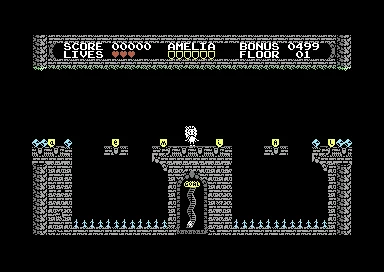
The digital retro gaming landscape has been invigorated by the recent release of "Princess Amelia (2026)," a new platformer for the venerable Commodore 64 home computer. Developed by BARKAMI, this freeware title challenges players to guide the eponymous Princess Amelia through a series of demanding castle levels, emphasizing classic platforming mechanics with a distinct narrative objective. The game, now available for download via BARKAMI’s official itch.io page, represents a continued dedication from independent developers to the enduring legacy of the C64, nearly 44 years after its initial launch.
Unpacking the Gameplay: A Quest for Identity and Jewels
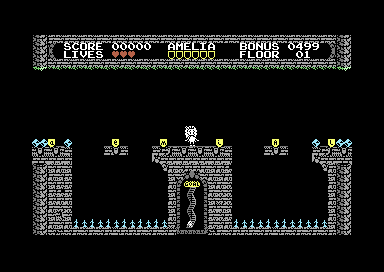
"Princess Amelia (2026)" immediately immerses players in a classic quest format. The core objective is to navigate Princess Amelia through 20 meticulously designed castle levels. Within each level, players must collect a series of lettered bucklers that, once assembled, will spell out the princess’s name. This innovative mechanic adds a layer of puzzle-solving to the traditional platforming genre, requiring players to not only master movement and timing but also to strategize the order and method of collection. Each buckler’s location is strategically placed, often demanding precise jumps, careful navigation around environmental hazards, and intelligent use of the level architecture. The game’s design ethos clearly aims to challenge players, reminiscent of the demanding difficulty curves prevalent in 8-bit era titles.
Beyond the primary goal of collecting bucklers, "Princess Amelia (2026)" introduces an optional secondary objective: gathering jewels scattered throughout the levels. This choice provides players with a dilemma, adding a strategic dimension that can influence gameplay pacing. Collecting jewels might lead to higher scores or unlock hidden content, but it also increases the risk, potentially exposing Princess Amelia to dangers or consuming valuable time. The game incorporates a crucial time-based element, indicated by the princess’s "patience running out." This soft time limit compels players to "act quickly," adding an urgent rhythm to the platforming action and preventing leisurely exploration. The interplay between these mechanics—essential buckler collection, optional jewel gathering, and the overarching time constraint—creates a dynamic and engaging experience that encourages replayability and mastery. Each of the 20 castle levels promises unique layouts and increasing complexity, ensuring that the challenge scales appropriately as players progress through the game’s narrative.
The Enduring Allure of the Commodore 64 in 2026
The release of "Princess Amelia (2026)" serves as a testament to the remarkable longevity and persistent appeal of the Commodore 64. Launched in August 1982, the C64 rapidly became the best-selling single computer model of all time, shifting an estimated 17 million units worldwide during its commercial run. Its innovative hardware, particularly the MOS Technology 6510 CPU, the versatile VIC-II graphics chip, and the iconic SID (Sound Interface Device) sound chip, established a benchmark for home computing and gaming in the 1980s. The SID chip, in particular, remains revered for its unique sound synthesis capabilities, contributing significantly to the C64’s distinctive audio identity and fostering a vibrant demoscene that continues to produce music and art for the platform even today.
Decades after its discontinuation, the C64 has not faded into obsolescence but has instead cultivated a fervent global community of enthusiasts, programmers, and artists. This community actively engages in hardware restoration, software preservation, and, crucially, the creation of new games and applications. Modern tools and emulators have significantly lowered the barrier to entry for aspiring C64 developers, allowing a new generation to explore the platform’s capabilities without needing vintage hardware. In 2026, the retro gaming scene is thriving, fueled by nostalgia, the desire for simpler, challenge-oriented gameplay, and the artistic appreciation for pixel graphics and chiptune music. "Princess Amelia (2026)" fits perfectly into this resurgence, offering a fresh experience built upon the familiar foundations of a beloved classic system. Its release underscores that the C64 is not merely a relic of the past but a living, evolving platform supported by a dedicated global following.
BARKAMI’s Vision: Indie Development in the Retro Sphere
BARKAMI, the independent developer behind "Princess Amelia (2026)," embodies the spirit of contemporary retro game development. While specific details about BARKAMI’s background are not widely publicized, their decision to develop a freeware title for the Commodore 64 speaks volumes about their passion for the platform and the broader retro computing community. Developing for the C64 in 2026 presents a unique set of challenges and opportunities. Developers must contend with the system’s stringent memory limitations (64KB RAM), its fixed screen resolution, and the specific instruction set of the 6510 CPU. These constraints, while formidable, often foster immense creativity, pushing developers to optimize code and graphics in ways rarely seen in modern development.
The choice to distribute "Princess Amelia (2026)" as freeware via itch.io aligns with a growing trend in the indie retro development scene. This model allows developers to share their passion projects widely, build a portfolio, and contribute directly to the platform’s library without the complexities of commercial distribution. Itch.io, a digital storefront focused on independent games, has become a vital hub for creators looking to publish niche titles, including those for retro platforms. This approach not only makes games accessible to a global audience of enthusiasts but also fosters a sense of community ownership and collaboration. BARKAMI’s initiative highlights the democratic nature of modern game development, where individual passion can lead to significant contributions to beloved, albeit vintage, platforms.
The Collaborative Spirit: A Call for Musical Enrichment
A notable aspect of "Princess Amelia (2026)" at its launch is the absence of a musical score. BARKAMI has openly acknowledged this, stating, "BARKAMI’s game is without music for now, if you want to help him out, get in touch with him. This would really add up to the game." This direct appeal for collaboration is a powerful demonstration of the open and supportive nature of the retro computing community. Music, particularly the distinctive sounds produced by the SID chip, is an integral component of the Commodore 64 experience. Legendary C64 game soundtracks from titles like "Commando," "Monty on the Run," and "RoboCop" are celebrated for their innovative use of the SID chip’s three voices and filter capabilities, often elevating the overall gaming experience.
The lack of music in "Princess Amelia (2026)" at launch, while not detrimental to its core gameplay, presents an opportunity for community engagement. The C64 demoscene and chiptune communities are replete with talented musicians and composers who specialize in creating authentic 8-bit audio. A collaborative effort could significantly enhance the game’s atmosphere and immersion, transforming it from a visually engaging platformer into a complete sensory experience. Such a partnership would not only benefit "Princess Amelia (2026)" but also strengthen the bonds within the retro development community, showcasing how shared passion can overcome individual resource limitations. The integration of a high-quality SID soundtrack could become a significant post-launch enhancement, potentially attracting even more players and further cementing the game’s place within the C64 library.
Broader Implications for Retro Game Development and Preservation
The release of "Princess Amelia (2026)" carries several important implications for the broader retro gaming ecosystem and digital preservation efforts. Firstly, it underscores the continued viability of developing new content for historically significant platforms. Each new game not only adds to the existing library but also keeps the platform relevant, attracting both seasoned enthusiasts and a new generation of players curious about gaming’s roots. This continuous injection of fresh content is crucial for the long-term health and visibility of vintage hardware communities.
Secondly, such releases contribute to the ongoing efforts of digital preservation. By developing and distributing games for platforms like the C64, developers ensure that the skills, tools, and creative approaches unique to these systems remain alive and documented. These games often become part of digital archives, accessible to researchers, historians, and future generations interested in the evolution of video games. The freeware model, in particular, facilitates this, as games are often easily downloadable and can be played on various emulators across modern operating systems.
Thirdly, "Princess Amelia (2026)" exemplifies a growing trend of hybrid development, where modern tools and distribution channels are used to create experiences for vintage hardware. This approach bridges the gap between the past and the present, demonstrating that technological limitations do not inherently restrict creativity or innovation. It also highlights the global nature of the retro community, where developers and players from diverse backgrounds can connect over a shared appreciation for classic computing. The act of creating a game like "Princess Amelia (2026)" is not just about making a fun experience; it is an act of cultural preservation, an homage to a bygone era, and a vibrant declaration that the golden age of 8-bit gaming continues to evolve.
In conclusion, "Princess Amelia (2026)" is more than just another game for the Commodore 64; it is a significant contribution to the retro gaming movement. BARKAMI’s platformer offers a compelling blend of classic challenge and innovative mechanics, inviting players into a meticulously crafted world. Its freeware status and the developer’s open call for musical collaboration underscore the community-driven spirit that sustains platforms like the C64. As players guide Princess Amelia through her quest, they participate in a vibrant continuation of gaming history, proving that the digital pulse of the Commodore 64 beats strong, even in 2026.