Farhan hamdan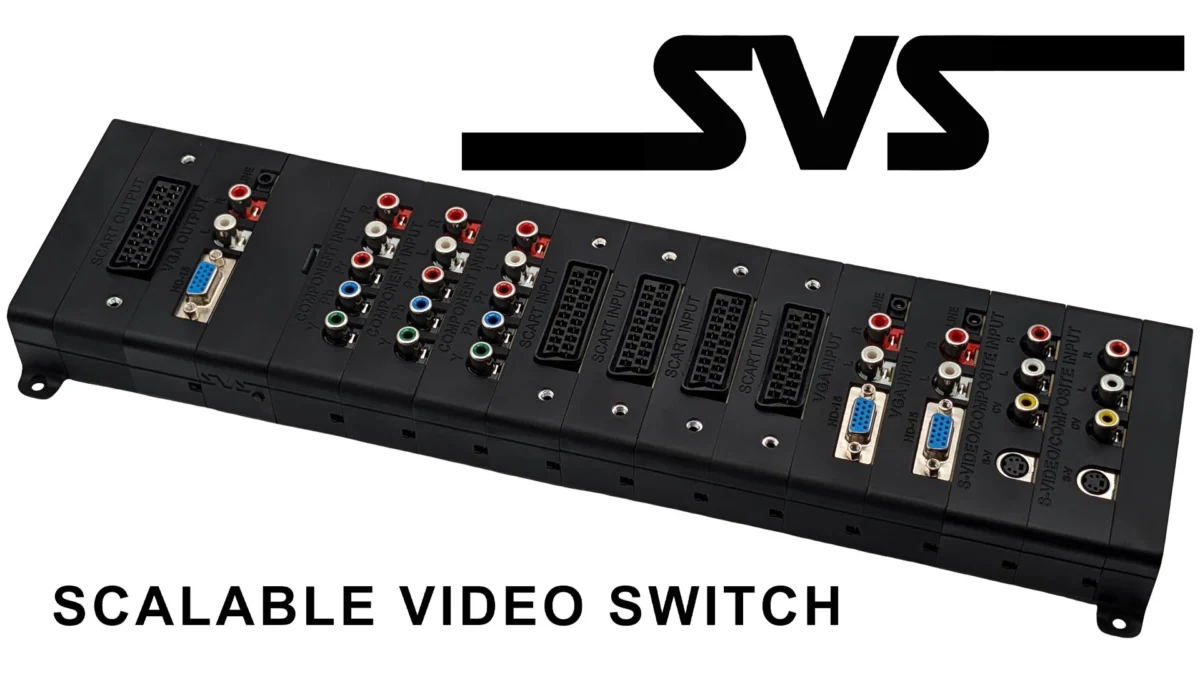
The retro gaming community is poised for a significant enhancement in signal management with the imminent release of specialized transcoder modules for the highly anticipated Scalable Video Switch (SVS) by Arthrimus. Scheduled for sale today at 4 PM ET (5 PM NYC time), these modules represent a crucial step forward in simplifying complex multi-standard video setups, a perennial challenge for enthusiasts dealing with vintage gaming consoles and modern display technologies.
The Introduction of Transcoder Modules for the SVS
Arthrimus is set to launch two distinct transcoder modules: one designed to convert RGB signals to YPbPr (component video) and another for the reverse, YPbPr to RGB. These modules are engineered to integrate seamlessly into the output side of the Scalable Video Switch, positioned directly before the output connector. This strategic placement ensures that signal conversion occurs precisely where needed, optimizing the output for the connected display without affecting other inputs.
Crucially, only one transcoder module of a specific direction is required per SVS unit, irrespective of the number of inputs requiring conversion. This design choice underscores the SVS’s philosophy of modularity and efficiency. However, each module is dedicated to a single conversion direction; for instance, an RGB-to-YPbPr module cannot simultaneously perform YPbPr-to-RGB conversion. The modules are priced at $45 and $55 respectively, offering an accessible solution for specialized signal needs. While Arthrimus may also list any leftover stock of existing SVS modules, these are expected to sell out rapidly due to high demand. Further details are available on the official product page at https://scalablevideoswitch.com/.
Addressing the Challenges of Mixed Video Signal Environments
The necessity for these transcoder modules stems from the inherent complexities of retro gaming setups, which frequently involve a diverse array of video signal types. Historically, video game consoles, home computers, and professional broadcast equipment have utilized various analog video standards, each with its own electrical characteristics and color space representation. The most common high-quality analog signals encountered by retro enthusiasts include:
- RGB (Red, Green, Blue): Often found in SCART (Europe) or VGA/BNC (professional monitors, some arcade boards). This signal type carries separate lines for red, green, and blue color information, along with synchronization signals, offering the purest analog picture quality.
- YPbPr (Component Video): Typically found on three RCA jacks (green, blue, red). This signal separates luminance (Y) from two color difference signals (Pb and Pr). It offers excellent quality, often indistinguishable from RGB for many users, and was widely adopted by later generation consoles (e.g., PlayStation 2, Xbox, Wii) and consumer CRTs in North America.
- S-Video (Separated Video): Carries luminance (Y) and chrominance (C) separately, providing a significant improvement over composite video by avoiding dot crawl and color bleeding.
- Composite Video (CVBS – Color, Video, Blanking, Sync): The most basic and widely compatible analog video signal, combining all video information onto a single wire. It is prone to artifacts like dot crawl and color bleeding due to signal interleaving.
Many retro gaming enthusiasts possess a collection of consoles spanning different eras and regions, leading to a "mixed setup" where some consoles output RGB, others YPbPr, and some even S-Video or composite. Compounding this, display devices (ranging from vintage RGB monitors and professional broadcast monitors to consumer-grade CRTs and modern flat-panel displays) often have specific input requirements. For example, a European RGB SCART console might need to connect to a North American CRT that only accepts YPbPr, or a YPbPr-outputting console might need to feed into a monitor that exclusively takes RGBs.
This disparity necessitates conversion solutions, traditionally handled by standalone transcoders. While effective, these external units add to cable clutter, require separate power supplies, and introduce additional points of potential signal degradation. The SVS transcoder modules aim to streamline this process by integrating conversion directly into the central video switching hub.
Seamless Integration and Intelligent Switching
A key advantage of the SVS transcoder modules lies in their intelligent integration with the SVS Control Module. Users can program the SVS to recognize which input port is receiving which type of video signal (e.g., RGB or YPbPr). When an RGB input is active, and a YPbPr-to-RGB module is installed, the SVS control module will intelligently bypass the transcoder, allowing the native RGB signal to pass through unimpeded. Conversely, if an input programmed as YPbPr is selected, the control module will instruct the transcoder to activate and perform the necessary YPbPr-to-RGB conversion. This "smart" switching mechanism ensures that transcoding only occurs when absolutely necessary, preserving signal integrity for native signals.
This selective transcoding approach is paramount for maintaining optimal video quality. While high-quality transcoders introduce minimal degradation, avoiding unnecessary conversion is always preferable. The SVS modules embody this principle, only engaging their conversion circuitry for the specific inputs that match their programmed function, and simply passing through signals that are already in the desired format.
Technical Pedigree and Quality Assurance

The quality of video conversion is heavily dependent on the underlying circuit design and components. Arthrimus has underscored the high standards of these new modules by revealing that their custom color matrix conversion circuit is based on the designs of Mike Chi, the esteemed creator of the RetroTINK line of video processors. Mike Chi, a widely respected figure in the retro video community, is known for his meticulous engineering and commitment to signal fidelity. His existing RGBtoComp and Comp2RGB transcoders have long been considered industry benchmarks for their top-tier quality and have been the go-to solutions for many enthusiasts for years.
Chi’s direct input into the creation of the SVS transcoder modules provides a strong endorsement of their likely performance. This collaboration suggests that Arthrimus has prioritized signal accuracy, color reproduction, and minimal latency – critical factors for an authentic retro gaming experience. The confidence in the quality of these modules is thus well-founded, given their lineage from a proven and highly regarded designer.
Advanced Configurations: Dual Outputs and Versatility
The modular design of the SVS extends to its output capabilities, allowing for even more complex and versatile setups. Users are able to install both an RGB-to-YPbPr and a YPbPr-to-RGB transcoder module simultaneously, catering to scenarios where multiple display types are utilized concurrently. For instance, an enthusiast might wish to send an RGB signal to a dedicated RGB monitor (which accepts only RGBs) while simultaneously outputting a YPbPr signal to a consumer-grade CRT or a modern flat-panel display equipped with component inputs.
In such a configuration, the YPbPr-to-RGB transcoder would be placed before the RGB output module, ensuring that any YPbPr sources are correctly converted for the RGB monitor. Concurrently, the RGB-to-YPbPr transcoder would precede the component output, converting any RGB sources for the YPbPr display. This flexibility aligns perfectly with the overarching design philosophy of the Scalable Video Switch, which aims to provide unparalleled versatility in managing diverse input and output types, making it a truly central hub for any retro video setup. This capacity for dual, simultaneous conversion to different display standards significantly reduces the need for multiple external devices, consolidating functionality within a single, elegant solution.
Limitations and Future Horizons
While the new transcoder modules offer substantial benefits for RGB and YPbPr signal management, it is important to note their current limitations. The modules do not support composite video (CVBS) or S-Video conversion. The technical challenges associated with accurately converting between these lower-quality signals and higher-fidelity RGB or YPbPr are considerably more complex. Converting "down" from RGB or YPbPr to composite or S-Video, especially composite, often involves significant signal degradation and the introduction of artifacts like dot crawl and chroma noise. There are currently very few devices on the market that achieve this "down-conversion" reliably and without noticeable quality loss across all circumstances, although some S-Video output solutions perform reasonably well.
Conversely, "up-conversion" from composite or S-Video to YPbPr or RGB, while achievable, also presents its own set of hurdles. Composite video, in particular, requires sophisticated comb filtering to properly separate luminance and chrominance information without introducing artifacts. Implementing such complex processing within a compact, modular transcoder would entail significant engineering effort and potentially increase costs. While Arthrimus might explore these possibilities in the future, the immediate focus remains on the higher-quality RGB and YPbPr domains, where the benefits of direct integration and precise conversion are most impactful. For existing needs related to composite and S-Video up-conversion, dedicated external devices such as the McBazel ODV-II Koryuu transcoder remain viable and effective solutions.
Market Impact and Community Reception
The release of these transcoder modules is expected to be met with strong positive reception within the retro gaming and video enthusiast communities. The Scalable Video Switch itself has garnered considerable anticipation due to its innovative modular design, promising a future-proof and highly customizable solution for video signal management. The addition of integrated transcoders addresses a critical pain point, further solidifying the SVS’s position as a comprehensive ecosystem.
The implications for the broader market are noteworthy. By offering an integrated, high-quality, and intelligently controlled transcoding solution, Arthrimus is setting a new standard for convenience and performance. This move could influence other hardware developers to consider more integrated approaches to signal management, potentially leading to a more streamlined and less cluttered future for complex retro setups. The elimination of multiple external boxes, power adapters, and interconnecting cables simplifies the user experience, making high-quality retro gaming more accessible to a wider audience, from seasoned enthusiasts to newcomers building their first advanced setup.
In conclusion, Arthrimus’s new transcoder modules for the Scalable Video Switch represent a significant advancement in retro video signal management. By providing integrated, high-quality RGB-to-YPbPr and YPbPr-to-RGB conversion, based on the expertise of Mike Chi, these modules address a fundamental challenge for enthusiasts with mixed signal setups. Their intelligent switching capabilities, versatile configuration options, and seamless integration into the SVS ecosystem promise to simplify complex arrangements, preserve signal integrity, and enhance the overall retro gaming experience. While the modules do not currently support composite or S-Video, their core functionality marks a pivotal moment for integrated analog video solutions in the enthusiast market.