Johny Imanuel
The Narrative Foundation of Toxy Noxy Foresty Forest
The story of Toxy Noxy Foresty Forest centers on a community of mushroom fairies, a species divided by their inherent biological traits: those who are edible and those who are poisonous. The protagonist, Tamagotake (later known as Aggy), belongs to a peaceful colony of edible mushroom fairies. Her life is upended when a rare, bioluminescent poisonous mushroom fairy named Tsukiyotake is brought into their village by hunters. Tsukiyotake is a "Tsukiyotake" or ghost mushroom, a species known in reality for its toxicity and its ability to glow in the dark—a trait that, in the manga, makes him a valuable but persecuted commodity.
The inciting incident occurs when Tamago awakens to find her entire village slaughtered, with all signs pointing to Tsukiyotake as the perpetrator. This sets the stage for a classic revenge narrative, as Tamago renames herself Aggy and arms herself with a jagged shard of glass, dedicating her existence to hunting down the "monster" who destroyed her family. However, as the first volume progresses, the narrative reveals that the truth of that night is far more nuanced. The series systematically deconstructs the assumption that "poisonous" equals "evil" and "edible" equals "good," establishing a world where the most dangerous threats often wear the most inviting faces.
A Chronology of Publication and Localization
The journey of Toxy Noxy Foresty Forest from Japanese magazine pages to the North American market follows a trajectory typical of high-concept niche manga. The series was originally serialized in Japan under its original title, Doku Doku Mori Mori, where it stood out for its unique blend of mycological facts and dark fantasy. Recognizing the growing Western appetite for "deceptive" storytelling—narratives that use cute art to mask mature themes—Yen Press announced the acquisition of the English-language rights.
The first volume was released in North America in mid-2024, introducing English-speaking audiences to the intricate world-building of Enu. While a specific release date for the second volume has not yet been finalized by Yen Press, the initial reception has sparked significant discussion among manga enthusiasts regarding its tonal shifts. The localization process involved careful consideration of the title; the transition to Toxy Noxy Foresty Forest highlights the rhythmic, almost nursery-rhyme quality of the world, further leaning into the irony of its violent content.
Thematic Analysis: The Biology of Persecution
At the heart of the manga is an exploration of how society labels individuals based on traits they cannot control. Tsukiyotake, despite his lethal nature, is depicted as a deeply tragic figure. He suffers from chronic depression and is frequently shown contemplating or attempting suicide, driven to despair by the fact that his very existence is hazardous to others. He does not choose to be poisonous, yet he is hunted for his rarity and feared for his toxicity.
Conversely, the "poisonous mushroom hunters"—humans or other forest creatures—represent a systemic cruelty. They view the mushroom fairies not as sentient beings with agency, but as resources to be harvested or pests to be eradicated. This dynamic serves as a critique of how marginalized groups are often dehumanized based on perceived "dangers" or "utility" to the majority.
The character of Sasako, a Toxic Sasako mushroom introduced later in the volume, further reinforces this theme. Sasako possesses a beautiful singing voice and a desire for artistic expression, yet her toxic nature forces her into isolation. The tragedy of these characters lies in the disconnect between their internal desires and their external biological realities. They are "monsters" by definition of their chemistry, yet they exhibit more empathy and restraint than the "normal" characters who hunt them.
The Visual Paradox: Art as a Narrative Tool
The artistic direction of Toxy Noxy Foresty Forest is perhaps its most striking feature. The character designs utilize the "Gothic Lolita" and "Mori Girl" fashion aesthetics, characterized by ruffles, bows, and intricate, nature-inspired patterns. Tamago/Aggy, with her large, expressive eyes and spotted dress, embodies the "moe" archetype that typically signifies innocence and vulnerability in manga.
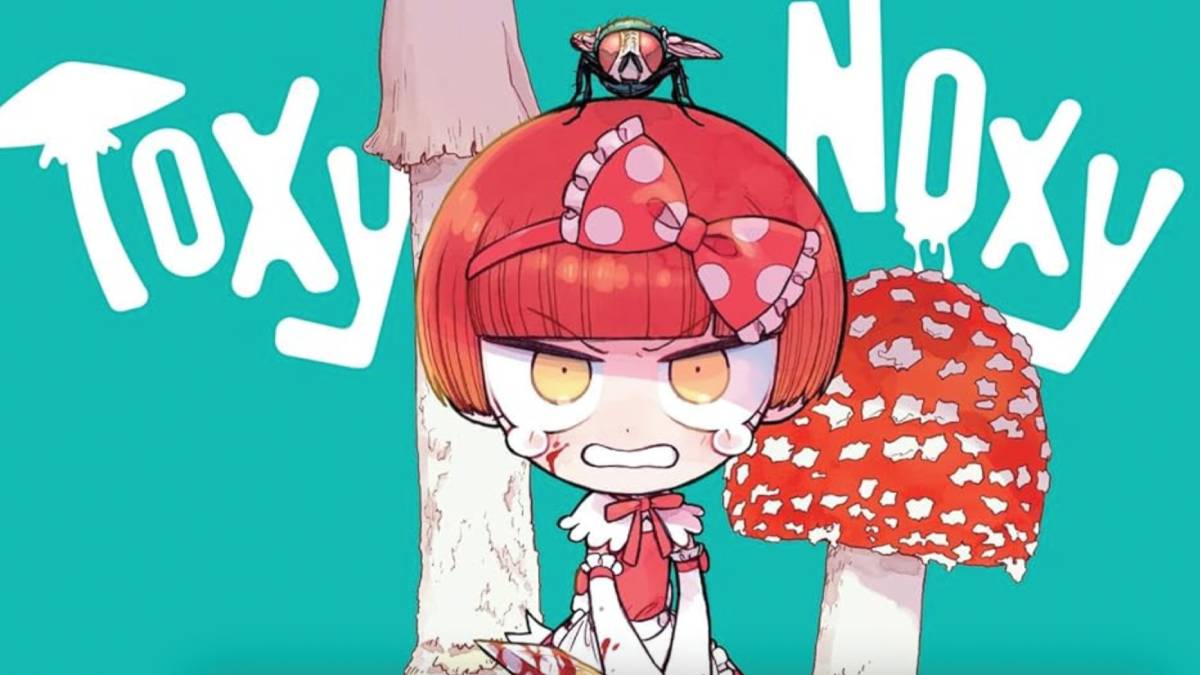
However, Enu uses this cuteness to heighten the impact of the series’ more visceral moments. When violence occurs, it is not stylized in a traditional shonen battle manga fashion; instead, it is depicted with a jarring realism that contrasts sharply with the soft character designs. The sight of blood on a lace collar or a cute fairy wielding a lethal weapon creates a sense of cognitive dissonance for the reader. This is a deliberate choice intended to mirror the central theme: appearances are a poor metric for character.
Industry analysts have compared this approach to other "dark cute" staples such as Puella Magi Madoka Magica or Made in Abyss. By drawing the reader in with an approachable, aesthetically pleasing exterior, the creator is able to deliver a more potent emotional blow when the story takes its darker turns. In Toxy Noxy Foresty Forest, the cuteness is not a mask for the horror, but a part of the horror itself—the tragedy of beautiful things existing in a world of inescapable violence.
Market Context and Industry Implications
The release of Toxy Noxy Foresty Forest comes at a time when the North American manga market is seeing record-breaking growth. According to data from Circana (formerly NPD Group), manga sales have remained a dominant force in the graphic novel sector, with a notable increase in the popularity of Seinen (targeted at young adult men) and Josei (targeted at young adult women) titles that tackle complex psychological themes.
Yen Press has positioned itself as a leader in this space, often taking risks on titles that defy easy categorization. By bringing Toxy Noxy Foresty Forest to a wider audience, the publisher is tapping into a demographic that values unconventional storytelling and high-quality production. The series appeals to a "crossover" audience: those who enjoy the aesthetic of "shojo" (girls’ manga) but crave the narrative depth and stakes of "dark fantasy."
Furthermore, the mycological theme of the manga aligns with a broader cultural fascination with fungi, seen in the success of non-fiction works like Entangled Life and the mainstream popularity of "cottagecore" and "goblinore" aesthetics. However, Toxy Noxy Foresty Forest subverts these cozy trends by injecting them with a dose of grim reality, reminding the audience that nature is as indifferent and lethal as it is beautiful.
Official Responses and Critical Reception
While official statements from the author Enu are rare in the Western press, the editorial team at Yen Press has highlighted the series for its unique emotional resonance. Critics have praised the first volume for its pacing and its ability to build empathy for characters who are, by their very nature, "toxic."
Early reviews from manga outlets have noted that the series succeeds because it does not rely solely on shock value. While the violence is present, it is always tied to the characters’ survival or their psychological state. The "misconceptions" mentioned in the series’ marketing are not just plot points; they are the fundamental hurdles the characters must overcome. Readers have responded positively to the "Aggy" transformation, noting that seeing a traditionally "cute" character navigate a path of vengeance provides a fresh take on the revenge genre.
Broader Impact and Future Outlook
As the series continues, the implications of its world-building suggest a larger conflict between the mushroom fairies and the world at large. Toxy Noxy Foresty Forest serves as a cautionary tale about the dangers of binary thinking. In a world that insists on categorizing life into "useful" and "dangerous," the characters who fall into the latter category are forced to become the very monsters society fears just to survive.
The success of Volume 1 suggests a strong future for the series in the English market. As fans wait for Volume 2, the discussion surrounding the series continues to grow, particularly in online communities dedicated to dark fantasy and mycological lore. Toxy Noxy Foresty Forest is more than just a story about mushroom fairies; it is a sophisticated exploration of the human condition, wrapped in a deceptively adorable package. It stands as a testament to the power of manga to use the fantastical to comment on the very real issues of prejudice, trauma, and the complicated nature of morality. By the end of the first volume, one thing is clear: in the forest of Toxy Noxy, the most beautiful mushrooms are often the ones that will kill you—but that doesn’t mean they don’t have a story worth telling.