Farhan hamdan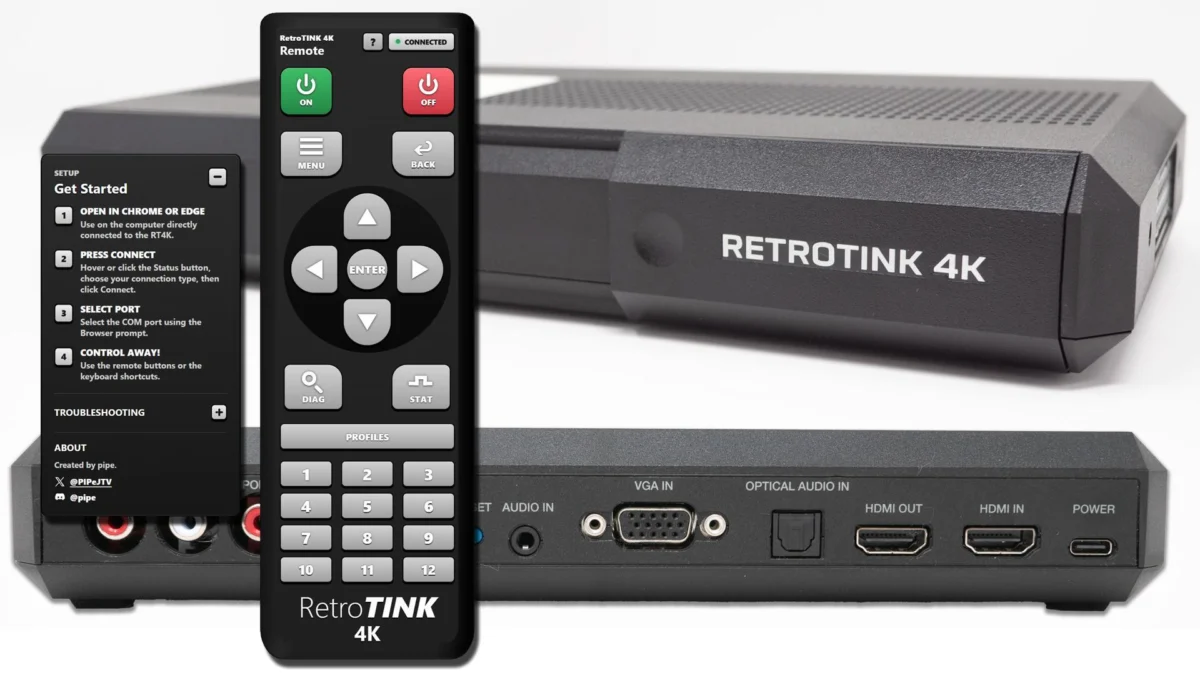
In a significant development for the retro gaming community, independent developer PIPeJTV has officially released a novel web-based USB control interface designed for the acclaimed RetroTINK 4K Pro and RetroTINK 4K CE video upscalers. This innovative tool offers a convenient, "no-installation" solution for users who power their RetroTINK 4K devices directly from their personal computers’ USB ports, effectively transforming a web browser into a virtual remote control. The introduction of this free utility, accessible via a dedicated webpage, marks another stride in enhancing the user experience for high-fidelity retro gaming setups, addressing common practical challenges faced by enthusiasts and content creators alike.
The RetroTINK 4K Ecosystem: A Foundation of Modern Retro Gaming
The RetroTINK 4K Pro and its compact counterpart, the RetroTINK 4K CE, stand as pinnacles in the realm of modern retro gaming hardware. Developed by Mike Chi, these advanced video upscalers are meticulously engineered to transform analog video signals from classic game consoles into pristine 4K digital outputs, compatible with contemporary displays. Unlike earlier solutions, the RetroTINK 4K series boasts unparalleled versatility, supporting a vast array of input formats, advanced scaling algorithms, and a comprehensive suite of image adjustments. This capability is crucial for preserving the authentic visual experience of vintage games while adapting them to high-resolution televisions and monitors, which often struggle with lower-resolution analog signals.
The primary function of the RetroTINK 4K devices is to deliver pixel-perfect scaling, de-interlacing, and aspect ratio correction, effectively bridging the technological gap between decades-old consoles and cutting-edge display technology. Their robust feature set includes custom resolutions, advanced filtering options, and extensive color space controls, all managed through an on-screen display (OSD) typically navigated with a dedicated infrared (IR) remote control. This level of granular control is essential for discerning retro gamers, streamers, and video archivists who demand precise image fidelity and customization for their diverse collection of gaming hardware. The market for such sophisticated upscalers has seen consistent growth, driven by a global resurgence in retro gaming, with enthusiasts investing significantly in both vintage consoles and modern enhancement technologies to achieve the best possible visual experience.
Introducing PIPeJTV’s Web-Based USB Solution
PIPeJTV’s newly launched web-based USB control provides an alternative, highly accessible method for interacting with the RetroTINK 4K’s extensive settings. The core innovation lies in its simplicity and directness: users merely need to load the specified webpage (https://rt4k-remote.pipe.hr/) in a browser on a PC that is also supplying power to the RetroTINK 4K via a USB connection. The web application then acts as a graphical interface, mirroring the functionality of the physical IR remote control. This design capitalizes on the often-overlooked data capabilities of standard USB power connections, enabling two-way communication between the PC and the RetroTINK 4K.
Technically, the system operates by sending serial commands, a method previously utilized by other community-driven control initiatives for RetroTINK devices. For instance, the SVS (Software Video Switch) control and the GSerial Enabler, both popular within the RetroTINK community, leverage serial communication to manipulate device settings. However, these earlier solutions often relied on serial data transmitted over the VGA port, which, while effective, might not always be the most convenient or universally available connection. PIPeJTV’s solution distinguishes itself by routing these crucial serial commands directly over the USB power cable, streamlining the connection process and eliminating the need for additional cables or adapters specifically for control purposes. The "no installation" aspect is a significant user benefit, removing potential barriers associated with software downloads, driver installations, or system configuration, making it instantly usable across various operating systems and browser environments.
Chronology of RetroTINK Control Innovations
The evolution of control interfaces for advanced retro gaming hardware like the RetroTINK series reflects a broader trend towards enhanced user convenience and integration within the enthusiast community. Initially, the primary method of interaction for the RetroTINK 4K, much like its predecessors, was through a standard infrared remote control, mirroring traditional consumer electronics. While functional, physical remotes are susceptible to being misplaced, suffering from battery depletion, or simply adding to the clutter of a complex gaming setup.
The first significant step beyond the physical remote came with community-driven initiatives that explored the serial communication capabilities inherent in the RetroTINK architecture. The SVS control, for example, emerged as a way to send commands to the RetroTINK devices via a PC, often through a dedicated serial port or a USB-to-serial adapter. This allowed for scripted control and integration into more complex setups. Following this, the GSerial Enabler further refined this concept, enabling control over the VGA port’s serial pins, providing a more integrated solution for users already connecting their PCs to the RetroTINK for video pass-through or capture. These developments highlighted the community’s desire for more flexible, software-driven control options.
PIPeJTV’s web-based USB control represents the latest iteration in this ongoing evolution. By leveraging the omnipresent USB connection for both power and data, it simplifies the setup process even further, democratizing access to advanced control. This progression from physical remotes to serial port control, then to VGA-based serial, and now to a web-based USB interface, demonstrates a clear trajectory towards seamless, software-centric interaction, driven by the ingenuity and collaborative spirit of the retro gaming hardware community.

Developer Insight and Community Contribution
While specific biographical details about PIPeJTV are not extensively publicized, the nature of this project strongly suggests an individual deeply embedded within the retro computing and gaming hardware development community. Such contributions are typically born out of a personal passion for enhancing the user experience, solving common frustrations, and pushing the boundaries of existing technology. The development of a web-based interface for a niche hardware product like the RetroTINK 4K series requires not only a strong understanding of web technologies and serial communication protocols but also an intimate familiarity with the RetroTINK’s internal command structure.
This initiative is a prime example of the open-source ethos and collaborative spirit prevalent in the retro tech sphere. Many significant advancements in retro gaming preservation and enhancement hardware, including firmware updates and auxiliary tools, often originate from dedicated community members who volunteer their expertise. These developers often work independently, driven by the desire to share solutions that benefit the broader enthusiast base. PIPeJTV’s decision to offer this utility completely free of charge aligns perfectly with this community-first approach, fostering an environment of shared knowledge and collective improvement. The positive reception from figures like Bob from RetroRGB, a prominent voice in the retro hardware community, underscores the value and impact of such independent contributions.
Practical Applications and User Scenarios
The practical utility of PIPeJTV’s web-based USB control extends far beyond merely replacing a lost remote. For content creators, particularly those engaged in livestreaming retro games, this tool offers significant workflow enhancements. Livestreamers often operate complex setups involving multiple consoles, capture cards, and monitors, with the RetroTINK 4K serving as a central hub for video processing. In such scenarios, the physical remote can easily be misplaced amidst cables and equipment, leading to frustrating delays during critical setup phases or live broadcasts. The instant accessibility of a web-based remote means that control is always available as long as a PC is connected, mitigating potential technical disruptions.
Beyond the "lost remote" scenario, the web interface can streamline the overall setup and configuration process. Users with multi-monitor workstations can dedicate a browser tab to the RetroTINK 4K control, allowing for quick adjustments without having to search for a physical remote or break their focus from the main display. This is particularly beneficial when fine-tuning image settings, switching inputs, or experimenting with different scaling modes. For those with their RetroTINK 4K units tucked away in less accessible locations (e.g., within an AV rack or behind a display), the web control offers a more convenient way to interact with the device without physical access. Furthermore, for users who prefer a fully integrated PC-centric control scheme for their entire gaming setup, this tool provides a cohesive experience, reducing reliance on disparate physical controls and simplifying the overall user interface.
Technical Underpinnings: USB and Serial Communication
The operational backbone of PIPeJTV’s web-based control lies in the sophisticated interplay between USB communication and serial protocols. While USB is predominantly known for high-speed data transfer and peripheral connectivity, it also supports various device classes, including virtual serial ports. When a RetroTINK 4K is connected to a PC via USB for power, the device can also expose a serial interface over that same connection. This allows the PC to send and receive commands to and from the upscaler using standard serial communication protocols.
The web application itself leverages modern browser APIs, specifically the Web Serial API, which enables web applications to communicate with serial devices directly from the browser. This eliminates the need for any intermediary desktop software or drivers, as the browser handles the communication layer. When a user interacts with the virtual buttons on the webpage, JavaScript code translates these actions into specific serial commands. These commands are then transmitted via the Web Serial API over the USB connection to the RetroTINK 4K. The RetroTINK’s firmware interprets these commands, executes the desired action (e.g., change input, adjust brightness), and potentially sends back status information. This elegant solution highlights the power of modern web technologies to bridge the gap between browser-based interfaces and physical hardware control, offering a highly flexible and cross-platform solution. Security is inherently managed by the browser’s permission model, requiring explicit user consent to access serial devices, ensuring that such control is always initiated and authorized by the user.
Broader Implications for the Retro Gaming Hardware Landscape
PIPeJTV’s innovative web-based control carries broader implications for the future of retro gaming hardware and the interaction paradigms within the community. It underscores a growing trend towards software-defined control and enhanced interoperability for specialized hardware. As retro gaming setups become increasingly complex, with multiple consoles, capture devices, and upscalers, the demand for integrated, streamlined control solutions will only intensify. This project demonstrates how community efforts can push product functionality beyond initial design specifications, extending the utility and longevity of high-end devices like the RetroTINK 4K.
The success of such a tool also suggests a potential pathway for official integration or inspiration for future hardware designs. Manufacturers of retro gaming peripherals might consider incorporating similar web-based or API-driven control methods directly into their products, offering greater flexibility and accessibility from the outset. Furthermore, this development fosters an environment where advanced users can develop custom scripts, macros, or even automated routines for their RetroTINK 4K, integrating it seamlessly into larger automation frameworks for streaming or archival purposes. It reinforces the idea that the hardware is only one part of the equation; the software and community-driven enhancements play an equally vital role in maximizing its potential. This continuous evolution, driven by passionate developers like PIPeJTV, ensures that the retro gaming experience remains dynamic, adaptable, and increasingly user-friendly.
The release of PIPeJTV’s web-based USB control for the RetroTINK 4K series is a testament to the ongoing innovation within the retro gaming community. By offering a free, instantly accessible, and highly convenient alternative to traditional remote controls, it addresses practical challenges faced by enthusiasts and content creators. This development not only enhances the user experience for the RetroTINK 4K but also highlights the power of community-driven solutions in pushing the boundaries of hardware functionality and fostering a more integrated, software-centric approach to retro gaming setups. Industry experts and users alike are likely to laud this initiative for its ingenuity and practical utility, signaling a continued evolution in how retro hardware is controlled and integrated into modern digital environments.