Edi Durjana
The Libretro team has officially announced the release of RetroArch 1.20.0, a significant update that introduces groundbreaking features poised to enhance the authenticity and immersion of retro gaming. Available immediately, this latest iteration solidifies RetroArch’s position at the forefront of emulation technology, bringing forth innovations such as a sophisticated CRT beam simulation shader and pioneering illuminance sensor support for Linux, including the popular Steam Deck. This release underscores the project’s enduring commitment to its user base, maintaining a steadfast dedication to open-source principles and a completely ad-free, monetization-free experience. The developers emphasize that their continued progress is a direct result of community support, inviting users to contribute via Patreon, GitHub Sponsors, or their official Teespring store.
The Foundation of Free and Open Emulation: A Community-Driven Mission
RetroArch, as the flagship frontend for the Libretro API, stands as a testament to the power of open-source development and community collaboration. It provides a unified interface for a multitude of emulators (cores), game engines, and media players, offering an unparalleled level of customization and control across an extensive array of platforms. Since its inception, the project has been driven by a core philosophy: to provide a high-quality, accessible, and uncompromising emulation experience without commercial pressures. This means a strict absence of in-app advertisements, intrusive monetization SDKs, or paywalled features—a stark contrast to many contemporary software models.
This commitment, while beneficial for users, places a unique reliance on community backing for financial sustainability. Developing and maintaining a complex, multi-platform application like RetroArch requires substantial resources, including developer time, infrastructure, and specialized hardware for testing. The Libretro team has historically depended on voluntary donations to sustain its operations and fuel continuous innovation. The introduction of GitHub Sponsors as an additional support channel, alongside established platforms like Patreon and the merchandise store on Teespring, reflects an ongoing effort to diversify funding avenues and make it easier for users to contribute. This model not only ensures the project’s financial viability but also reinforces the collaborative spirit that defines the open-source movement, allowing the community to directly influence the project’s longevity and trajectory. The success of this model is evident in the project’s consistent updates and expansions, demonstrating that a user-centric approach can indeed thrive outside conventional commercial frameworks.
Revolutionizing Visuals: The Shader Subframe Breakthrough
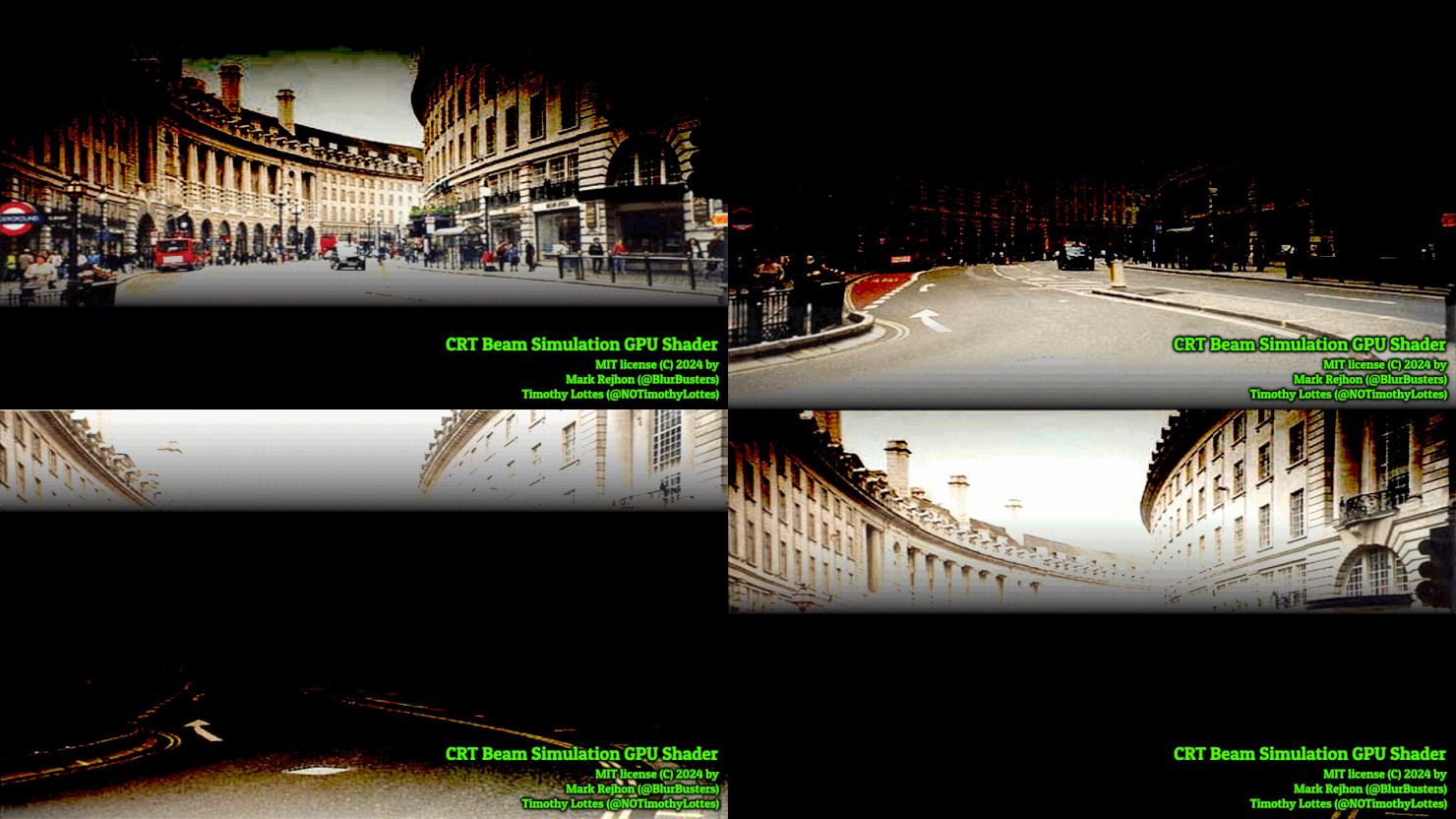
One of the most compelling features in RetroArch 1.20.0 is the introduction of a new CRT beam simulation shader, a collaborative effort from display technology luminaries Mark Rejhon of BlurBusters and Timothy Lottes, renowned for the original FXAA shader and the crt-lottes series. This advancement represents a significant leap forward in recreating the authentic visual experience of cathode ray tube (CRT) displays on modern screens.
The unique appeal of CRT monitors for retro gaming stems from their inherent display characteristics, particularly their "impulse" display nature. Unlike modern "sample-and-hold" LCD or OLED panels, which display a static image until the next frame is drawn, CRTs draw an image line by line, with the electron beam briefly illuminating each pixel before moving on. This sequential illumination, combined with the phosphors’ decay time, significantly reduces motion blur and contributes to a perception of superior motion clarity, even at lower refresh rates. However, replicating this effect on contemporary displays has been a persistent challenge.
Previous attempts often relied on techniques like Black Frame Insertion (BFI), where a black frame is inserted between each rendered game frame. While BFI can reduce perceived motion blur by resetting the persistence of vision, it comes with significant drawbacks. These include a noticeable reduction in overall screen brightness, dulled colors, and a heightened risk of image persistence (often mistakenly called "burn-in") on many LCD panels, where a ghost image can temporarily remain on the screen.
The new shader leverages RetroArch’s recently implemented "subframe" shader capabilities to circumvent these issues. While specific technical details are elaborated in a separate article by Libretro, the essence of the subframe approach lies in its ability to manipulate display output at a finer temporal granularity than standard frame rates allow. This enables a more nuanced simulation of the CRT beam’s behavior, selectively illuminating and darkening parts of the screen within a single display refresh cycle, rather than simply inserting full black frames. The result is a dramatic improvement in motion clarity that closely mimics the impulse display characteristics of CRTs, but without the detrimental side effects associated with BFI. Users can now experience the sharp, fluid motion of classic games on their modern high-refresh-rate displays, preserving the visual integrity and vibrant colors, and mitigating the risk of image persistence. This innovation is not merely about aesthetics; it’s about historical accuracy and preserving the intended visual fidelity of games from an era defined by CRT technology. Mark Rejhon, known for his extensive research into display motion clarity, and Timothy Lottes, a pioneer in real-time graphics, bring unparalleled expertise to this project, making this shader a landmark achievement in the realm of display emulation.
Bridging Worlds: Illuminance Sensor Support for Linux
Another groundbreaking addition in RetroArch 1.20.0 is the integration of illuminance sensor support for Linux, a feature spearheaded by developer Jesse Talavera. This innovation directly addresses a long-standing challenge in game preservation: faithfully emulating games that relied on unique, real-world hardware peripherals. The most prominent example highlighted is the Nintendo DS title Boktai: The Sun Is in Your Hand, and its sequels. These action role-playing games famously incorporated a solar sensor directly into the Game Boy Advance cartridges (and later, DS cartridges), requiring players to physically expose their handheld console to sunlight to progress in the game, charge weapons, or defeat enemies. This unique mechanic, while innovative for its time, posed a significant hurdle for emulation, as it inherently broke the connection between the virtual game world and the physical environment.
Jesse Talavera’s work effectively bridges this gap. By enabling RetroArch to interface with a Linux device’s built-in illuminance sensor (common on modern laptops, tablets, and handheld gaming PCs like the Steam Deck), players can now interact with Boktai and similar titles exactly as intended. The provided demonstration clip, showcasing Lunar Knights (a Boktai successor) running on a Steam Deck with its light sensor actively responding to ambient light changes, vividly illustrates the impact of this feature. This is not just a novelty; it represents a critical step in achieving "perfect" emulation, where every aspect of the original game’s design, including its hardware-specific interactions, is meticulously recreated.
The implications extend beyond Boktai. The Libretro team has indicated that the upcoming update for the melonDS DS core will include robust solar sensor support, further broadening the scope of games that can leverage this new capability. Moreover, the announcement of forthcoming camera support for more platforms hints at a future where other hardware-dependent game mechanics—such as those found in games utilizing the PlayStation 2’s EyeToy or Nintendo DS camera functions—could be faithfully emulated. This continuous push for hardware integration underscores RetroArch’s dedication to preserving the full, uncompromised experience of classic games, allowing a new generation of players to appreciate the innovative design choices of yesteryear, while offering veteran players a nostalgic yet authentic trip down memory lane.
A Legacy of Innovation: RetroArch’s Evolutionary Path
RetroArch’s journey has been one of continuous evolution, driven by a passionate community and a dedicated team of developers. What began as a simple frontend for a single emulator core has blossomed into a comprehensive, multi-system emulation powerhouse, supporting hundreds of cores and boasting an extensive feature set. Each major release builds upon this foundation, refining existing functionalities and introducing novel advancements that push the boundaries of what is possible in emulation.
The project’s timeline is marked by consistent milestones: the development of its sophisticated shader system, which predates the subframe innovation, revolutionized how retro games could look on modern displays; the implementation of netplay capabilities brought multiplayer retro gaming into the online era; and its unparalleled multi-platform support, ranging from desktop operating systems like Windows, macOS, and Linux to consoles, mobile devices, and even specialized hardware like the Steam Deck, has made retro gaming accessible to an unprecedented audience. RetroArch 1.20.0 is a natural progression of this legacy, demonstrating that even after years of development, there remain fertile grounds for innovation in the pursuit of emulation perfection. The integration of cutting-edge display technology simulation alongside real-world sensor integration illustrates a holistic approach to authenticity, tackling both visual fidelity and interactive mechanics.
Broader Impact and Future Prospects
The release of RetroArch 1.20.0 signifies more than just another software update; it marks a pivotal moment in the ongoing quest for perfect digital preservation and an enriched retro gaming experience. The advanced CRT beam simulation shader sets a new benchmark for visual accuracy, effectively eliminating the long-standing trade-offs associated with recreating classic aesthetics on modern screens. This advancement is particularly impactful for purists and historians of video games, who can now experience titles with a visual clarity and motion fidelity closer to their original presentation than ever before, fostering a deeper appreciation for the art and technology of gaming’s past.
Concurrently, the introduction of illuminance sensor support opens new doors for interactive authenticity, ensuring that games designed with unique hardware dependencies can be fully experienced and preserved. This not only benefits niche titles like Boktai but also establishes a framework for future integrations, potentially paving the way for more immersive and accurate emulation of other hardware-centric gaming experiences. The ongoing commitment to open-source development and community funding further strengthens RetroArch’s position as a vital, user-driven project in the digital preservation landscape. It demonstrates that innovation can thrive outside commercial constraints, fueled by collective passion and a shared vision.
As RetroArch continues to evolve, guided by its foundational principles and the invaluable support of its community, it remains a critical tool for both casual retro enthusiasts and serious game preservationists. Version 1.20.0 stands as a testament to the team’s dedication, pushing the boundaries of what is possible in emulation and promising an even brighter, more authentic future for classic gaming. The project encourages continued engagement and support from its global user base, recognizing that every contribution directly fuels the next wave of groundbreaking features and ensures the enduring legacy of video game history.