Cecilia Chamidah Nur
Hamster Corporation, a prominent purveyor of classic arcade and console titles, has officially announced a triple-header of highly anticipated releases, set to launch concurrently on Thursday, May 28th. This significant announcement includes Namco’s 1994 3D racing classic, Ace Driver, joining the esteemed Arcade Archives series; Warashi Inc.’s acclaimed shoot ’em up, Geki-Oh ShienRyu, making its debut on the Console Archives platform for next-generation consoles following Hamster’s acquisition of Warashi’s intellectual property rights; and the vertically scrolling shooter Tatakae! Big Fighter expanding its reach to the new Arcade Archives 2 series on next-gen systems. These releases underscore Hamster’s unwavering commitment to game preservation and accessibility, bringing a diverse array of historical gaming experiences to modern audiences.
Ace Driver Accelerates into the Arcade Archives Collection
Among the highlights of Hamster’s latest offerings is the inclusion of Namco’s seminal 1994 arcade racer, Ace Driver, into the comprehensive Arcade Archives library. Developed during a fiercely competitive era of 3D arcade innovation, Ace Driver was a testament to Namco’s pioneering spirit in graphical technology and gameplay design. The game was powered by Namco’s formidable System 22 arcade hardware, a proprietary platform celebrated for its groundbreaking 3D polygon capabilities and advanced texture mapping, which allowed for unprecedented visual fidelity and immersive environments at the time. The System 22 notably facilitated the creation of vibrant, realistic racing circuits and detailed vehicle models, setting a new benchmark for arcade experiences.
The development of Ace Driver was spearheaded by Tatsuro Okamoto and Shinichiro Okamoto, the latter famously known for his work on the iconic 1982 racing game Pole Position. This lineage brought a wealth of experience in crafting engaging and technically proficient racing mechanics. Ace Driver emerged onto the arcade scene in close proximity to other monumental 3D racers, most notably Namco’s own Ridge Racer (released slightly earlier in 1993) and Sega’s Daytona USA (1994). This period marked a "golden age" for arcade racing, with developers pushing the boundaries of technology to deliver thrilling, visually spectacular experiences. While Ace Driver did not achieve the same stratospheric levels of commercial popularity or cultural ubiquity as Ridge Racer or Daytona USA, it carved out its own niche and was sufficiently successful to warrant two direct sequels: Ace Driver: Victory Lap in 1995 and Ace Driver 3: Final Turn in 2008, showcasing its enduring appeal within a dedicated fanbase. A planned home port of the original game for the Sony PlayStation was regrettably never released, adding to its mystique and making its Arcade Archives debut particularly significant for fans who missed its console rendition.
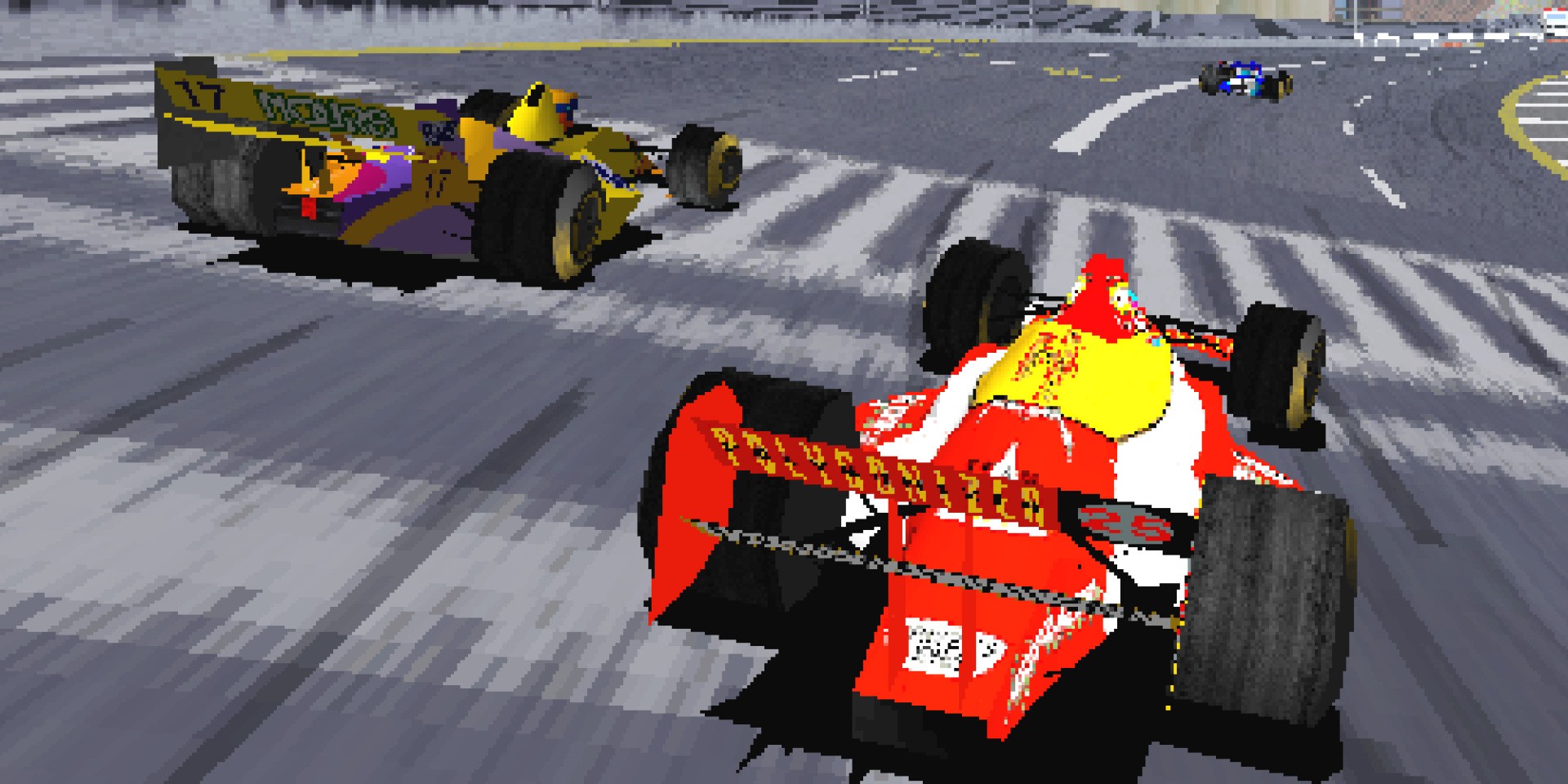
The Arcade Archives program, curated and executed by Hamster Corporation, is globally recognized for its meticulous approach to preserving and re-releasing classic arcade titles. Each release typically features faithful emulation of the original hardware, offering players an authentic experience complete with customizable display options, support for online leaderboards, and various quality-of-life improvements that enhance modern playability without compromising historical accuracy. The inclusion of Ace Driver across Nintendo Switch, PlayStation, and Xbox platforms ensures that a broad spectrum of contemporary gamers will have the opportunity to experience this pivotal piece of arcade racing history, either for the first time or as a nostalgic return.
Geki-Oh ShienRyu Leads the Charge for Console Archives, Fueled by Warashi IP Acquisition
In a particularly noteworthy development, Hamster has announced the launch of Console Archives Geki-Oh ShienRyu, slated for release on the forthcoming Nintendo Switch 2 and PlayStation 5. This marks a significant expansion of Hamster’s preservation efforts beyond the arcade realm, establishing a dedicated Console Archives series. The choice of Geki-Oh ShienRyu as a flagship title for this new initiative is underscored by Hamster’s strategic acquisition of all rights related to the games and other intellectual properties of Warashi Inc., the original developer of the title.
Geki-Oh ShienRyu is a celebrated vertically scrolling shoot ’em up, originally gracing arcades in 1997. It quickly garnered a reputation for its intense action, intricate bullet patterns, and distinctive visual style. The version being released on Console Archives is based on the enhanced PlayStation 1 port, which often featured additional modes, refined graphics, and sometimes rebalanced gameplay elements compared to its arcade counterpart. This focus on a console-specific iteration highlights the unique mission of the Console Archives series: to preserve and present significant console releases with the same fidelity and care that Arcade Archives applies to arcade titles.
The acquisition of Warashi Inc.’s entire intellectual property catalog by Hamster Corporation is a monumental event for retro gaming enthusiasts. Warashi, though perhaps not as widely known as some larger Japanese developers, created a number of highly regarded titles, including the critically acclaimed TriggerHeart EXELICA. This strategic move by Hamster not only secures the future of Geki-Oh ShienRyu but also opens the door for a potential wealth of future Console Archives releases from Warashi’s library. It signals Hamster’s long-term vision to become a comprehensive steward of Japanese gaming heritage, ensuring that the creative output of smaller, yet impactful, studios like Warashi Inc. remains accessible and celebrated for generations to come. The move also speaks to a broader trend within the industry, where established entities are actively investing in the preservation of classic intellectual properties, recognizing their cultural and commercial value in an increasingly digital landscape. This acquisition ensures that these beloved titles are not lost to time, providing a clear path for their re-release on modern platforms and potentially even inspiring new interpretations or sequels under Hamster’s stewardship.
The choice to launch Console Archives Geki-Oh ShienRyu on the next-generation Nintendo Switch 2 and PlayStation 5 platforms is also strategic. It positions the Console Archives series as forward-looking, capable of delivering these classic experiences with the benefits of modern hardware, such as faster load times, improved resolution scaling, and potentially enhanced input responsiveness, while maintaining the authentic feel of the original games.
Tatakae! Big Fighter Joins Arcade Archives 2 on Next-Gen Consoles
Completing the trio of releases is Tatakae! Big Fighter, a vertically scrolling shoot ’em up from Namco originally released in arcades in 1989. This title is set to join the newly designated Arcade Archives 2 series, expanding its availability to the Nintendo Switch 2, PlayStation 5, and Xbox Series X|S. Tatakae! Big Fighter has previously seen release on the original Nintendo Switch and PlayStation 4 as part of the initial Arcade Archives line, demonstrating its popularity and Hamster’s commitment to migrating favored titles to newer hardware.
The introduction of "Arcade Archives 2" suggests an evolution in Hamster’s archival strategy. While the exact distinctions from the original Arcade Archives series are yet to be fully detailed, it primarily appears to denote releases tailored for the latest generation of gaming consoles. This new branding likely signifies optimized versions that take full advantage of the enhanced capabilities of these systems, ensuring seamless performance and potentially offering new features exclusive to the next-gen platforms. It also serves as a clear indicator to consumers that these particular releases are specifically engineered for the latest hardware, providing a premium experience for modern gamers.
Tatakae! Big Fighter itself is a classic example of the early shoot ’em up genre, challenging players with waves of enemies, intricate bullet patterns, and rewarding power-up systems. Its re-release on all major next-gen consoles—Nintendo Switch 2, PlayStation 5, and Xbox Series X|S—underscores Hamster’s dedication to multi-platform support, ensuring that a broad audience, regardless of their preferred gaming ecosystem, can access and enjoy these historical titles. This broad availability is crucial for the ongoing success of retro game preservation efforts, making these games as accessible as possible.

Hamster Corporation: A Pillar of Retro Game Preservation
These simultaneous announcements further solidify Hamster Corporation’s position as an indispensable entity in the realm of video game preservation and re-release. For years, Hamster has maintained a consistent and impressive release schedule, often delivering new Arcade Archives titles on a weekly basis. This relentless dedication has resulted in a vast library of meticulously emulated classics, encompassing games from various eras and genres, from the earliest arcade cabinets to more complex 3D experiences.
Hamster’s commitment goes beyond mere porting; their development team invests significant effort into ensuring the fidelity of each release. This includes reverse-engineering original arcade boards, understanding complex proprietary hardware, and developing accurate emulation layers that replicate the precise timing, graphical quirks, and audio characteristics of the original games. This painstaking process is crucial for providing an authentic experience, which is highly valued by retro gaming purists and historians. The features common across their releases, such as various display options (scanlines, screen filters), save states, and online leaderboards, enhance the modern player experience while respecting the historical context.
The broader implications of Hamster’s work, particularly with the new Console Archives series and the acquisition of Warashi’s IP, are profound. In an era where digital storefronts can disappear and physical media can degrade, companies like Hamster play a critical role in preventing digital obsolescence. By securing intellectual property rights and developing robust emulation solutions, they ensure that significant cultural artifacts of the gaming world remain available for future generations to study, play, and appreciate. This contributes significantly to the academic understanding of video game history and the continued enjoyment of these titles by a global audience. The growing demand for retro games, fueled by nostalgia, academic interest, and a new generation of players discovering these classics, indicates a healthy market for Hamster’s ongoing efforts.
Conclusion
The simultaneous launch of Ace Driver, Geki-Oh ShienRyu, and Tatakae! Big Fighter on Thursday, May 28th, represents a pivotal moment for Hamster Corporation and the retro gaming community at large. From the expansion of the Arcade Archives to the introduction of the Console Archives series and the strategic acquisition of Warashi Inc.’s entire intellectual property, these announcements demonstrate Hamster’s evolving strategy to become an even more comprehensive custodian of gaming history. By bringing these diverse and historically significant titles to a wide array of modern and next-generation platforms, Hamster continues to bridge the gap between gaming’s rich past and its vibrant present, ensuring that the legacy of these classic experiences endures for players worldwide.