
 Hartono Sudibyo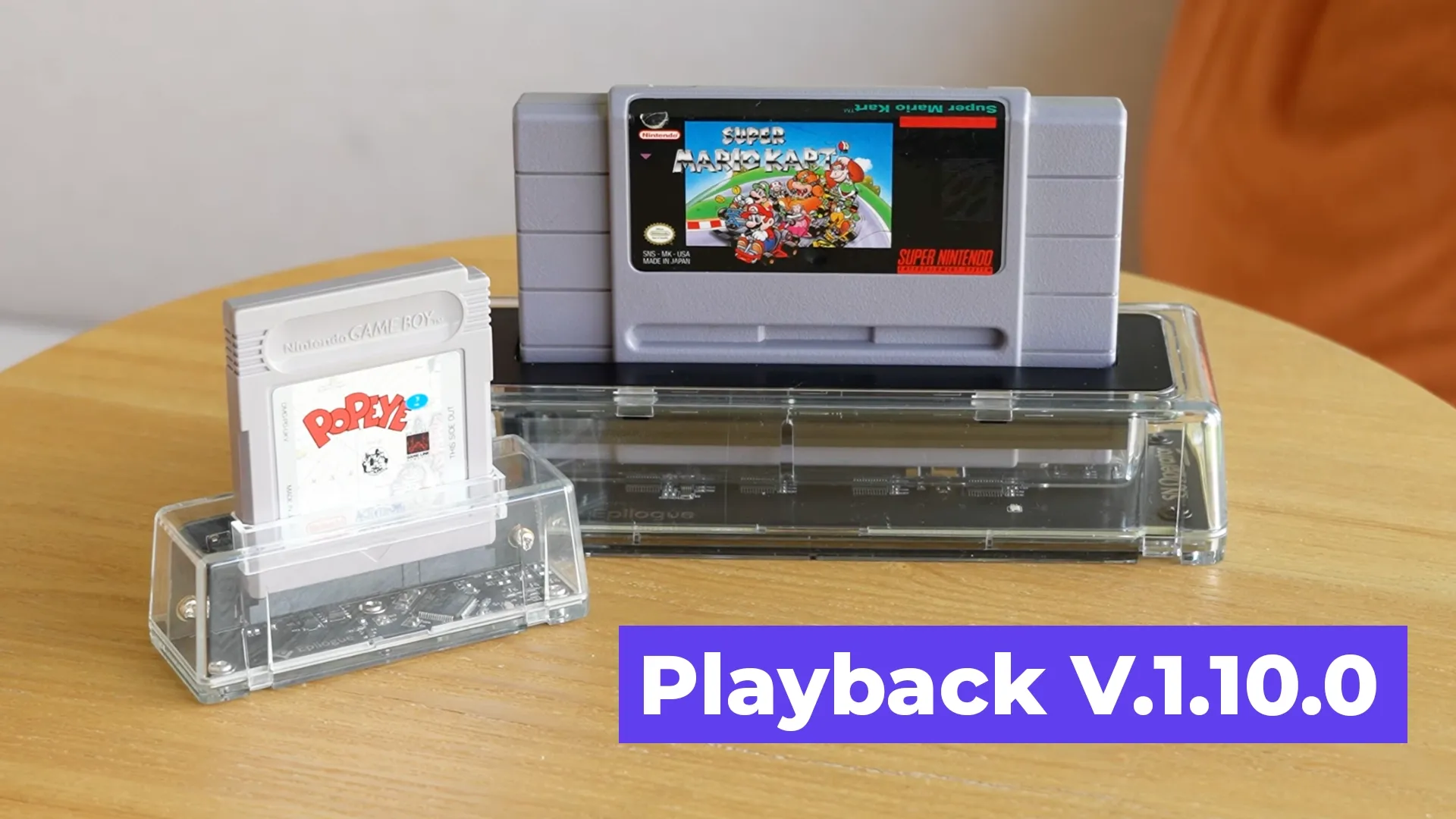
Epilogue, a company renowned for its premium cartridge readers designed for the Super Nintendo Entertainment System (SNES) and Nintendo’s Game Boy line, has officially released version 1.10.0 of its Playback software. This substantial update aims to enhance the user experience for owners of both the SN Operator and the Game Boy Operator, addressing a range of critical bugs and introducing several new features. The release comes as the first batch of SN Operator devices begins shipping to customers who pre-ordered, following an initial review that highlighted several performance shortcomings.
Background and Initial Reception
Epilogue’s foray into the retro gaming hardware market has been met with considerable interest from enthusiasts seeking modern ways to engage with their classic game collections. The SN Operator, in particular, promised a streamlined solution for playing SNES cartridges directly on a PC or Mac, leveraging the company’s proprietary Playback software. However, upon its initial review, the SN Operator, and by extension the Playback software, exhibited several significant bugs that impacted core functionality. These issues were detailed in a prior assessment, with a strong recommendation for Epilogue to refine the software before wider customer distribution. The company has evidently taken this feedback to heart, alongside its own development roadmap, to deliver this comprehensive update.
A "Quieter Update" with Major Impact
While Epilogue describes version 1.10.0 as a "quieter update," a closer examination reveals a series of substantial improvements that significantly bolster the capabilities and stability of their Operator devices. The update’s primary objectives, as stated by the company, are to boost performance, eradicate persistent bugs, and "improve overall smoothness." This latest iteration of Playback not only addresses the issues previously identified but also introduces features that enhance the authenticity and convenience of playing retro games.
Revitalized Real-Time Clock Functionality
One of the most impactful additions in Playback v1.10.0 is the restoration of functional real-time clocks (RTC) for Game Boy and Game Boy Advance cartridges. Many iconic Game Boy titles, such as Pokémon Gold, Silver, and Crystal, relied on internal coin cell batteries to maintain their in-game clocks. As these batteries have aged and depleted over the years, crucial gameplay elements like Berry growth, daily events, and character interactions have ceased to function. This often manifests as the frustrating "TIME NOT SET – INTERNAL BATTERY HAS RUN DRY" message.
The new Playback update intelligently circumvents this issue by utilizing the computer’s system clock. When a Game Boy or Game Boy Advance cartridge with a depleted RTC battery is detected, Playback seamlessly substitutes its own clock. This allows games to run as if the battery were fresh, enabling day-night cycles, scheduled events, and other time-sensitive mechanics to operate correctly. This feature is now compatible with all Game Boy cartridges featuring an RTC, including the aforementioned Pokémon titles and third-party cartridges that utilized clock functionality. Furthermore, it extends to Game Boy Advance games like Pokémon Ruby, Sapphire, and Emerald, as well as the Boktai series, all of which also incorporated RTC features.
This enhancement also involved the resolution of subtle bugs related to corrupted or out-of-range timestamps, which could previously cause significant discrepancies in in-game time. The integration of a more recent version of the mGBA emulator further underpins this improvement. This upgrade brings a year’s worth of accuracy enhancements from the mGBA development team, including robust Game Boy Advance clock support at the emulator level, fixes for Game Boy rumble functionality, and numerous minor corrections to timing and audio rendering. Consequently, older Pokémon games and any Game Boy Advance titles heavily reliant on the clock should now exhibit more accurate and authentic behavior.
Enhanced Audio Purity
Playback v1.10.0 also introduces significant improvements to the audio pipeline for Game Boy and Game Boy Advance emulation. Previously, audio from these systems was processed through a community-developed fork of mGBA, which would convert the signal internally before passing it to Playback. Playback would then perform a second conversion to match the user’s audio device, resulting in two instances of audio resampling that could degrade sound quality.
The updated Playback software now interfaces directly with the official mGBA project. This allows audio to be received at its native rate, bypassing the intermediate conversion. Playback then handles the single, necessary conversion to the user’s audio output. This streamlined approach is expected to yield a cleaner audio signal, particularly for users with high-fidelity audio setups or dedicated Digital-to-Analog Converters (DACs). For the majority of users, this translates to audio output that more closely mirrors the original hardware’s sonic output.
Precision Input for Lightgun and Mouse Control
A notable improvement has been made to the mouse capture and lightgun input systems. The mouse capture path has been rebuilt across Windows, X11, and Wayland environments to ensure greater reliability and precision. For lightgun games, such as those utilizing the Super Scope accessory, off-screen aiming is now reported accurately, irrespective of whether the cursor is captured. This is crucial for games that differentiate between a shot fired off-screen and a shot aimed at a target.
Furthermore, the ‘Tab’ key has been designated as a universal shortcut for releasing the mouse cursor. This eliminates the frustration of having to hunt for specific screen corners to regain control of the mouse, a common annoyance in previous iterations. This enhancement is particularly relevant for players looking to fully engage with lightgun titles, such as Super Scope 6, offering a more responsive and accurate gaming experience.
Seamless Multi-Operator Support
For users who own multiple Epilogue Operator devices, such as both an SN Operator and a Game Boy Operator, Playback v1.10.0 resolves a persistent issue with running multiple Playback windows concurrently. Previously, managing two instances could lead to devices being assigned to the incorrect window or conflicts in device ownership.
The latest update establishes clear ownership for devices within each Playback window. When a device is opened in a specific window, that window retains exclusive control. Upon closing the window, the device is cleanly handed back, ensuring that multiple Operators and their respective cartridges can run side-by-side without interference. This feature significantly enhances the usability for collectors and enthusiasts who utilize more than one Epilogue product.
Behind the Scenes: Robust Testing and Foundational Development
Epilogue has invested considerable effort in developing a comprehensive end-to-end test suite for this release. This suite encompasses a wide array of functionalities, including language switching, FPS counter accuracy, fast-forward speed, vault operations, backup encryption, window resizing, and pixel-perfect rendering. The implementation of this rigorous testing protocol is a proactive measure designed to identify and rectify regressions before they impact end-users, thereby ensuring a more stable and polished product.
Additionally, the "Console (kiosk) mode" has undergone significant development. This mode, typically utilized for dedicated retro gaming builds, now features support for OpenGL ES 3.0, improved frame size correctness, unified core options handling, and a mock mode for development purposes. While these underlying enhancements may not be directly visible to all users, they represent crucial foundational work for future features and optimizations within the Playback software.
Analysis of Implications
The release of Playback v1.10.0 marks a critical juncture for Epilogue and its customers. The update directly addresses the initial performance concerns that tempered the excitement surrounding the SN Operator’s launch. By restoring functional RTCs, improving audio fidelity, and refining input controls, Epilogue is demonstrating a commitment to evolving its product and software beyond the initial release.
The implications of these improvements are far-reaching. For collectors and preservationists, the ability to accurately experience time-sensitive game mechanics in titles like Pokémon Gold and GBA Pokémon games is invaluable. It breathes new life into cartridges that may have been functionally incomplete due to battery degradation. The cleaner audio and more precise input further contribute to a more authentic and immersive retro gaming experience, aligning with the core value proposition of Epilogue’s hardware.
The successful implementation of multi-Operator support is also a significant step, catering to a dedicated segment of the retro gaming community that invests in multiple pieces of specialized hardware. The rigorous testing framework put in place suggests a more mature development process, which bodes well for the long-term stability and feature development of the Playback software.
While the update does not resolve every single bug encountered during initial testing – specifically mentioning issues with the Super Game Boy Adapter and certain cheat functionalities – the breadth and depth of the improvements in v1.10.0 represent a substantial leap forward. This update demonstrates Epilogue’s responsiveness to user feedback and their dedication to refining their product offerings. The company’s proactive approach in delivering such a comprehensive update during the initial shipment window of the SN Operator is likely to be well-received by both early adopters and new customers, solidifying their position in the premium retro gaming hardware market. The ongoing development and commitment to software refinement suggest a promising future for Epilogue’s Operator line.








