Cecilia Chamidah Nur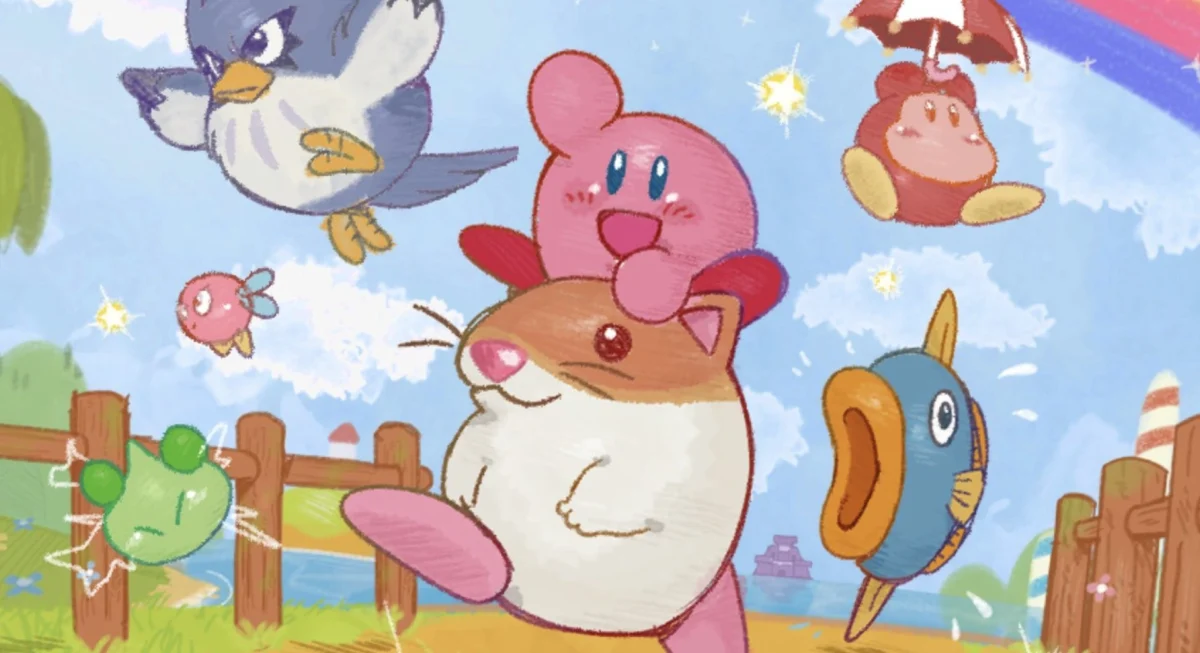
In a development that has simultaneously thrilled and worried the retro gaming community, independent development groups Grape Garden Games and Team Starfall have unveiled an unofficial PC port of the beloved Game Boy titles, Kirby’s Dream Land 2 and Kirby’s Dream Land 3. This ambitious project, titled Kirby’s Dream Land 2+3, promises a modern reimagining of these classic adventures, featuring a "brand-new coat of paint," improved levels, and added content. A demo is slated for release on May 30th, allowing eager fans to experience the updated vision of the pink puffball’s early exploits. While the footage released so far has been met with considerable excitement for its visual fidelity and proposed enhancements, the project also revives long-standing anxieties regarding intellectual property rights and Nintendo’s historically stringent enforcement against fan-made adaptations of its iconic franchises.
The Genesis of a Fan-Driven Revival
The announcement from Grape Garden Games and Team Starfall marks another significant moment in the ongoing trend of fan communities taking it upon themselves to preserve, enhance, and reimagine classic video games. Kirby’s Dream Land 2, originally released in 1995 for the Game Boy, and its sequel Kirby’s Dream Land 3, launched in 1997 for the Super Famicom (later localized for SNES), represent pivotal entries in the Kirby saga. Dream Land 2 notably introduced Kirby’s animal friends – Rick the Hamster, Kine the Ocean Sunfish, and Coo the Owl – which dramatically expanded his movement and ability sets, adding layers of strategy and charm to the platforming formula. Dream Land 3 further refined these mechanics while deepening the narrative with the ongoing Dark Matter saga and introducing Gooey, another fan-favorite companion.
These titles, particularly Kirby’s Dream Land 2, were technical marvels for their respective platforms, pushing the boundaries of what was thought possible on the monochrome Game Boy and the colorful Super NES. Their unique visual styles, innovative gameplay mechanics, and enduring appeal have cemented their status as cherished classics among Nintendo enthusiasts. However, like many games of their era, they are now largely confined to their original hardware or official emulation on Nintendo’s virtual console services, which often lack modern amenities or visual enhancements.

The motivation behind projects like Kirby’s Dream Land 2+3 is multifaceted. For many fan developers, it stems from a deep passion for the original games and a desire to introduce them to a new generation of players or allow existing fans to revisit them with contemporary sensibilities. This often involves upscaling graphics, implementing quality-of-life improvements such as save states or fast-forward options, or even adding entirely new content that expands on the original vision. The "DX" treatment, which adds color to original Game Boy titles, has been a popular form of enhancement within the homebrew community, as evidenced by the previously noted Kirby’s Dream Land 2 DX ROM hack. The Kirby’s Dream Land 2+3 PC port, however, represents a more ambitious undertaking, aiming for a full standalone PC application rather than a modified ROM, potentially offering a greater degree of control over the game’s engine and features.
The developers behind Kirby’s Dream Land 2+3 have been explicit in their communication, keen to "stress that it is not affiliated with HAL Laboratory, the original studio behind these Kirby outings." This disclaimer, while crucial for legal distancing, also implicitly acknowledges the precarious position of such projects within the legal landscape of intellectual property.
Nintendo’s Stance: A History of Vigilance
The announcement of Kirby’s Dream Land 2+3 has inevitably cast a long shadow of concern within the community, primarily due to Nintendo’s well-documented and aggressive stance on protecting its intellectual property. The company is renowned for its proactive and often uncompromising legal actions against fan-made projects that utilize its copyrighted characters, assets, and game designs. This approach, while legally sound from an IP holder’s perspective, frequently leads to disappointment and frustration among dedicated fan bases who view their creations as tributes rather than infringements.
A timeline of Nintendo’s enforcement actions illustrates this consistent pattern:

-
2016: The Case of AM2R (Another Metroid 2 Remake): One of the most prominent examples of Nintendo’s IP enforcement came with AM2R, a fan-made remake of the 1991 Game Boy title Metroid II: Return of Samus. Developed over a period of approximately 10 years by Milton "DoctorM64" Guasti, AM2R was a labor of love that reimagined the original game with updated graphics, improved gameplay mechanics inspired by Metroid Fusion, new boss battles, and a detailed in-game log. It was critically acclaimed by both players and professional reviewers upon its unofficial release in August 2016, praised for its quality and fidelity to the Metroid spirit. However, within days of its release, Nintendo issued Digital Millennium Copyright Act (DMCA) takedown notices to websites hosting the game. Despite the creator’s intent to honor the original, Nintendo viewed AM2R as a clear violation of its copyright, leading to its effective removal from public distribution. This event sent a chilling message through the fan-game development community, highlighting the risks involved even with projects of exceptional quality and positive intent.
-
2021: The Demise of Prime 2D: Another significant casualty of Nintendo’s IP policy was Prime 2D, an ambitious fan project aiming to translate the groundbreaking 3D gameplay of Metroid Prime into a traditional side-scrolling 2D format. The project showcased incredible dedication and creativity, with developers meticulously recreating environments, enemies, and mechanics in a new perspective. After several years in development and building significant community anticipation through regular updates and demos, Nintendo’s legal team intervened in August 2021. The Prime 2D team announced they had received a DMCA takedown notice, forcing them to cease development and remove all related content. This action underscored that even conceptual reinterpretations, if they heavily rely on Nintendo’s established characters and world, are not exempt from enforcement.
-
Ongoing Enforcement Against Pokémon Fan Projects: Nintendo’s legal department has also consistently targeted fan-made Pokémon games. Titles like Pokémon Uranium, a completely original Pokémon game developed by fans over nine years, was forced to shut down shortly after its release in 2016 due to numerous DMCA notices. These actions confirm that no major Nintendo franchise is safe from scrutiny when it comes to unauthorized fan adaptations.
This consistent history has led to a widespread understanding within the fan development community: while passion projects are lauded by players, they exist on borrowed time, always under the potential threat of a cease-and-desist letter from Nintendo. The company’s legal justification often centers on protecting its trademarks and copyrights, preventing dilution, and ensuring that any official products are the sole representations of its brands. From a corporate standpoint, allowing fan projects to proliferate could set precedents that weaken their ability to control their intellectual property, potentially impacting future licensing deals, official remakes, or virtual console releases.
Technical Ambition vs. Legal Reality
The enhancements promised for Kirby’s Dream Land 2+3, including "improved levels and added content," suggest a significant undertaking that goes beyond mere emulation or simple graphical upscaling. Creating new assets, redesigning level geometry, and potentially introducing new gameplay elements require substantial creative and technical effort. Such projects often involve reverse-engineering original game code, developing custom engines, or extensively modifying existing ones, all of which venture into legally sensitive territory.
The visual fidelity observed in the preview footage of Kirby’s Dream Land 2+3 demonstrates a commitment to a modern aesthetic while retaining the charm of the original. This level of polish, while appealing to players, also makes the project more visible and, consequently, more susceptible to legal attention. Unlike simple ROM hacks that modify existing game files and are often distributed through less public channels, a standalone PC port with its own installer and promotional materials carries a higher profile.
However, the distinction between a "ROM hack" and a "PC port" can be blurry in the eyes of IP law. A ROM hack, such as the aforementioned Kirby’s Dream Land 2 DX, typically requires users to provide their own copy of the original game’s ROM file to apply the fan-made patch. This mechanism can sometimes offer a slight legal buffer, as the fan project itself doesn’t directly distribute Nintendo’s copyrighted code. A full PC port, on the other hand, often includes substantial portions of the game’s logic and assets, even if heavily re-coded or redrawn, making it a more direct derivative work. The fact that Kirby’s Dream Land 2 DX remains live at the time of writing, while full remakes like AM2R were swiftly taken down, highlights this nuanced distinction and the varying levels of risk associated with different types of fan projects.
The Broader Implications: Fan Creativity, Preservation, and Corporate Control
The ongoing tension between fan creativity and corporate intellectual property rights is a complex issue with no easy answers. On one hand, fan projects often serve as powerful testaments to the enduring legacy of beloved games, fostering community engagement, and even pushing the boundaries of what is possible within a given franchise. They can also act as a form of game preservation, making older titles accessible and enjoyable for modern audiences when official channels may not adequately do so. Many highly successful game developers today started their careers by creating mods or fan games, using these projects as learning tools and portfolios.
On the other hand, corporations like Nintendo have a legitimate right to protect their investments and creative works. Intellectual property is the bedrock of their business model, and unauthorized use, even if well-intentioned, can be seen as undermining that foundation. The argument often made is that allowing uncontrolled fan projects could dilute the brand, confuse consumers, or even compete with potential official releases. Nintendo has, for instance, re-released many of its classic titles through its Virtual Console services or as part of subscription packages (e.g., Nintendo Switch Online), demonstrating an active interest in monetizing its back catalog.
The Kirby’s Dream Land 2+3 project serves as the latest flashpoint in this perennial debate. The developers’ passion is evident, and the potential for a revitalized experience of these Game Boy classics is undeniably appealing. Yet, the specter of legal action looms large. The gaming community is left to watch, hoping that the project might somehow evade Nintendo’s gaze, or perhaps, that some form of understanding could be reached. However, given Nintendo’s consistent track record, the future of Kirby’s Dream Land 2+3 remains uncertain, a testament to the precarious balance between homage and infringement in the digital age. The demo’s arrival on May 30th will undoubtedly be met with a mixture of eager anticipation and nervous apprehension, as fans brace for what could be another chapter in the ongoing saga of fan-made tributes and corporate enforcement.