Johny Imanuel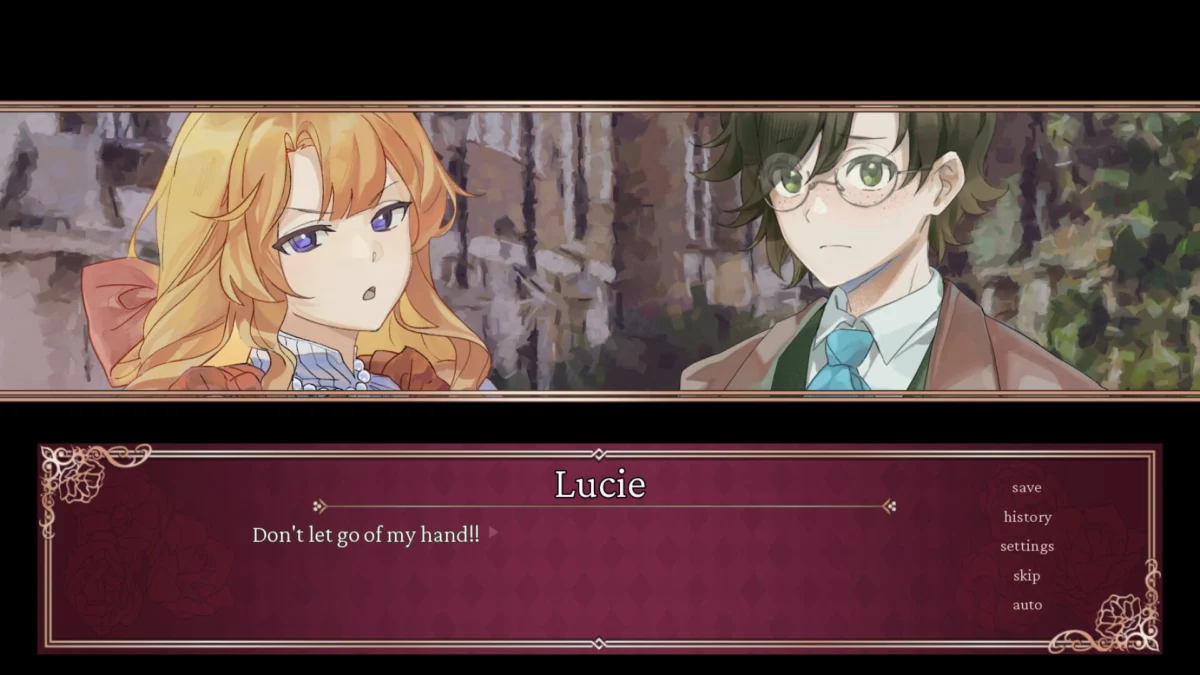
Narrative Foundation and the Protagonist’s Dilemma
The story centers on Lucie, a vampire who has achieved what many in her position would consider impossible: she has discovered a cure for her supernatural condition. In this setting, vampirism is treated less as a romanticized gift and more as a state of being that separates the individual from the natural cycle of life and death. Lucie’s cure involves the use of specially prepared emeralds, which, when utilized correctly, negate vampiric abilities and allow the user to age and live as a human once more.
As the narrative of Crimson Waves on the Emerald Sea: Amaranthine Moon begins, Lucie is positioned on the precipice of a life-changing business deal intended to make this cure widely accessible. However, the plot shifts from medical breakthrough to murder mystery when her prospective partner, a man named Douglas, is found dead. This inciting incident forces Lucie into a dual role: she must navigate the dangerous waters of a criminal investigation involving a serial killer targeting jewelers while simultaneously deciding the future of her own identity. The player’s choices dictate whether Lucie pursues the cure for herself, how she manages her burgeoning business, and which of the three primary love interests she aligns with.
Chronology of Development and Studio Evolution
The trajectory of Crystal Game Works reflects a broader trend in the indie visual novel scene, where developers use free "prologue" games to build an audience before launching full-scale commercial projects. The original Crimson Waves on the Emerald Sea was released several years prior as a concise introduction to the world and characters. While the original focused on establishing the Victorian atmosphere and the specific rules of its vampire lore, Amaranthine Moon is designed to be a standalone experience that benefits from, but does not strictly require, knowledge of its predecessor.
The development timeline suggests a focus on refining the "otome" elements—a genre of story-based video games targeted at a female audience, where one of the main goals is to develop a romantic relationship between the female protagonist and one of several male characters. By expanding the word count and the number of branching paths, Crystal Game Works has moved from a "kinetic" or short-branching style to a high-consequence narrative where player agency significantly impacts the ending.
Character Dynamics and Romantic Integration
The game features three primary love interests, each representing a different facet of the story’s themes:
- Cecil: A returning character from the original game, Cecil’s route follows a "friends-to-lovers" trajectory. His relationship with Lucie is grounded in established history, providing a sense of stability and emotional depth for players who have followed the series since its inception.
- Rowan: One of the sons of the murdered jeweler, Douglas, Rowan’s narrative is inextricably linked to the central mystery. His route allows for a more direct exploration of the grief and investigation aspects of the plot, placing the romance within the context of a shared external crisis.
- Elm: Also a son of Douglas, Elm’s path focuses heavily on the philosophical implications of Lucie’s cure. His route challenges the protagonist to consider what she truly wants for her future—whether that be a return to humanity or an acceptance of her current state.
The writing has been noted for its mature handling of these relationships. Rather than relying on tropes, the characterizations present the love interests as intellectual and emotional equals to Lucie. This parity is essential in maintaining the "strong protagonist" archetype that the game establishes early on, ensuring that Lucie’s agency is never sidelined by the romantic subplots.
The Murder Mystery and World-Building
While the romance is a pillar of the otome genre, Crimson Waves on the Emerald Sea: Amaranthine Moon distinguishes itself through its integration of a procedural murder mystery. The investigation into Douglas’s death and the string of jeweler murders provides a structural backbone that keeps the pacing tight. This element of the story allows for broader world-building, as Lucie must interact with various layers of Victorian society and the vampire underworld to uncover the truth.
The mystery serves a secondary purpose: it highlights the socioeconomic tensions of the era. The focus on jewelers and the "emerald cure" creates a link between the supernatural and the material wealth of the Victorian period. It positions vampirism not just as a biological state, but as something that can be commodified and controlled through industry and trade.
Technical Analysis: Visual Presentation and Dissonance
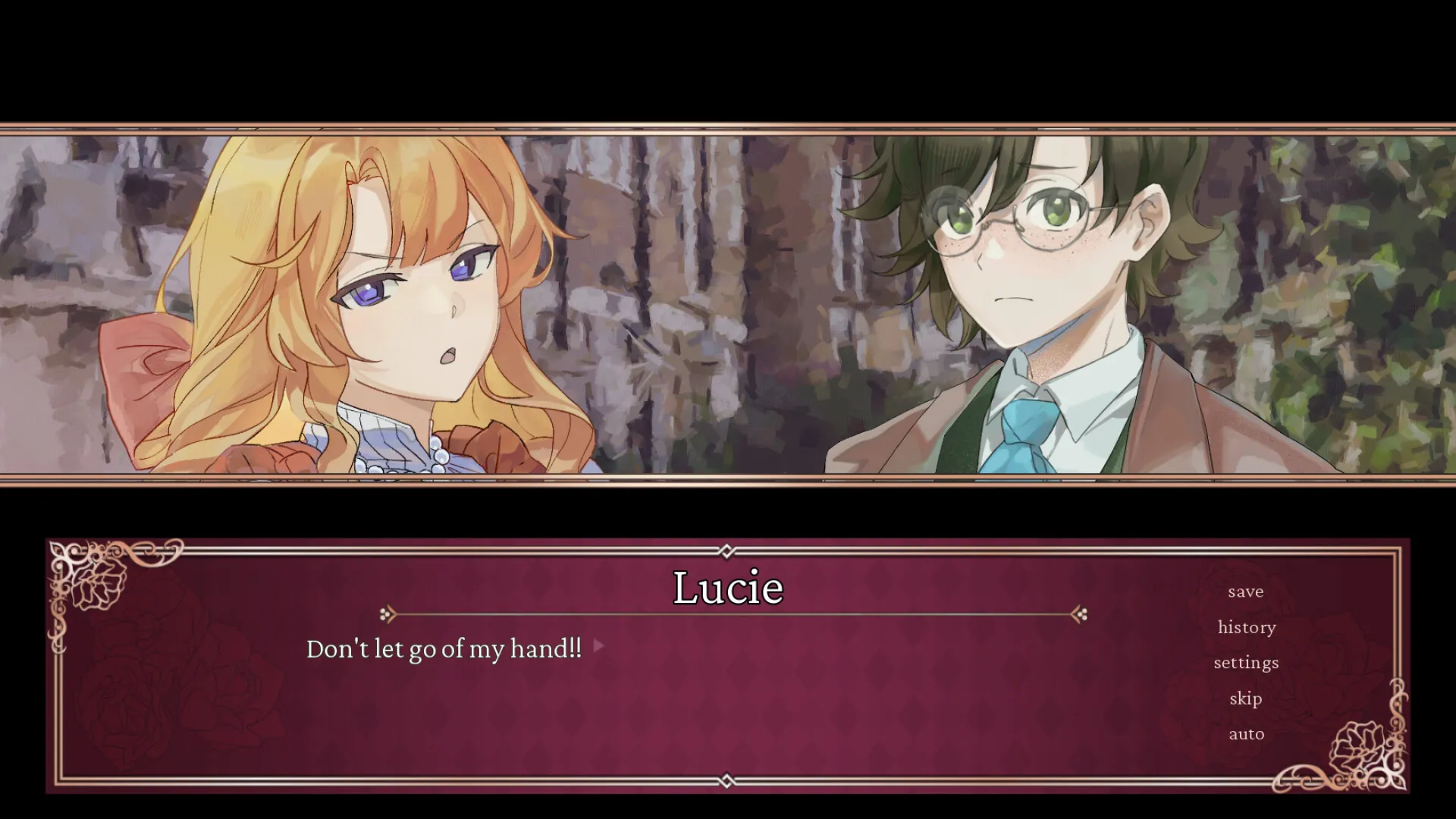
A critical component of any visual novel is its art direction. In Amaranthine Moon, the production values are generally high, particularly concerning the character portraits used during dialogue sequences. These portraits are described as sophisticated and mature, fitting the Victorian aesthetic and the serious tone of the writing.
However, the game faces challenges with visual consistency regarding its Event CGs (Computer Graphics)—the full-screen illustrations that appear during pivotal story moments. Reports indicate a notable discrepancy between the detailed, mature style of the standard character sprites and the more "cartoonish," wide-eyed aesthetic of the special event illustrations. This lack of stylistic cohesion can lead to "ludo-narrative dissonance," where the visual representation of a character during a romantic or dramatic peak does not match the established look of that character during the rest of the game. Such inconsistencies are often the result of using multiple artists with differing styles or a shift in art direction during a long development cycle.
Market Context: The Growth of Western Indie Otome
The release of Crimson Waves on the Emerald Sea: Amaranthine Moon on platforms like Steam highlights the growing market for Western-developed otome games. Historically, the genre has been dominated by Japanese developers (such as Otomate or Rejet). However, over the last decade, North American and European indie studios have begun to carve out a niche by blending traditional otome mechanics with Western narrative sensibilities and diverse themes.
Crystal Game Works’ focus on a Victorian setting with a strong, career-oriented protagonist reflects a shift toward more complex female leads in the genre. This aligns with a broader consumer demand for visual novels that offer more than just romantic escapism, providing instead a blend of genre fiction (mystery, horror, or sci-fi) with character-driven storytelling.
Broader Impact and Implications
The success of Amaranthine Moon as a sequel suggests that there is a viable path for indie developers to scale their intellectual properties from free, experimental projects into full-length commercial titles. By providing a free "entry point" through the first game, the studio successfully lowered the barrier to entry for the lore, while the sequel provides the depth required to justify a purchase.
Furthermore, the game’s exploration of a "vampire cure" adds a fresh perspective to a genre that often treats the condition as either an unmitigated curse or a romanticized eternal life. By framing the cure as a scientific and business endeavor, the game invites players to think about the logistics of the supernatural.
Conclusion
Crimson Waves on the Emerald Sea: Amaranthine Moon stands as a testament to the maturation of Crystal Game Works as a narrative-focused studio. Despite some technical inconsistencies in its artistic presentation, the game offers a substantial and intellectually engaging experience for fans of the otome genre and Victorian supernatural fiction alike. Its blend of identity politics, medical ethics, and traditional murder mystery ensures that it occupies a unique space in the current visual novel landscape. As the title continues to reach audiences on Steam, it reinforces the importance of strong character writing and world-building in sustaining long-term player interest in indie franchises.