Edi Durjana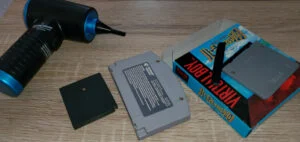
Libretro, the influential open-source initiative behind the universal emulation frontend RetroArch, has announced a groundbreaking new utility core named "ROM Cleaner," developed by Jesse Talavera. Known for his contributions to projects like melonDS DS and McSoftServe, Talavera’s latest innovation represents a unique approach to digital game preservation, diverging from conventional technical solutions by incorporating a symbolic, user-interactive element. The core, designed to address the persistent issue of digital data degradation, promises to help retro gaming enthusiasts maintain the integrity of their cherished digital ROM backups, ensuring their long-term playability. This announcement signals a creative expansion of RetroArch’s capabilities, moving beyond pure emulation to encompass novel utility functions aimed at fostering greater user engagement with digital preservation.
The Genesis of ROM Cleaner: A Developer’s Vision
Jesse Talavera, a prominent developer within the Libretro ecosystem, has consistently pushed the boundaries of what RetroArch can achieve. His previous work on melonDS DS significantly enhanced Nintendo DS emulation within the platform, while McSoftServe introduced innovative features for content delivery. Talavera also contributed critical improvements to RetroArch itself, including robust microphone support and advanced XDelta softpatching capabilities, which allow for the application of game patches without altering the original ROM files. These prior endeavors showcased his aptitude for integrating complex functionalities into a user-friendly environment. The development of ROM Cleaner, which he describes as a long-term secret project, emerged from a desire to tackle the often-overlooked challenge of digital file integrity from a fresh perspective.
Talavera articulated his motivation, stating, "While RetroArch’s primary design goal has always been robust retro game emulation, the platform’s modular architecture allows for ventures into adjacent domains. ROM Cleaner is an embodiment of that flexibility, a utility core specifically crafted to address the silent enemy of digital data: degradation." His vision was to create a tool that not only performs a function but also educates users about the subtle vulnerabilities of digital files, even if through an unconventional interface.
Understanding Digital Degradation in the Modern Era
The concept of data degradation is a well-understood phenomenon in the physical world. Analog media, such as magnetic tapes and optical discs, are inherently susceptible to environmental factors like temperature, humidity, and physical wear. Flash memory, while seemingly robust, experiences charge leakage over time, leading to bit rot. Discs can suffer from "disc rot," where the reflective layer degrades, rendering data unreadable. These physical vulnerabilities necessitate careful storage and regular migration for true archival preservation.
However, the digital realm, often perceived as immutable, faces its own set of insidious challenges. "Bit rot," where individual bits flip from 0 to 1 or vice-versa due to cosmic rays, hardware errors, or silent data corruption, can render files unreadable or introduce subtle glitches. File system corruption, metadata errors, and the sheer volume of data make comprehensive integrity checks a daunting task for the average user. While checksums (like MD5 or SHA-256) are standard tools for verifying file integrity against a known good copy, they primarily detect corruption rather than rectify it. True digital preservation often involves active management, including redundant storage, error-correcting codes, and periodic re-verification and migration to new media or formats.
It is against this backdrop of pervasive, albeit often invisible, digital decay that ROM Cleaner positions itself. The utility core aims to provide a user-friendly, symbolic interaction to address these abstract problems, thereby offering a sense of control and participation in the preservation process.
The Mechanism of "Cleaning": A Symbolic Interaction
The most distinctive feature of ROM Cleaner lies in its proposed method of operation. Talavera explains, "If you find that one of your ROMs is beginning to degrade and won’t boot anymore, simply run it through ROM Cleaner to rid it of the dust that’s accumulated over the years. All you need is a microphone and a set of lungs, and you’ll never have to worry about dirt building up in your digital collection again." This instruction, at first glance, appears whimsical and metaphorical, drawing a direct parallel between the physical act of blowing dust off a cartridge and the abstract process of digital data maintenance.
While the literal act of blowing into a microphone cannot physically alter digital data, the implication is that this user input serves as a trigger for an underlying set of digital integrity checks and potential minor repairs. The "dust" accumulating in digital backups is a metaphor for subtle errors, corrupted metadata, or minor file system inconsistencies that might prevent a ROM from loading correctly. The "blowing" action, facilitated by RetroArch’s existing microphone support, could activate internal algorithms designed to:
- Re-validate file headers: Ensuring that the initial bytes of a ROM conform to expected formats for its respective platform.
- Cross-reference against known good checksums (if available): While not explicitly stated, a utility core could potentially leverage community-contributed databases of verified ROM checksums to identify discrepancies.
- Correct minor structural errors: Some ROM formats have redundancy or specific structures that, if slightly off, can be programmatically corrected to a default valid state.
- Refresh file system metadata: Ensuring the operating system and RetroArch itself have the most accurate and current information about the file’s attributes.
By externalizing this process through a playful, user-initiated action, ROM Cleaner aims to make the abstract concept of digital data maintenance more tangible and engaging for the retro gaming community. It transforms a passive concern into an active, albeit symbolic, ritual of care.
RetroArch’s Flexible Architecture and the Rise of Utility Cores
RetroArch, developed by the Libretro Foundation, stands as a cornerstone of the emulation community. Its unique modular design, based on the Libretro API, allows for a "core" system where different emulators, game engines, and now utilities, can be loaded dynamically. This architecture provides immense flexibility, allowing users to switch between dozens of different systems and applications from a single, unified interface.
The introduction of ROM Cleaner as a "utility core" marks a significant evolution in RetroArch’s scope. Traditionally, cores have been focused on emulating specific hardware or running particular game engines. However, the platform’s underlying design has always had the potential for broader applications. McSoftServe, another of Talavera’s projects, hinted at this expansion by offering content delivery services. ROM Cleaner solidifies this trend, demonstrating that RetroArch can serve as a versatile hub not just for playing old games, but also for managing and preserving the digital artifacts associated with them. This strategic move could pave the way for an entirely new category of utility cores, further enriching the RetroArch ecosystem with tools for file management, asset conversion, or even digital rights management for personal backups.
Broader Implications for Digital Preservation and the Retro Gaming Community
The announcement of ROM Cleaner has sparked considerable interest and discussion within the retro gaming and digital preservation communities. Its immediate implications are multifaceted:
Empowering the End User:
For the average retro gamer, ROM Cleaner offers a seemingly straightforward solution to a complex problem. The psychological comfort of believing one can "clean" a digital file through a simple, interactive gesture is powerful. It democratizes an aspect of digital preservation that often feels inaccessible to those without deep technical knowledge. This could lead to greater awareness and proactive engagement with the health of digital game libraries.
Raising Awareness about Data Integrity:
Even if the "blowing" mechanism is primarily symbolic, its existence draws attention to the very real and often ignored issue of bit rot and data corruption. By presenting a solution, however unconventional, ROM Cleaner educates users that digital files are not immune to decay and require attention. This awareness is a crucial first step in promoting better digital hygiene practices, such as regular backups, checksum verification, and media migration.
A New Paradigm for Utility in Emulation Platforms:
ROM Cleaner broadens the definition of what an emulation frontend can be. By integrating utility functions directly into RetroArch, it blurs the lines between a game player and a digital content manager. This could inspire other developers to create similar utility cores that enhance the user experience beyond mere gameplay, offering tools for organizing game libraries, managing save states, or even repairing corrupted game assets.
The Philosophical Debate: What Constitutes "Preservation"?
The core’s approach might also ignite a philosophical debate among digital archivists and preservationists. While the scientific community relies on rigorous, verifiable methods of data integrity, ROM Cleaner introduces an element of user agency and symbolic interaction. This raises questions about the psychological and cultural aspects of preservation. Does a tool that makes users feel like they are preserving their data, even if through a non-traditional mechanism, contribute to the overall goal of long-term access and playability? Experts might argue that while checksums and redundant backups are technically superior, user engagement is equally vital for ensuring that preservation efforts are sustained by a passionate community.
Expert Reactions and Community Outlook
While no formal statements from external digital preservation experts have been released regarding ROM Cleaner, it is possible to infer potential reactions. A representative from a digital archiving institution might acknowledge the tool’s symbolic value. "While our methods for long-term digital preservation involve robust checksumming, format migration, and geographically dispersed redundant storage, any initiative that raises public awareness about the fragility of digital data is valuable," an expert might comment. "The playful interface of ROM Cleaner could serve as an excellent entry point for enthusiasts to understand that digital artifacts, much like physical ones, require care and attention. It prompts a dialogue, which is crucial."
Within the Libretro Foundation, the launch of ROM Cleaner is seen as a testament to the open-source community’s innovative spirit. A spokesperson for the Foundation could state, "Jesse Talavera’s work consistently exemplifies the creativity and dedication present within our developer community. ROM Cleaner, while uniquely conceived, aligns perfectly with our mission to keep yesterday’s games playable for generations. It underscores RetroArch’s adaptability as a platform and our commitment to supporting diverse solutions that enhance the user experience and contribute to the broader goal of digital heritage preservation."
The retro gaming community, known for its passion and willingness to embrace novel solutions, is expected to receive ROM Cleaner with enthusiasm. Forum discussions and social media chatter would likely center on the intriguing concept, the potential practical benefits, and the humor inherent in "blowing away digital dust." The ease of access, being available directly from RetroArch’s core downloader, ensures widespread adoption and experimentation among users on supported platforms.
The Future of Digital Artifact Care
ROM Cleaner represents more than just a new utility; it signifies an evolving understanding of digital content and its maintenance. As our digital libraries grow exponentially, the challenge of preserving them becomes increasingly complex. Tools like ROM Cleaner, with their blend of technical utility and user-centric design, offer a glimpse into a future where digital preservation is not solely the domain of specialized institutions but an interactive and accessible practice for every enthusiast. Jesse Talavera’s latest contribution to the RetroArch ecosystem underscores Libretro’s ongoing commitment to innovation and its pivotal role in ensuring that the rich history of video games remains vibrant and accessible for future generations. The core is now available for download via RetroArch’s core downloader, inviting users to personally engage with the future of digital retro game care.