Cecilia Chamidah Nur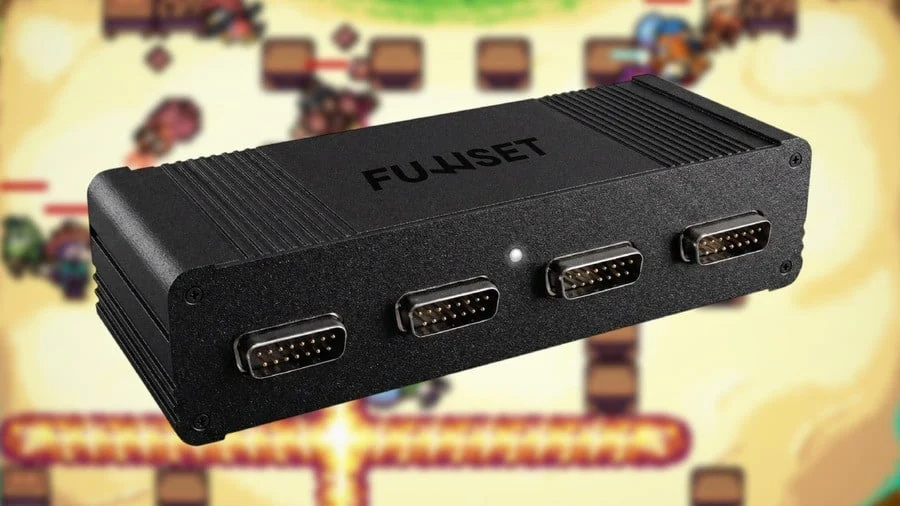
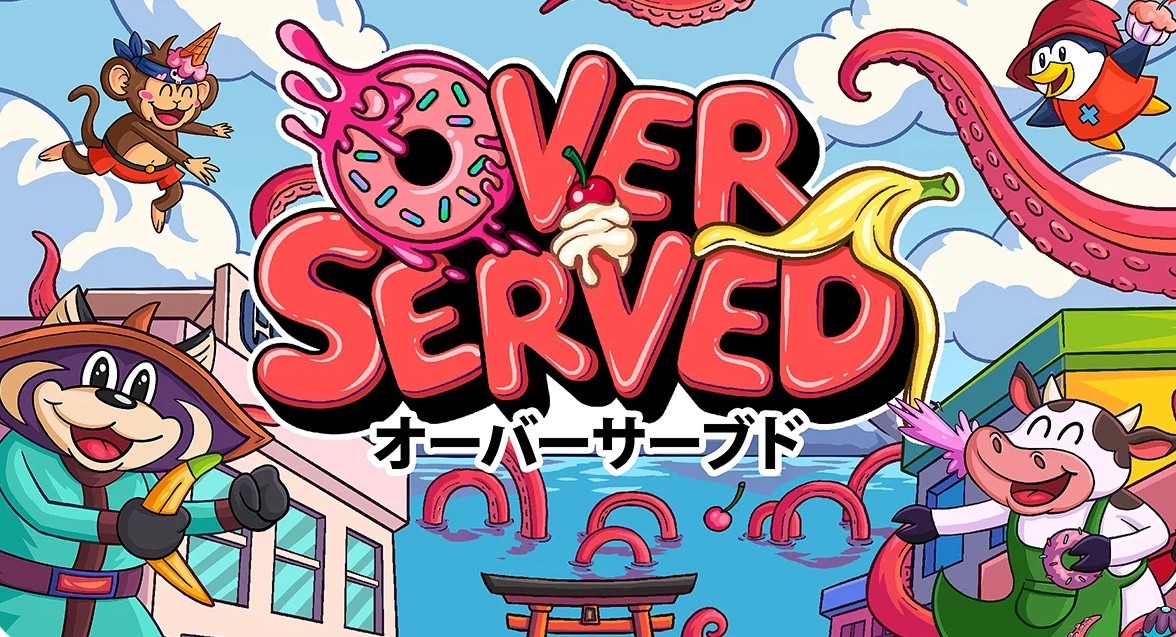
The landscape of retro gaming is witnessing an unprecedented surge in innovation, with independent developers pushing the boundaries of what’s possible on classic platforms. Among these pioneering efforts, Overserved: Food Fighters stands out as a particularly intriguing title for the venerable Neo Geo, promising a blend of nostalgic gameplay and cutting-edge modern features. Developed by FULLSET, this party game, drawing inspiration from classics like Saturn Bomberman, is poised to redefine expectations for homebrew releases, offering online and offline 8-person multiplayer, alongside ambitious cross-play capabilities spanning a vast array of modern and vintage systems.
This groundbreaking initiative is underpinned by custom hardware solutions, including Wi-Fi-equipped cartridges for both the Neo Geo (FSNG-1) and Sega Saturn (FSST-1), along with a newly designed Neo Geo multitap. These innovations aim to bridge decades of gaming technology, enabling seamless connectivity and expanded player counts previously unimaginable for these consoles. Teased in February 2025 and officially launched for pre-order earlier this month, Overserved is accompanied by Sega Dreamcast and Sega Saturn versions of FULLSET’s prior shoot ’em up, Project Neon, signaling a robust commitment to multi-platform retro development. To delve into the vision and technical prowess behind these projects, Time Extension recently sat down with project lead Sascha Reuter for an in-depth conversation.
Unveiling a Retro-Modern Vision: The Genesis of FULLSET’s Ambition
FULLSET’s ambitious foray into retro game development is spearheaded by Sascha Reuter, whose journey into the world of Neo Geo and Sega Saturn homebrew is as unique as the projects themselves. Overserved: Food Fighters is not merely a game; it represents a comprehensive ecosystem designed to revitalize classic consoles with modern connectivity. The core appeal lies in its dual nature: a straightforward, accessible party game reminiscent of the beloved Bomberman series, yet technically profound in its implementation of online features and cross-platform compatibility.
The game’s inspiration, Saturn Bomberman, is widely regarded as one of the finest multiplayer experiences of its era, famous for supporting up to 10 players. FULLSET seeks to capture this spirit of inclusive, chaotic fun, translating it into a family-friendly experience where "treats" are thrown instead of "weapons," and "nobody is being hurt." This thematic choice aligns with Reuter’s broader goal of making the game accessible not only technically but also conceptually, appealing to a wide demographic. The development team, including pixel artist Sonreir and designer Impbox, collaborates on ideas for these in-game "treats," ensuring a creative and engaging experience.
From Hobbyist to Homebrew Pioneer: Sascha Reuter’s Journey
Sascha Reuter’s path to becoming a prominent figure in the retro homebrew scene is a testament to perseverance and a deep passion for gaming. Born in the 1980s in Germany, Reuter’s early exposure to arcade culture was limited, a stark contrast to many peers in other regions. His initial gaming experiences were largely confined to home consoles like the Sega Mega Drive and Super Nintendo. The mythical Neo Geo AES remained an elusive dream, glimpsed only through fragmented media coverage or whispered tales of a friend-of-a-friend’s wealthy relative or a US military base resident. This early inaccessibility fueled a later adult fascination, which solidified when he returned to gaming as a serious hobbyist.
Reuter’s journey into game development began with exploratory tinkering on an Amiga 500, a common starting point for aspiring developers of his generation. However, it was in 2019, following a period focused on startup ventures, that he dedicated himself to game creation. His first significant project was a version of Project Neon for Pico-8, a fantasy console designed for making, sharing, and playing tiny games. Pico-8’s deliberate constraints proved invaluable, forcing Reuter to concentrate on core game design and completion rather than getting bogged down by the overwhelming possibilities of modern engines like Unity or Unreal. This foundational experience allowed him to rapidly prototype and finish a game.
Inspired by the Pico-8 success, Reuter sought to port Project Neon to more tangible retro hardware. He immersed himself in C programming and utilized GBDK (Game Boy Development Kit) to bring his creation to the Game Boy. This version performed commendably at a local demo scene event, affirming his newfound skills and solidifying his ambition. The logical next step was to target his favorite arcade system. While the CPS-2 was considered, its less-documented architecture and complex board manufacturing steered him towards the Neo Geo, which offered a more feasible development pathway for an independent creator. Early YouTube videos documented his progress, showcasing a Game Boy Color-esque rendition of Project Neon running on Neo Geo hardware.
The project gained momentum with key collaborations. Reuter partnered with Freezedream, known for his work on Tanglewood, for the soundtrack, and enlisted pixel artists to refine the game’s visuals. Despite facing time constraints due to his professional commitments, Project Neon eventually shipped on the Neo Geo in 2024. This success marked a turning point; by 2026, Reuter had decided to fully commit to game development, leaving behind the stresses of the startup world to pursue his passion full-time, setting the stage for Overserved: Food Fighters.
Revolutionary Hardware: The FSNG-1 and FSST-1 Cartridges
The technical backbone of FULLSET’s ambitious vision lies in its custom hardware: the FSNG-1 cartridge for the Neo Geo and the FSST-1 for the Sega Saturn. These are far more than mere game cartridges; they are sophisticated computing devices designed to imbue retro consoles with modern functionalities. The idea for custom manufacturing originated during Project Neon‘s development when existing solutions failed to meet Reuter’s quality and functionality expectations. This led to the realization that building cartridges in-house could unlock a plethora of possibilities, including making them upgradable via a Microcontroller Unit (MCU).
The inclusion of an ESP32 chip transformed this concept, enabling Wi-Fi capabilities for over-the-air updates, online high scores, and local saving of settings. Crucially, it also integrates Bluetooth, theoretically allowing for additional wireless controller pairing – a feature particularly vital for Overserved‘s 8-player local multiplayer ambitions.
This advanced cartridge design was a collaborative effort with programmer Furrtek, a respected figure in the retro hardware community. Furrtek’s expertise was instrumental in pushing the design further, integrating the advanced connectivity features that define the FSNG-1. The partnership exemplifies the collaborative spirit often found within the homebrew community, where shared passion drives technological leaps.
For the Sega Saturn, FULLSET collaborated with Professor Abrasive, a legendary figure known for cracking the console’s copy protection and developing the Satiator, one of the first Optical Drive Emulators (ODEs) for the Saturn. The FSST-1 cartridge for the Saturn piggybacks on the FSNG-1’s architecture, sharing many platform features such as over-the-air updates, Bluetooth controller support, and Wi-Fi capabilities. The primary differences lie in system-specific adaptations like the edge connector and other hardware interface requirements.
Professor Abrasive’s involvement also opens up intriguing possibilities beyond gaming. The FSST-1 is being designed with the potential to double as a wireless Netlink device. Currently, playing Sega Saturn games online typically requires a Netlink cartridge, a DreamPi, a complex array of cables, and a USB modem. The FSST-1 aims to streamline this, offering a "more bang for your buck" solution by allowing users to toggle its function between a game cartridge and a wireless Netlink adapter with a simple gamepad input during console startup. While this dual functionality is still under development and not yet confirmed, the underlying PCB design supports it, showcasing FULLSET’s commitment to maximizing value and utility for retro enthusiasts.
Expanding Multiplayer: The Neo Geo Multitap
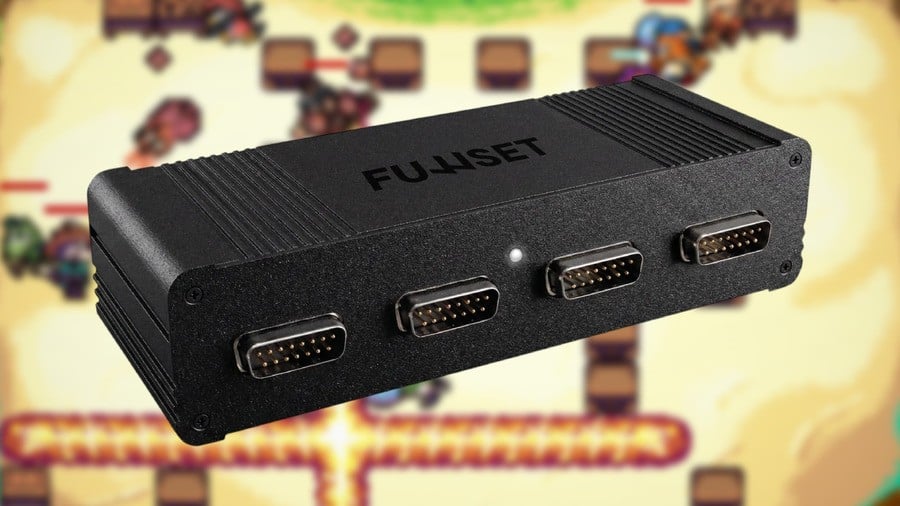
Complementing the advanced cartridges is FULLSET’s innovative Neo Geo multitap, a crucial component for realizing Overserved‘s 8-player local multiplayer vision. Inspired by the multi-tap capabilities of Saturn Bomberman and even earlier Bomberman titles on the Super Nintendo, the multitap was a natural extension of the project’s design philosophy.
The development of the multitap also benefited from Furrtek’s expertise, who had reportedly harbored a desire to create such a device for the Neo Geo for some time. Historically, the market for a Neo Geo multitap was severely limited, with only one officially supporting game, Kizuna Encounter, and a few homebrews like Neotris utilizing custom two-cable solutions for four players. FULLSET’s multitap simplifies connectivity, requiring only a single cable to enable expanded player support. The multitap intelligently detects the required operational mode, allowing for compatibility with existing multi-tap implementations while supporting FULLSET’s streamlined eight-player setup.
Players can theoretically combine multiple multitaps for an even larger local player base or integrate Bluetooth-paired controllers, offering flexible options for gathering a crowd around the console. Furthermore, the system supports online players joining local sessions, blurring the lines between physical and virtual gatherings. A particularly noteworthy feature currently in development is the multitap’s ability to function as a Neo Geo to USB adapter when connected to a PC via USB-C. This would allow users to leverage their authentic Neo Geo controllers on modern computing platforms, adding significant utility beyond Overserved itself. While not yet implemented, Furrtek has expressed 100% confidence in its feasibility, highlighting the multitap’s potential as a versatile piece of retro hardware.
Bridging Eras: Cross-Platform Development and Abstraction
Perhaps the most astonishing aspect of Overserved: Food Fighters is its ambition for cross-platform play across an incredibly diverse range of systems: Neo Geo, Sega Saturn, Sega Dreamcast, Nintendo Switch, PlayStation, Xbox, Windows, Mac, Linux, iOS, tvOS, and Android. FULLSET asserts that the game, including its networking functionalities, is already running on all these mentioned platforms, with the "risky stuff" successfully tackled. The ability to pick up a Steam Deck, a current-gen console controller, or a retro system and play together seamlessly is a testament to the sophisticated engineering behind the project.
This rapid development and broad compatibility are achieved through a meticulously designed engine architecture centered around a general abstraction layer. This layer standardizes calls for networking, storage, save states, and trophies, allowing system-specific implementations to be "shimmed" in the background without altering the core game code. FULLSET leverages SDKs like Neobitz and datlib for the Neo Geo, while SDL (Simple DirectMedia Layer) serves as a broad catch-all for modern consoles, PC, and mobile platforms.
However, the abstraction is not rigidly tied to SDL. For platforms like the Dreamcast, where SDL proved too slow, Reuter directly utilized the raw PowerVR APIs, achieving a stable 60 FPS within hours. This flexibility in engine design allows FULLSET to optimize performance for each target platform, ensuring a consistent and high-quality experience regardless of the underlying hardware.
The ambitious cross-play initiative naturally raises questions about potential hurdles with modern platform holders like PlayStation, Nintendo, and Xbox, known for their stringent guidelines. FULLSET remains confident, stating they do not anticipate problems. Their strategy includes avoiding user-generated content and utilizing platform-provided means for sanitizing usernames, addressing common concerns proactively. Reuter highlights their responsiveness to community feedback, citing an instance where concerns about using JoEngine (a Sega-proprietary graphics library) for the Saturn version led him to swiftly switch to the fully open-source libyaul over a single weekend. This adaptive approach underscores FULLSET’s commitment to transparency and community engagement, crucial for navigating the complex landscape of multi-platform development.
Anticipating Release: Public Testing and Future Outlook
As Overserved: Food Fighters approaches its launch, FULLSET is gearing up for a series of public testing events designed to fine-tune the experience and showcase its groundbreaking features. While earlier, more ad hoc testing at events like "Beer and Pixels" in Sydney yielded positive feedback, particularly from Bomberman fans who played for dozens of games, the upcoming events are set to be more comprehensive.
The first major public demonstration is scheduled for Too Many Games in June. Here, FULLSET plans to feature an arcade setup with both CRT and large modern TVs, specifically highlighting the game’s cross-play capabilities across various systems, with the exception of current-gen consoles, which will be integrated in a less direct manner for demonstration purposes. This event will provide invaluable feedback on the multi-platform experience in a live, interactive setting.
Following this, FULLSET will participate in Gamescom in August, hosting tournaments in the Indie Arena. For Gamescom, the focus will be on the game’s network nature, likely running off a central Steam Deck or similar device in the background, allowing participants to experience the online competitive aspect. These high-profile events offer significant exposure and opportunities to stress-test the game’s network infrastructure under diverse conditions.
Finally, a release party is planned for September or October at 1UP, Australia’s largest arcade in Brisbane, ahead of the game’s official launch. This event will serve as a celebratory culmination of the development journey, bringing the community together to experience the fruits of FULLSET’s labor.
FULLSET’s Overserved: Food Fighters, alongside the continuing legacy of Project Neon, represents a significant milestone in retro homebrew development. By integrating sophisticated hardware, modern connectivity, and an unwavering commitment to cross-platform accessibility, Sascha Reuter and his team are not just making games for classic consoles; they are redefining what is possible, breathing new life into beloved systems, and creating a blueprint for the future of retro gaming. The implications extend beyond these specific titles, signaling a new era where the lines between vintage hardware and contemporary gaming experiences continue to blur, driven by innovation and a deep-seated passion for the medium.