Cecilia Chamidah Nur
The Sega Saturn emulator Yaba Sanshiro has marked a significant milestone in its development, officially releasing an updated version on Friday, May 15th, 2026, featuring a revolutionary rendering technique. This advancement, initially announced on Monday, May 11th, 2026, fundamentally re-engineers how the emulator handles the Sega Saturn’s unique VDP1 graphics chip, effectively overcoming a long-standing challenge that has plagued Saturn emulation for decades. The new method leverages modern GPU compute shaders to render graphics with unprecedented accuracy, eliminating visual distortions previously inherent in upscaled emulation and maintaining optimal performance.
The Breakthrough: A New Era for Saturn Emulation
The core of Yaba Sanshiro’s latest update lies in its innovative approach to emulating the Saturn’s VDP1 chip. This proprietary graphics processor was a defining, yet challenging, component of the console’s architecture, notorious for its reliance on quad-based polygon rendering rather than the triangle-based rendering prevalent in most contemporary and all modern GPUs. This fundamental disparity has historically forced emulators to approximate the Saturn’s output, often leading to visual inaccuracies, particularly when games were run at resolutions higher than their original specifications. The new rendering path directly addresses this by implementing a compute shader for each VDP1 command, allowing for a pixel-perfect reconstruction of the Saturn’s intended visuals.
Developer devMiyax, the driving force behind Yaba Sanshiro, articulated the profound impact of this change on their official blog: "This VDP1 compute shader work is a major step forward in rendering quality for Yaba Sanshiro. The previous approach required tricks like vertex corrections and expanded drawing regions in order to bend modern triangle rendering toward VDP1’s specification." The immediate implication for users is a significantly improved visual experience, particularly noticeable in games that extensively utilize VDP1 for sprites and polygons, which previously exhibited distorted textures or visual seams. The update promises a cleaner, more faithful representation of the Saturn’s graphical output, bringing a new level of fidelity to retro gaming enthusiasts.
Unpacking the Technical Nuance: Quads, Triangles, and the Saturn’s VDP1
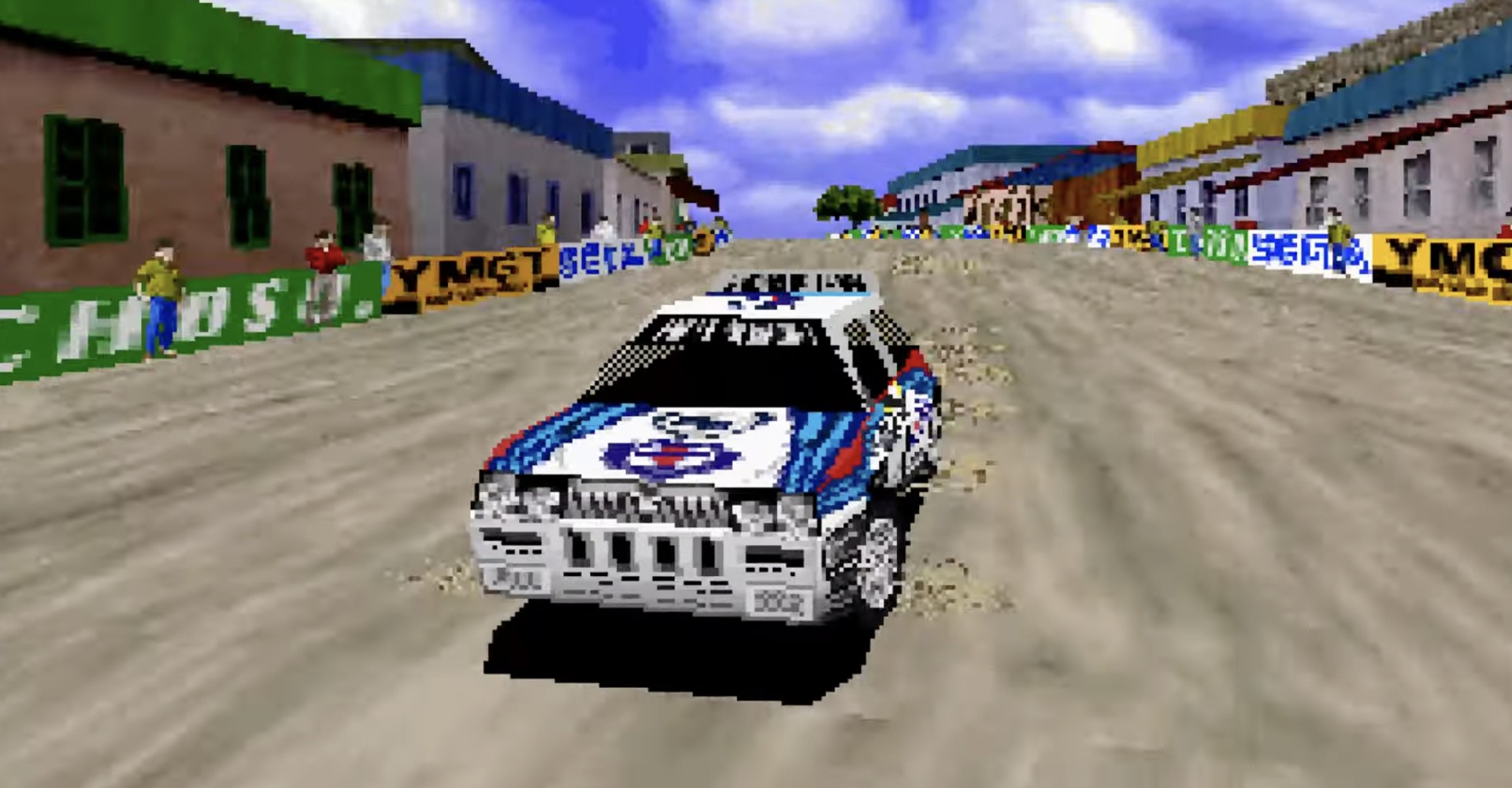
To fully appreciate the magnitude of this achievement, it is crucial to understand the technical intricacies of the Sega Saturn’s graphics hardware. Launched in 1994 in Japan and 1995 internationally, the Saturn was designed with a complex, multi-processor architecture. Its graphics capabilities were split between two main chips: the VDP1 and the VDP2. The VDP2 primarily handled background layers, scaling, rotation, and transparency effects, contributing to the Saturn’s distinctive 2D prowess. The VDP1, however, was responsible for drawing sprites and polygons, notably doing so using quads (four-sided polygons) rather than the industry-standard triangles (three-sided polygons) that the Sony PlayStation and later, virtually all 3D accelerators, adopted.
This architectural divergence created a unique set of challenges for emulation. Modern GPUs are inherently optimized for triangle rasterization, making the direct emulation of VDP1’s quad-based rendering a formidable task. Traditional emulation methods typically involved splitting each Saturn quad into two triangles before feeding them to the modern GPU. While seemingly a straightforward translation, this process introduces artifacts. As devMiyax explained, "If you draw a sprite this way, a texture that should look natural across the whole quad can appear distorted across the seam between the two triangles." This distortion arises from how texture coordinates are interpolated across the two new triangles, often leading to visible seams, misaligned textures, or warped geometry, especially pronounced when emulated games are rendered at higher resolutions. Prior attempts to mitigate this included tessellating quads into even smaller triangles or applying vertex corrections, but these were largely regarded as workarounds rather than fundamental solutions.
The Compute Shader Solution: Precision at the Pixel Level
The innovation introduced in Yaba Sanshiro represents a paradigm shift from these approximation techniques. Instead of forcing quad-based rendering into a triangle pipeline, devMiyax’s new method utilizes compute shaders. Compute shaders are a powerful feature of modern GPUs, allowing them to perform general-purpose computation beyond traditional graphics rendering. Unlike vertex or pixel shaders, which operate within the fixed graphics pipeline, compute shaders can execute arbitrary code on parallel data, making them ideal for tasks that require highly customized, fine-grained control over processing.
In this context, Yaba Sanshiro now runs a compute shader for each VDP1 command. This allows the emulator to process rendering logic on a per-pixel basis, or for upscaled output, per output HD pixel. This "screen-side reverse-mapping approach" enables the GPU to directly compute the visual output of the VDP1 quads without the intermediate step of splitting them into triangles. By bypassing this problematic conversion, the emulator can achieve "smooth rendering… through simple per-pixel logic," as described by devMiyax. The result is a faithful reproduction of how the Saturn’s VDP1 would have rendered the graphics, eliminating the distortions and artifacts previously associated with traditional triangle-based approximations.
What makes this breakthrough even more impressive is the reported performance. Despite the inherent complexity and "much extra work" involved in this novel approach, the implementation "stays at 60fps." This critical detail underscores the efficiency of devMiyax’s engineering and the power of modern GPU compute capabilities. Maintaining full framerate ensures that the enhanced visual fidelity does not come at the cost of playability, a crucial factor for a satisfying emulation experience. This achievement demonstrates that direct, accurate emulation of unique hardware features can be accomplished without sacrificing performance, a testament to the continuous advancements in both software optimization and GPU technology.
A History of Challenge: Emulating the Sega Saturn
The Sega Saturn’s journey from its ambitious launch to its complex emulation history is a compelling narrative in the annals of video game hardware. Despite its technical prowess, particularly in 2D graphics, the Saturn struggled to gain market dominance against the more developer-friendly Sony PlayStation. Its dual-CPU architecture (two Hitachi SH-2 processors) and the aforementioned VDP1/VDP2 graphics chips, while powerful, presented a steep learning curve for developers, often leading to games that did not fully leverage the console’s potential. This complexity earned the Saturn a reputation as a difficult system to program for, contributing to its eventual commercial decline.
This difficulty translated directly into the world of emulation. For many years, accurate and high-performance Saturn emulation remained an elusive goal. Early emulators like SSF (Sega Saturn Emulator) and later projects like Yabause (the predecessor to Yaba Sanshiro) and Mednafen made significant strides, but perfect emulation of the Saturn’s myriad quirks, especially its VDP1, remained a persistent challenge. The unique rendering pipeline, coupled with other complexities like the console’s sound hardware (SCSP), made it one of the most notoriously difficult fifth-generation consoles to emulate faithfully. The struggle to accurately reproduce VDP1’s quad rendering was a key bottleneck, with graphical glitches and performance compromises often being the trade-off for any level of playability. The current breakthrough by Yaba Sanshiro marks a pivotal moment, addressing one of the last major technical hurdles in achieving near-perfect Saturn emulation.
Developer Insights and AI’s Role
devMiyax’s transparent communication about the development process offers valuable insights into the dedication and innovation driving Yaba Sanshiro. The detailed blog post outlining the compute shader implementation provides an accessible technical explanation for both developers and enthusiasts, fostering a deeper understanding of the complexities involved. This openness is a hallmark of many open-source emulation projects, where community engagement and shared knowledge contribute significantly to progress.
Furthermore, devMiyax has previously been candid about the role of artificial intelligence (AI) in the emulator’s development. In February 2026, the developer publicly credited AI tools with contributing to Yaba Sanshiro’s "renewed momentum," stating, "I’m just enjoying building software with those new tools." While the exact nature of AI’s involvement in this specific VDP1 breakthrough is not explicitly detailed in the latest announcement, it suggests that advanced computational assistance may have played a part in accelerating the research, design, or implementation of the complex compute shader logic. AI’s capabilities in pattern recognition, code generation, and optimization can significantly streamline development processes, potentially enabling developers to tackle challenges that might otherwise be prohibitively time-consuming or complex. This integration of cutting-edge AI tools with deep technical understanding underscores a modern approach to solving legacy hardware challenges, pushing the boundaries of what is possible in retro game preservation.
Visual Evidence and User Experience
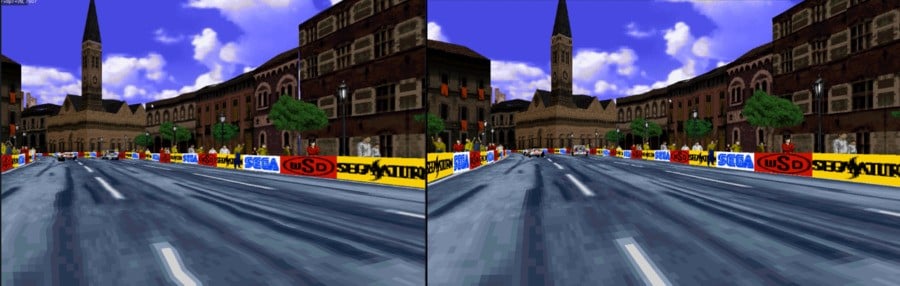
The tangible impact of this technical achievement is best illustrated through visual comparisons. As highlighted in the original report, images comparing the old rendering method with the new compute shader approach clearly demonstrate the elimination of distorted textures and improved overall fidelity. For instance, a side-by-side comparison often reveals jagged lines and misaligned sprites in the older version, which are rendered smoothly and accurately in the updated Yaba Sanshiro. This visual evidence provides compelling proof of the "major step forward" in rendering quality.
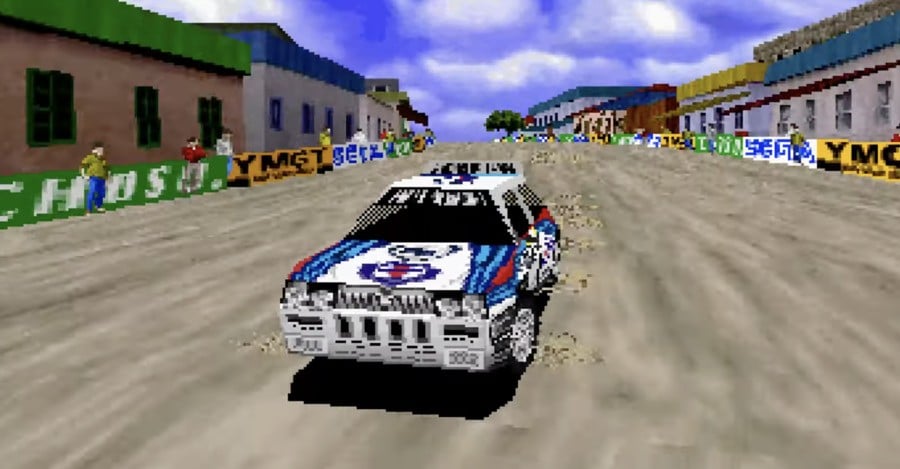
For the end-user, this means a significantly enhanced experience when revisiting or discovering classic Sega Saturn titles. Games like Panzer Dragoon Saga, Sega Rally Championship, Nights into Dreams…, and Virtua Fighter 2, which extensively utilize VDP1 for their iconic 3D and sprite-based graphics, will now look closer to their original intent, especially at higher resolutions. The ability to upscale these games to modern display standards without introducing distracting visual artifacts allows players to appreciate the artistry and technical ambition of the original developers in a way previously difficult to achieve through emulation. This improvement not only elevates the aesthetic quality but also deepens the immersion, making the emulation experience more authentic and enjoyable.
Broader Implications for Retro Gaming and Preservation
The advancements in Yaba Sanshiro carry significant implications extending beyond just one emulator. This breakthrough sets a new precedent for Sega Saturn emulation, potentially influencing other projects to explore similar compute shader-based solutions. As retro gaming continues to grow in popularity, the demand for accurate and high-fidelity emulation intensifies. Projects like Yaba Sanshiro are at the forefront of this movement, ensuring that gaming history is not only preserved but also presented in the best possible light for future generations.
The successful application of compute shaders to solve a complex hardware-specific rendering problem also demonstrates the power of modern GPU architecture in retro emulation. It highlights how contemporary hardware, with its parallel processing capabilities and programmable shaders, can be harnessed to overcome the unique and often idiosyncratic designs of vintage consoles. This methodology could potentially be adapted to address similar challenges in emulating other difficult systems with unconventional graphics pipelines.

Ultimately, this development reinforces the vital role of the emulation community in digital preservation. By meticulously reverse-engineering and accurately replicating the behavior of original hardware, projects like Yaba Sanshiro contribute immeasurably to keeping the legacy of classic games alive and accessible. The ability to accurately render the Sega Saturn’s graphics at high resolutions, free from historical emulation artifacts, ensures that the console’s unique visual identity is preserved and celebrated, cementing its place in video game history.
The release of the updated Yaba Sanshiro, featuring its groundbreaking VDP1 rendering via compute shaders, marks a monumental achievement in the realm of retro game emulation. By meticulously tackling one of the Sega Saturn’s most challenging hardware quirks, developer devMiyax has not only delivered a superior visual experience for enthusiasts but also established a new benchmark for accuracy and performance in complex console emulation. This innovation not only enhances the enjoyment of classic Saturn titles but also reinforces the critical ongoing efforts to preserve and celebrate video game history through the diligent work of the emulation community.