Cecilia Chamidah Nur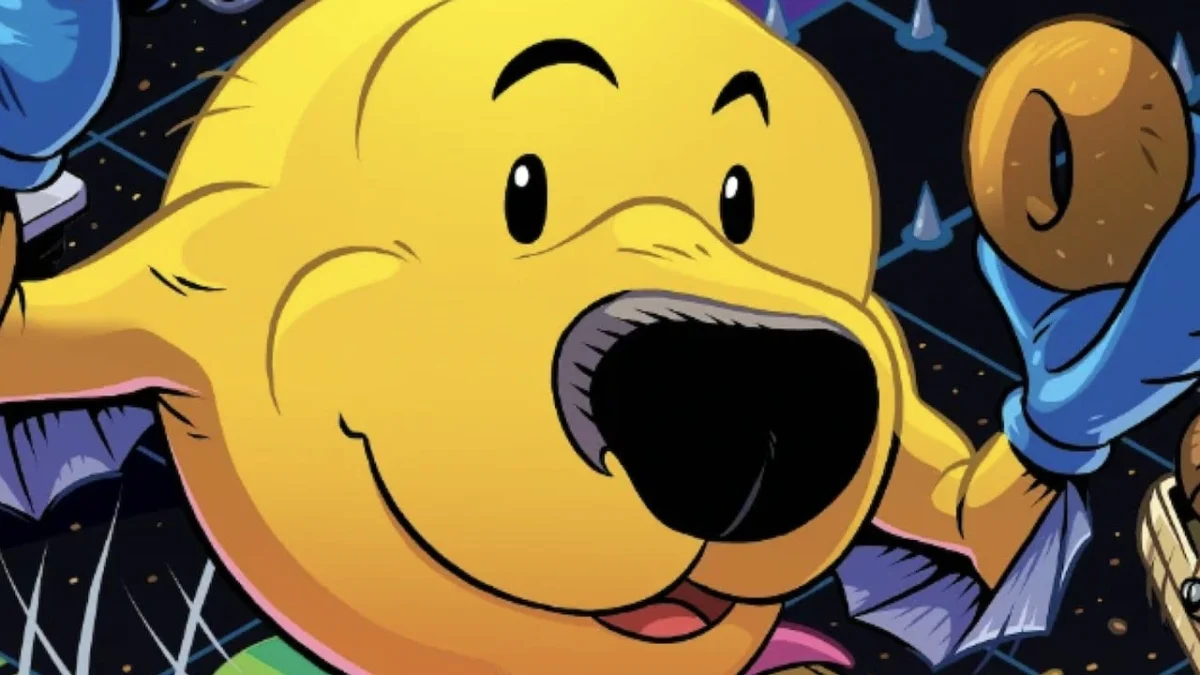
The Genesis of a Decades-Long Project
The story of Return To Blacktooth began in the immediate aftermath of a significant achievement in retro gaming history. In 1989, programmer Colin Porch completed the Amiga and Atari ST versions of Jon Ritman and Bernie Drummond’s critically acclaimed 1987 isometric puzzle-platformer, Head Over Heels. Rather than moving on to entirely new ventures, Porch immediately embarked on a sequel. This decision, made at the height of the 16-bit era’s initial boom, set in motion a development process that would span more than 35 years, evolving from a nascent idea into a fully realized game.
The original Head Over Heels was a groundbreaking title, widely celebrated as a cornerstone of "Britsoft" – a term for games developed in the United Kingdom during the 1980s and early 1990s, often characterized by their innovation, unique aesthetics, and challenging gameplay. It was released across a multitude of 8-bit and 16-bit platforms, including the ZX Spectrum, Amstrad CPC, Commodore 64, Amiga, and Atari ST. Its distinctive features included some of the era’s most ingenious level design within an isometric perspective and an innovative dual-character mechanic that tasked players with controlling two distinct entities, Head and Heels, each with unique abilities, often simultaneously or in tandem. This innovative approach garnered widespread critical acclaim and fostered a dedicated fanbase that would eagerly await any news of a follow-up.
A Legacy Reimagined: Gameplay Evolution and Fidelity
At its core, Return To Blacktooth is designed as a profound "love letter" to the legions of fans who grew up with Head Over Heels. The sequel meticulously maintains fidelity to the original classic’s core vision while introducing a wealth of fresh ideas that integrate seamlessly into the established gameplay framework. This delicate balance ensures that the game feels both familiar and novel, satisfying the nostalgia of veteran players without stagnating the experience.
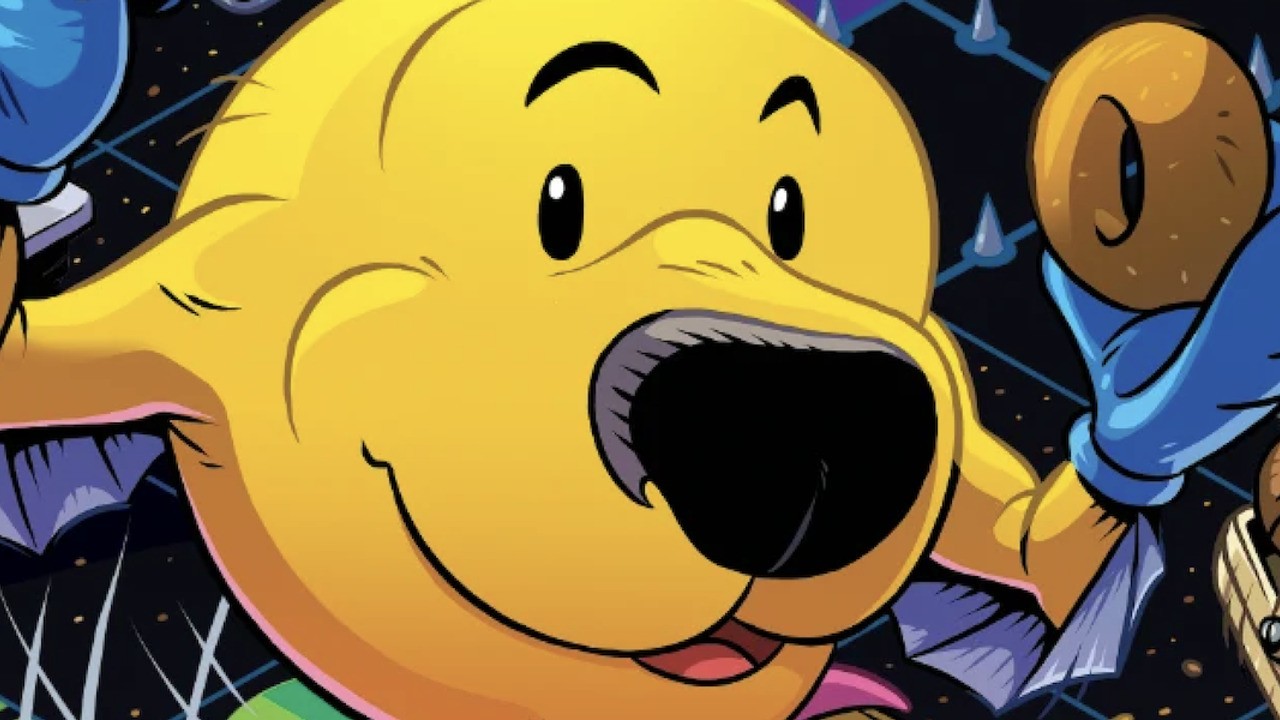
The defining gameplay mechanic of Head Over Heels involved its two titular protagonists. Head, a disembodied head with rabbit ears, excelled at jumping, could manipulate his trajectory mid-air, and wielded a quirky "doughnut gun." Heels, a limbless bipedal creature resembling a cat, was incapable of jumping but moved swiftly and possessed a handbag that allowed him to pick up and transport useful objects. The initial objective of the game often involved reuniting these two characters, after which they could combine into a single, more powerful entity capable of utilizing all their individual powers. This "genius design," as it has often been described, offered a rich tapestry of puzzle-solving possibilities that Return To Blacktooth demonstrates had far more potential than could be explored in just one title.
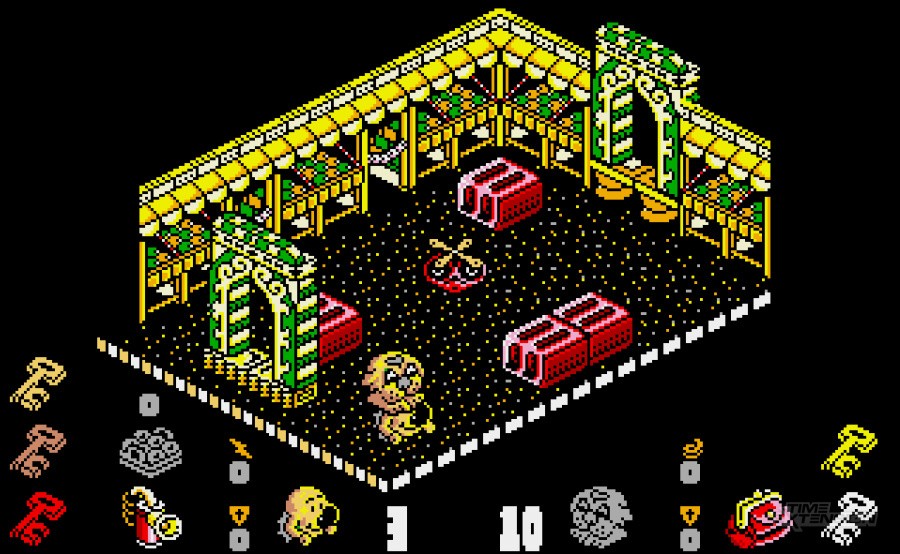
The sequel significantly expands the game world, featuring over 300 screens, a considerable increase that dwarfs many titles of the era. These screens present a blend of nostalgic familiarity and inventive new challenges. Players will encounter twists on iconic puzzles from the original, such as the memorable remote-control "Prince Charles Dalek," alongside entirely novel concepts. New gameplay elements like forcefield barriers and invisible platforms introduce additional layers of complexity and strategy, expanding the classic formula in exciting ways without fundamentally altering the principles that made the 1987 original so compelling. While a few screens are cleverly reused or remixed from the first game, the vast majority are new, offering a fresh experience that will be appreciated by both long-time fans and those discovering the series for the first time.
Navigating Challenge: Designed for Veterans, Accessible for Modern Players
One of the key considerations for Return To Blacktooth appears to be its target audience. The intricate design of the new puzzles suggests they were primarily crafted with veteran players of Head Over Heels in mind. The initial stages of the sequel present a level of complexity comparable to the more demanding sections of the original game, potentially posing a significant challenge for newcomers. As such, reviewers and early players often recommend that individuals unfamiliar with the series first experience the 1987 classic to fully appreciate the design philosophies and mechanics at play in the sequel. This approach ensures that players are adequately prepared for the intellectual demands that Return To Blacktooth places upon them.
However, the development team, led by Colin Porch, has also incorporated several concessions to accommodate modern players and the evolving landscape of gaming. In a stark contrast to the often unforgiving difficulty of games from the 1980s, Return To Blacktooth provides a generous number of starting lives, significantly more than its predecessor. This count can be further adjusted based on the player’s chosen difficulty level, offering a customizable experience. A particularly innovative "saving grace" allows one character to transfer a portion of their lives to the other under specific conditions, providing a strategic safety net. These additions are especially beneficial for "time-poor retro gamers," enabling them to delve deeper into the intricate Blacktooth Castle without the constant threat of a complete restart, thus enhancing accessibility without compromising the core challenge.
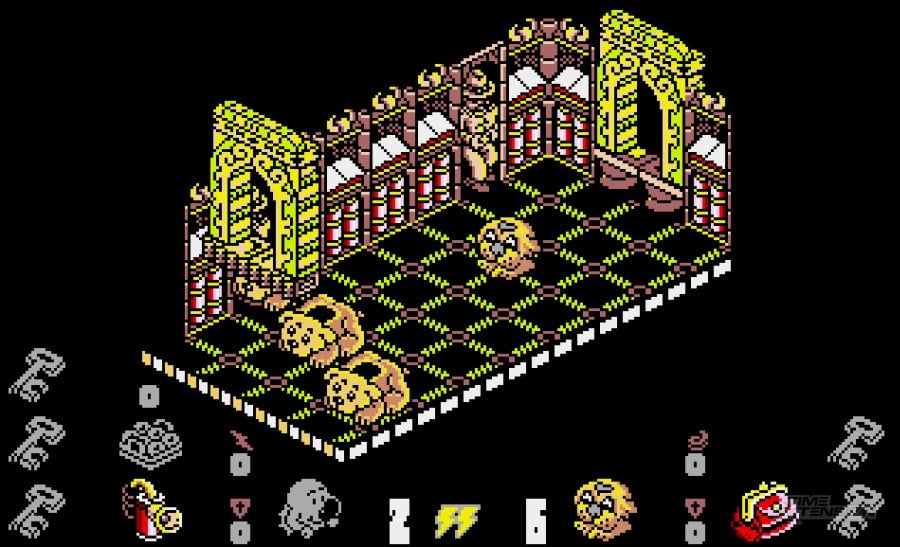
Despite these player-friendly additions, Return To Blacktooth remains a game that demands dedication and intellectual rigor. Many puzzles are designed to be genuine "head-scratchers," potentially requiring hours of contemplation and experimentation. Yet, critically, every puzzle is constructed with an underlying logic, making them ultimately achievable through perseverance. The design philosophy emphasizes the "enormous sense of satisfaction" that accompanies the moment a complex puzzle finally "clicks" into place. This rewarding feedback loop is a core tenet of the game’s appeal, even if, on rare occasions, players might discover unintended solutions or bypass mechanisms through creative, albeit unconventional, means.
Technical Achievements and Platform Specifics
A significant triumph of Return To Blacktooth lies in its technical execution and its commitment to authentic retro hardware. The game runs exceptionally smoothly and presents a visually appealing experience even on basic Amiga models. For players whose primary experience with Head Over Heels was on 8-bit systems, the graphical fidelity and fluidity of this 16-bit sequel will be a notable improvement. Furthermore, the game achieves something that was not always common in the 8-bit and early 16-bit eras: simultaneous playback of both sound effects and background music, enriching the atmospheric experience.
The game is designed for flexibility in deployment, easily playable from either a floppy disk or a hard drive, and includes crucial save game functionality, a feature that was often rudimentary or absent in early titles. This modern convenience is invaluable for a game of Return To Blacktooth’s scope and difficulty, allowing players to progress at their own pace.
However, a minor point of contention noted in early reviews concerns the lack of full CD32 controller compatibility. While Head’s actions, such as jumping and firing, map intuitively to the red and blue buttons, controlling Heels inexplicably requires a combination of joypad inputs and keyboard keys. This minor inconvenience is hopefully a temporary oversight that can be addressed through a future patch, ensuring a fully streamlined control scheme across all intended peripherals. Despite this small issue, the overall technical delivery on real Amiga and Atari ST hardware is a testament to Colin Porch’s programming prowess and a significant draw for the retro gaming community, who value authenticity and direct hardware interaction.
The Broader Impact and Enduring Legacy
The release of Return To Blacktooth is more than just the launch of a new game; it is a cultural event within the retro gaming community. It underscores the enduring appeal of "Britsoft" classics and highlights the dedication of individual developers like Colin Porch, whose unwavering commitment over decades brought this vision to fruition. The support from British indie publisher Thalamus Digital also exemplifies the vital role smaller publishers play in preserving and extending the history of video games, particularly for niche audiences and dormant intellectual properties.
This project serves as a powerful reminder that some creative visions transcend the immediate commercial cycles of the industry. The journey of Return To Blacktooth from concept to completion, spanning almost 40 years, is an anomaly, a labor of love driven by a profound respect for the original work and its fanbase. The official approval from Atari, the current rights holder, lends an important layer of legitimacy and opens avenues for wider distribution, potentially introducing a new generation of players to the ingenious world of Head and Heels.
The success of Return To Blacktooth could also signal a broader trend or inspire other developers to revisit long-dormant intellectual properties, especially those from the golden age of 8-bit and 16-bit computing. It demonstrates that with sufficient dedication, technological adaptation, and respect for original design, it is possible to deliver sequels that not only honor their predecessors but also expand upon their legacy in meaningful ways. The ability to play this new adventure on original hardware is not just a technical feat but a philosophical statement about the value of historical computing platforms and the experiences they offer.
Conclusion
Ultimately, Return To Blacktooth: A Head Over Heels Adventure stands as a monumental achievement and an unreserved gift to the gaming community. It masterfully builds upon every element that made Jon Ritman and Bernie Drummond’s Head Over Heels a timeless classic, delivering a final, enchanting dose of magic from a bygone era of video game design. The game successfully blends deeply nostalgic elements with fresh, inventive challenges, creating an experience that feels both comfortingly familiar and exhilaratingly new. The fact that this surprise sequel can be experienced authentically on real 16-bit hardware only amplifies its significance, cementing its place not just as a well-executed game, but as a remarkable cultural artifact in the annals of video game history. For fans old and new, Return To Blacktooth is a compelling testament to the enduring power of classic game design and the boundless potential of creative dedication.