Cecilia Chamidah Nur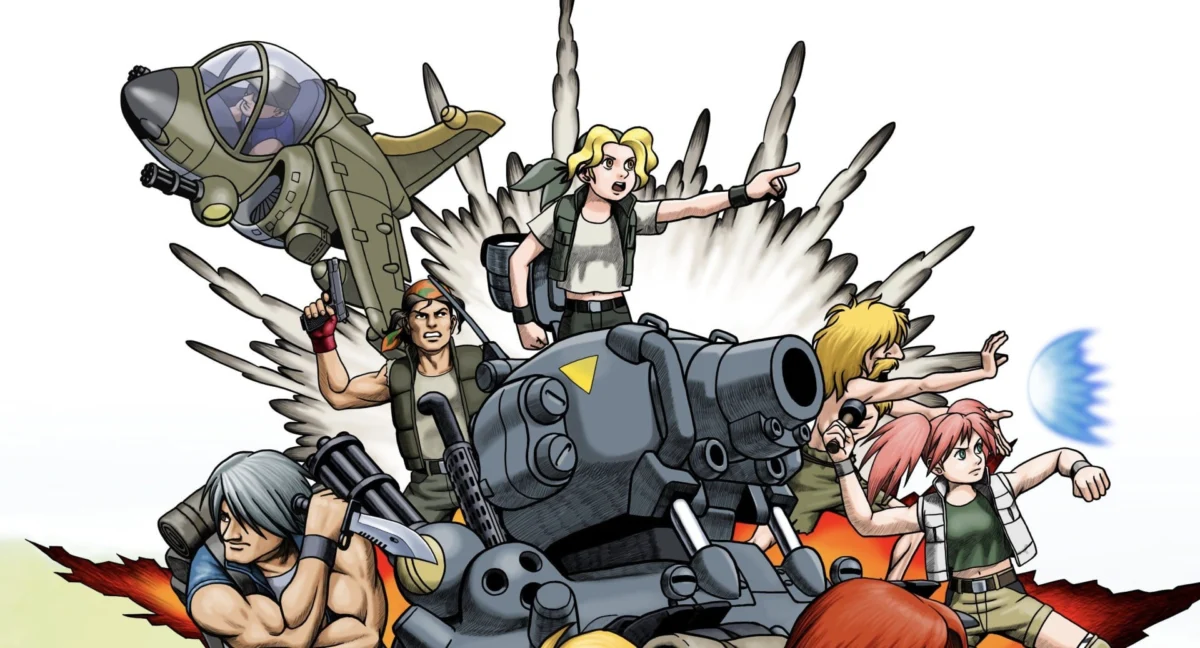
The world of classic gaming continues its vibrant evolution, marked this past week by groundbreaking hardware innovations, intricate intellectual property disputes, significant cultural commentary, and ongoing debates surrounding emerging technologies like Generative AI. From the miniaturization of iconic consoles to high-profile celebrity endorsements and crucial preservation efforts, the retro gaming landscape remains a dynamic intersection of nostalgia and cutting-edge development.
Revolutionizing Retro Hardware: The Kawaii Project and SuperStation One
A significant development in the realm of retro hardware modification emerged this week with Tito at Macho Nacho Productions showcasing the remarkable Kawaii project. This ambitious endeavor has successfully miniaturized the Nintendo Wii chipset into a keychain-sized system, achieving what modder Tito proudly describes as "the smallest Nintendo GameCube ever made" that still runs on genuine Nintendo hardware. Given the Nintendo Wii’s inherent backward compatibility with GameCube titles, this ingenious creation effectively functions as an ultra-compact, fully operational GameCube, a feat that has garnered widespread attention within the modding community.
The Kawaii project represents the pinnacle of hardware miniaturization, overcoming significant engineering challenges related to power management, heat dissipation, and component integration. Past projects by enthusiasts have often involved compacting consoles, but achieving a form factor akin to a keychain while maintaining full functionality is a testament to advanced modding techniques. This innovation not only serves as a proof of concept for extreme portability but also sparks discussions about the future of pocket-sized emulation and the potential for official or third-party manufacturers to explore similar compact designs for classic systems. The immediate reaction from online communities has been overwhelmingly positive, with many marveling at the technical skill involved and expressing a desire for such a device.
Complementing this DIY innovation, the much-anticipated SuperStation One from Taki Udon has finally arrived, promising an unparalleled PlayStation 1 gaming experience. This FPGA-based system is being hailed as potentially "the best way to experience PS1 games in 2026," setting a new benchmark for retro console accuracy and fidelity. Field-Programmable Gate Array (FPGA) technology offers a distinct advantage over traditional software emulation by physically reconfiguring a chip to mimic the original console’s hardware at a transistor level. This results in near-perfect timing accuracy, minimal input lag, and a genuine hardware experience that software emulation, no matter how advanced, often struggles to replicate entirely.
The SuperStation One enters a competitive market alongside other high-fidelity FPGA systems like the MiSTer platform and Analogue’s line of consoles, all catering to a growing demand among purists for authentic retro experiences. Its success underscores a broader trend in the retro gaming community: a pivot towards hardware-level accuracy for preservation and play. While the initial investment in FPGA-based systems can be higher than software-based alternatives, the promise of uncompromised performance and historical fidelity often justifies the cost for dedicated enthusiasts. The SuperStation One’s launch is expected to further invigorate discussions around hardware preservation and the optimal methods for revisiting gaming’s golden eras.
Navigating the Complexities of Intellectual Property and Market Delays
The retro gaming industry continues to grapple with the intricate web of intellectual property rights, a challenge highlighted this week by two significant developments: Atari’s strategic acquisition of early Wizardry titles and the persistent delays plaguing the Amiga replica, THEA1200.
Atari, under its current strategic direction, has announced the acquisition of "the complete and exclusive rights to the first five Wizardry games and their underlying IP." This includes seminal titles such as Wizardry: Proving Grounds of the Mad Overlord (1981), Wizardry II: The Knight of Diamonds (1982), Wizardry III: Legacy of Llylgamyn (1983), Wizardry IV: The Return of Werdna (1987), and Wizardry V: Heart of the Maelstrom (1988). This move aligns with Atari’s broader strategy of revitalizing classic franchises and expanding its portfolio of foundational gaming intellectual property. The Wizardry series is historically significant, pioneering many conventions of the computer role-playing game genre and profoundly influencing both Western RPGs and the burgeoning Japanese RPG market, notably inspiring titles like Dragon Quest and Final Fantasy.
However, this acquisition comes with an important clarification regarding the fragmented nature of the Wizardry IP. Japanese company Drecom promptly issued a statement via its official Twitter/X account to clarify that it still retains the rights to later installments, specifically Wizardry VI: Bane of the Cosmic Forge (1990), Wizardry VII: Crusaders of the Dark Savant (1992), and Wizardry 8 (2001), along with domestic and global trademarks, which it acquired in 2020. This division underscores the complex, often multi-party ownership structures prevalent in older game IPs, where rights may have been sold, licensed, or split over decades. Atari’s acquisition of the early titles suggests a potential for remakes, remasters, or new entries based on the original lore, while Drecom continues to explore its own plans for the later series, possibly including new Japanese-market specific titles. The fragmented ownership could lead to distinct creative directions for different segments of the franchise.
Meanwhile, the highly anticipated THEA1200, a full-size Amiga replica from Retro Games Ltd, has faced yet another delay. Originally teased in 2023 and slated for a 2024 launch, the plug-and-play system, designed to emulate the classic Amiga 1200, has been pushed back due to ongoing legal disputes concerning the rights to the Amiga OS. Retro Games Ltd has a track record of producing popular "mini" versions of classic computers, such as THEC64 and THEVIC20, which have been well-received by retro enthusiasts for their ease of use and nostalgic appeal. However, the Amiga brand’s history is fraught with complex legal battles over its intellectual property, dating back decades. The Amiga operating system, in particular, has been a contentious point, with various entities laying claim to its ownership and licensing.
These delays have a tangible impact on consumer confidence and market anticipation. Enthusiasts eager to revisit the Amiga 1200, a machine revered for its graphical capabilities and robust software library in the 1990s, must continue to wait. The situation highlights the inherent risks and protracted timelines involved in bringing licensed retro hardware to market, especially when dealing with legacy IPs that have undergone numerous corporate transitions and legal challenges. Industry analysts suggest that resolving such deep-seated legal entanglements can be a lengthy and costly process, often extending development cycles far beyond initial projections.
Cultural Touchstones and the Shifting Landscape of Digital Art

The intersection of classic gaming with broader cultural trends and ethical debates was particularly prominent this week, featuring a celebrity endorsement for The Legend of Zelda and a significant controversy surrounding AI-generated art.
Two-time Academy Award-winning actress Sally Field made headlines during an interview for her new Netflix movie, Remarkably Bright Creatures, by revealing her deep affection for The Legend of Zelda series. In a lighthearted moment during her chat with entertainment reporter Jake Hamilton, Field playfully challenged her co-star, Lewis Pullman, asking "What the hell is the matter with you?" when he admitted to never having played the iconic Nintendo franchise. This candid display underscores the growing mainstream acceptance and cultural penetration of video games, moving beyond niche entertainment to become a beloved pastime for individuals across all demographics, including Hollywood veterans. The Legend of Zelda series, with its decades-long history of critically acclaimed titles like Ocarina of Time, Breath of the Wild, and most recently Tears of the Kingdom, has consistently captivated audiences with its immersive worlds, intricate puzzles, and timeless narratives, cementing its status as one of gaming’s most influential and cherished franchises. Field’s comments serve as a powerful, albeit informal, endorsement that resonates with millions of fans and further legitimizes gaming as a significant cultural force.
Conversely, a more contentious issue emerged regarding the use of Generative AI in the art accompanying Fangamer’s vinyl soundtrack release for Riven, the acclaimed sequel to Myst. Robyn Miller, co-creator of Myst and composer of Riven‘s music, faced criticism after admitting on Reddit that AI tools were used to create one of the images for the 30-track, 2-disc LP’s gatefold. Miller, who also designed the special package, defended his creative process, stating, "I use AI like any other visual tool. For this, I spent weeks making the image. There is a lot of AI slop. I am a designer and artist. I designed and directed Riven and I meticulously designed this image. AI is a powerful tool if used correctly."
This incident reignites the ongoing, heated debate within the artistic and gaming communities about the ethical implications and creative legitimacy of AI-generated art. Critics often argue that AI art, particularly when trained on existing copyrighted works without explicit consent or compensation, constitutes a form of plagiarism or undermines the value of human artistic labor. Concerns also revolve around transparency, with many advocating for clear disclosure when AI tools are employed. Miller’s defense, positioning AI as another tool in an artist’s arsenal, reflects a perspective held by some creators who see AI as an efficiency enhancer or a means to explore new aesthetic possibilities, much like digital brushes or 3D rendering software. However, the strong negative reaction from a segment of the Myst community on Reddit highlights a significant ethical divide, particularly when an established artist from a franchise known for its unique and handcrafted aesthetic chooses to incorporate AI, raising questions about authenticity and artistic integrity in an era of rapidly advancing synthetic media.
Adding to the broader ethical concerns surrounding AI, a new wave of Generative AI adverts for retro consoles has been observed proliferating across retro gaming social media circles. These fabricated Japanese advertisements, often featuring "scantily-clad ladies" alongside vintage consoles, are actively "fooling a lot of people." Many users have mistakenly interpreted these images as legitimate historical promotional material, leading to a romanticized and often inaccurate view of past marketing practices. This trend is a concerning "dubious benefit" of Generative AI, demonstrating its capacity for creating convincing, yet entirely fictitious, content that can easily be misconstrued as factual.
These AI-generated ads exploit nostalgic sentiments and often present an idealized, sometimes objectifying, version of retro culture that never genuinely existed in that specific context. Beyond the potentially offensive nature of some of the imagery, the core problem lies in the erosion of digital trust and the spread of misinformation. As AI tools become more sophisticated, distinguishing between genuine historical artifacts and expertly crafted fakes becomes increasingly difficult for the average user. This development poses a significant challenge for retro gaming communities, which often rely on accurate historical documentation and authentic artifacts for preservation and scholarship. It underscores the urgent need for media literacy and critical evaluation of online content, especially as AI continues to blur the lines between reality and simulation.
Preserving Legacies: Interviews and Comprehensive Features
The importance of documenting and celebrating the history of video games was underscored this week through an in-depth interview and a retrospective feature on influential titles.
An exclusive interview with Kenji Kaido, the director of Taito’s 1989 arcade masterpiece Night Striker, provided invaluable insights into the game’s origins and development. Conducted during Tokyo Game Show 2025 in anticipation of the upcoming compilation Operation Night Strikers (from Clear River Games and Limited Run Games), the interview delves into Kaido-san’s experiences designing and directing the game 36 years ago. Kaido is a veteran of the video game industry whose career began in the late 1980s, contributing to arcade classics like Bonze Adventure and Sonic Blast Man for Taito. His extensive credits also include significant roles on PlayStation titles such as Ape Escape (designer) and Tomba (producer). However, he is arguably most recognized for his pivotal role as producer alongside director Fumito Ueda on the critically acclaimed PlayStation 2 titles, ICO and Shadow of the Colossus, games lauded for their artistic vision and minimalist storytelling.
The interview with Kaido-san is crucial for preserving the often-overlooked history of arcade game development and offers a rare glimpse into the creative minds behind some of gaming’s most beloved titles. Night Striker, a unique 3D pseudo-racer/shooter, represented a technical achievement for its time and contributed to the diverse arcade landscape of the late 80s. Capturing first-hand accounts from legendary developers like Kaido-san ensures that the context, challenges, and inspirations behind these historical games are not lost to time, providing invaluable resources for future generations of enthusiasts and scholars.
Further solidifying the commitment to historical documentation, a comprehensive feature this week charted the intricate development of Nazca Corporation’s legendary run-and-gun shooter, Metal Slug. This article meticulously pulls together legacy interviews with various team members, offering a detailed look at the creative process behind one of the Neo Geo’s most iconic franchises. Metal Slug is celebrated for its distinctive hand-drawn pixel art, fluid animation, challenging gameplay, and irreverent humor, establishing itself as a benchmark for the run-and-gun genre. The feature highlights the contributions of Nazca, a studio formed by former Irem developers, and their impact on pushing the boundaries of 2D sprite-based graphics and gameplay design. Such retrospective pieces are vital for honoring the creators and chronicling the evolution of groundbreaking games, providing context for their enduring appeal and influence on subsequent titles.
In conclusion, the past week in retro gaming demonstrates a vibrant ecosystem where technological innovation, commercial strategy, cultural discourse, and historical preservation converge. From cutting-edge FPGA hardware and miniaturized consoles pushing the boundaries of play, to legal battles shaping the future of cherished IPs, and ethical debates challenging artistic norms, the retro gaming community continues to engage with its past while actively shaping its future. These developments collectively underscore the enduring legacy of classic games and the passionate dedication of those committed to celebrating, preserving, and reimagining them.