Chalid Lutfie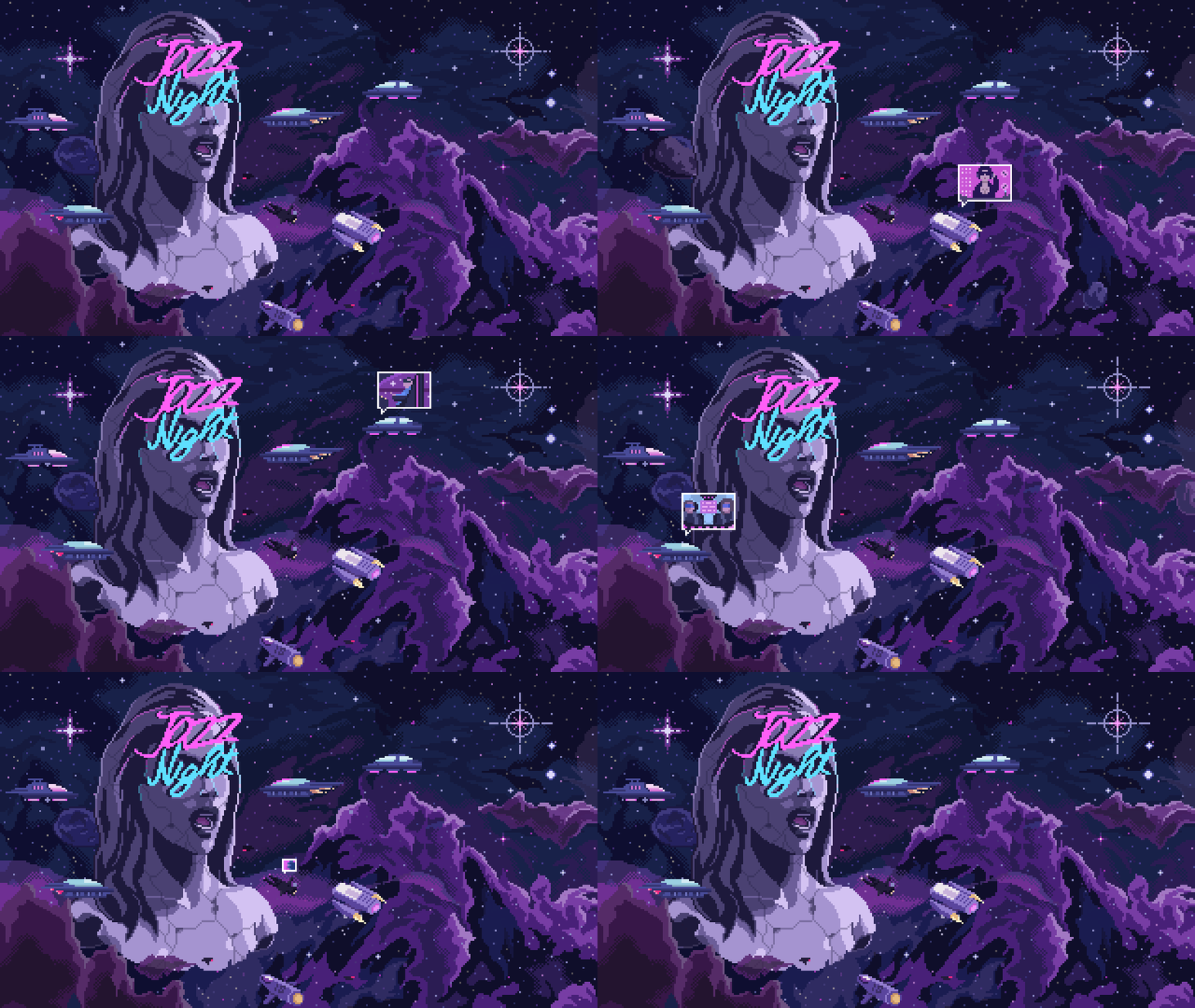
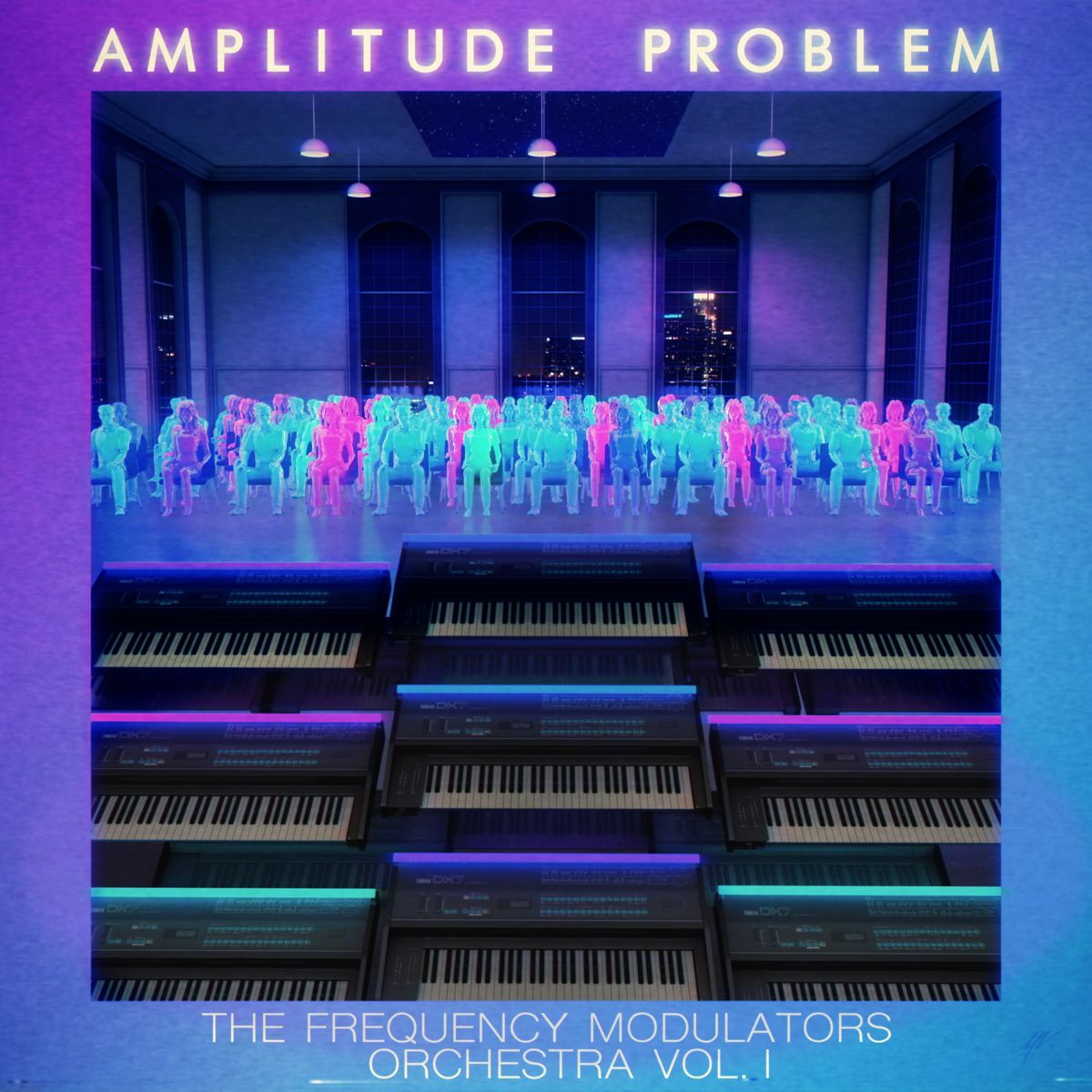
Ubiktune has officially announced the release of The Frequency Modulators Orchestra, Vol. 1, a conceptual studio album by Juan Irming, better known by his stage name Amplitude Problem. Marking his debut with the record label, Irming has delivered a project that serves as a technical and stylistic exploration of the intersection between Frequency Modulation (FM) synthesis and the improvisational language of jazz. The album, released on April 25, 2017, represents a significant departure from standard synthwave tropes, opting instead for a "retro-electro-jazz" aesthetic that utilizes the specific, often polarizing textures of 1980s digital synthesis to evoke the warmth of human-led funk and groove.
The Frequency Modulators Orchestra, Vol. 1 is characterized by its strict adherence to specific hardware and software limitations. The project was composed and produced using exclusively FM synthesizers and lo-fi percussion samples, a creative constraint designed to test whether the "cold" and clinical nature of digital frequency modulation could be molded into the "warm," expressive territory usually reserved for acoustic jazz ensembles. This synthesis of styles results in a soundscape that the artist describes as a "zany chiptune adventure" and a "synth-funk soundtrack" for the mind.
Technical Foundation and the Philosophy of FM Synthesis
The choice of FM synthesis as the primary tool for this record is a deliberate nod to the digital revolution of the 1980s. Frequency Modulation synthesis, popularized by the Yamaha DX7 and various sound chips in 16-bit computers and arcade machines, is historically noted for its metallic, bell-like, and complex harmonic textures. Unlike subtractive synthesis, which is often described as "creamy" or "organic," FM synthesis is frequently labeled as "cold" or "rigid" due to its mathematical precision and digital origins.

Irming’s objective with this album was to subvert these perceptions. By applying these digital timbres to a jazz-funk framework—complete with syncopated rhythms, complex chord voicings, and extensive keyboard improvisation—he sought to humanize the machine. The production process involved a ten-month creative cycle where the artist focused on the "nuanced, improvised language" of jazz. This approach required a deep understanding of the percussive potential of FM synthesis, which lends itself well to the "slap" of a synth bass or the sharp "tink" of a digital vibraphone, both staples of the jazz-fusion era.
The Evolution of Amplitude Problem: From Demoscene to Los Angeles
Juan Irming’s career trajectory provides critical context for the sophisticated sound of The Frequency Modulators Orchestra. A native of the European demoscene of the late 1980s, Irming began his musical journey as a composer for SYNC, a prominent Atari ST demo crew. The demoscene—a computer art subculture focused on pushing the technical limits of hardware—was a formative environment where Irming learned to maximize the potential of limited sound chips, such as the Yamaha YM2149.
Following his move to Los Angeles and his education at the Musicians Institute in the early 1990s, Irming transitioned into professional production and sound design. His portfolio spans a diverse array of genres, including hip-hop, cyberpunk, and video game soundtracks. Notable collaborations include his work with the renowned geek-rapper YTCracker on the album Introducing Neals, as well as contributions to soundtracks for games such as Power Drive 2000 and VirtuaVerse.
Irming’s experience in the synthwave community—having shared billing with prominent artists like Mitch Murder, Lazerhawk, and GUNSHIP—allowed him to observe the genre’s evolution. While many artists in the scene focused on the cinematic, analog-heavy sounds of 1980s horror and action films, Irming found himself increasingly drawn to the quirky, percussive potential of chip-based FM sounds, leading directly to the conception of the Frequency Modulators Orchestra.
Chronology of Production and Creative Impetus
The conceptual seeds for the album were planted in 2014 during the production of YTCracker’s Introducing Neals. While composing the instrumental for the track "Feel Like Leisure Suit Larry," Irming rediscovered the specific appeal of "chip-like FM-synth" sounds. He noted that these sounds possessed a unique energy that complemented zany, percussive grooves.
In 2015, the track "Funky Mustache" from his album Blue Bots Dots further solidified this direction. By the end of that year, the concept for an all-FM jazz-funk album had fully formed. The production timeline was as follows:
- Late 2015: Conceptualization of The Frequency Modulators Orchestra as a "band" of digital instruments.
- Early to Mid-2016: A ten-month intensive writing and recording period focused on improvisation and FM sound design.
- Late 2016: Finalizing the tracklist and moving into the mastering phase.
- Early 2017: Collaboration with visual artists to establish the album’s aesthetic identity.
- April 25, 2017: Official release on Ubiktune.
A key decision in the production was the emphasis on "live" improvisation. Irming performed the keyboard solos and lead lines manually rather than relying on heavy MIDI quantization, ensuring that the "human" element of jazz was preserved despite the digital nature of the instruments.
High-Fidelity Production and Visual Collaboration
To bridge the gap between "chiptune" and "high-fidelity jazz," Irming sought out world-class mastering. The album was mastered by Don Grossinger, a Grammy Award-winning engineer whose resume includes work with jazz icon Miles Davis, as well as legendary acts like The Rolling Stones and The Flaming Lips. Grossinger’s involvement provided the album with the sonic weight and clarity necessary to satisfy audiophiles and jazz enthusiasts who might otherwise dismiss digital synthesis.

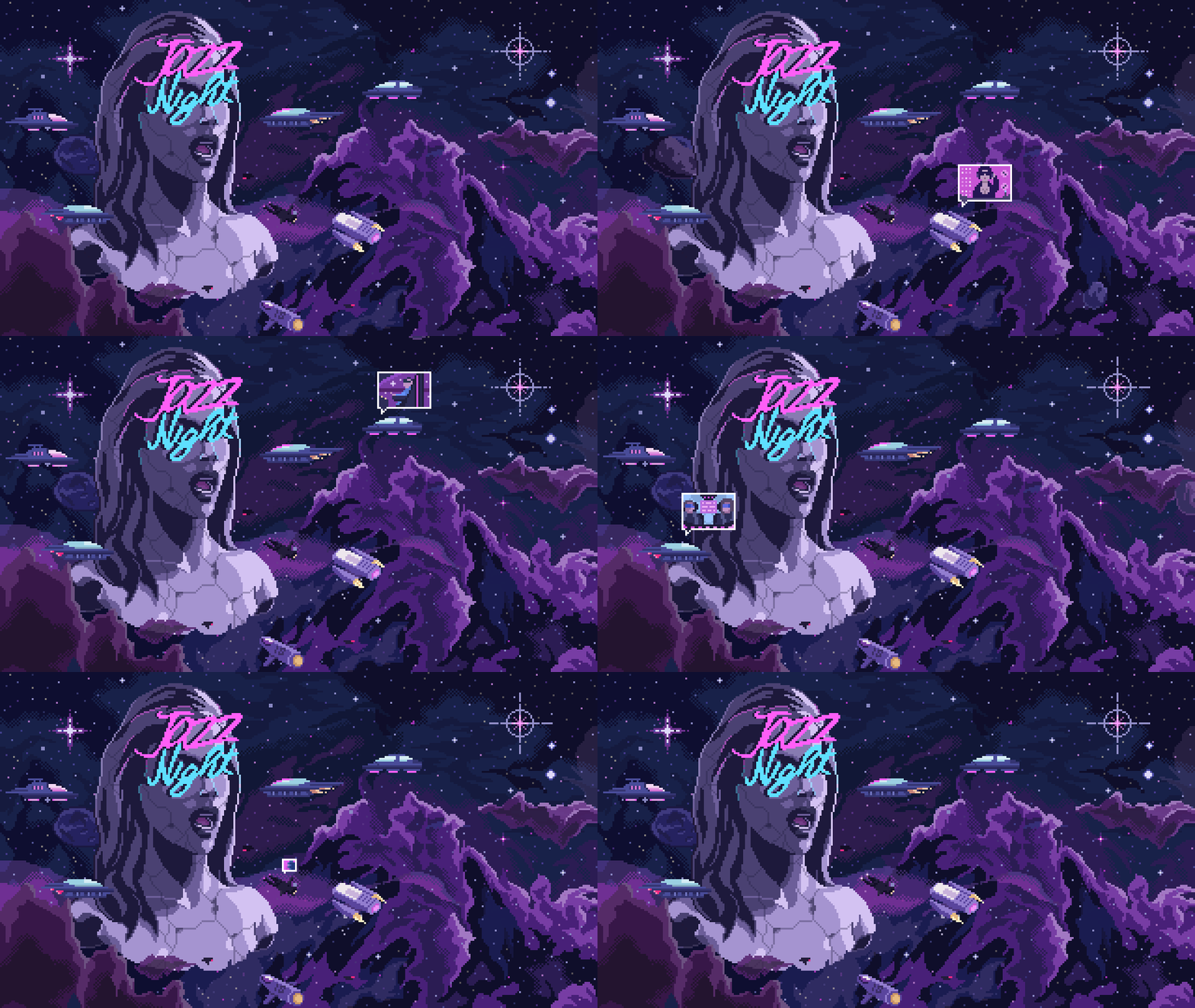
The visual presentation of the album was equally curated. The front cover artwork was created by Mythical Vigilante, while additional art and animations were provided by Valenberg, a pixel artist known for his work in the synthwave and cyberpunk genres. Valenberg’s "Jazz Night" animation serves as a visual counterpart to the music, utilizing a pixel-art style that mirrors the lo-fi, retro-digital themes of the audio.
Narrative Structure and Thematic Depth
The Frequency Modulators Orchestra, Vol. 1 is structured as a narrative journey, moving from personal introspection to broader cosmic observations. According to Irming, the first four tracks of the album constitute a "deep introspective," exploring internal mental states and personal history. The track "Ghosts in My Medicine Cabinet" is highlighted as a centerpiece of this exploration—a bold, uncompromising piece that demands the listener’s full attention through its complex arrangements.
The final three tracks shift the focus outward, offering what the artist describes as "heartfelt commentary on life and the universe." By personifying the FM synthesizers as members of an "orchestra," Irming created a collaborative atmosphere within a solo project. Each "modulator" was treated as a band member with the "privilege to improvise," a metaphorical approach that helped guide the songwriting process and ensured the album felt like a collective performance rather than a static sequence of programmed notes.
Industry Implications and Critical Context
The release of this album comes at a time when the "Retrowave" and "Synthwave" genres have begun to diversify. While the initial wave of the 2010s focused on 80s nostalgia through a lens of neon aesthetics and analog pads, Amplitude Problem’s work signals a move toward "Technical Retro-Futurism." This sub-movement prioritizes the specific technical limitations of 1980s and 90s hardware—such as FM chips and early samplers—as a legitimate medium for complex musical genres like jazz and fusion.
Industry analysts suggest that the involvement of a label like Ubiktune is pivotal for such a release. Ubiktune has long been a curator of music that blurs the lines between video game soundtracks, chiptune, and progressive fusion. By positioning The Frequency Modulators Orchestra within this ecosystem, the album reaches an audience that values technical proficiency and hardware-specific sound design.
The broader implications of the project suggest a growing interest in "digital warmth." As modern production becomes increasingly software-based, artists like Irming are looking back to the first generation of digital tools to find "soul" in the machine. The success of this volume may pave the way for future installments, as indicated by the "Vol. 1" designation, suggesting that the Frequency Modulators Orchestra is an ongoing project dedicated to the evolution of the FM-jazz sound.
The Frequency Modulators Orchestra, Vol. 1 is currently available for purchase and streaming on all major digital platforms. The album stands as a testament to the versatility of digital synthesis and remains a key entry in the 2017 electronic music landscape, challenging the boundaries between the artificial and the improvisational.