Cecilia Chamidah Nur
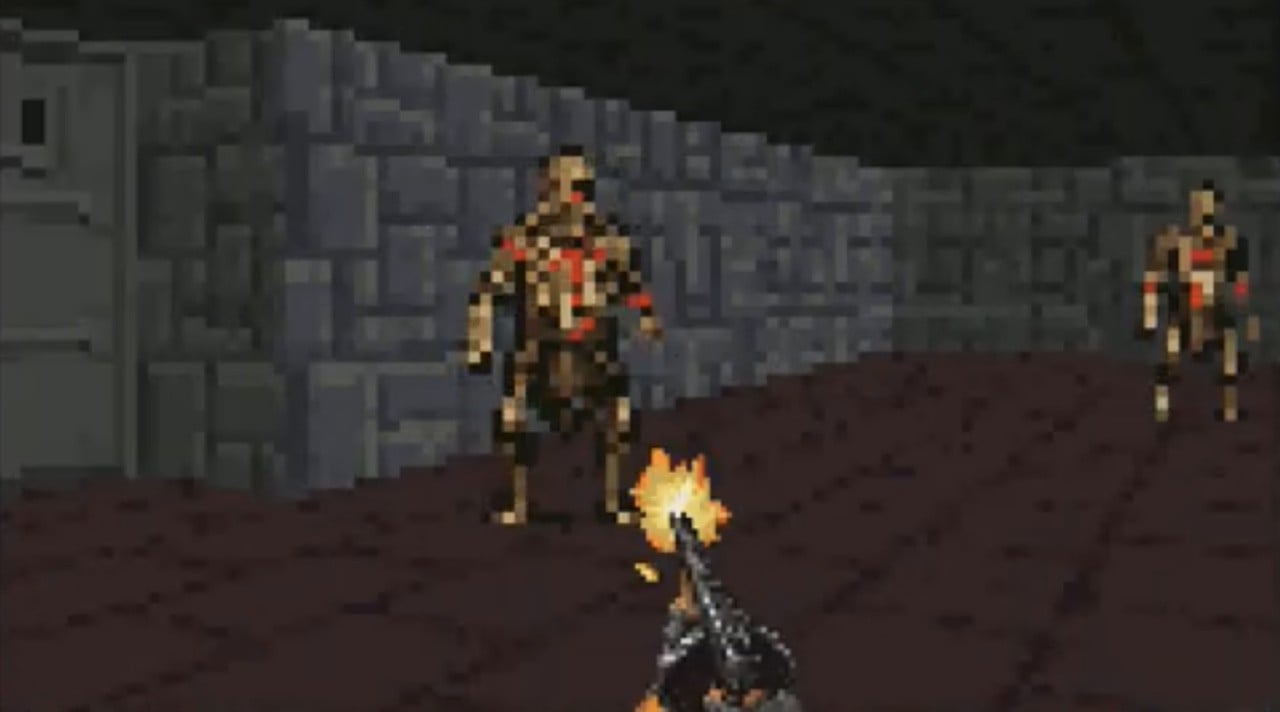
A new first-person shooter, Veins of Iron, is currently under development for the Super Nintendo Entertainment System (SNES), drawing inspiration from classic titles such as Wolfenstein 3D and early survival horror games like Resident Evil. This ambitious project, spearheaded by homebrew developer ModeVII, aims to deliver "a brand-new horror experience" on the 16-bit console, designed to run on authentic SNES hardware through a custom cartridge equipped with a modern co-processor. The game, which was first unveiled to the public just over two weeks ago via a YouTube gameplay video, has quickly garnered attention within the retro gaming community, particularly for its technical aspirations and atmospheric presentation. However, early observations regarding the use of AI-generated imagery for its proposed packaging have prompted a swift clarification from the developer.
The Resurgence of Retro Gaming and Homebrew Innovation
The phenomenon of developing new titles for vintage gaming consoles like the SNES is a testament to the enduring appeal of retro gaming and the ingenuity of independent developers. For decades after their commercial lifespans, consoles like the SNES have fostered vibrant homebrew communities, where enthusiasts and programmers push the boundaries of aging hardware, often surpassing the technical achievements of original developers. This niche but dedicated market thrives on nostalgia, technical challenge, and the desire for novel experiences on beloved platforms. Veins of Iron enters this landscape, aiming to deliver a genre-defining experience that was largely absent from the SNES’s original library.
The SNES, released in 1990, was a powerhouse of its era, known for its vibrant 2D graphics, Mode 7 capabilities for pseudo-3D effects, and rich sound. However, full 3D first-person shooters, as popularized by titles like id Software’s Wolfenstein 3D (1992) and Doom (1993) on PC, were largely beyond its native capabilities. While games like Doom did see highly compromised ports to the SNES (utilizing the Super FX chip), and Wolfenstein 3D received a censored port, these were often viewed as technical compromises rather than optimal experiences. The concept of building a Wolfenstein 3D-style FPS from the ground up for the SNES in the modern era, leveraging advanced cartridge technology, represents a significant technical undertaking and a bold creative statement.
Project Genesis and Early Unveiling
Veins of Iron burst onto the scene in late May, when ModeVII released its inaugural gameplay video on YouTube, showcasing early footage of the game in action. The video immediately captivated retro gaming enthusiasts, demonstrating a dark, atmospheric aesthetic, reminiscent of early PC horror titles, but rendered with a distinct pixel art style adapted for the SNES’s graphical palette. The project quickly gained traction, positioning itself as a "brand-new horror experience" distinct from typical SNES fare.
The game is the inaugural commercial venture for ModeVII, a homebrew developer whose main creative force is Jan Olausson. Olausson’s vision for Veins of Iron blends the fast-paced, maze-like exploration of 90s shooters with the oppressive atmosphere and psychological tension found in early survival horror masterpieces such as Capcom’s Resident Evil series, which first debuted on the PlayStation in 1996. The promise of an entirely new, fully featured game for a 30-year-old console, particularly one that pushes technical boundaries, has generated considerable buzz. To fund the significant costs associated with physical cartridge production, collector rewards, further game polishing, and content expansion, ModeVII is preparing to launch a Kickstarter campaign in the near future.
Addressing the AI Art Controversy
During the pre-launch phase of its Kickstarter campaign, Veins of Iron faced an early challenge concerning the provenance of some of its promotional materials. Observers visiting the Kickstarter preview page noted that the proposed SNES packaging artwork exhibited characteristics commonly associated with AI-generated imagery. This observation sparked discussions within the community, given the ongoing debate and ethical considerations surrounding the use of artificial intelligence in creative industries, particularly concerning issues of artistic integrity, copyright, and the potential impact on human artists.
In response to inquiries from Time Extension, Jan Olausson directly addressed these concerns via email. Olausson clarified, "About the box art, the current art is AI-generated placeholder art that will be replaced as soon as I have funding. The plan is to use the Kickstarter funding to expand art, music, and physical cartridge production." This statement unequivocally confirms the temporary nature of the AI-generated imagery and outlines a clear intent to commission original, human-created artwork once sufficient funding is secured.
Furthermore, Olausson was keen to emphasize that the core artistic elements of the game itself are entirely the product of human craftsmanship. He assured that "all of the current in-game pixel art had been ‘painstakingly’ made by him." This distinction is crucial, as it separates the temporary placeholder marketing material from the actual artistic foundation of the game, which remains rooted in traditional pixel art development. The developer’s transparency in addressing the issue head-on is a significant step in managing community expectations and maintaining trust, especially in a landscape where the ethical use of AI is a frequently debated topic. The broader implications of AI in game development continue to be a subject of intense discussion, with developers often navigating the fine line between utilizing AI as a tool for efficiency and maintaining artistic authenticity and ethical production practices. Olausson’s commitment to replacing the placeholder art with commissioned works reflects a sensitivity to these concerns.
Technical Ambition and Hardware Promise
A cornerstone of Veins of Iron‘s appeal and technical ambition lies in its commitment to running on "real hardware," powered by a "custom cartridge with a modern co-processor." This approach is critical for pushing the SNES beyond its original limitations, particularly for rendering complex 3D environments at acceptable frame rates. Historically, the SNES relied on enhancement chips (like the Super FX, SA-1, DSP-1, etc.) embedded within game cartridges to handle tasks beyond the console’s native CPU, such as advanced scaling, rotation, or basic 3D polygon rendering. A "modern co-processor" implies a significantly more powerful custom chip, likely leveraging contemporary microcontrollers or FPGAs, designed to offload substantial computational tasks from the SNES’s aging Ricoh 5A22 CPU. This would enable the game to achieve a level of graphical fidelity and performance previously unattainable for a 3D FPS on the console.
Olausson reiterated that "the technical side of the project is very much real and actively progressing," indicating that substantial progress has been made beyond what is currently listed on the project’s website or Kickstarter preview. Acknowledging that the initially released gameplay footage was recorded using a custom emulator, the developer has made a firm commitment to demonstrate the game running on actual SNES hardware in the near future. "I should also have the first assembled prototype cartridge ready soon. It will allow me to show the game running on actual SNES hardware, which I hope will increase the trust in the project," Olausson stated. This physical demonstration is a critical milestone, as it serves as tangible proof of the project’s technical viability and reassures backers and enthusiasts of the game’s authenticity and potential. The ability to witness a modern, complex FPS running fluidly on original SNES hardware, driven by a custom co-processor, would be a compelling validation of ModeVII’s ambitious engineering.
A Deep Dive into the Narrative and Gameplay
The official description of Veins of Iron‘s story paints a grim and evocative picture, setting a dark, industrial horror tone:
"In Veins of Iron, Europe is choking on soot, steel, and superstition until a string of ritual killings ignites something far worse than panic. You play Viktor Eisenhart, a WWI survivor, marked by wounds that never truly healed, pulled from a blood-soaked home into a city where apostate monks stalk the streets, once servants of God, now devotees of something older, hungrier, and unnamed. The dead refuse to stay buried. Tracking the trail leads you through plague-lit alleys, factories, manors, catacombs, and fortified ruins. Each location hides secrets, keys, and forbidden machinery that shouldn’t exist. The deeper you go, the clearer it becomes: this isn’t a simple murder spree, it’s an industrial rite meant to awaken a power sealed beneath the old world. Stop the cult, survive the horrors, and decide what you’re willing to become when iron and faith collide."

This narrative promises a rich, atmospheric experience that transcends simple run-and-gun action. The protagonist, Viktor Eisenhart, a WWI survivor, suggests a character already scarred by conflict, making him a compelling figure to navigate a world spiraling into supernatural terror. The setting of a soot-choked, superstitious Europe evokes a post-industrial gothic horror, blending historical elements with occult dread. The "apostate monks" and "industrial rite" hint at a deeply ingrained, ancient evil manifesting through modern means, a common trope in cosmic horror that Resident Evil also tapped into with its bio-organic weapons and ancient viruses.
Gameplay is likely to involve navigating labyrinthine environments – "plague-lit alleys, factories, manors, catacombs, and fortified ruins" – typical of Wolfenstein 3D‘s level design, but infused with the puzzle-solving, item management, and psychological tension characteristic of Resident Evil. The mention of "secrets, keys, and forbidden machinery that shouldn’t exist" further solidifies the blend of exploration, puzzle elements, and a narrative driven by uncovering hidden truths. The game’s premise of an "industrial rite meant to awaken a power sealed beneath the old world" suggests a climactic confrontation with an ancient, possibly Lovecraftian, entity, pushing Viktor to confront not only external horrors but also his own humanity "when iron and faith collide." This rich thematic content, coupled with the technical challenge of an SNES FPS, positions Veins of Iron as a potentially unique and memorable entry in both the retro and horror gaming canons.
Funding the Vision: The Kickstarter Campaign
The upcoming Kickstarter campaign is crucial for the realization of Veins of Iron. Beyond the initial development, crowdfunding will directly address several key areas: "producing physical cartridges and collector rewards," "polishing" the game, and creating "more content." For a project targeting a retro console, physical production is a significant cost, encompassing manufacturing custom circuit boards, plastic shells, boxes, manuals, and other collector’s items. The success of the Kickstarter will not only enable the distribution of the game in a tangible format but also provide the necessary resources for ModeVII to refine gameplay mechanics, enhance visual and audio assets, and potentially expand the game world, enemy roster, or narrative scope.
Crowdfunding has become a vital lifeline for many independent developers, particularly those working on niche projects like Veins of Iron. It allows direct engagement with the target audience, fostering a community around the game before its release. However, it also places a significant burden on developers to manage expectations, provide regular updates, and ultimately deliver on promises. The transparency shown by Olausson regarding the AI art and the commitment to a hardware demonstration are critical steps in building the confidence necessary for a successful campaign.
Broader Impact and Future Outlook
Veins of Iron stands as a compelling example of the continued innovation within the retro gaming space. It demonstrates that older platforms are not merely relics of the past but vibrant canvases for new creative endeavors. The project’s technical ambition, its intriguing horror narrative, and the developer’s proactive engagement with community concerns position it as a noteworthy title to watch. Should the Kickstarter campaign prove successful and the game deliver on its promises, it could set a new benchmark for what is achievable on the Super Nintendo Entertainment System, further cementing the console’s legacy as a platform for diverse and enduring gaming experiences.
The game also contributes to the ongoing discourse about artificial intelligence in creative fields. Olausson’s decision to use AI art as a temporary placeholder while committing to commission human artists for the final product reflects a pragmatic yet ethically sensitive approach that many in the industry are grappling with. This nuanced stance highlights the potential for AI as a tool for rapid prototyping, provided there’s a clear intent to transition to human-created assets for the final, commercially released product.
As the launch of the Kickstarter campaign approaches, and with the promise of a live demonstration on SNES hardware, Veins of Iron is poised to become a significant talking point in both the retro gaming and independent development communities. Its blend of classic shooter mechanics, deep horror narrative, and cutting-edge retro engineering could carve a unique niche, proving that the spirit of innovation in gaming knows no chronological bounds. The project invites players to rediscover the thrill of a new game on an old friend, while pushing the boundaries of what was once thought possible.