Chalid Lutfie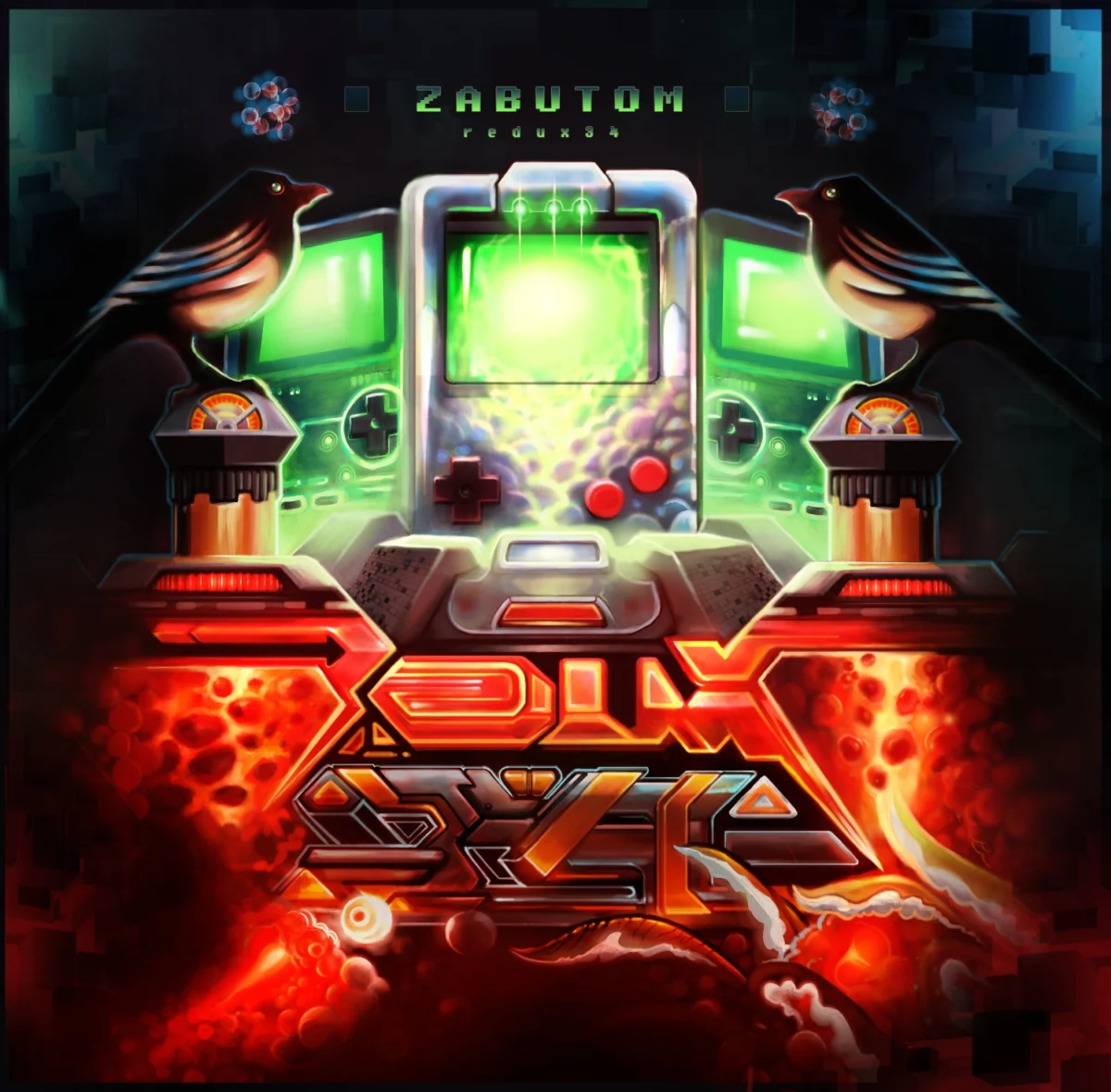
The contemporary electronic music scene witnessed a pivotal moment on September 18, 2015, with the official release of Redux34, the latest full-length studio album from the acclaimed Swedish composer Niklas Sjösvärd, known professionally as zabutom. Released under the Ubiktune label, the album represents a sophisticated departure from traditional chiptune boundaries, merging the precision of 8-bit synthesis with the expansive textures of progressive rock, IDM (Intelligent Dance Music), and folk-inspired melodies. This release serves as a culmination of several years of technical experimentation and academic study, positioning Sjösvärd as a central figure in the "chip-fusion" movement that seeks to elevate hardware-limited music into the realm of high-concept electronic composition.
The Artistic Trajectory of Niklas Sjösvärd
Born in 1985, Niklas Sjösvärd has been a foundational contributor to the global demoscene and chiptune communities since the early 2000s. His early career was defined by a mastery of hardware-specific limitations, particularly the sound chips of the Nintendo Entertainment System (NES) and the Game Boy. Before the release of Redux34, Sjösvärd gained international recognition through his participation in various demoscene events—subcultural gatherings where programmers and musicians compete to produce the most impressive audiovisual displays using legacy hardware.
In 2011, Sjösvärd released his debut album, Zeta Force, also on the Ubiktune label. Zeta Force was largely characterized by its "shmup-esque" aesthetic, drawing heavy inspiration from the high-energy, fast-paced soundtracks of 1980s and 1990s shoot-’em-up arcade games. The album quickly achieved classic status within the chiptune genre for its melodic clarity and technical proficiency. However, Sjösvärd’s ambitions extended beyond the nostalgic revival of arcade sounds. In 2014, he earned a bachelor’s degree in composition and electronic music from the Academy of Music and Drama at the University of Gothenburg, Sweden. This academic foundation provided him with the theoretical tools to integrate complex harmonic structures and avant-garde production techniques into his digital compositions, a shift that is profoundly evident in the arrangement of Redux34.
Technical Origins and the Redux34 Chronology
The development of Redux34 was a protracted and often arduous process that spanned nearly seven years. While the album was finalized in 2015, the foundational sketches for several tracks date back to 2008. During this period, Sjösvärd was a frequent performer at international chiptune festivals, utilizing the Game Boy and the Little Sound DJ (LSDJ) software as his primary instruments. The title of the album, Redux34, is rooted in a catastrophic technical failure that occurred during these early years of development.
While composing the title track in 2008, Sjösvärd experienced a total data loss when his LSDJ cartridge crashed, erasing the entirety of the song’s groundwork. The necessity of recreating the track from memory led to the designation "Redux," signifying a return to and reconstruction of lost ideas. The "34" suffix refers to the track’s primary time signature of 3/4, a departure from the standard 4/4 meter dominant in electronic dance music. This theme of "lost and found" permeated the production of the entire album, as Sjösvärd repeatedly faced technical hurdles, including lost patterns and corrupted mixes, requiring him to rebuild complex soundscapes from scratch.
This iterative process allowed Sjösvärd to refine his vision. By the time he returned to these tracks following the releases of Zeta Force and New Beginnings (2014), his production skills had matured. He sought to maintain the raw, visceral energy of the original 8-bit intentions while applying the sophisticated mixing and mastering techniques he had honed during his university studies.
Genre Synthesis and Production Analysis
Redux34 is characterized by its "retro-futuristic" atmosphere, a stylistic choice that utilizes the sounds of the past to envision the aesthetics of the future. The album’s production is notable for its seamless integration of disparate sonic elements. Listeners are presented with a dense layering of 8-bit Nintendo "bleeps" alongside high-fidelity electric guitars, analog synthesizers, and "spaced out" delay textures. This hybrid approach moves the music away from the "lo-fi" label often associated with chiptune and into the territory of high-definition electronic art.

Stylistically, the album explores several distinct territories:
- Progressive Rock Influence: The album features complex arrangements and shifting meters that echo the ambitious compositions of 1970s prog-rock. The inclusion of live instrumentation, particularly electric guitars, provides a grounded, organic counterpoint to the synthetic digital pulse.
- IDM and Experimental Electronics: Sjösvärd incorporates the intricate glitch patterns and irregular rhythms associated with IDM. This is likely a result of his excursions into experimental projects such as Friktion and Scratches and Petals, as well as his work with the Buchla Boys, a live modular techno ensemble.
- Folk and Acoustic Textures: Drawing from his experience as a guitarist and vocalist in folk-inspired acts like Fowlcloud and collaborations with Léonore Boulanger, Sjösvärd weaves melodic sensibilities into the album that feel grounded in traditional storytelling, despite their electronic delivery.
The result is a narrative arc that has been described by critics and the artist alike as melancholic yet hopeful. The album does not merely serve as a collection of songs but as a cohesive exploration of strange, new auditory worlds.
Visual Identity and Collaborative Efforts
The immersive experience of Redux34 is bolstered by its visual presentation. The album artwork was created by Anders Karlsson, a concept artist and painter based in Norrköping, Sweden. Karlsson’s work often explores surreal and atmospheric themes, making him a fitting collaborator for Sjösvärd’s retro-futuristic soundscapes. The artwork serves to reinforce the album’s narrative of exploration and mystery, providing a visual anchor for the listener’s journey through the complex audio environments.
The collaboration highlights the multidisciplinary nature of Sjösvärd’s work. His career has not been limited to music alone; he has been involved in art installations and multimedia projects, indicating a broader interest in how sound interacts with space and visual stimuli. This holistic approach to art is a hallmark of the contemporary Swedish electronic scene, which often emphasizes the intersection of technology and human emotion.

Market Positioning and Distribution
Ubiktune, the label responsible for the release, has positioned Redux34 as a flagship project that demonstrates the potential of the chiptune genre to evolve into more sophisticated musical forms. As of September 18, 2015, the album is available across all major digital distribution platforms and streaming services. In a move that honors the physical media traditions of the independent music community, Redux34 has also been made available as a physical Compact Disc (CD).
The decision to release a physical edition reflects a persistent demand within the electronic music community for tangible artifacts, particularly for albums with high-quality production and intricate artwork. For collectors, the physical CD serves as a permanent record of Sjösvärd’s technical achievement, contrasting with the often ephemeral nature of digital-only releases.
Broader Impact and Implications for the Genre
The release of Redux34 carries significant implications for the future of chiptune and independent electronic music. By successfully bridging the gap between hardware-limited "chip" sounds and professional-grade studio production, Sjösvärd has provided a roadmap for other artists in the scene. The album challenges the notion that chiptune is merely a nostalgic novelty or a subset of video game music. Instead, it asserts that the 8-bit sound palette is a legitimate and versatile tool for contemporary composition, capable of expressing a wide range of emotions and complex musical ideas.
Furthermore, Sjösvärd’s transition from a self-taught demoscene musician to a university-trained composer highlights a growing trend of academic validation for electronic and digital music genres. As more artists with formal training enter the "chip" scene, the boundaries between "high art" and "subculture" continue to blur.

In the context of the 2015 music landscape, Redux34 stands as a testament to the endurance of creative vision over technical adversity. The seven-year journey from a crashed Game Boy cartridge to a polished, multi-genre masterpiece underscores the dedication required to push a niche genre into new, unexplored territories. As zabutom, Niklas Sjösvärd has not only returned to his roots but has also redefined what those roots can produce, ensuring that Redux34 will be analyzed and appreciated by electronic music enthusiasts for years to come.