Chalid Lutfie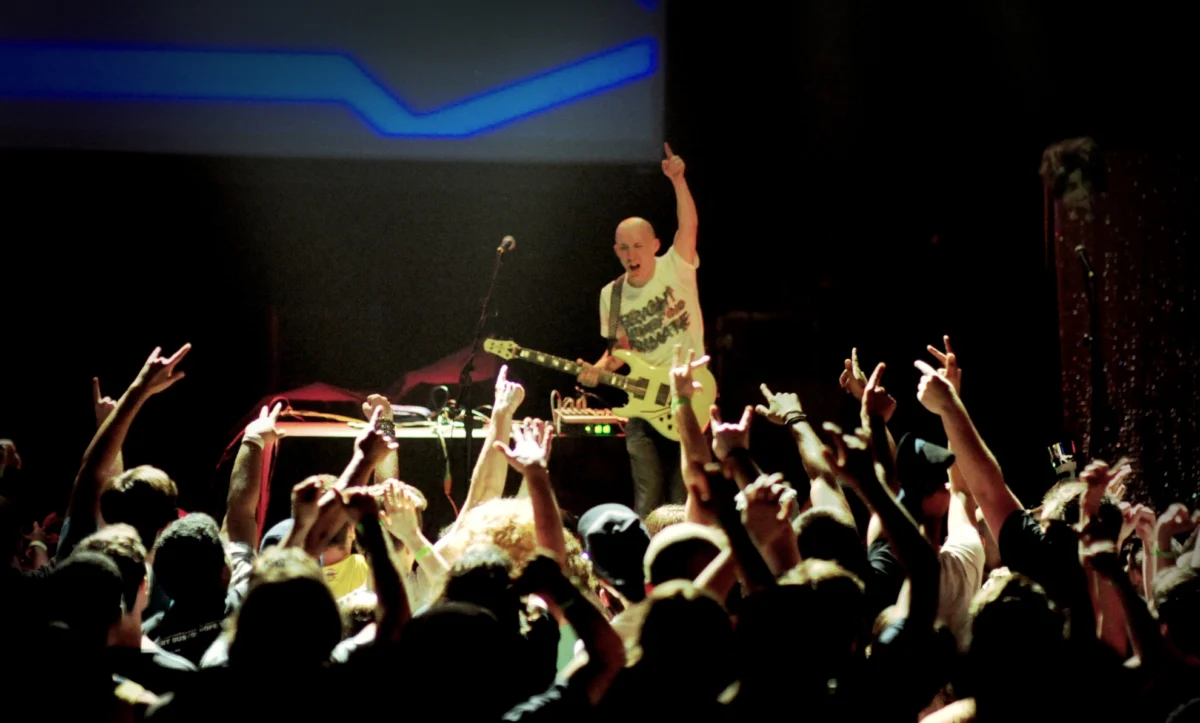
The progressive electronic music landscape is set for a significant milestone as Dan Burke, professionally known as Danimal Cannon, announces the upcoming release of his latest full-length studio album, Lunaria. This project marks the artist’s first solo endeavor in three years, following the 2013 collaborative effort Parallel Processing with the artist Zef. Scheduled for a global release on March 11, Lunaria represents a definitive shift in the artist’s discography, formally integrating high-gain electric guitar with the hardware-limited sounds of the Nintendo Game Boy. While this hybrid performance style has been a staple of Burke’s live appearances, Lunaria serves as the first comprehensive studio recording to master the technical and harmonic challenges of merging 8-bit synthesis with modern progressive metal.
The announcement comes through the Ubiktune record label, a prominent outlet for experimental electronic and chiptune music. According to the label, the album is the culmination of years of technical refinement, moving beyond the experimental stages of Burke’s earlier work to present a cohesive "band-like" sound. The album features eight core tracks, including the lead single "Behemoth," and is bolstered by high-profile collaborations within the independent music community.
A Chronological Evolution of the Danimal Cannon Sound
The journey toward Lunaria began over five years ago with the release of Burke’s 2011 album, Roots. At that time, the chiptune scene was largely divided between purists who utilized original hardware and "chip-rock" artists who used software emulators to mimic 8-bit sounds. Burke, a classically trained musician and proficient guitarist, sought to find a middle ground by using the Little Sound DJ (LSDJ) tracker on original Game Boy hardware while overlaying live instrumentation.
However, the integration was not immediate. In the production of Roots, Burke experimented with adding guitar to select tracks but found the process of "marrying" the two distinct timbres surprisingly difficult. The frequency range of a Game Boy’s pulse waves often competes with the mid-range saturation of a distorted electric guitar, leading to a cluttered mix. Consequently, much of Roots was released as a purely electronic project, with the guitar-heavy versions reserved primarily for live performances at festivals like MAGFest and Blip Festival.
The three-year gap following Parallel Processing was characterized by intensive technical study and composition. Burke reportedly spent four years mastering the songwriting techniques necessary to treat the Game Boy not just as a novelty backing track, but as a primary rhythmic and melodic engine that could interact dynamically with progressive metal riffs. The result, as showcased in Lunaria, is a sophisticated interplay where the two mediums function as a unified ensemble rather than separate layers.
Technical Composition and Diverse Musical Influences
Lunaria is categorized as a progressive metal album, yet its DNA is composed of a broad spectrum of musical disciplines. Burke has cited an eclectic array of influences that shaped the writing process, ranging from contemporary video game soundtracks to 18th-century classical music.
A primary influence on the album’s melodic structure is the Shovel Knight original soundtrack, composed by Jake Kaufman. Kaufman’s work is widely regarded for pushing the limits of the NES sound chip, and Burke’s approach in Lunaria reflects a similar commitment to complex, polyphonic arrangements within the constraints of 8-bit hardware. Beyond the digital realm, the album draws from the industrial textures of Nine Inch Nails and KMFDM, the rhythmic experimentation of indie rock duo Buke and Gase, and the harmonic densities of choral composer Eric Whitacre and Wolfgang Amadeus Mozart.
By blending these disparate elements, Lunaria moves away from the "nostalgia bait" often associated with chiptune music. Instead, it utilizes the Game Boy’s limitations as a creative framework for high-level music theory application. The technical complexity of the arrangements requires the artist to program intricate percussion and bass lines into the LSDJ software, which must then be synchronized with precisely tracked guitar performances that mirror the speed and precision of the digital output.
Conceptual Framework: The Giant Impact Hypothesis
Beyond its technical merits, Lunaria is a conceptual work rooted in the artist’s interest in planetary science. The album’s title and overarching theme are derived from the "giant impact hypothesis," the prevailing scientific theory regarding the formation of the Moon. This theory suggests that approximately 4.5 billion years ago, a Mars-sized protoplanet named Theia collided with the early Earth, ejecting debris that eventually coalesced to form the Moon.
Burke has personified this celestial event through the character of Lunaria, representing the impactor. The title itself serves a dual purpose, functioning as a reference to the moon and a linguistic play on the word "aria"—a self-contained piece for a single voice, typically found in opera. This personification allowed Burke to explore themes of collision, creation, and celestial evolution, providing a narrative backbone to the instrumental-heavy tracklist.
Collaborative Contributions and Artistic Direction
To bring the "celestial" aspect of the concept to life, Burke enlisted the talents of Emily Yancey, a professionally trained opera singer. Yancey’s vocal contributions appear on two tracks, providing a timbre that Burke described as essential for portraying a "moon goddess" character. The contrast between Yancey’s soaring, organic vocals and the jagged, digital square waves of the Game Boy creates a unique sonic texture that further distinguishes the album from traditional metal or electronic releases.
The album also features a significant contribution from Samuel Ascher-Weiss, known in the music community as Shnabubula. A virtuoso pianist and long-time collaborator, Ascher-Weiss provided a piano rendition of the track "Axis." Burke specifically chose "Axis" for this collaboration because it was the most technically demanding piece on the record. The inclusion of a solo piano version serves as a stylistic counterpoint, demonstrating how the complex compositions of Lunaria translate from the "quirky digital" environment of a handheld console to the "traditional" elegance of an acoustic instrument.
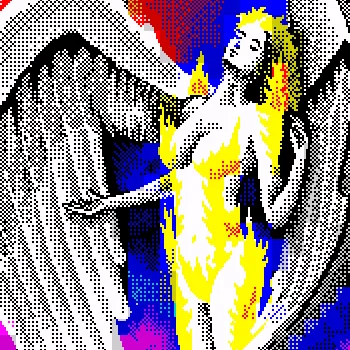
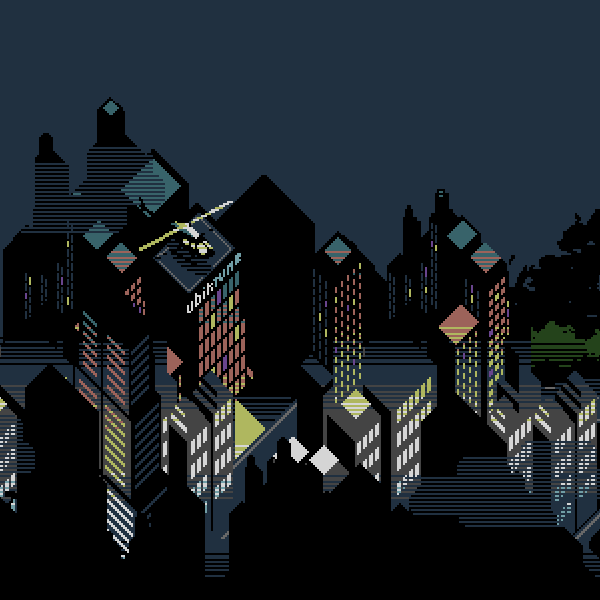
Visual representation for the project was handled by artist Minerva Mopsy. The artwork is designed to complement the lunar themes and is featured prominently in the physical CD release, which includes a poster.
Market Context and Industry Implications
The release of Lunaria comes at a time when the "chip-metal" subgenre is seeing a resurgence in the independent music market. Platforms like Bandcamp have allowed artists like Danimal Cannon to reach a global audience without the need for traditional label backing, though the support of Ubiktune provides a specialized infrastructure for this niche market.
Industry analysts note that the integration of hardware-based electronic music with live instrumentation is a growing trend among independent producers seeking to differentiate themselves in a saturated digital market. By utilizing original Nintendo hardware rather than software plugins, Burke taps into a specific aesthetic of "authentic" 8-bit sound that remains highly valued by audiophiles and retro-gaming enthusiasts.
The decision to release the album on physical CD alongside digital formats reflects a persistent demand within the independent music community for tangible collectibles. As streaming services continue to dominate the industry, "boutique" physical releases with high-quality artwork and posters have become essential revenue streams for independent artists.
Official Response and Availability
In statements regarding the upcoming launch, Burke expressed that Lunaria is the project his audience has been anticipating for half a decade. The refinement of the "Game Boy plus Guitar" formula is presented as a solved puzzle, moving from a live experiment to a polished studio reality. The artist indicated that the wait was necessary to ensure the two instruments functioned as a "new band lineup that really gels," rather than a forced gimmick.
Lunaria is currently available for pre-order via the Danimal Cannon Bandcamp page. The official release on March 11 will see the album become available across major digital platforms. Fans who opt for the physical CD will receive the full artwork suite designed by Minerva Mopsy, further cementing the album’s status as a comprehensive artistic package.
Broader Impact on the Chiptune Genre
The release of Lunaria is expected to influence the trajectory of the chiptune genre by demonstrating the viability of high-production-value "hybrid" music. For years, chiptune was often relegated to the realm of novelty or background music for indie games. Artists like Danimal Cannon are instrumental in repositioning the medium as a legitimate tool for complex musical expression, on par with traditional synthesizers or orchestral instruments.
As the lines between digital and organic music continue to blur, Lunaria stands as a case study in how technical constraints can foster innovation. By looking back at 1980s hardware and forward to modern progressive metal structures, Danimal Cannon has carved out a unique space in the 2016 musical landscape, promising a listening experience that is both mathematically precise and emotionally resonant.