Chalid Lutfie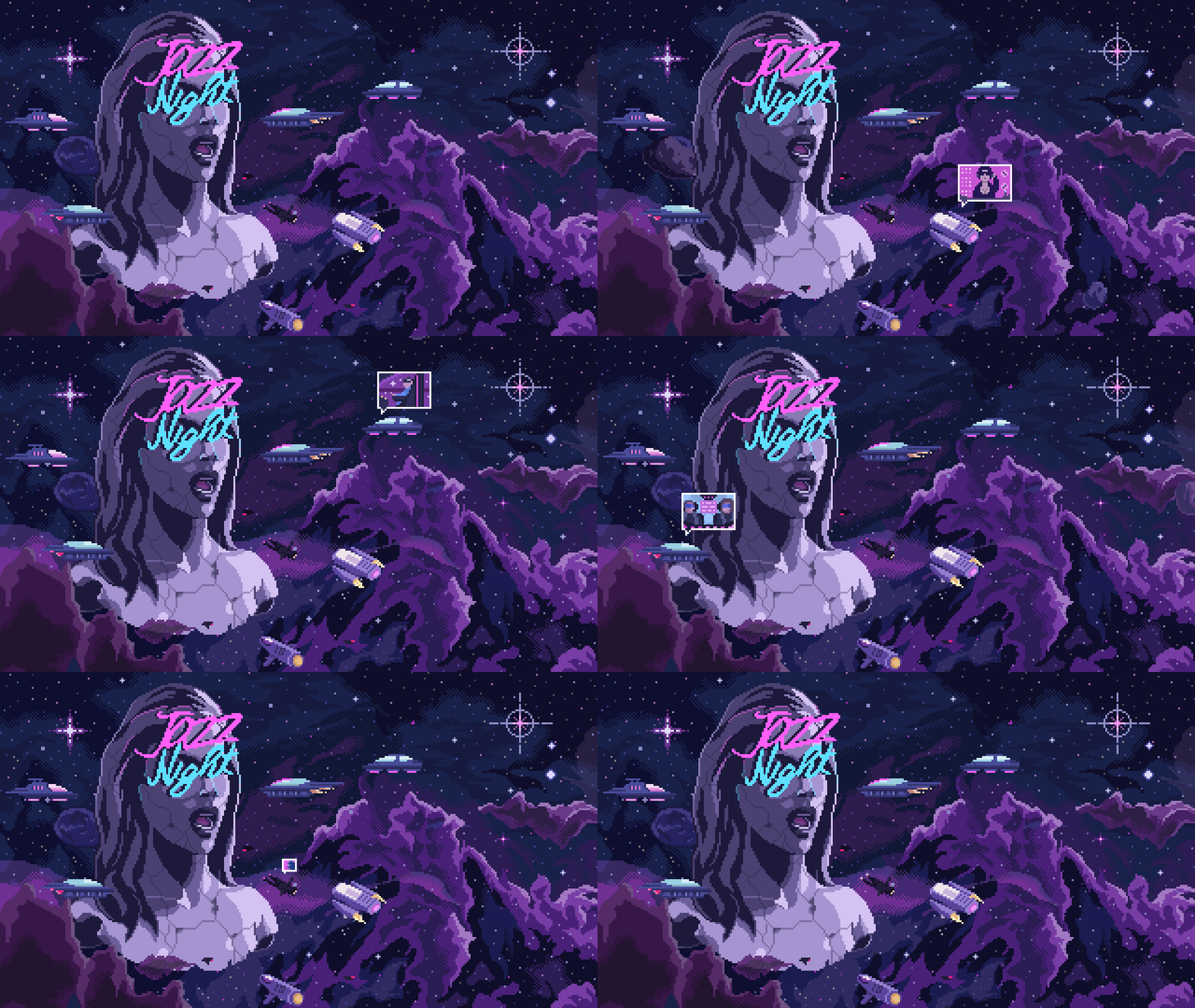
The intersection of digital precision and improvisational fluidity has found a new benchmark with the release of The Frequency Modulators Orchestra, Vol. 1, the latest project from Los Angeles-based producer and composer Juan Irming, performing under the moniker Amplitude Problem. Released on April 25, 2017, through the Ubiktune label, the album represents a rigorous exploration of Frequency Modulation (FM) synthesis, a method of sound generation historically characterized by its complex, "cold," and metallic textures. Irming’s work seeks to subvert these technical associations by applying the rigid architecture of FM synthesis to the "warm," human-centric grooves of jazz-funk and retro-electro.
The album is positioned as a conceptual breakthrough for the artist, marking his debut on Ubiktune, a label renowned for bridging the gap between chiptune aesthetics and contemporary electronic production. By utilizing FM synthesizers and lo-fi drum samples exclusively, Irming has constructed a sonic environment that pays homage to the 1980s digital revolution while maintaining the improvisational soul of a live jazz ensemble. The project arrives at a time of renewed interest in vintage synthesis, yet distinguishes itself by eschewing the more common subtractive analog revival in favor of the challenging, operator-based logic of FM.
The Technical Foundations of Frequency Modulation Synthesis
To understand the significance of The Frequency Modulators Orchestra, Vol. 1, one must consider the historical context of the technology employed. Frequency Modulation synthesis was pioneered by John Chowning at Stanford University in the late 1960s and early 1970s, eventually becoming a commercial juggernaut via the Yamaha DX7 in 1983. Unlike analog synthesis, which filters harmonically rich waveforms, FM synthesis uses one sine wave (a modulator) to alter the frequency of another (a carrier). This process creates complex sidebands that result in the bright, percussive, and often "glassy" sounds that defined the 1980s pop and video game landscapes.

Irming’s decision to limit his toolkit to FM synthesis is a deliberate creative constraint. In the professional audio industry, FM is often criticized for being difficult to program and inherently "thin" compared to the "fat" oscillators of Moog or Sequential Circuits hardware. However, Irming leverages this perceived limitation to simulate the percussive nature of jazz instrumentation. The "zany" and "pixelated" quality of the album stems from this digital heritage, where the precise control over harmonic overtones allows for the creation of unique, bell-like timbres and sharp, rhythmic attacks that are essential for the funk-inflected grooves found throughout the record.
A Chronological Overview of Juan Irming’s Career
Juan Irming’s trajectory into the professional music sphere is rooted in the European demoscene of the late 1980s, a subculture dedicated to pushing the technical limits of early personal computers. As a member of the Atari ST crew known as SYNC, Irming established himself as a composer capable of extracting sophisticated melodies from the limited sound chips of the era. His early success included winning several demo music contests, providing a foundation in hardware-based composition that informs his current methodology.
In the early 1990s, Irming moved to Los Angeles to attend the Musicians Institute, a transition that allowed him to fuse his technical background with formal musical theory. Over the subsequent decades, he expanded his portfolio to include work as a sound designer, keyboardist, and producer. His credits span ten LPs and numerous collaborations within the synthwave and hip-hop communities. Notably, he produced the instrumental for "Feel Like Leisure Suit Larry" on the 2014 cyberpunk album Introducing Neals by the prominent geek-rapper YTCracker. This specific collaboration served as the catalyst for The Frequency Modulators Orchestra, as it reignited Irming’s interest in the "percussive, jazzy, and zany grooves" achievable through chip-like FM sounds.
The Creative Evolution and Production of the Album
The development of The Frequency Modulators Orchestra, Vol. 1 was a ten-month endeavor that began in late 2015. Following the release of his 2015 album Blue Bots Dots, which featured the track "Funky Mustache," Irming committed to a full-length project dedicated entirely to the FM soundscape. The production process was characterized by a heavy emphasis on live keyboard performance and improvisation, a departure from the grid-based programming often associated with electronic and chiptune music.
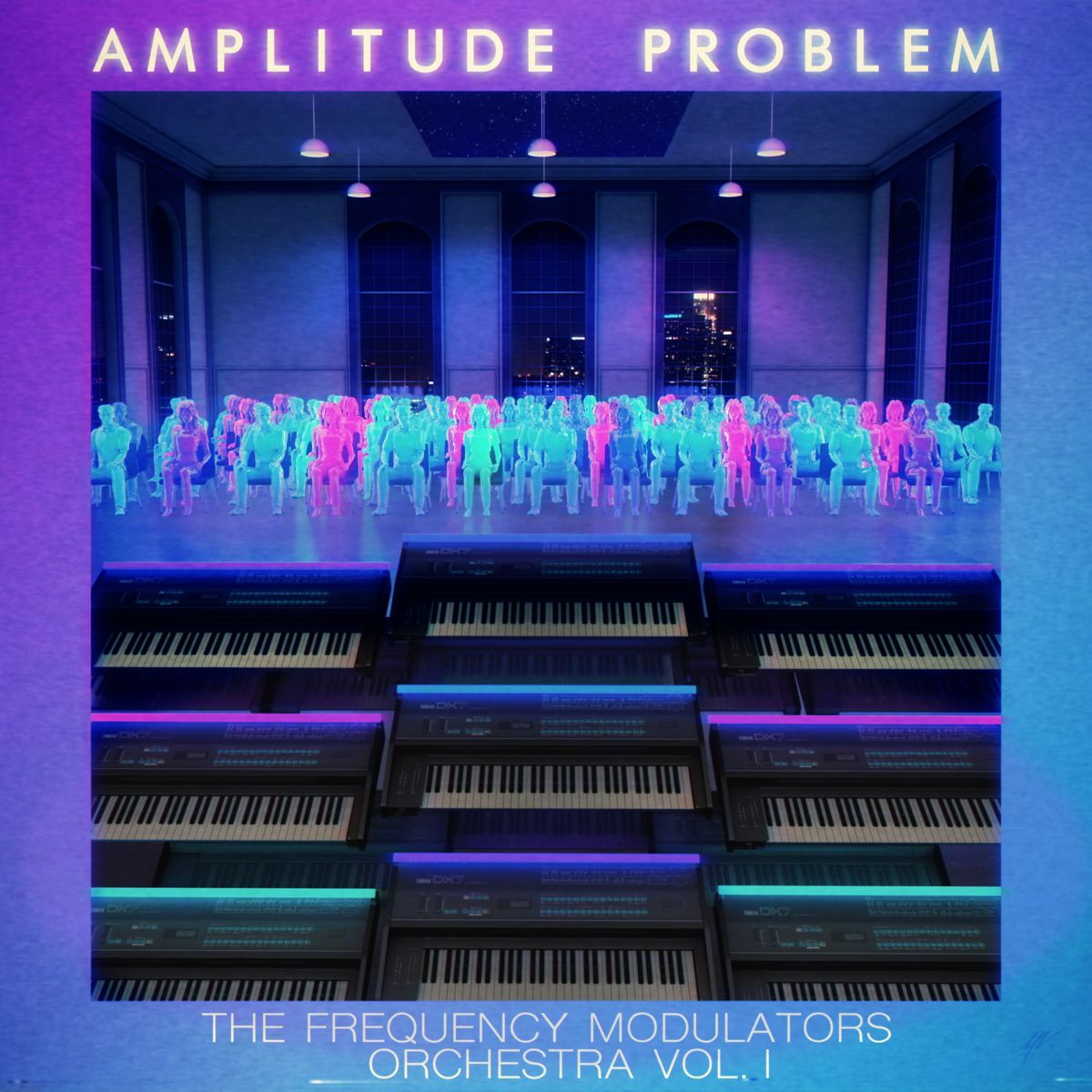
Irming’s approach to the "orchestra" concept involved treating individual FM synth patches as distinct band members. This personification allowed for a dynamic interplay within the tracks, where each "instrument" was granted the latitude to solo and respond to the rhythmic foundation. According to Irming, this method was essential to maintaining the "human" element of the music. The result is a collection of songs that function as a narrative, with the first four tracks serving as a deep introspection and the final three offering a broader commentary on existential themes.
To ensure the album met the high fidelity standards of the jazz genre, Irming enlisted the services of Don Grossinger for mastering. Grossinger, a Grammy Award-winning engineer whose credits include work with jazz legend Miles Davis, provided the necessary sonic polish to balance the digital grit of the FM synthesis with the professional clarity required for modern streaming and broadcast.
Visual Identity and Collaborative Artistry
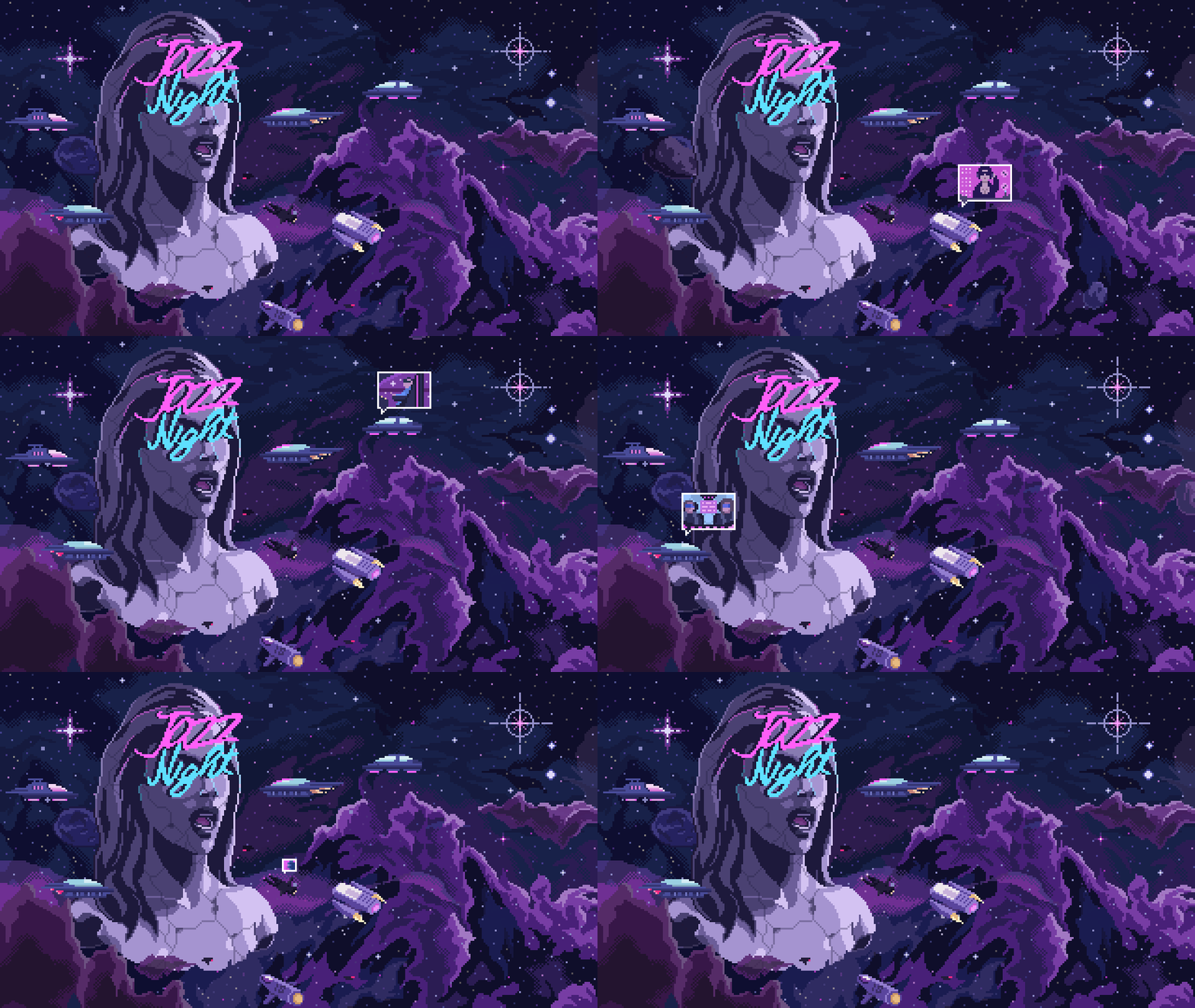
The aesthetic presentation of the album is as integral to the experience as the audio. The front cover art was created by Mythical Vigilante, whose style aligns with the retro-futuristic themes of the record. Additionally, the project features art and animations by Valenberg, a well-known figure in the pixel art community. Valenberg previously collaborated with Irming on the "Jazz Night" animation, which serves as a visual counterpart to the album’s "pixelated rabbit hole" concept.
This collaboration highlights a growing trend in the independent music industry where visual media and audio are developed in tandem to create a cohesive brand identity. For Amplitude Problem, the use of pixel art is not merely an exercise in nostalgia but a deliberate choice to ground the music in the digital history from which it draws its technical inspiration.

Broader Implications and Genre Analysis
The release of The Frequency Modulators Orchestra, Vol. 1 carries significant implications for the evolution of the synthwave and chiptune genres. While much of the "retrowave" movement of the mid-2010s relied on the tropes of 1980s film scores and analog synth-pop, Irming’s work suggests a pivot toward more complex, jazz-adjacent structures. By proving that "cold" digital synthesis can support "warm" improvisational music, the album challenges the binary distinctions often made between organic and synthetic sound.
Furthermore, the project underscores the viability of the "concept album" in the digital age. At a time when the industry is increasingly focused on singles and playlist-oriented releases, Irming’s commitment to a ten-month narrative arc demonstrates a dedication to long-form musical storytelling. The tracks, such as "Ghosts in My Medicine Cabinet," are delivered with a conviction that Irming describes as essential to the genre; the music does not apologize for its complexity but rather demands the listener’s full engagement.
Official Responses and Industry Context
The reception of the album within the electronic music community has been marked by an appreciation for its technical audacity. Industry analysts note that Ubiktune’s decision to host the release reinforces the label’s position as a curator of high-concept electronic music. By aligning with artists who have deep roots in both the demoscene and formal music education, Ubiktune continues to elevate the "chip" sound from a niche hobbyist pursuit to a legitimate form of contemporary art.
In his own reflections on the project, Irming has stated that the album was an opportunity to be "as ‘me’ as I wanted," with no constraints on the musical direction. This sentiment is echoed by his peers in the industry, including artists like Mitch Murder and Lazerhawk, who have also explored the boundaries of 1980s-inspired electronics. However, Irming’s specific focus on the "Frequency Modulators" as a virtual band sets this work apart as a unique contribution to the 2017 musical landscape.
Conclusion and Future Outlook
The Frequency Modulators Orchestra, Vol. 1 is currently available across all major digital storefronts and streaming platforms. As a testament to the enduring versatility of FM synthesis, the album serves as both a historical retrospective and a forward-looking exploration of digital jazz. With Juan Irming’s background in the Atari ST demoscene and his professional experience in the Los Angeles production scene, Amplitude Problem has successfully bridged two disparate worlds, creating a soundtrack that is as intellectually stimulating as it is rhythmically engaging.
The project not only cements Irming’s reputation as a versatile composer but also sets a high bar for future volumes in the Frequency Modulators series. As listeners continue to rediscover the nuances of digital synthesis, works like this will likely remain vital reference points for the intersection of technology and human creativity. For the modern audiophile and jazz enthusiast alike, the album offers a compelling argument: that even the most mathematical of synthesis methods can, in the right hands, produce music of profound warmth and character.