Cecilia Chamidah Nur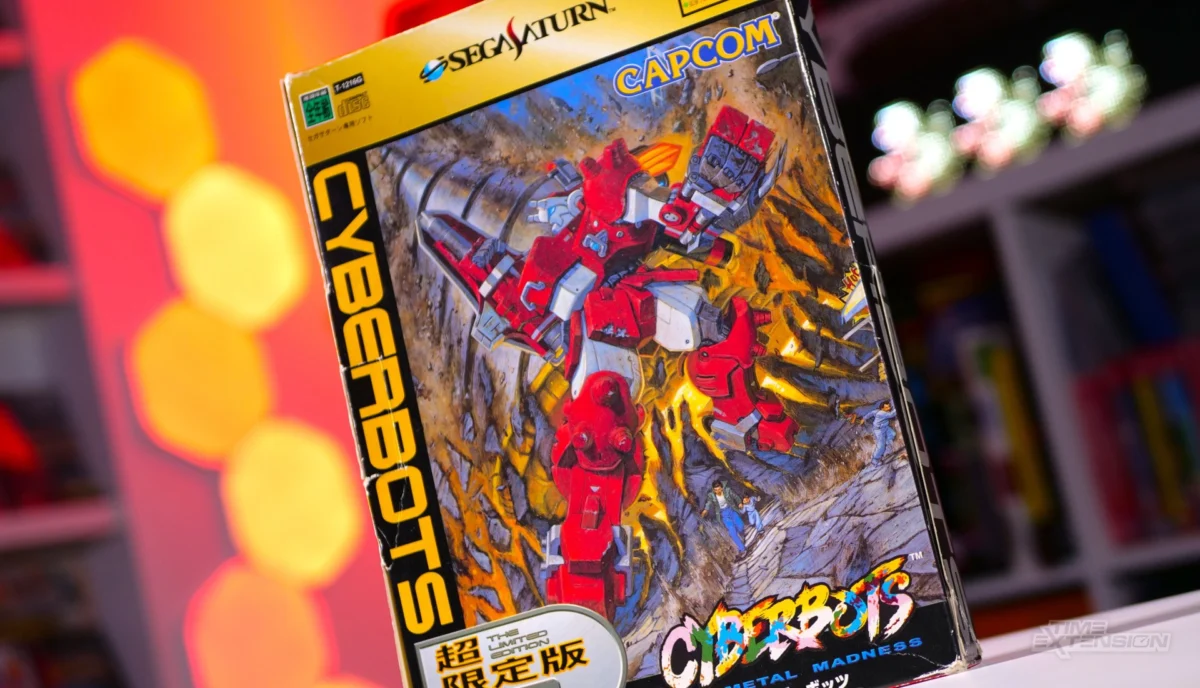
Capcom’s 1995 arcade title, Cyberbots: Fullmetal Madness, stands as a distinctive entry in the pantheon of 2D fighting games, distinguished by its focus on colossal mech-on-mech combat. While initially overshadowed by the company’s more prominent Street Fighter franchise, Cyberbots has steadily cultivated a dedicated following, particularly in the wake of its recent re-releases on modern platforms. The game’s intricate mechanics, vibrant pixel art, and unique setting established it as more than a mere derivative, solidifying its status as a cult classic whose legacy continues to unfold decades after its initial debut.
Genesis in the Arcades: The CPS-2 Era
Cyberbots: Fullmetal Madness first launched in arcades in April 1995, powered by Capcom’s formidable CPS-2 arcade system board. This proprietary hardware, renowned for its vibrant 2D graphics and robust sound capabilities, was the engine behind many of Capcom’s most celebrated fighting games of the era, including Street Fighter Alpha, Marvel Super Heroes, and Darkstalkers. In an increasingly crowded market dominated by a flurry of fighting game releases, Cyberbots sought to carve out its niche by eschewing human martial artists in favor of massive, piloted robotic war machines known as Variant Armors (V.A.s).
The game introduced a roster of diverse V.A.s, each with distinct designs, weapon systems, and pilot personalities. From the agile, sword-wielding Blodia to the heavy-hitting, projectile-focused G.O.D., the V.A.s offered varied combat styles that appealed to different player preferences. Unlike traditional human-centric fighters, Cyberbots emphasized the sheer scale and destructive power of its combatants. Environmental interaction, while not extensive, often featured destructible elements, reinforcing the feeling of powerful machines clashing. This mechanical focus also extended to the game’s narrative, set in the year 20XX where a global conflict necessitates the deployment of V.A.s. The plot, while secondary to gameplay in arcade settings, provided a rich backdrop for the characters and their motivations, linking them to the preceding belt-scrolling brawler, Armored Warriors.
The Elusive Home Console Ports: Japan-Exclusive Releases
Despite its arcade origins and the general trend of Capcom porting its successful arcade fighters to home consoles, Cyberbots: Fullmetal Madness experienced a notably restricted release in the consumer market. Its console iterations were exclusively launched in Japan, contributing significantly to its relative obscurity in Western territories for many years.
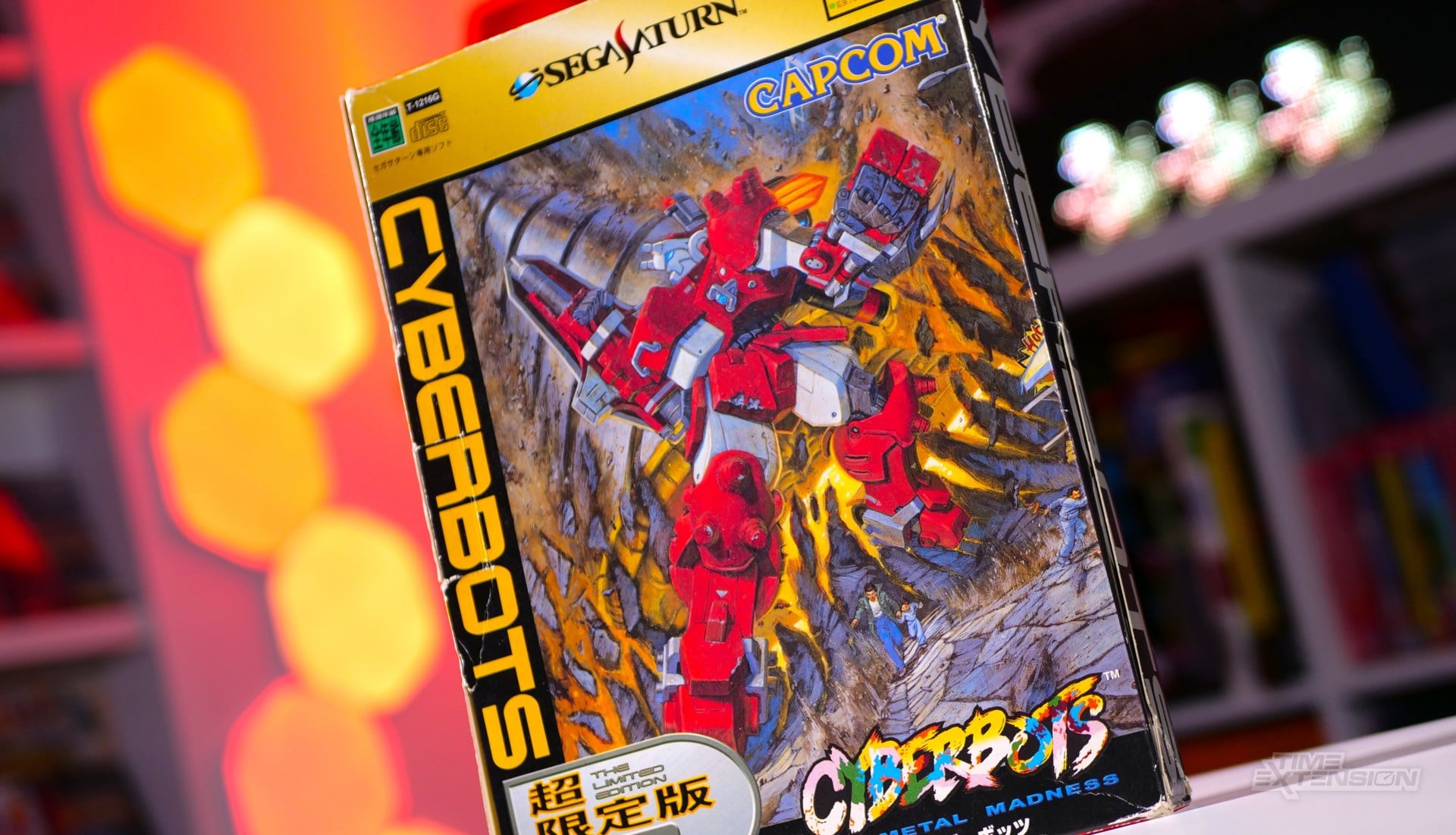
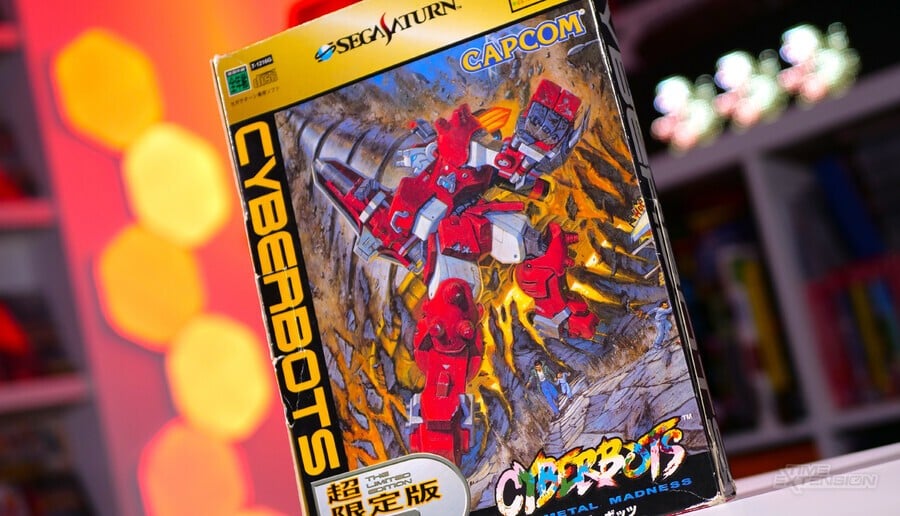
The first console port arrived on the Sega Saturn in January 1997. The Saturn version was particularly noteworthy for its limited edition release, a collector’s item that has since become highly sought after. This premium package typically included a large-format cardboard box, a hardback artbook showcasing character designs and mech schematics, a meticulously crafted pop-up diorama depicting V.A.s in combat, and unique cover artwork that differed from the standard release. Such limited editions were a burgeoning trend in the Japanese gaming market of the 1990s, catering to dedicated fans and collectors who valued physical memorabilia as much as the game itself. The inclusion of these high-quality extras further cemented the Saturn version’s status as a definitive collectible.
Following the Saturn release, a PlayStation port of Cyberbots was launched in December 1997. While technically competent, replicating the arcade experience to a commendable degree, this version also remained exclusive to Japan. The decision to keep both console ports confined to the Japanese market can be attributed to several factors prevalent during that era. In the mid-to-late 1990s, the Western console market was rapidly evolving. The Sega Saturn, while popular in Japan, struggled significantly against the surging PlayStation in North America and Europe. Capcom, like many publishers, had to make strategic decisions regarding localization costs versus anticipated sales returns.
Localizing a fighting game involves not just translating text but often re-recording voice lines, adapting marketing materials, and navigating cultural nuances. For a niche title like Cyberbots, which diverged from the mainstream appeal of human-centric fighters, the perceived market demand in the West might not have justified the significant investment required for a full international release. Capcom’s international strategy at the time often prioritized established franchises like Street Fighter and newer, more universally appealing titles for broader distribution. Furthermore, the genre of mech-based fighting games, while having a dedicated following in Japan (fueled by popular anime franchises like Gundam and Macross), had a less proven track record of widespread commercial success in Western markets, making Cyberbots a riskier proposition for international localization. This exclusivity, while understandable from a business perspective, meant that generations of Western fighting game enthusiasts remained unaware of Cyberbots‘ existence, relegating it to the realm of import-only cult classics.
Gameplay Mechanics: Beyond "Street Fighter with Robots"
While a superficial comparison might label Cyberbots as "Street Fighter with robots" due to its 2D fighting game engine and traditional input commands, such a characterization does a disservice to the game’s distinct mechanical identity. Cyberbots innovated within the 2D fighting genre by introducing elements that profoundly altered the flow and strategy of combat, setting it apart from its human-sized contemporaries.
The core gameplay revolves around managing the large hitboxes and unique movement capabilities of the V.A.s. Unlike the fluid, agile movements of characters like Ryu or Ken, V.A.s possess a sense of weight and momentum. Players must account for the larger frame of their chosen mech, utilizing strategic positioning and movement options. A crucial mechanic is the "V.A. Dash" system, which allows V.A.s to quickly traverse the screen, both horizontally and vertically, adding a layer of aerial combat and evasive maneuvers. This system, combined with the V.A.’s size, often leads to dynamic, screen-filling clashes that feel distinct from other 2D fighters.
One of Cyberbots‘ most notable innovations is its limb-specific damage system. Each V.A. has designated health bars for its head, arms, and legs, in addition to an overall health bar. While damaging specific limbs doesn’t immediately disable them, it can affect the V.A.’s performance. For instance, repeated hits to an arm might weaken its attacks or even cause it to momentarily malfunction, creating strategic opportunities for opponents to exploit. This adds a layer of tactical depth, encouraging players to target specific weaknesses rather than simply aiming for the overall health bar.
Furthermore, Cyberbots features an "Assist" system, which was remarkably forward-thinking for its time. Each V.A. is piloted by a human character, and during gameplay, the pilot can be called upon to provide a unique assist attack or buff, often appearing briefly on screen to execute their action before retreating. This mechanic predates and parallels similar tag-team or assist systems that would become staples in later fighting games like the Marvel vs. Capcom series. The pilot’s assist can be crucial for extending combos, breaking an opponent’s guard, or providing defensive coverage, adding another layer of complexity to the game’s strategic options.
The game also incorporates a "Weapon Change" system, allowing some V.A.s to switch between different weapon sets mid-match, further diversifying their attack patterns and adaptability. This, combined with a robust "Overheat" mechanic for certain powerful attacks or dashes (requiring a cool-down period), demands careful resource management from players. The unique combination of these mechanics created a fighting game experience that was slower and more methodical than Street Fighter, emphasizing positioning, strategic limb targeting, and intelligent use of special abilities over pure combo execution. While it never achieved the widespread competitive recognition of Capcom’s flagship titles, Cyberbots was lauded by Japanese critics at the time for its innovative approach and distinct visual flair, securing its reputation as a unique and challenging entry in the genre.
A Connected Universe: Predecessors and Spiritual Successors
Cyberbots: Fullmetal Madness is not an isolated title within Capcom’s extensive portfolio; rather, it is part of a loosely connected universe of mech-centric games that began with an earlier arcade release and later expanded into 3D. This lineage underscores Capcom’s enduring interest in the giant robot genre and provides a richer context for Cyberbots‘ design and lore.

The direct precursor to Cyberbots is Armored Warriors / Powered Gear: Strategic Variant Armor Equipment, a belt-scrolling brawler released in arcades in 1994, also running on the CPS-2 hardware. Armored Warriors introduced many of the core V.A. designs and the overarching narrative framework that Cyberbots would later adopt. In Armored Warriors, players piloted V.A.s through various stages, battling enemy mechs and bosses. The game was highly innovative for the brawler genre, allowing players to pick up and attach enemy V.A. parts and weapons to their own mech in real-time, effectively customizing their loadout during gameplay. This modularity was a revolutionary concept for the time, offering unprecedented strategic depth and replayability in a beat ’em up. The shared aesthetic, character designs (such as Jin Saotome, who pilots the Blodia V.A. in both games), and technological concepts firmly establish Armored Warriors as the foundational piece of this mech universe. Its inclusion in modern compilations like the Capcom Beat ‘Em Up Bundle and Capcom Arcade Stadium has allowed a new generation to appreciate its groundbreaking design.
The spiritual successor to Cyberbots emerged in 1998 with Tech Romancer / Chōkō Senki Kikaiō. This title represented Capcom’s venture into 3D mech fighting, initially released in arcades on the Sega Naomi hardware. Tech Romancer expanded the universe by introducing a new roster of V.A.s and pilots, maintaining the core concept of giant robot combat but translating it into a fully three-dimensional environment. The game embraced a more overtly anime-inspired aesthetic, featuring dramatic camera angles, flashy special moves, and highly stylized character designs that paid homage to classic Japanese super robot anime. It featured a compelling Story Mode with branching paths and multiple endings, further deepening the lore. Tech Romancer was later ported to the Sega Dreamcast in 2000, where it garnered critical acclaim for its faithful adaptation of the arcade experience and its robust content. While distinct in its 3D presentation, Tech Romancer carried forward the spirit of Cyberbots by offering diverse mech designs, unique pilot personalities, and a focus on the grand spectacle of giant robot battles, solidifying Capcom’s position in the mech combat genre across different dimensions.
Re-emerging from the Shadows: Modern Accessibility
For decades, Cyberbots: Fullmetal Madness remained largely inaccessible to Western audiences, confined to the niche world of arcade emulation and expensive import hardware. This changed significantly in the 2020s, thanks to Capcom’s initiative to preserve and re-release many of its classic arcade titles through digital compilations. These modern ports have been instrumental in elevating Cyberbots from an obscure cult classic to a more widely appreciated fighting game.
The first major re-release came with Capcom Arcade Stadium, launched in February 2021. This digital platform, available across multiple modern consoles (Nintendo Switch, PlayStation 4, Xbox One, PC), allows players to purchase and play a curated selection of Capcom’s arcade hits. Cyberbots was included as one of the individual titles, offering a faithful emulation of the original arcade version. This marked the first official Western release of the game, making it legally and easily accessible to a broad audience for the first time. The Capcom Arcade Stadium package includes modern quality-of-life features such as save states, rewind functions, and customizable display options, enhancing the play experience for both nostalgic fans and newcomers.
Further expanding its reach, Cyberbots was prominently featured in the Capcom Fighting Collection, released in June 2022. This comprehensive anthology brought together ten classic Capcom fighting games, including several that had never received a Western console release, such as Red Earth and Warzard. The Capcom Fighting Collection positioned Cyberbots alongside other celebrated and lesser-known fighters, allowing it to be discovered by a wider fighting game community. The collection offered robust online multiplayer capabilities with rollback netcode, a critical feature for competitive fighting game play, enabling players to engage in smooth, low-latency matches against opponents worldwide. This inclusion not only facilitated online competitive play but also introduced Cyberbots to a new generation of fighting game enthusiasts who might not have otherwise encountered it. The collection also included a comprehensive museum mode, featuring concept art, design documents, and music, providing invaluable historical context and insight into the game’s development.

These re-releases have had a profound impact on Cyberbots‘ legacy. They have democratized access to a previously niche title, allowing both seasoned veterans to revisit a beloved game and new players to experience its unique mechanics without the barriers of import costs or emulation complexities. The renewed exposure has sparked fresh discussions within the fighting game community, leading to a re-evaluation of its innovative features and its place within Capcom’s rich history. Its inclusion in these collections underscores Capcom’s recognition of the game’s enduring appeal and its commitment to preserving its extensive arcade heritage.
Legacy and Influence
Cyberbots: Fullmetal Madness holds a significant, albeit understated, position in the broader landscape of fighting games and the mech genre. While it never achieved the commercial juggernaut status of Street Fighter, its unique approach to 2D combat and its contributions to game mechanics have left an indelible mark.
Its most direct influence can be seen in the continued appeal of giant robot combat in video games. While titles like Sega’s Virtual On series (which emerged around the same time) explored 3D mech combat, Cyberbots demonstrated the viability and excitement of large-scale mechanical clashes within the confines of a 2D plane. The concept of pilots and their V.A.s existing in a shared universe, with intertwined stories, set a precedent that resonated with fans of Japanese anime and manga. Elements such as limb-specific damage, while not universally adopted, showcased a creative way to add depth and strategic targeting to traditional fighting game health systems. The "Assist" mechanic, in particular, proved to be a harbinger of future fighting game design, predating and influencing the tag-team and assist-focused gameplay popularized by later Capcom titles like the Marvel vs. Capcom series, where characters can call upon allies for support during combat.
Furthermore, Cyberbots contributed to the diversity of the 2D fighting game genre during its golden age. At a time when many developers were attempting to replicate the success of Street Fighter II, Cyberbots dared to be different, offering a distinct thematic and mechanical experience. It proved that the fighting game formula could be successfully applied to vastly different scales and concepts, expanding the creative boundaries of the genre. Its intricate pixel art and animation, typical of Capcom’s CPS-2 output, remain visually stunning and serve as a testament to the artistry of 2D game development in the 1990s.
Today, Cyberbots: Fullmetal Madness is celebrated not just as a historical curiosity, but as a genuinely engaging and innovative fighting game. Its journey from arcade obscurity and Japan-exclusive console releases to widespread digital availability highlights the importance of game preservation and the enduring appeal of thoughtfully designed titles. It stands as a testament to Capcom’s willingness to experiment and innovate, even outside its most famous franchises, and continues to captivate players with its heavy metal clashes and surprisingly deep mechanical systems. As new generations discover its unique charms, Cyberbots: Fullmetal Madness solidifies its legacy as a vital, albeit unconventional, piece of fighting game history.