Ganda Hendra Perkasa
In the annals of computer gaming, few titles possess the enigmatic allure and genre-bending complexity of Cookie’s Bustle, a game developed by the Japanese studio RODIK and released in 1999. Over the past few years, this peculiar title has cultivated a devoted cult following, largely due to its wildly unconventional narrative. The game’s premise, which defies simple summation, places players in the role of a five-year-old girl from New Jersey who finds herself embroiled in an international sports competition that rapidly devolves into civil war and intergalactic intrigue. This unique and artistically significant game has recently become the focal point of a significant legal dispute, highlighting the challenges faced by historical preservationists and the broader gaming community in the face of aggressive copyright enforcement.
The Video Game History Foundation (VGHF) recently acquired a rare physical copy of Cookie’s Bustle, donated by multimedia researcher Misty De Méo. This acquisition underscores the VGHF’s commitment to preserving culturally significant digital artifacts, particularly those that are out of print and at risk of being lost to time. Given that Cookie’s Bustle has been unavailable for nearly three decades, the VGHF has meticulously documented its packaging and physical materials, making them accessible in their digital archive for research purposes. While direct access to the game itself is restricted due to copyright law, the VGHF has provided a gameplay demonstration video, recorded by community member sebmal, to aid researchers in understanding this remarkable title.
However, the VGHF’s efforts to preserve and share information about Cookie’s Bustle have been significantly hampered by the actions of an individual identified as Brandon White, operating under the corporate guise of Graceware, SL. This entity has repeatedly issued Digital Millennium Copyright Act (DMCA) takedown notices to the VGHF, and to numerous other websites and creators, in an apparent campaign to control and restrict any discussion or dissemination of information related to Cookie’s Bustle. These actions have not only disrupted the VGHF’s preservation work but have also impacted a wider community of content creators, including those producing "Let’s Play" videos, fan art, and even casual mentions of the game.
The VGHF, in consultation with its legal counsel, Albert Sellars LLP, has undertaken a thorough investigation into Graceware’s claims of ownership over Cookie’s Bustle. Their findings suggest that Brandon White and Graceware, SL lack any legally substantiated proof of ownership for the game. This has led to a significant development: Ukie, the Association for UK Interactive Entertainment, has suspended DMCA takedown services for Cookie’s Bustle on behalf of Graceware, SL. This decision represents a crucial victory for the gaming community, potentially signaling an end to what appears to be a prolonged campaign of intellectual property squatting.
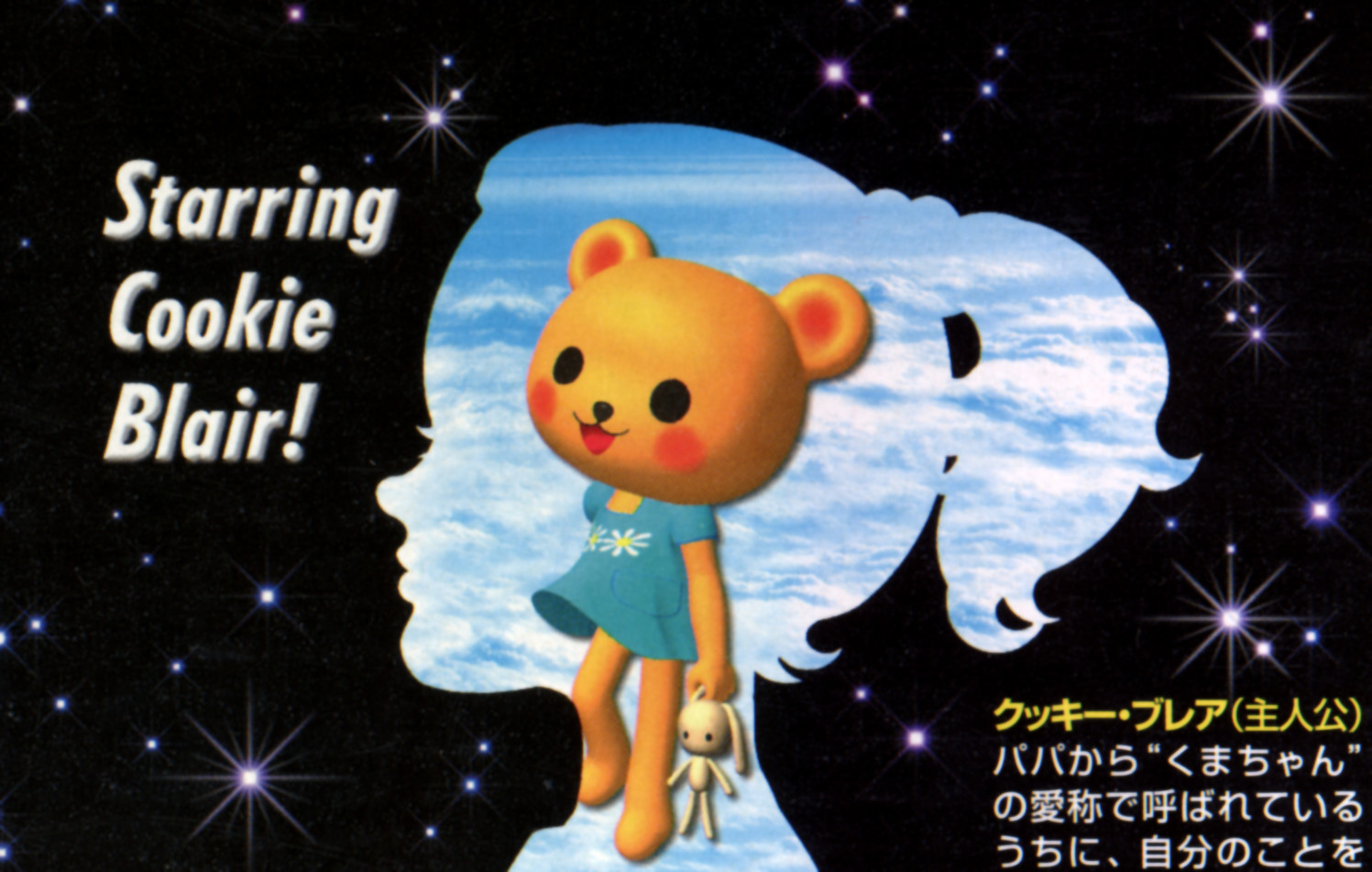
The Enigmatic Origins of Cookie’s Bustle
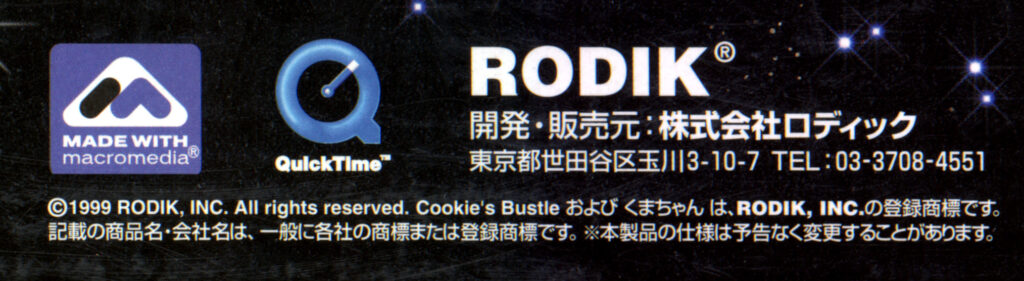
Cookie’s Bustle was originally published in 1999 by RODIK, Inc., a Japanese developer primarily known for its fortune-telling software rooted in traditional Japanese divination. To the VGHF’s knowledge, the game has been out of print since its initial release, and its copyright was exclusively attributed to RODIK, Inc. within Japan. The current status of RODIK, Inc. and the ownership of its intellectual property rights remain unclear, leading to the classification of Cookie’s Bustle as an "orphan work" – a copyrighted work whose owner cannot be identified or located. This status makes it particularly vulnerable to misuse by individuals or entities seeking to exploit its obscurity. The VGHF has documented the original copyright statement found on the game’s packaging, which clearly reads, "©1999 RODIK, INC. All rights reserved." This formal declaration of copyright at the time of release serves as a foundational piece of evidence in understanding the game’s legal history.
The Emergence of Brandon White and Graceware, SL
The aggressive actions surrounding Cookie’s Bustle began in 2021 when an individual identified as Brandon White started asserting intellectual property rights over the game, including claiming copyright ownership and filing trademark registrations. These claims have been made under both his personal name and, more frequently, through the corporate entity Graceware, SL. While an explicit connection between Brandon White and Graceware, SL is not always clearly delineated in public filings, takedown notices issued on behalf of Graceware consistently identify Brandon White as the copyright owner.
The identity and whereabouts of Brandon White remain largely obscure. Publicly available information offers conflicting details about his location, with some documents suggesting a base in Japan while business information for Graceware, SL points to a purported address in Andorra, which appears to be a fictitious location. Graceware itself exhibits no discernible online or offline presence, nor has it, to the VGHF’s knowledge, ever introduced any products or services to the market. This suggests Graceware, SL is likely a shell company established by Brandon White to facilitate his claims.
The VGHF expresses skepticism regarding the plausibility of Brandon White acquiring the rights to Cookie’s Bustle through legitimate channels. Given RODIK, Inc.’s historical focus on niche software, it seems improbable that they would transfer their intellectual property catalog to an anonymous holding company with a dubious operational base. However, if such an acquisition did occur, Brandon White would be expected to provide concrete evidence of his ownership, which he has demonstrably failed to do.
A Pattern of Spurious Takedown Notices
Graceware’s primary activity, as observed by the VGHF and other affected parties, has been the issuance of a substantial volume of DMCA Section 512 takedown notices pertaining to Cookie’s Bustle. These notices have been characterized by their indiscriminate nature, targeting a wide array of content. The VGHF has documented instances of takedown requests being issued for:
- "Let’s Play" videos and gameplay footage: Content creators showcasing their experiences with the game.
- Fan art and creative works: Visual interpretations and tributes to the game’s characters and themes.
- Translation efforts: Projects aimed at making the game accessible to a wider, non-Japanese speaking audience.
- Historical documentation: Archival efforts by organizations and individuals preserving information about the game.
- Even mere mentions of the game’s Simple references in articles, forum posts, or discussions.
The VGHF asserts that the majority of these takedown requests target content that would clearly fall under fair use principles, including commentary, criticism, and transformative works. The speed and aggressive nature of these takedowns have drawn significant attention within the gaming community, with several YouTube channels documenting this behavior. Some of these videos remain among the few extant on YouTube that showcase Cookie’s Bustle.
The VGHF itself has been a frequent target of Graceware’s takedown notices. Over the past year, the foundation has received three such notices for materials related to Cookie’s Bustle within its digital archive. In one particularly egregious instance, Graceware issued a takedown notice for a webpage detailing the VGHF’s possession of a copy of Cookie’s Bustle. This webpage explicitly stated that the game files were "Not Available" and contained no copyrighted material, not even images. Graceware’s action suggests a position that even the mere description of the game’s existence in an archival context constitutes copyright infringement – a stance widely considered legally untenable. Every takedown notice from Graceware has asserted their ownership or exclusive license to Cookie’s Bustle, yet the validity of these claims has largely gone unexamined until now.
The Legal Invalidity of Brandon White’s Claims
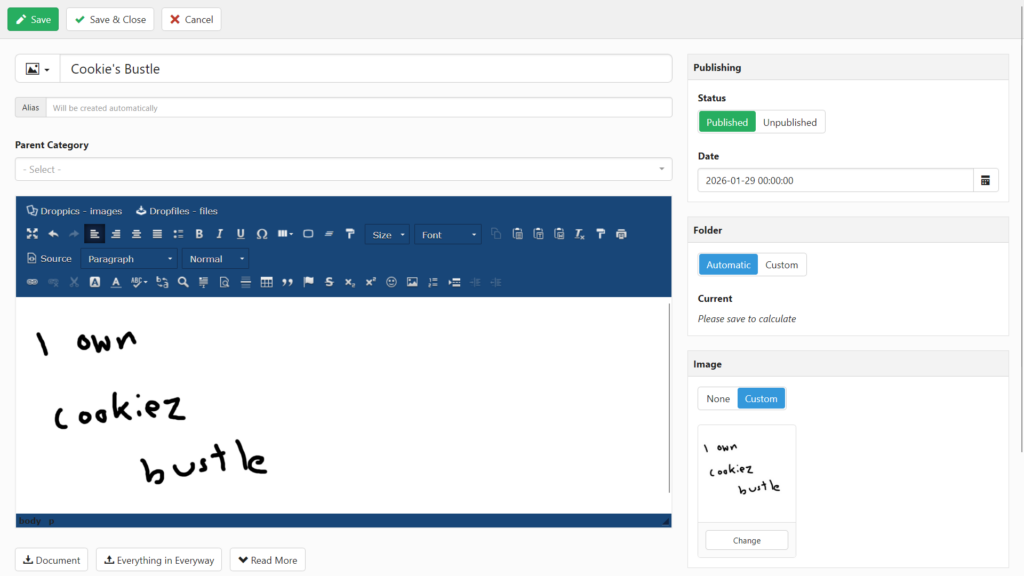
Graceware’s primary justification for its takedown notices has been a series of "registrations" filed by Brandon White through a German company called INTEROCO – "Copyright Office" in 2021. These filings purport to claim ownership of various aspects of Cookie’s Bustle, including its source code, game concept, and character designs.
However, the VGHF, in conjunction with legal experts, has determined that these INTEROCO "registrations" are legally meaningless and do not confer any rights to the game. Copyright law, under international treaties like the Berne Convention, grants protection from the moment a work is created, without the need for formal registration. While registration can offer additional legal benefits, particularly in jurisdictions like the United States, it must be performed through official governmental bodies, such as the U.S. Copyright Office.
INTEROCO, on the other hand, is a private company that describes itself as a "full-automated electronic depository." It functions akin to a digital version of the "dead drop" method of proving authorship – mailing a work to oneself to establish a postmarked date. The VGHF’s investigation revealed that INTEROCO lacks robust oversight. Their system allows for the creation of copyright deposit entries without significant verification, and attempts by the VGHF to understand their process led to contact with a third party in Dubai who claimed high fees for registration and deflected responsibility for questionable claims. Crucially, depositing a copy of a work that has already been published does not establish ownership of its copyright. It is akin to mailing a copy of a commercially released video game and then claiming the postmarked envelope proves copyright ownership.
Furthermore, Brandon White’s purported "registrations" on INTEROCO, even if they include unique art assets or source code, do not prove copyright ownership. As the VGHF demonstrates with its own collection of development assets for Tomb Raider III, possessing such materials does not equate to owning the copyright of the game. The INTEROCO filings, therefore, serve as a misleading basis for takedown notices.
Unapproved Trademark Applications
Graceware, SL has also filed trademark applications in the United States for the name "Cookie’s Bustle," covering a range of products including computer games, apparel, and merchandise. While these applications have not been cited in DMCA notices as proof of copyright ownership, they have surfaced in discussions regarding the game’s rights. The VGHF clarifies that these trademark applications are currently unenforceable and do not grant any ownership rights to the game itself.
The applications were filed under an "intent to use" (ITU) basis, meaning the trademark is not yet actively being used in commerce. The U.S. Patent and Trademark Office (USPTO) considers ITU applications as "pending" rather than "registered." Graceware has filed multiple extensions for these applications since December 2022, indicating a failure to demonstrate actual use of the "Cookie’s Bustle" mark in commerce. Until such use is proven, these applications remain mere placeholders, offering only an earlier priority date but no substantive rights.
Moreover, trademark rights are distinct from copyright. The original trademark for "Cookie’s Bustle" by RODIK, Inc. expired in 2001. Graceware’s 2022 application, filed through a third-party service, does not retroactively grant them ownership of the game’s copyright. This is analogous to the recent situation where a homebrew developer acquired the Tengen trademark; while they can use the name, it does not confer ownership of Warner Communications’ original intellectual property associated with that brand.
Exploitation of Legal Mechanisms
The VGHF’s investigation has revealed a pattern of Brandon White exploiting low-cost, easily accessible legal resources to issue a barrage of nuisance takedown requests. Graceware utilizes Ukie, the UK’s largest video game trade organization, for its DMCA takedown services. Ukie offers these services to its members, and Graceware, despite peculiarities such as a misspelled membership listing ("Gracewear") and a defunct associated website, appears to leverage this provision. Membership in Ukie is relatively affordable, suggesting that entities can gain access to these legal services with a modest annual fee.
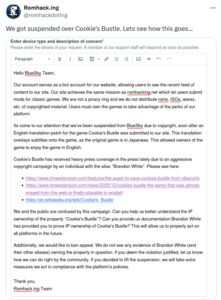
The takedown notices are often processed by Mumith (Mo) Ali, Ukie’s IP coordinator, through his company Web Capio (now operating as Obviously). Web Capio has advertised "automated takedown notices" and, notably, has stated that human verification is not always required for takedowns with a high match rate. This automated approach, coupled with the low barrier to entry for Ukie membership, creates a fertile ground for abuse. The VGHF points to instances where Web Capio’s automated systems have led to the removal of content with little scrutiny, potentially exposing both Web Capio and its clients to liability under the DMCA for false takedown claims. Crucially, neither White nor Graceware has initiated any formal legal action, suggesting a strategy of intimidation rather than legitimate legal pursuit.
The DMCA’s Vulnerabilities and Graceware’s Tactics
The DMCA’s Section 512 creates a "safe harbor" for online platforms, obligating them to remove user-submitted content upon receiving a takedown notice to avoid potential liability for copyright infringement. This system, while intended to protect copyright holders, can be exploited by bad actors. Web Capio’s strategy appears to capitalize on this by targeting the underlying web hosts and service providers of content creators, rather than the creators directly.
The VGHF experienced this firsthand when Graceware, through Web Capio, issued a takedown notice not to the VGHF or its archive host, but to Vercel, the web host for the VGHF’s archive portal. This indirect approach leverages the fact that platforms like Vercel are more likely to automatically comply with DMCA notices to mitigate their own risk. Fortunately, Vercel, in this instance, took the VGHF’s concerns seriously and did not remove any material.
Confrontation and Resolution
In December 2025, Mumith Ali directly contacted the VGHF to request the removal of a Cookie’s Bustle longplay video. When pressed for further details, Ali reiterated Graceware’s reliance on the INTEROCO "registrations." The VGHF’s counsel then requested clarification on the link between Brandon White’s 2021 INTEROCO filings and the original 1999 publication of the game. Graceware failed to provide a response. This inability to substantiate their claims when directly challenged is a significant indicator of the weakness of their legal position.
Following these exchanges, the VGHF presented their findings to Ukie CEO Nick Poole. After review, Ukie confirmed that it had suspended DMCA takedown services for Graceware, SL, citing Graceware’s inability to provide sufficient proof of ownership. This suspension effectively halts Graceware’s ability to issue widespread automated takedowns for Cookie’s Bustle through Ukie.

Implications and the Future of Orphan Works
The resolution of this dispute means that Cookie’s Bustle is, in practical terms, freed from the grip of copyright trolling. While the true owner of the game remains unknown, classifying it as an orphan work, this status does not remove it from copyright protection in the United States. However, the VGHF is confident that, in the absence of a proven owner, legal action or further takedowns related to the game are unlikely.
Crucially, this development should allow for fair uses of Cookie’s Bustle, such as gameplay clips, streams, commentary, and educational documentation, to exist online without the threat of automated takedowns. While previously removed content may not be automatically restored, future uploads and streams should proceed without interference.
However, underlying issues persist. INTEROCO continues to offer misleading copyright registration services, and automated takedown systems like Web Capio’s remain susceptible to abuse. The VGHF notes that Web Capio has indicated implementing stricter measures for escalating counterclaims, which may offer some recourse in similar future situations.
An update to the VGHF’s reporting indicated that Ukie had resumed sending takedowns for Cookie’s Bustle, though they provided no evidence to dispute the VGHF’s findings or address concerns about fair use and takedown verification. The VGHF maintains that users have the right to dispute inappropriate DMCA notices and that Graceware is unlikely to effectively respond to such challenges.
While Graceware can no longer leverage Ukie’s services, the possibility remains that they may seek alternative representatives or attempt to issue takedowns independently, relying on their discredited INTEROCO claims. Furthermore, Graceware’s pending trademark applications for "Cookie’s Bustle," which are set to expire in April 2027, represent their only remotely plausible claim to any rights associated with the game.

The VGHF emphasizes the importance of individuals understanding their rights in the face of spurious DMCA notices. They encourage creators to dispute takedowns, particularly when fair use is applicable, and to utilize resources that debunk false claims.
A Broader Fight for Game Preservation
The VGHF acknowledges that this fight over a single obscure game may seem disproportionate. However, they argue that it represents a larger battle for the preservation of video game history. With an estimated half of pre-1995 game and software titles considered orphan works due to poor ownership documentation, the video game medium is particularly vulnerable to manipulation by bad actors. These actors can muddy the historical record, sow disinformation about ownership, and obstruct the efforts of historians, documentarians, and archivists.
The VGHF’s commitment to challenging copyright trolls like Graceware is driven by the belief that video games are significant cultural artifacts. By standing up for the legal right to document out-of-print orphan games, they aim to protect the integrity of video game history and ensure that future generations can understand and appreciate this vital medium. The VGHF has consistently refused to comply with Graceware’s DMCA notices and has not removed any material related to Cookie’s Bustle from its digital archive, standing firm in its mission to preserve and provide access to gaming’s rich past.